
This is one of the more anxiety-inducing questions I get from families, usually after probate has already wrapped up and someone realizes there might have been an unresolved tax issue.
I want to answer this carefully and precisely, because the honest answer has real nuance in it.

TLDR;
- Closing probate does not automatically erase an unresolved federal tax debt.
- The IRS generally has priority over most other creditors when an estate does not have enough assets to pay all debts.
- If a personal representative distributes estate assets to beneficiaries or other creditors before paying a known or reasonably knowable IRS debt, and the estate is insolvent, the representative can become personally liable for that debt, up to the value of what was improperly distributed.
- This liability generally requires that the estate was insolvent, or became insolvent, at the time of the transfer, and that the representative had actual or constructive knowledge of the tax debt.
- Property that passes outside of probate, such as certain jointly held property, is generally treated differently than assets that were in the executor's custody.
- This article covers federal tax debt specifically. California probate and community property rules add another layer - see the callout below.
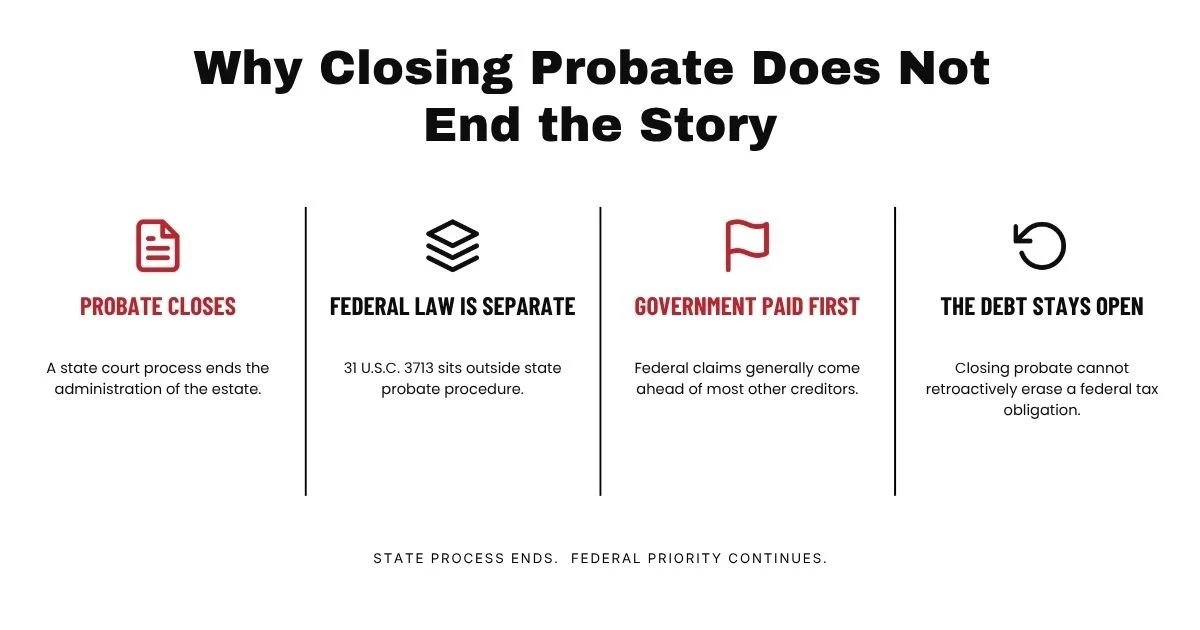
Why Closing Probate Does Not End the Story
Probate closing is a state court process. It resolves the administration of the estate under state law, but it does not have the power to retroactively erase a federal tax obligation that was not properly addressed during administration.
The IRS's collection priority is governed by 31 U.S.C. 3713, a federal statute completely separate from state probate procedure.
Under this statute, when the assets of a deceased person's estate, in the custody of the executor or administrator, are not enough to pay all debts, a claim of the United States government generally must be paid first, ahead of most other creditors.
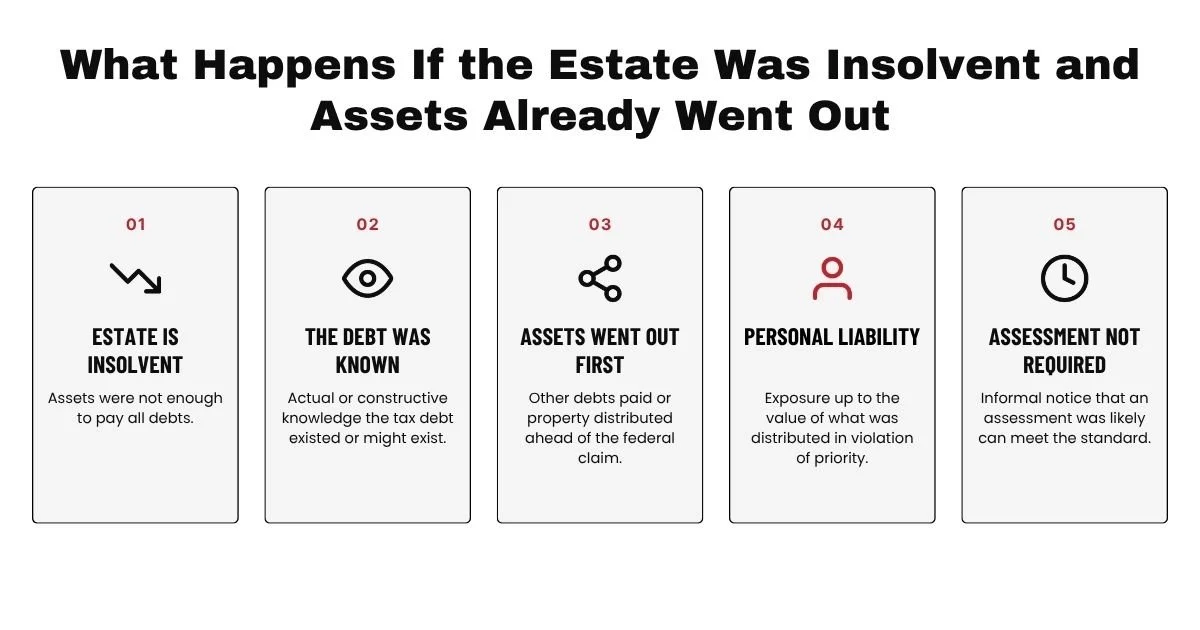
What Happens If the Estate Was Insolvent and Assets Already Went Out
This is where things become personal rather than just involving the estate itself. If the priority rule applies, meaning the estate did not have enough assets to pay all debts, and the personal representative paid other debts or distributed assets to beneficiaries before paying the government's claim, the representative can become personally liable for the unpaid tax debt, up to the value of what was distributed in violation of that priority.
For this liability to apply, the law generally requires two things to be true: the estate was insolvent, or became insolvent, at the time of the distribution, and the representative had actual or constructive knowledge that the tax debt existed or might exist.
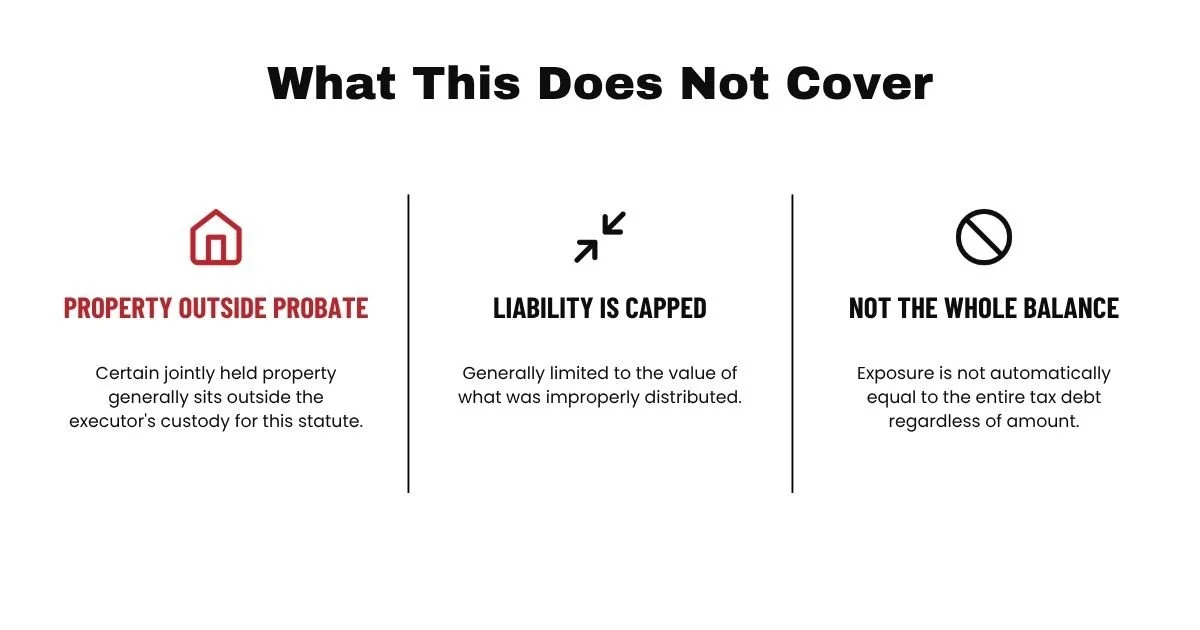
What This Does Not Cover
I want to be precise about the boundaries of this rule, because overstating it would be just as much a disservice as understating it.
Assets that pass outside of probate entirely, certain jointly held property is a common example, are generally not part of "the estate of the deceased debtor in the custody of the executor or administrator" for purposes of this statute.

Federal vs California - Do Not Assume the Same Rules Apply
Everything above describes the federal priority statute.
California probate law and community property rules add another layer that interacts with, but does not replace, this federal framework.
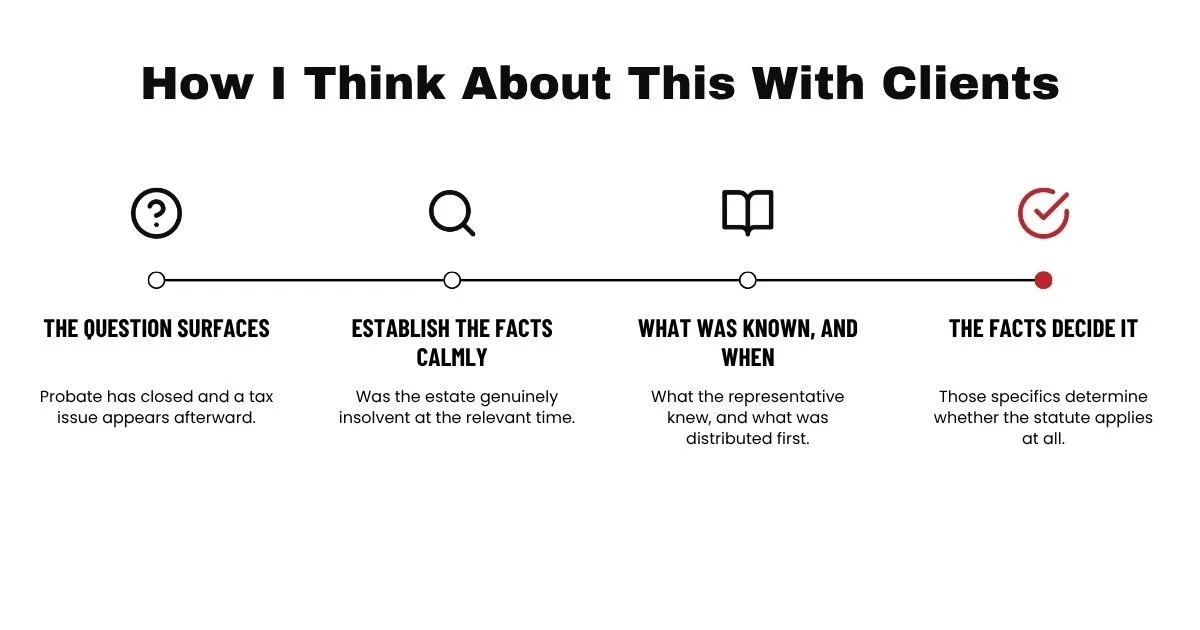
How I Think About This With Clients
When a family comes to me worried about this exact scenario, probate already closed, and a tax question surfacing afterward, my first goal is to establish the actual facts calmly: was the estate genuinely insolvent at the relevant time, what did the personal representative actually know and when, and what, if anything, was distributed before the tax issue was addressed.
Those specific facts determine whether this statute applies at all, and speculating without them tends to cause more anxiety than the situation usually warrants.
Frequently Asked Questions
-
Not automatically. Federal tax priority rules under 31 U.S.C. 3713 operate separately from state probate closing, and an unresolved tax debt does not disappear simply because probate concluded.
-
Potentially, but only under specific conditions: generally, the estate must have been insolvent, and you generally must have known or reasonably should have known about the tax debt, when assets were distributed ahead of that debt.
-
The knowledge standard matters significantly here.
-
Generally, property that passed outside of probate is treated differently under this statute than property that was in the executor's Custody.
-
Confirming the estate's tax filing status and any known or potential liabilities before distributing assets is generally the most direct way to avoid this kind of exposure.
This is exactly the kind of situation worth reviewing with a qualified professional before, not after, assets go out.
If You Are Worried About This Right Now
If probate has already closed and you are wondering whether a tax issue could still surface, or if you are currently acting as executor and want to make sure you are handling this correctly before distributing anything, this is exactly the kind of situation worth a careful review rather than guesswork.
I offer a free case review to look at the actual facts of your situation and help you understand where you genuinely stand.