

IRS Wage Garnishment Help
If the IRS is taking money from your paycheck, it can affect your rent, mortgage, groceries, car payment, family expenses, and ability to keep up with everyday life. This is one of the most stressful IRS collection actions because it hits your income before the money reaches your bank account.
Do I qualify for tax relief? Find out with a free case review.
Call today: 24 Hours / 7 Days a Week or book online.
IRS Wage Garnishment Help When the IRS Starts Taking Your Paycheck
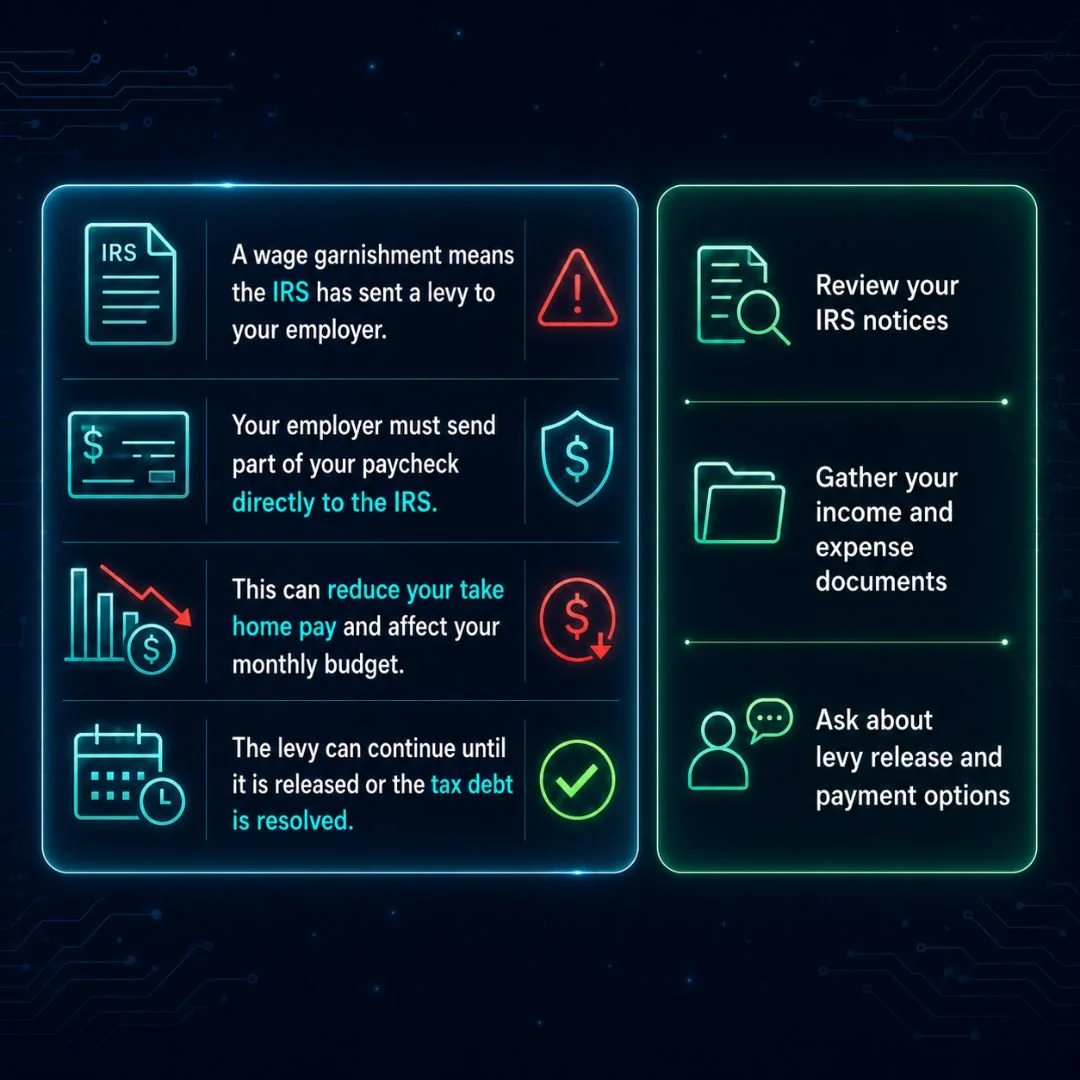
An IRS wage garnishment is also called an IRS wage levy. It means the IRS has sent a levy to your employer and instructed them to send part of your pay to the IRS. If this is happening to you, the next step is not panic. The next step is to review the notices, the tax years involved, your income, your expenses, and the available options to stop, reduce, or release the levy.
Why the IRS sends a wage levy to an employer
The IRS may send a wage levy when there is an unpaid tax balance and prior notices have not led to payment or resolution. This can happen because of unpaid individual income taxes, unfiled tax returns that later create balances, old tax years that were never resolved, or payment plans that defaulted.
In many cases, the taxpayer received several IRS notices before the wage levy began. Sometimes the notices were ignored. Sometimes the taxpayer moved and did not see them. Sometimes the person wanted to deal with it but did not know what to do next.

What an IRS wage garnishment means
An IRS wage garnishment means the IRS is legally collecting money directly from your paycheck to apply toward a tax balance. Your employer receives the levy and must follow the IRS instructions unless the IRS releases it or the tax issue is resolved another way.
This is different from a regular bill or collection letter. Once the levy reaches your employer, the IRS is already collecting. That is why IRS paycheck garnishment help should be handled quickly.
Why this problem should not be ignored
A wage levy can continue from paycheck to paycheck until the IRS releases it or the debt is handled through a proper resolution. Waiting usually makes the situation harder because every paycheck may be affected while penalties and interest may continue on the balance.
If the IRS is taking your paycheck, it is important to find out what tax years are involved, whether all required returns are filed, how much is owed, and whether you qualify for a levy release, payment plan, Currently Non Collectible status, or another resolution.
How IRS Wage Garnishment Usually Starts
IRS notices that may come before a wage levy
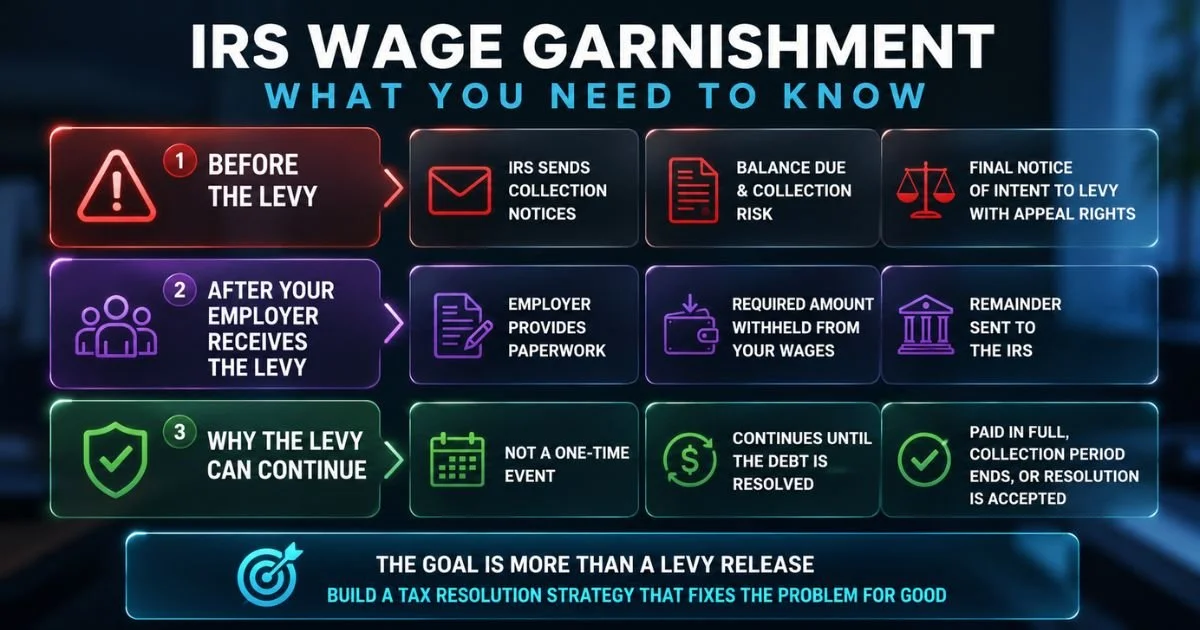
Before a wage levy, the IRS often sends notices about the balance due and collection risk. These notices may include a first balance due notice, follow up collection notices, and a final notice of intent to levy with appeal rights.
Common IRS notices connected to collection problems may include CP14, CP501, CP502, CP504, LT11, or Letter 1058. The exact notice matters because some notices give important appeal rights and deadlines.
Why the levy can continue until the debt is resolved
An IRS wage levy is not usually a one time event. It can continue against future wages until the IRS releases it, the tax is paid, the collection period ends, or a resolution is accepted that stops the levy.
That is why the goal is not only to ask for a wage garnishment release. The bigger goal is to build a tax resolution strategy that addresses the reason the levy happened in the first place.
What happens after the employer receives the levy
Once your employer receives the levy, they usually give you paperwork to complete and begin withholding the required amount from your wages. The IRS determines how much of your pay is exempt based on filing status, pay frequency, and dependents. The rest may be sent to the IRS.
This can create immediate pressure, especially for working families, homeowners, small business owners who also receive wages, and professionals who rely on steady income to cover monthly obligations.
How to Stop IRS Wage Garnishment

Requesting a wage levy release
A wage levy release may be available if the levy is creating financial hardship or if another resolution is accepted. Financial hardship means the levy is preventing you from paying basic necessary living expenses.
The IRS will not usually release a levy just because it is frustrating or embarrassing. The request needs to be supported with financial information, documents, and a clear explanation of why the levy should be released.
Using Currently Non Collectible status for hardship cases
Currently Non Collectible status may be an option when you cannot afford to pay the IRS and still cover basic living expenses. If approved, the IRS may temporarily pause active collection because your financial situation does not allow payment at that time.
This does not erase the tax debt. Penalties and interest may continue. The IRS may review your situation later. Still, for a taxpayer facing serious hardship, Currently Non Collectible status can be an important option.
Setting up an IRS payment plan
An IRS payment plan may help stop or prevent enforced collection when the plan is approved and the taxpayer stays compliant. The right payment plan depends on the balance, the tax years involved, income, expenses, assets, and filing compliance.
For some taxpayers, a streamlined payment plan may be enough. For others, the IRS may require a financial review before approving the plan. If the current levy is already active, the payment plan request should address the wage levy directly.
Reviewing Offer in Compromise eligibility
An Offer in Compromise may be an option when you cannot pay the full tax debt based on your income, expenses, assets, and future ability to pay. Not everyone qualifies, and no honest tax professional should promise acceptance before reviewing the full financial picture.
I review Offer in Compromise eligibility carefully because submitting an offer without a realistic basis can waste time and money. When it fits, it can be a powerful resolution tool. When it does not fit, another option may be better.
When Financial Hardship May Help
What the IRS reviews
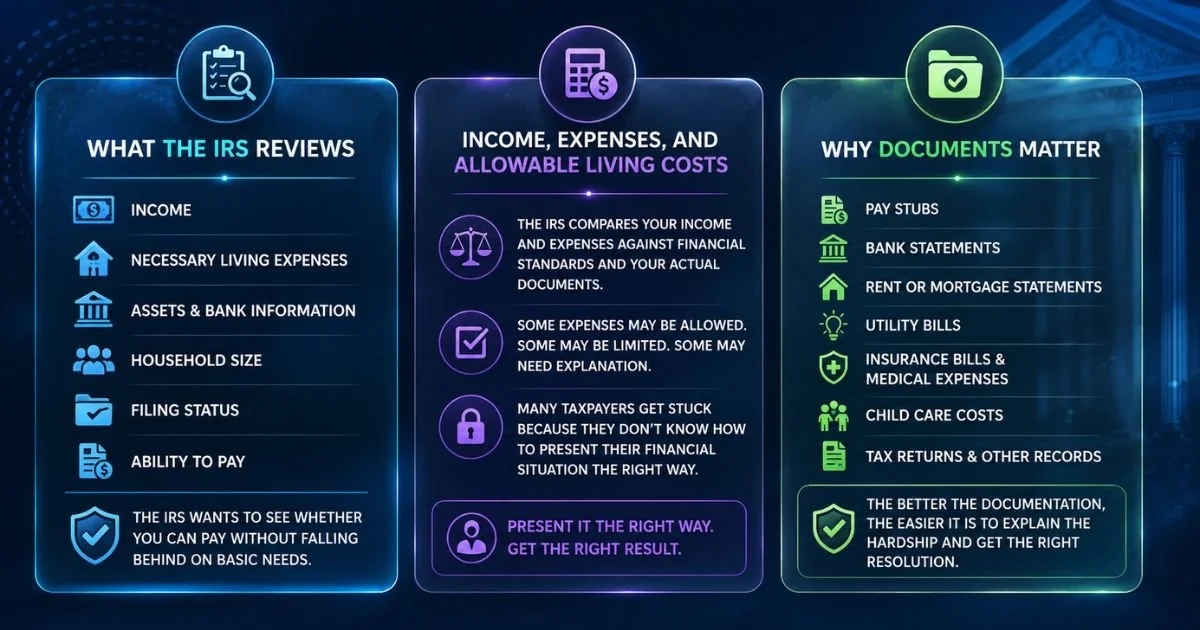
When financial hardship is involved, the IRS usually reviews income, necessary living expenses, assets, bank information, household size, filing status, and the taxpayer’s ability to pay. The IRS wants to see whether the taxpayer can pay without falling behind on basic needs.
A hardship request is stronger when the numbers are organized and supported. It is weaker when the IRS receives incomplete information or estimates that do not match the documents.
Why documents matter
Documents matter because the IRS relies on proof. Pay stubs, bank statements, rent or mortgage statements, utility bills, insurance bills, medical expenses, child care costs, tax returns, and other records may be needed.
The better the documentation, the easier it is to explain the hardship and request the correct resolution.
Income, expenses, and allowable living costs
The IRS does not look only at what you feel you can afford. It compares your income and expenses against financial standards and your actual documents. Some expenses may be allowed. Some may be limited. Some may need explanation.
This is where many taxpayers get stuck. They know the levy is hurting them, but they do not know how to present their financial situation in the format the IRS expects.
How I Help With IRS Wage Garnishment
IRS transcript review
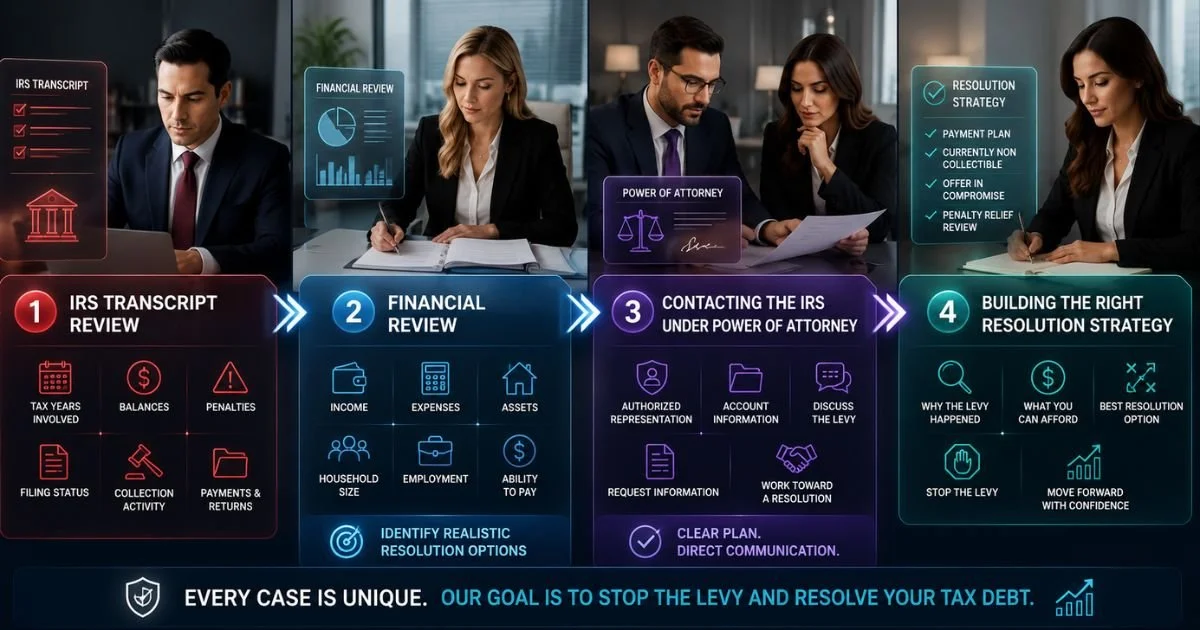
I start by reviewing IRS transcripts when available. This helps identify the tax years involved, balances, penalties, filing status, collection activity, payments, missing returns, and whether the IRS has already issued levy action.
This step matters because a wage levy is often part of a larger tax problem. Before I recommend a resolution, I want to know what the IRS records show.
Contacting the IRS under Power of Attorney
When representation is needed, I can contact the IRS under Power of Attorney. This allows me to speak with the IRS about your account, request information, discuss the levy, and work toward a resolution.
This does not mean the IRS must approve every request. It does mean your case can be handled with a clear plan, proper documentation, and direct communication.
Financial review
Next, I review your financial situation. This includes income, expenses, assets, household size, employment, business income if applicable, and your ability to pay. The goal is to determine which resolution options are realistic.
This may include a payment plan, Currently Non Collectible status, Offer in Compromise review, penalty relief review, or another strategy based on the facts.
Building the right resolution strategy
The right strategy depends on why the wage levy happened and what you can afford. For one taxpayer, the answer may be a payment plan. For another, it may be hardship status. For another, it may be an Offer in Compromise review.
My job is to help you understand the options, avoid unrealistic promises, and work toward the best available path based on your facts.
What to Do Next If the IRS Is Garnishing Your Wages
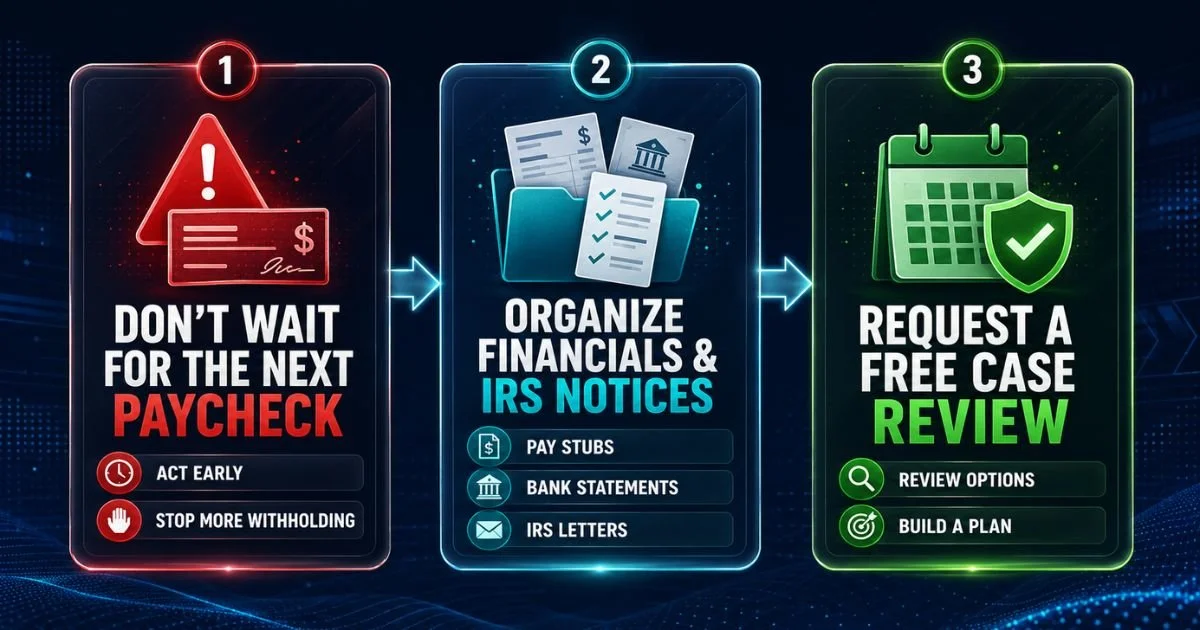
Do not wait for the next paycheck
If the IRS is already taking money from your paycheck, time matters. Waiting for another pay period can mean losing more income before the issue is reviewed.
You do not need to have everything figured out before asking for help. You need to know what notices you received, whether the levy has started, and what your current financial situation looks like.
Request a free case review
If you need help with IRS taking your paycheck, Semper Tax Relief can review your situation and explain the next steps. I will not promise results before reviewing the facts. I will help you understand what the IRS is doing, what options may be available, and what information is needed to move forward.
Gather your IRS notices
Gather any IRS letters you received, especially notices about intent to levy, final notices, balance due letters, and payment plan default notices. If you do not have the notices, IRS transcripts may help identify what happened.
Also gather recent pay stubs, bank statements, tax returns, and basic monthly expense information. These documents can help determine whether you may qualify for a levy release or another resolution.
IRS Wage Garnishment Help FAQs
-
An IRS wage garnishment is when the IRS sends a wage levy to your employer and requires part of your paycheck to be sent to the IRS for unpaid taxes. It can continue until the levy is released, the debt is paid, or another resolution is accepted.
-
The IRS usually leaves an exempt amount based on your filing status, pay frequency, and dependents. The remaining amount may be sent to the IRS. For many taxpayers, the amount taken can still be large enough to create serious financial pressure.
-
You may be able to stop an IRS wage levy by resolving the tax debt, requesting a levy release, setting up a payment plan, proving financial hardship, or qualifying for another tax relief option. The right approach depends on your IRS account, income, expenses, assets, and filing
-
A payment plan may help stop wage garnishment if the IRS accepts the agreement and the levy is addressed as part of the resolution. If the levy is already active, it is important to request that the IRS release the wage levy once the payment arrangement or other resolution is in place.
-
Common documents may include IRS notices, recent pay stubs, bank statements, tax returns, proof of rent or mortgage, utility bills, insurance bills, medical expenses, child care costs, and other records that show income and necessary living expenses. The exact documents depend on your financial situation and the type of relief being requested.