

Dealing with IRS Tax Debt?
Orange County IRS Tax Debt Resolution

If you owe the IRS, the worst move is guessing.
IRS tax debt can lead to notices, penalties, interest, wage garnishments, bank levies, tax liens, and pressure from collections. Resolve your IRS Tax Debt Today
Do I Qualify for the Best Tax Relief? Find out with a Free Case Review | Call or Book Online (24 Hours /7 Days a week)
✔ 100% Confidential ✔No Sales Pressure ✔Personalized Strategy
I help Orange County taxpayers understand what the IRS is doing, what the account records show, and which tax debt resolution option fits the facts. Some cases need an IRS payment plan. Some cases may qualify for an Offer in Compromise. Some taxpayers need hardship protection through Currently Not Collectible status
Tax Debt Does Not Go Away Just Because You Wait
Tax debt usually gets worse when it is ignored.
Penalties can continue. Interest can grow. Notices can become more serious. What starts as a balance due notice can turn into collection action if there is no plan in place.
Many taxpayers wait because they are overwhelmed, embarrassed, or unsure what the IRS can actually do.
I understand that.
But waiting without a strategy gives the IRS more time to move the case forward.
If you received an IRS notice, owe back taxes, have missing tax returns, or are worried about a levy or garnishment, the first step is to find out exactly where you stand.
Who I Help With IRS Tax Debt in Orange County

I help individuals, families, professionals, homeowners, self employed taxpayers, and small business owners in Orange County who are dealing with IRS tax problems.
This includes taxpayers who owe for one year, taxpayers who have multiple years of IRS debt, and taxpayers who have not filed tax returns for several years.
I also help taxpayers & business owners who received IRS notices and do not know what the notice means, what deadline matters, or what step should come next.
IRS Tax Problems I Resolve

IRS tax debt can show up in different ways.
Some taxpayers receive a simple balance due notice. Others are already facing active collection.
The goal is to identify the real issue first. Once the IRS account is reviewed, I can help determine whether the case needs tax return filing, penalty relief, a payment plan, hardship protection, an appeal, or a settlement option.
IRS Back Taxes

Back taxes are taxes owed from a prior year.
The balance may include the original tax, penalties, and interest.
Before choosing a resolution option, I review the IRS account records to confirm which years are owed, what has been assessed, and whether the balance looks accurate.
This matters because some taxpayers are trying to resolve a balance before they understand what the IRS is actually collecting.
Years of Unfiled Tax Returns
If you have years of unfiled tax returns, tax debt resolution usually starts with compliance.
The IRS often wants required tax returns filed before it will approve many resolution options.
Unfiled returns can also cause the IRS to estimate a balance based on information reported under your Social Security number or business account.
That estimate may not include deductions, credits, business expenses, or other items that could change the final amount owed.
IRS Wage Garnishment Help

An IRS wage garnishment means the IRS is taking part of your paycheck.
This can create immediate financial pressure for working families and professionals.
A garnishment usually means the IRS believes the taxpayer has not resolved the balance after prior notices.
In many cases, the next step is to contact the IRS, review the account, and request a collection alternative that fits the taxpayer’s financial situation.
An IRS bank levy can freeze or take money from your account.
This is one of the most stressful IRS collection actions because it can affect rent, mortgage payments, payroll, utilities, and daily living expenses.
If you received a levy notice or your bank account has already been hit, fast action matters.
The goal is to identify what triggered the levy and whether a release or resolution request can be made.
IRS Bank Levy Help

Federal Tax Lien Help

A federal tax lien is the government’s legal claim against your property in Orange County, CA when you owe tax debt.
A lien can affect real estate, refinancing, business assets, and financial planning.
Not every lien issue is handled the same way.
Some taxpayers need a payment plan. Some need lien withdrawal review. Some need lien discharge or subordination because they are selling or refinancing property.
IRS Tax Debt Resolution Options Available
There is no one size fits all answer for IRS tax debt.
The right resolution depends on the facts.
Before recommending a strategy, I look at the tax years owed, filing status, income, expenses, assets, equity, collection notices, deadlines, and the taxpayer’s ability to pay.
The main options may include an IRS payment plan, Offer in Compromise, Currently Not Collectible status, penalty abatement, or appeal rights.

Offer in Compromise
An Offer in Compromise is the IRS tax settlement program that may allow qualified taxpayers to settle tax debt for less than the full balance owed.
This option is powerful, but it is not automatic.
The IRS looks at income, expenses, assets, equity, and future ability to pay.
I review these factors before determining whether an Offer in Compromise is realistic.

IRS Payment Plans
An IRS payment plan allows a taxpayer to pay the balance over time.
Some payment plans are based mainly on the amount owed and filing compliance. Other plans require financial information.
A payment plan may be the right option when the taxpayer can afford monthly payments and does not qualify for a lower settlement or hardship status

Currently Not Collectible Status
IRS Currently Not Collectible status may be an option when a taxpayer cannot afford to make payments after covering necessary living expenses.
This status can pause active IRS collection, but it does not erase the tax debt.
The IRS may review the taxpayer’s finances later. This option is usually based on financial hardship.
IRS Tax Penalty Abatement

Some taxpayers may qualify for penalty relief.
This can include first time abatement or reasonable cause penalty relief.
Penalty relief does not remove the original tax, but it may reduce the overall balance if the taxpayer qualifies.
IRS Appeals And Collection Rights
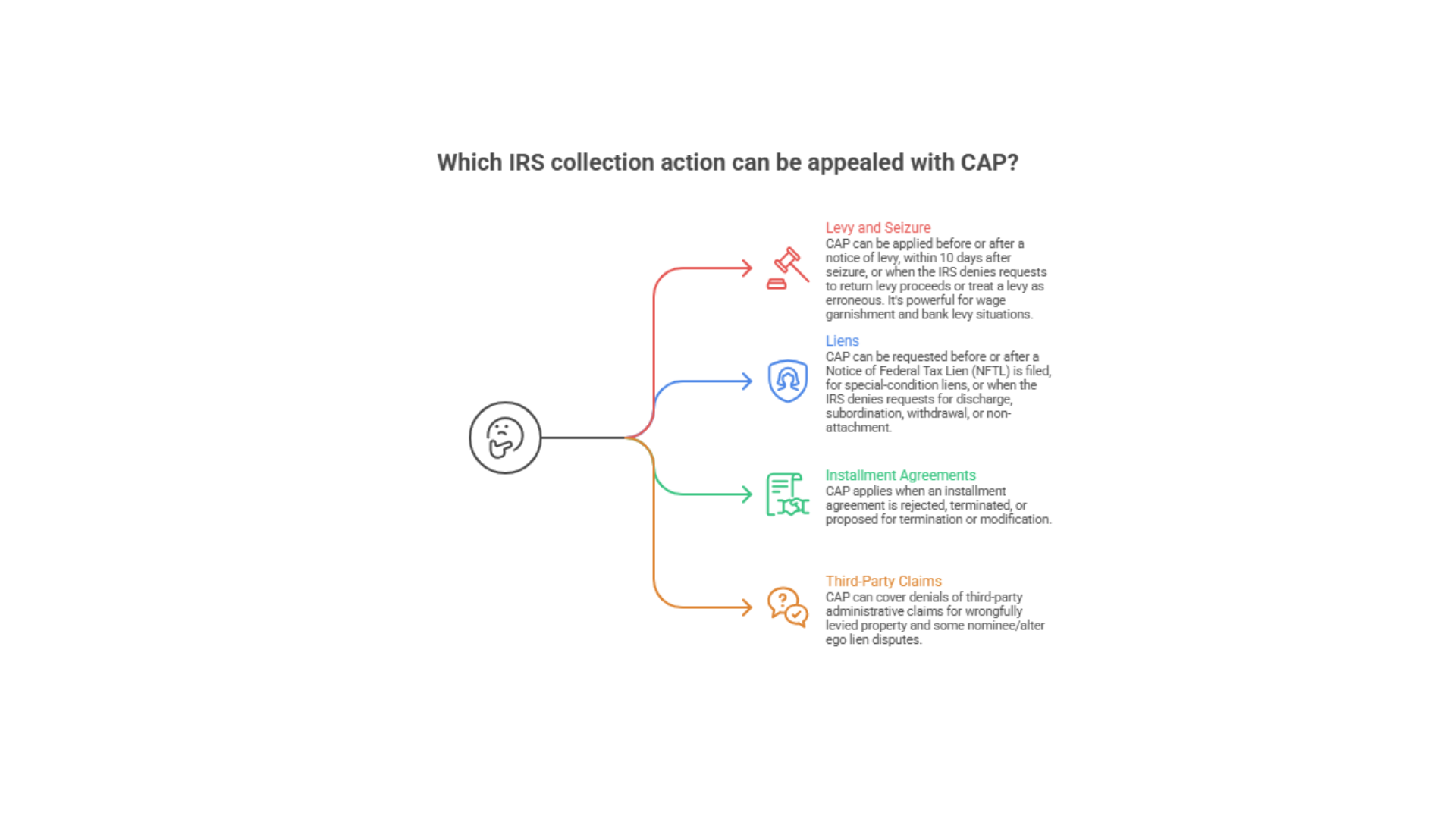
Some IRS notices give taxpayers appeal rights.
This can matter when the IRS is preparing to levy, has filed a lien, or has taken a collection action that should be challenged.
Deadlines matter.
If an appeal deadline is missed, the taxpayer may lose important rights.
My IRS Tax Debt Resolution Process
I do not believe in guessing with IRS tax debt. A strong resolution starts with the facts. The process begins by reviewing your IRS account, identifying the tax years involved, confirming filing compliance, and determining what the IRS can legally collect.
Step 1, IRS Account Review
If tax returns are missing, I identify which years need to be filed.
Filing compliance is often required before the IRS will approve many resolution options.
Step 2, Filing Compliance Review
If tax returns are missing, I identify which years need to be filed.
Filing compliance is often required before the IRS will approve many resolution options.
Step 3, Financial Review
I review income, expenses, assets, equity, and household financial facts.
This helps determine whether the taxpayer can afford payments, qualifies for hardship protection, or may be a candidate for settlement.
Step 4, Resolution Strategy
Once the facts are clear, I explain the available options.
The goal is to choose the strongest resolution based on IRS rules, not wishful thinking.
Step 5, IRS Representation
When engaged for representation, I contact the IRS, submit required documents, respond to IRS requests, and work toward the selected resolution.
Orange County IRS Tax Debt Help For Local Taxpayers
Semper Tax Relief helps taxpayers throughout Orange County, California.
This includes Anaheim, Brea, Irvine, Santa Ana, Fullerton, Garden Grove, Huntington Beach, Costa Mesa, Orange, Mission Viejo, Newport Beach, Laguna Niguel, and surrounding communities.
Many IRS tax debt cases can be handled remotely.
That means you do not need to sit in an IRS office or try to figure out notices alone.
I can review the account, explain the problem, and help build a resolution plan
Why Work With Semper Tax Relief
I am Sergio Melendez, an IRS Enrolled Agent and Juris Doctor.
I focus on helping taxpayers resolve IRS tax problems, including back taxes, unfiled tax returns, wage garnishments, bank levies, tax liens, payment plans, Offers in Compromise, and hardship cases and other IRS Tax Problems
My approach is direct.
I review the facts, explain the options, and help taxpayers understand what can realistically be done.
No scare tactics. No fake promises. Just a clear plan based on the IRS account, the taxpayer’s financial situation, and the available resolution options.

IRS Tax Debt Resolution FAQs
-
Some taxpayers may qualify to settle IRS tax debt through an Offer in Compromise.
The IRS reviews income, expenses, assets, equity, filing compliance, and ability to pay.
Not everyone qualifies, but it is worth reviewing if the full balance is not realistic.
-
Yes.
The IRS can garnish wages when a tax balance remains unresolved and the required collection notices have been issued.
If wages are being garnished, it is important to act quickly and review available collection alternatives.
-
Yes.
The IRS can levy a bank account after the collection process reaches that stage.
A bank levy can create immediate financial hardship, so the taxpayer should review the account and determine whether a levy release or resolution request is available.
-
In many cases, yes.
The IRS often requires filing compliance before approving payment plans, hardship status, or settlement options.
If returns are missing, those years usually need to be addressed first.
-
If you cannot afford payments, hardship options may be available.
Currently Not Collectible status may pause active IRS collection when your financial information shows that you cannot pay after necessary living expenses.
-
The best option depends on the facts.
A taxpayer with income may need a payment plan.
A taxpayer with limited ability to pay may qualify for hardship status.
A taxpayer whose financial situation supports settlement may qualify for an Offer in Compromise.
-
The timeline depends on the case.
A payment plan may move faster than an Offer in Compromise or an appeal.
Cases with missing tax returns, complex financials, levies, liens, or Revenue Officer involvement usually take longer.
Get Help With IRS Tax Debt in Orange County Today
If you owe the IRS, do not wait for the next notice to make the decision for you.
The sooner the account is reviewed, the sooner you can understand your options.
I can help you review the IRS records, identify the tax years involved, explain the collection risk, and determine which resolution path fits your situation.