

IRS Tax Lien Discharge and Subordination Help
Our IRS Tax Power of Attorney Representatives in Orange County eliminate tax problems so that you can live your best life!
Specializing in Stopping & Settling Tax Problems
Do I Qualify for the Best Tax Relief? Find out with a Free Case Review
Call or Book Online (24 Hours /7 Days a week)
✔ 100% Confidential ✔No Sales Pressure ✔Personalized Strategy
A federal tax lien can interfere with the sale or refinancing of real estate. In some cases, the IRS may discharge a specific property from its lien or subordinate its lien position to another creditor.
A discharge removes the federal tax lien from a specific property. A subordination does not remove the lien. It allows a named creditor to move ahead of the IRS in priority for the property identified in the certificate.
Neither option automatically eliminates the underlying tax debt or removes the lien from every other asset. Approval depends on the transaction, property value, existing liens, anticipated proceeds, and the legal basis presented to the IRS.
I am Sergio Melendez, a tax attorney and enrolled agent. I have worked in tax resolution since 2005. At Semper Tax Relief, my team and I help taxpayers, property owners, lenders, and closing professionals evaluate lien issues and prepare discharge or subordination applications for IRS consideration.
What Is a Federal Tax Lien?
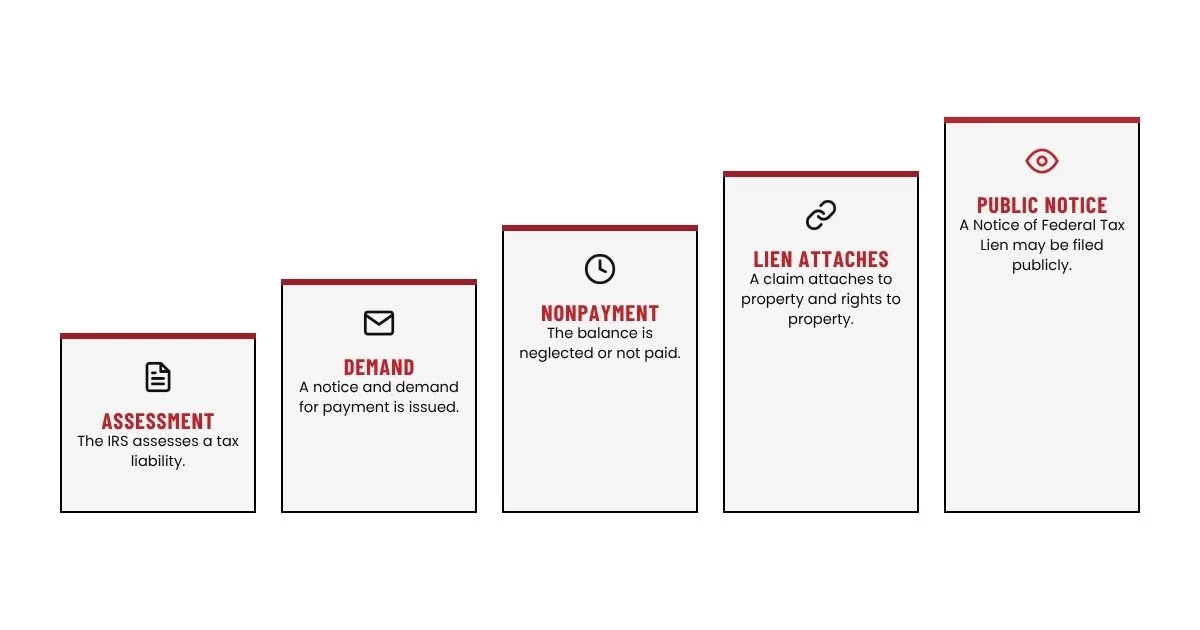
A federal tax lien is the government’s legal claim against a taxpayer’s property and rights to property after the IRS assesses a tax liability, sends a demand for payment, and the taxpayer neglects or refuses to pay the balance.
The lien can attach to property such as:
• Real estate.
• Vehicles.
• Business property.
• Accounts receivable.
• Securities and other financial assets.
• Certain property acquired while the lien remains in effect.
The IRS may file a Notice of Federal Tax Lien in public records to notify other creditors of the government’s interest.
A federal tax lien is different from an IRS levy. A lien secures the government’s interest in property. A levy is an enforcement action used to take property or rights to property to pay a tax liability.
What Is an IRS Tax Lien Discharge?
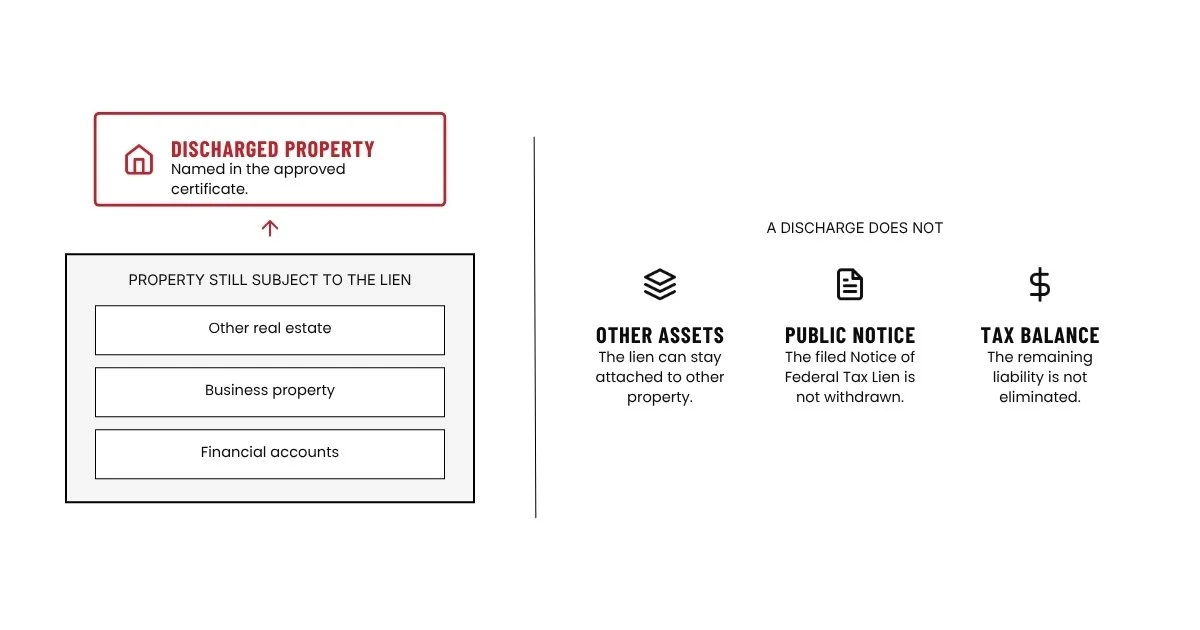
A Certificate of Discharge removes a federal tax lien from one specifically identified property.
For example, a taxpayer may need a discharge to complete the sale of a home, commercial building, vacant land, or another asset affected by the lien.
A discharge does not necessarily:
• Pay the entire tax liability.
• Release the federal tax lien from all property.
• Withdraw the public Notice of Federal Tax Lien.
• Prevent the lien from remaining attached to other assets.
• Approve an installment agreement or another tax resolution.
The certificate applies only to the property described in the approved application.
The IRS generally evaluates discharge applications under the legal grounds established in Internal Revenue Code Section 6325(b). The appropriate basis depends on the property’s value, liens with priority over the IRS, proceeds available to the government, and ownership of the property.
Common Legal Bases for an IRS Lien Discharge
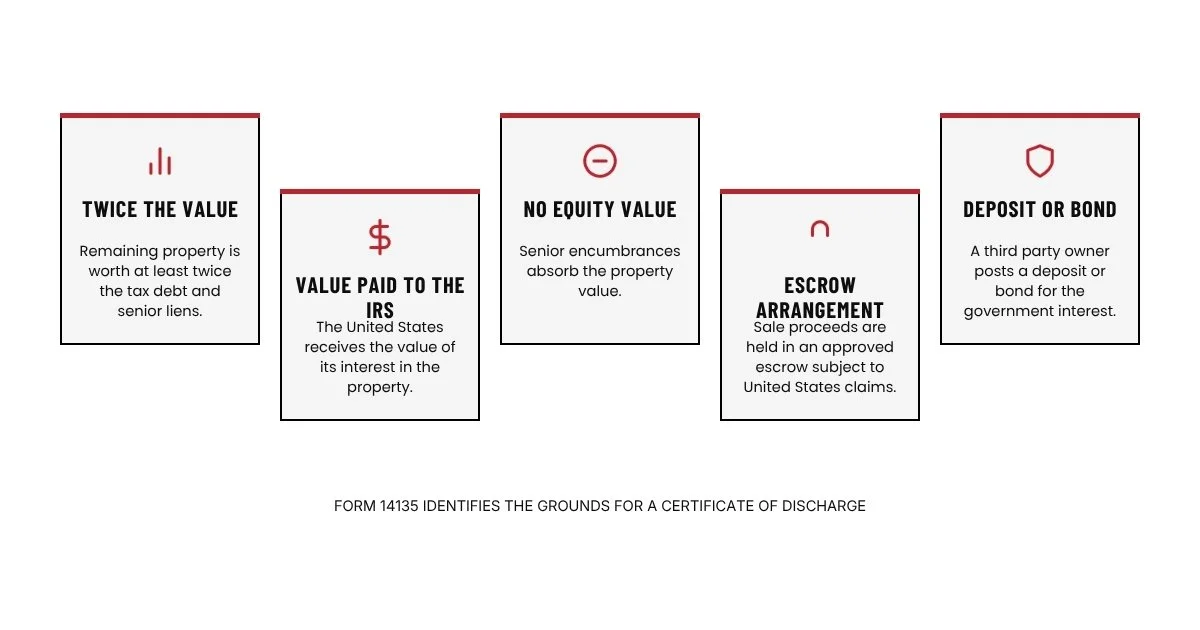
Form 14135 identifies several possible grounds for requesting a Certificate of Discharge. Selecting the correct basis is an important part of the application.
Remaining Property Has Sufficient Value
A discharge may be considered when the value of property that will remain subject to the federal tax lien is at least twice the total of the federal tax liability and other liens that have priority over the IRS lien.
This basis generally requires documentation and valuation of both the property being discharged and the property that will remain subject to the lien.
The IRS Receives the Value of Its Interest
A discharge may be considered when the United States receives an amount equal to the value of its interest in the property.
The IRS evaluates the proposed sale price, property value, mortgages, senior liens, permitted closing expenses, and the government’s lien position. The IRS determines the amount required for the discharge.
The IRS Interest Has No Value
A discharge may be considered when the IRS lien has no value in the property because the property’s value is fully absorbed by encumbrances that have priority over the federal tax lien.
Approval is not automatic simply because the taxpayer has little or no equity. The IRS reviews the property value, the validity and priority of other encumbrances, and the proposed transaction.
Sale Proceeds Will Be Held in Escrow
In certain situations, a discharge may be considered when the property is sold and the proceeds are placed in an approved escrow arrangement subject to the claims of the United States.
The terms of the escrow agreement must be acceptable to the IRS before the discharge is approved.
A Third Party Owner Provides a Deposit or Bond
A person who owns property subject to another taxpayer’s federal tax lien may be able to request a discharge by providing a deposit or acceptable bond equal to the value of the government’s interest.
Special procedural and judicial review rights may apply. The correct section should be evaluated carefully before funds are submitted or rights are waived.
What Is an IRS Tax Lien Subordination?
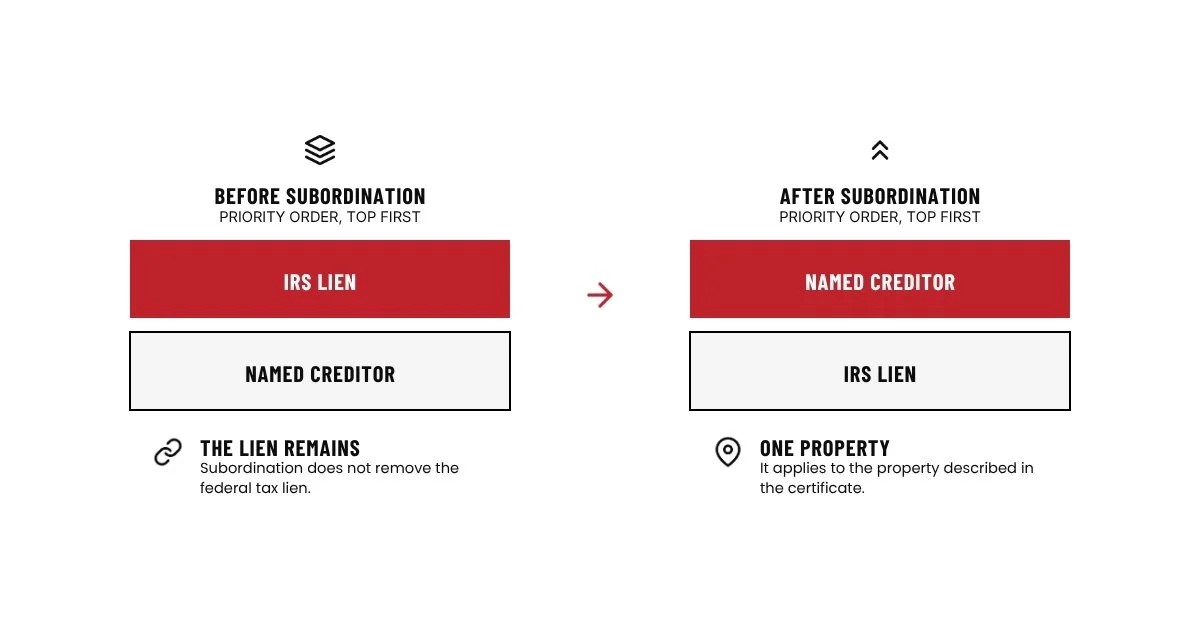
A Certificate of Subordination allows a named creditor to move ahead of the IRS lien for the property identified in the certificate.
Subordination does not remove the federal tax lien. It changes the lien priority between the IRS and the specified creditor.
This may help a taxpayer complete a refinance or loan transaction that otherwise could not close because the lender requires a superior lien position.
The IRS may consider subordination when:
• The United States will receive an amount equal to the interest being subordinated.
• Changing the lien priority is expected to increase the government’s interest and make collection of the tax liability easier.
A lender’s willingness to make a loan does not require the IRS to approve subordination. The application must establish a qualifying legal basis and show how the proposed transaction satisfies it.
When a Tax Lien Discharge May Help
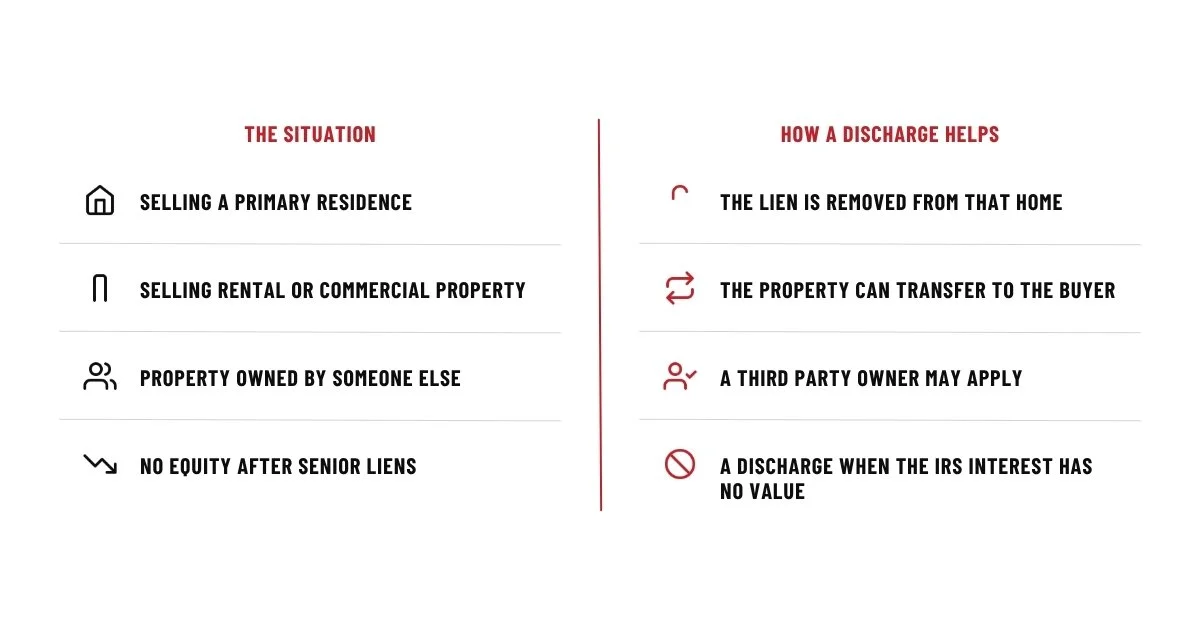
A discharge may be useful when a federal tax lien is preventing the transfer or sale of a particular property.
Common situations include:
• Selling a primary residence with an IRS lien.
• Selling rental or investment property.
• Selling commercial real estate.
• Transferring property owned by someone other than the taxpayer.
• Completing a transaction when the IRS lien has no equity value.
• Selling an asset when part of the proceeds will be paid to the IRS.
• Completing a transaction through an approved escrow arrangement.
The application must usually coordinate the interests of the taxpayer, purchaser, title company, lender, escrow holder, other lienholders, and the IRS.
Approval of a discharge allows the identified property to transfer without the federal tax lien remaining attached to that property. The remaining tax balance and the lien’s effect on other property may continue.
When Tax Lien Subordination May Help
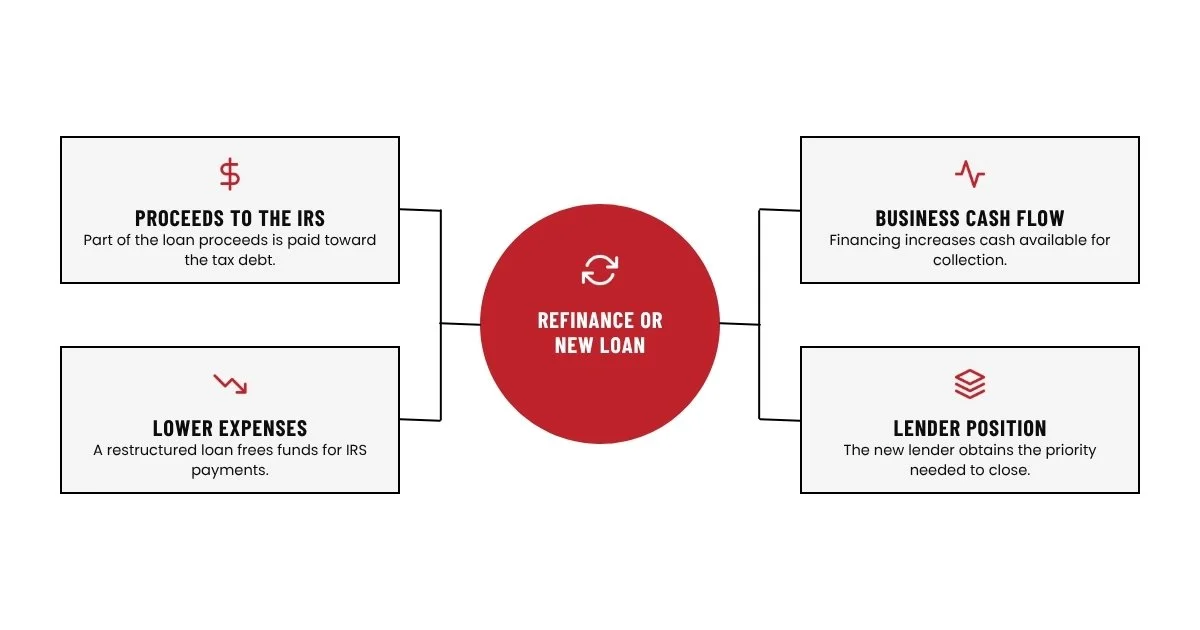
Subordination is most commonly considered in connection with a refinance or new loan.
Examples may include:
• Refinancing real estate and paying part of the loan proceeds to the IRS.
• Obtaining financing that may improve the taxpayer’s ability to pay the tax debt.
• Restructuring a loan to reduce expenses and increase the amount available for IRS payments.
• Obtaining business financing that may increase cash flow available for collection.
• Allowing a new lender to obtain the lien position required to complete the transaction.
The IRS will generally want to know exactly how the transaction benefits tax collection. A lower interest rate or reduced monthly payment does not by itself establish approval. The application should show how the change produces funds for the IRS or improves the government’s ability to collect.
Discharge Compared With Subordination
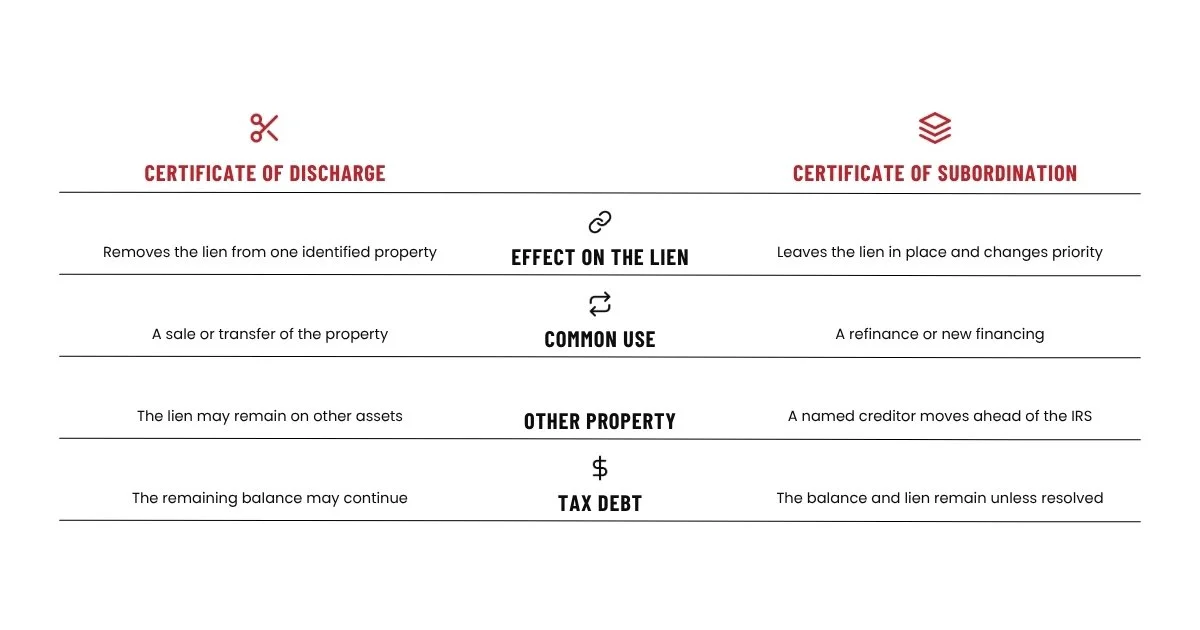
Certificate of Discharge
A discharge removes the federal tax lien from one identified property.
It is commonly used in connection with a sale or transfer.
The lien may remain attached to other property, and the underlying tax debt may continue.
Certificate of Subordination
A subordination leaves the federal tax lien attached to the property but allows a named creditor to move ahead of the IRS.
It is commonly used in connection with refinancing or financing.
The underlying tax debt and federal tax lien remain unless addressed through a separate process.
Discharge, Subordination, Release, and Withdrawal Are Different
These terms are often confused, but they involve different forms of lien relief.
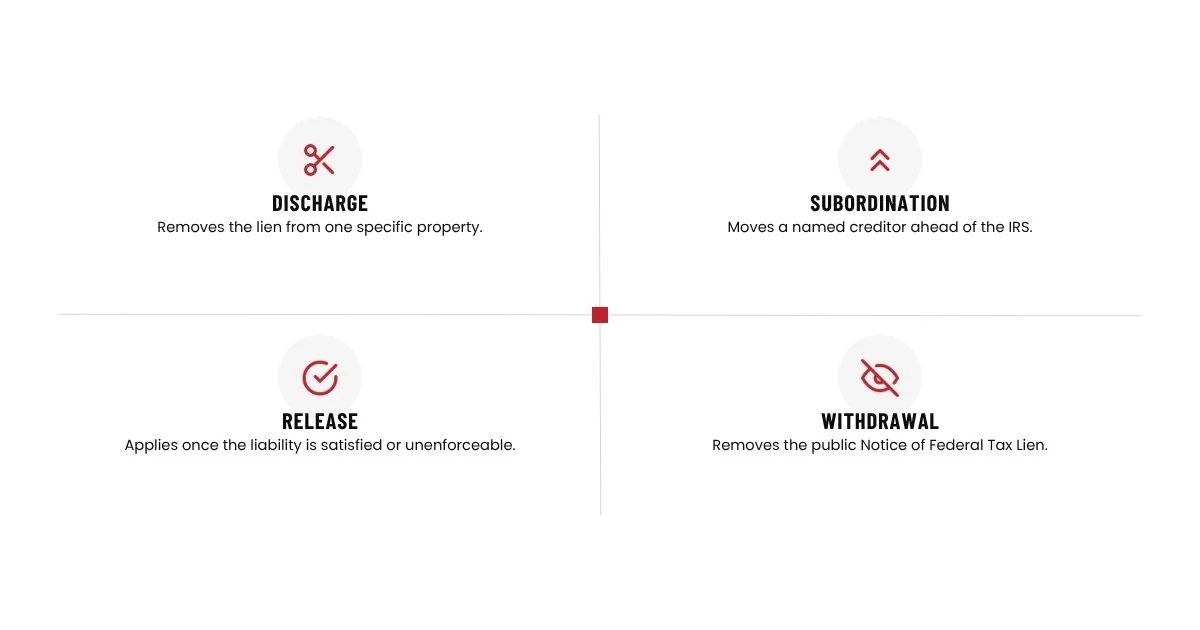
Discharge
A discharge removes the lien from a specific property. It does not necessarily affect the lien on other property or eliminate the remaining tax balance.
Subordination
A subordination changes the priority of the IRS lien in relation to a named creditor. It does not remove the lien.
Release
A release generally addresses the federal tax lien after the liability has been fully satisfied, becomes legally unenforceable, or another statutory basis for release applies.
Withdrawal
A withdrawal removes the public Notice of Federal Tax Lien under qualifying conditions. It does not necessarily eliminate the underlying tax liability.
The correct procedure depends on what must happen for the sale, refinance, financing, or overall tax resolution.
IRS Form 14135 for a Certificate of Discharge

Form 14135 is the Application for Certificate of Discharge of Property from Federal Tax Lien.
The application generally requests information about:
• The taxpayer named on the Notice of Federal Tax Lien.
• The applicant and the applicant’s relationship to the taxpayer.
• The purchaser, transferee, or proposed new owner.
• The taxpayer’s authorized representative.
• The lender, title company, finance company, or escrow company.
• The proposed sales price.
• The amount expected to be paid to the United States.
• The legal basis for the requested discharge.
• The property and its legal description.
• Property appraisals and other valuations.
• Mortgages and other encumbrances.
• The proposed sale contract.
• A current title report.
• The proposed closing statement.
• Any unusual circumstances affecting the request.
A complete application may require additional exhibits, affidavits, payoff statements, recorded documents, and transaction records.
Submitting Form 14135 does not guarantee that the IRS will issue a Certificate of Discharge. The IRS may request additional information, question valuations or expenses, determine a different payment amount, or deny the application.
IRS Form 14134 for a Certificate of Subordination

Form 14134 is the Application for Certificate of Subordination of Federal Tax Lien.
The application generally requests:
• Taxpayer and property owner information.
• Information about the applicant and authorized representative.
• The lender or finance company’s information.
• Existing and proposed loan amounts.
• The amount proposed for payment to the IRS.
• The legal basis for subordination.
• A description of the affected property.
• An appraisal or another acceptable valuation.
• A current title report.
• The proposed loan agreement.
• A proposed closing statement.
• An explanation of how the transaction will improve collection when that is the basis for the request.
If the application is based on improved collection, the explanation should connect the financial terms of the transaction to the government’s expected recovery. General statements that the refinance will help the taxpayer are usually not enough to explain that benefit.
Submitting Form 14134 does not require the IRS to approve the request or accept the transaction on the proposed terms.
Documents Commonly Needed for a Lien Application
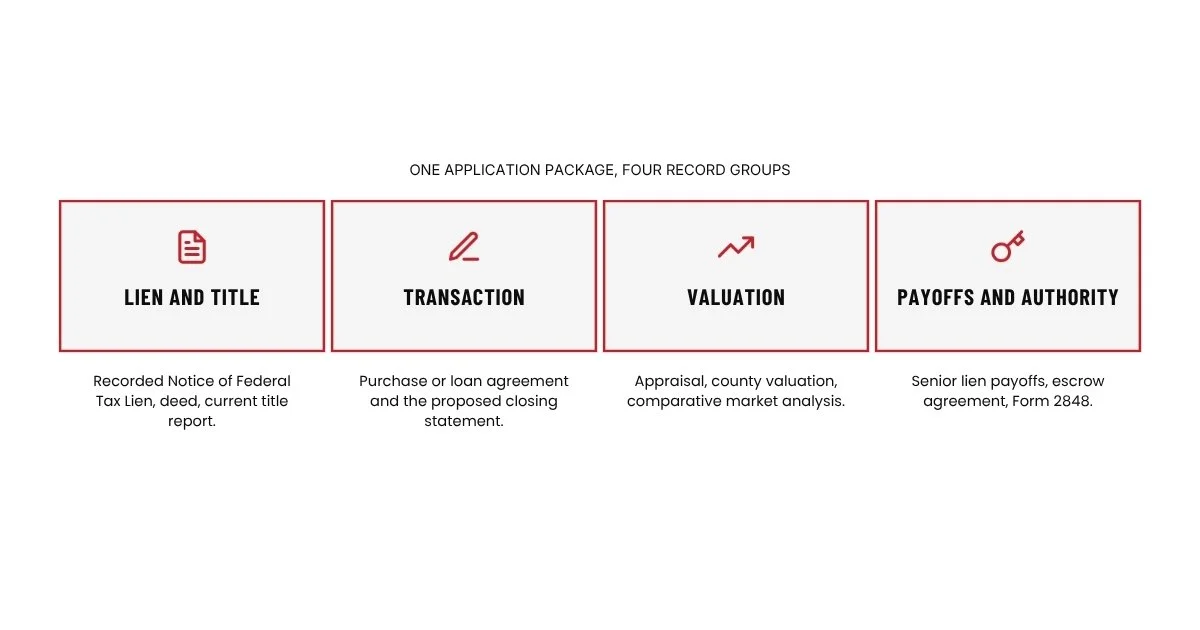
The exact documents depend on the transaction and the legal basis for the request. A discharge or subordination package may include:
• A complete copy of the recorded Notice of Federal Tax Lien.
• The deed or title showing the legal description.
• A current title report.
• A signed purchase agreement or proposed loan agreement.
• A professional appraisal.
• County property valuation.
• A comparative market analysis.
• Mortgage and senior lien payoff statements.
• A proposed settlement or closing statement.
• Documentation of anticipated commissions and closing costs.
• Information about related party transactions.
• An escrow agreement when applicable.
• A written explanation supporting the legal basis for approval.
• Form 2848 when a qualified representative will communicate with the IRS.
The IRS may request further information from the applicant, taxpayer, lender, title company, appraiser, or another party involved in the transaction.
How Early Should You Apply?

IRS Publication 783 and Publication 784 instruct applicants to submit discharge and subordination applications at least 45 days before the date the certificate is needed.
This is a recommended submission period intended to provide time for IRS review, a determination, notification, and preparation of any approved certificate. It is not a guarantee that the IRS will complete every case within 45 days.
Incomplete applications, valuation disputes, title problems, revised closing terms, missing documents, or delayed responses can extend the process.
If a closing date is approaching, the application should be prepared as early as possible. The purchase agreement, lender, escrow holder, and title company should also account for the possibility that the IRS may request changes or additional time.
How the IRS Determines Its Interest in Property
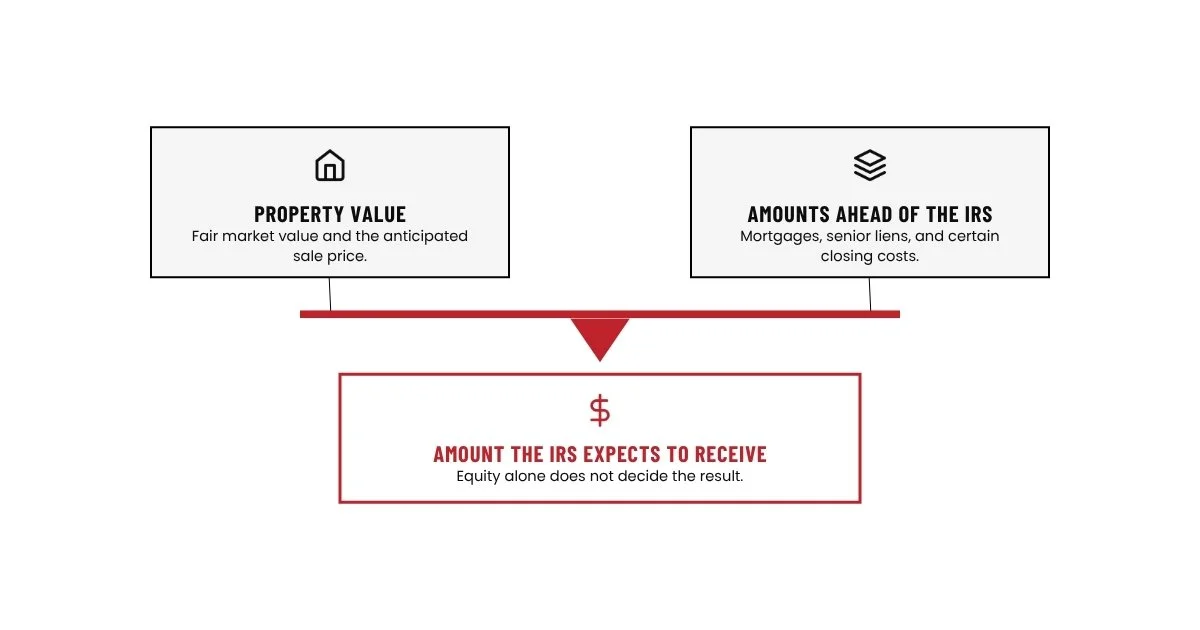
The IRS generally reviews the government’s lien position by considering:
• The fair market value of the property.
• The anticipated sale price.
• Mortgages and other valid encumbrances.
• The priority of each lien or encumbrance.
• Certain costs associated with the proposed transaction.
• The taxpayer’s ownership interest.
• The amount secured by the federal tax lien.
• The amount the IRS expects to receive.
Property equity alone does not determine the result. Lien priority, ownership, transfer history, related parties, closing costs, and the requested statutory basis may all affect the IRS analysis.
The IRS may reject a valuation or obtain additional information if it believes the stated value does not reflect the property’s fair market value.
Can You Sell a Home With an IRS Tax Lien?
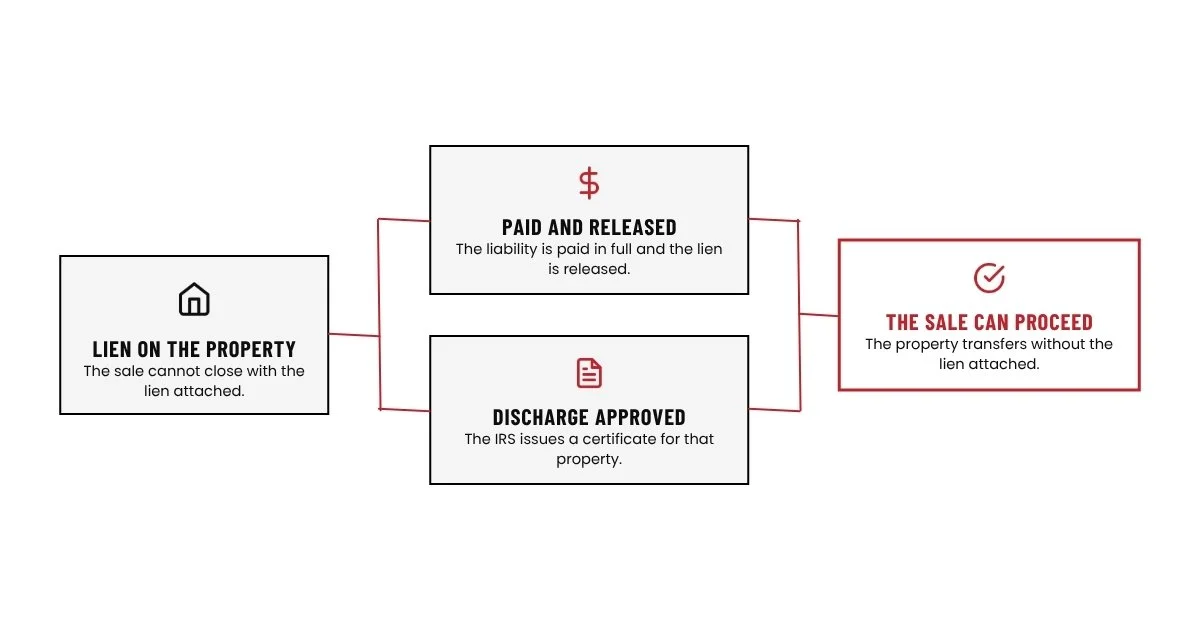
A federal tax lien does not always make a sale impossible. The transaction may proceed if the lien is fully paid and released or if the IRS approves a discharge for the property.
If there is sufficient equity, the IRS may require payment from the taxpayer’s proceeds based on the value of its interest. If senior encumbrances absorb the property’s value, a discharge may be considered under a different legal basis.
The seller should not assume that having no cash remaining after closing means the IRS has no interest. Proposed commissions, seller credits, repair allowances, related party payments, and other closing costs may receive additional review.
The certificate should generally be addressed before the transfer occurs. A pending application by itself does not remove the lien from the property.
Can You Refinance a Home With an IRS Tax Lien?
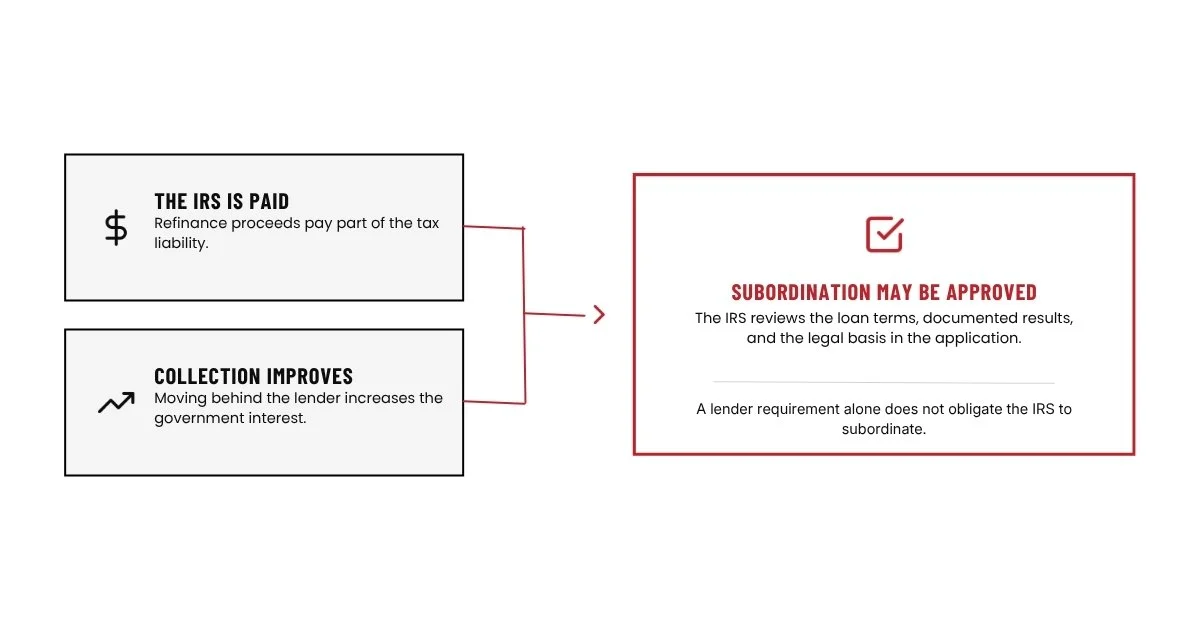
A refinance may be possible if the lender accepts its existing priority or the IRS approves a Certificate of Subordination.
The IRS may consider subordination when it receives an amount through the transaction or when moving behind the new lender is expected to improve collection.
Examples may include using refinance proceeds to make a payment toward the tax liability or reducing financing costs so that the taxpayer can make larger or more reliable payments to the IRS.
Approval depends on documented financial results and the applicable legal standard. The IRS does not have to subordinate its lien simply because a lender requires it.
What Happens to the Remaining Tax Debt?
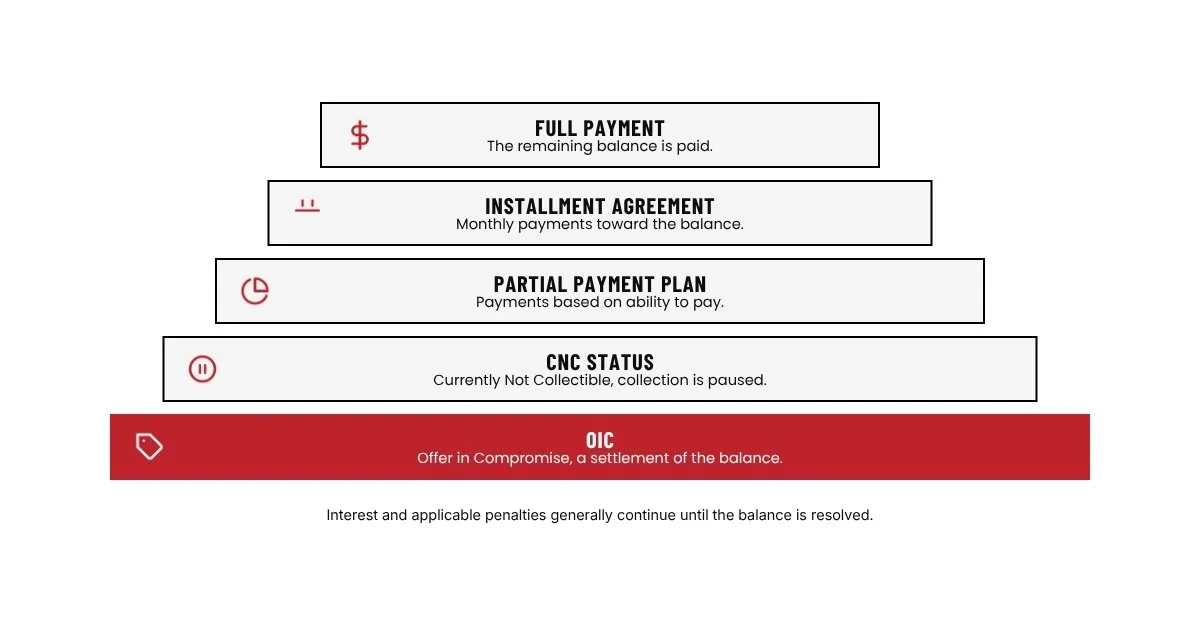
A discharge or subordination addresses a property or lien priority issue. It does not necessarily provide a complete resolution of the taxpayer’s IRS balance.
After the transaction, the taxpayer may still need to consider:
• Full payment of the remaining balance.
• An IRS installment agreement.
• A Partial Payment Installment Agreement.
• Currently Not Collectible status.
• An Offer in Compromise.
• A challenge to an incorrect assessment.
Each option has separate eligibility requirements. Interest and applicable penalties generally continue until the liability is paid or otherwise adjusted, and a lien may remain against other property.
How Semper Tax Relief Can Help
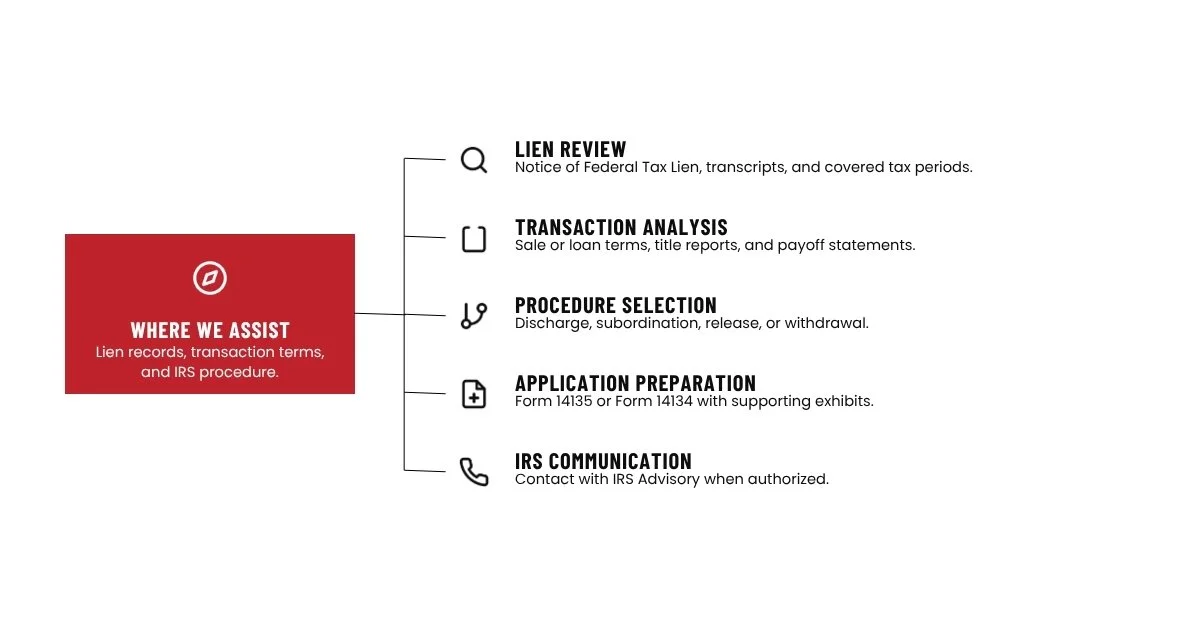
A successful lien application requires more than completing a form. The supporting records must explain the transaction, establish the relevant property values, account for lien priority, and identify the correct legal basis.
Semper Tax Relief can assist with:
• Reviewing the Notice of Federal Tax Lien.
• Obtaining and examining IRS account transcripts.
• Confirming the tax periods and liabilities covered by the lien.
• Reviewing recorded liens, deeds, title reports, and payoff statements.
• Evaluating whether discharge or subordination is the appropriate procedure.
• Identifying the legal basis for the application.
• Reviewing appraisals and other property valuations.
• Evaluating proposed sale or loan terms.
• Reviewing the preliminary closing statement.
• Preparing Form 14135 or Form 14134.
• Organizing the supporting exhibits.
• Communicating with IRS Advisory when authorized.
• Responding to requests for additional information.
• Coordinating with the taxpayer, lender, title company, escrow holder, and other professionals.
• Evaluating how the remaining tax debt may be addressed after the transaction.
The goal is to submit a complete and supportable request that allows the IRS to evaluate the proposed transaction. Approval and processing time remain subject to IRS review.
Our Tax Lien Application Process
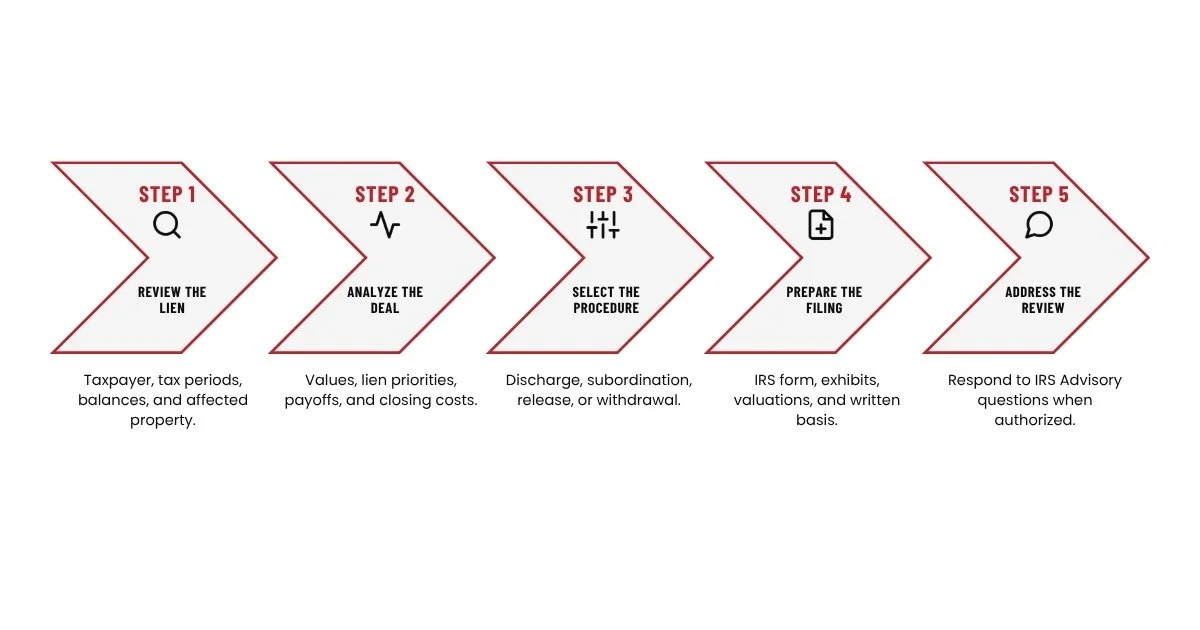
Step 1, Review the Federal Tax Lien
We identify the taxpayer, tax periods, assessment balances, filing information, and property affected by the recorded lien.
Step 2, Analyze the Proposed Transaction
We review the sale, refinance, or financing terms, including property values, lien priorities, payoff amounts, proceeds, and proposed closing costs.
Step 3, Select the Appropriate Procedure
We determine whether the transaction requires a discharge, subordination, release, withdrawal, or another lien procedure.
Step 4, Prepare the Application and Exhibits
We prepare the applicable IRS form and organize the legal description, valuation records, title report, agreements, proposed closing statement, and supporting explanation.
Step 5, Address the IRS Review
When authorized, we communicate with the assigned IRS Advisory employee, respond to questions, and provide additional documentation when appropriate.
H3: Step 6, Coordinate the Transaction
If the IRS approves the request, the certificate, required payment, and closing terms must be coordinated with the appropriate parties. Approval may include conditions that must be satisfied before or during closing.
Why Work With Semper Tax Relief?
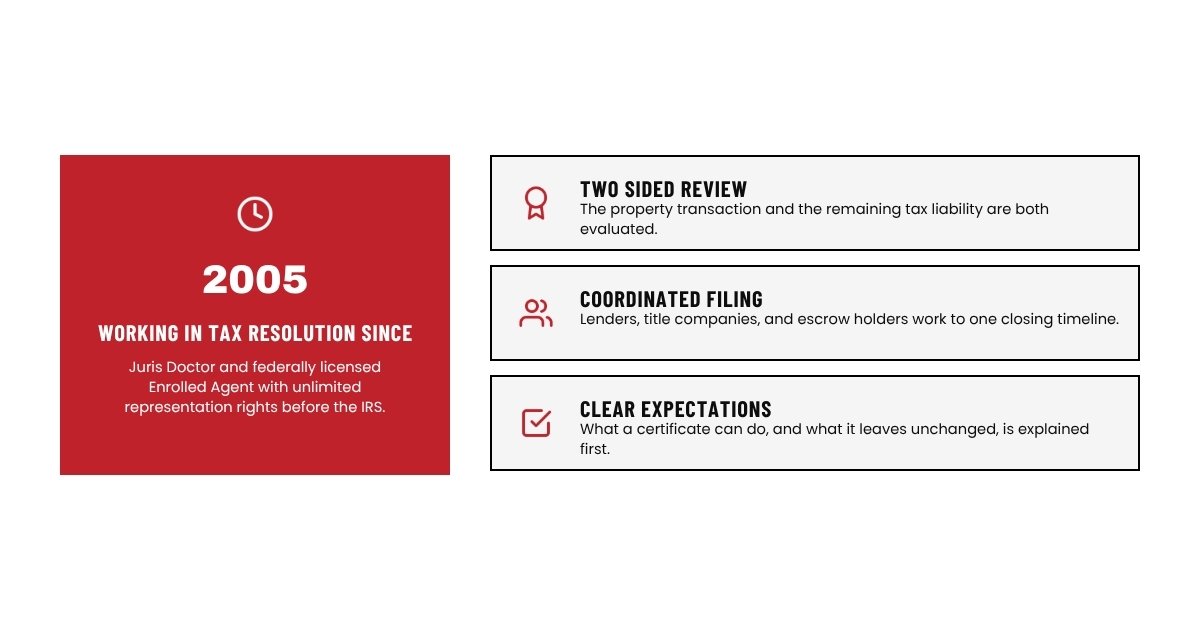
I have worked in tax resolution since 2005. I earned my Juris Doctor degree and am federally licensed as an Enrolled Agent with unlimited representation rights before the IRS.
I understand that a federal tax lien can affect more than an IRS account. It can delay a sale, prevent refinancing, disrupt business financing, and involve several parties working under a closing deadline.
My team and I evaluate both the immediate property transaction and the remaining tax liability. We explain what the requested certificate may accomplish, what it would leave unchanged, and what the IRS may require before making a determination.
We do not promise that the IRS will approve an application or meet a particular closing date. We prepare the request based on the applicable IRS procedures, transaction records, property values, and the government’s lien interest.
Frequently Asked Questions About IRS Lien Discharge and Subordination
-
No. A discharge removes the federal tax lien from the specific property identified in the certificate. Any remaining tax balance and the lien’s effect on other property may continue.
-
No. Subordination does not remove the lien. It allows a named creditor to move ahead of the IRS in priority for the property described in the certificate.
-
Form 14135 is used to apply for a Certificate of Discharge of Property from Federal Tax Lien. The correct legal basis and supporting exhibits must also be provided.
-
Form 14134 is used to apply for a Certificate of Subordination of Federal Tax Lien. The application must identify the creditor receiving priority and establish an applicable basis for approval.
-
A sale may still be possible if the IRS determines that its interest will be paid or that its interest in the property has no value under the applicable discharge provision. The IRS must review the valuation, senior encumbrances, costs, and transaction terms.
-
A lower interest rate alone does not guarantee approval. The application generally must show that the IRS will receive an amount through the transaction or that subordination will increase the government’s interest and make collection easier.
-
The IRS instructs applicants to submit the application at least 45 days before the certificate is needed. Actual processing depends on the completeness of the application, transaction details, valuation issues, and IRS review. The 45 day submission recommendation is not a guaranteed processing time.
-
An applicant may be someone other than the taxpayer, including a property owner, purchaser, or another interested party, depending on the circumstances. Special rules may apply when the property owner is not the taxpayer named on the lien.
Get Help Selling or Refinancing Property With an IRS Tax Lien

If an IRS lien is interfering with a sale, refinance, or financing transaction, early review can help identify the correct procedure and the documents the IRS will need.
Semper Tax Relief can review the lien, analyze the proposed transaction, prepare the applicable discharge or subordination application, and communicate with the IRS when authorized.