
IRS Form 56: Notice Concerning Fiduciary Relationship Explained
If you have been appointed executor, administrator, trustee, or guardian for someone else's affairs, there is a specific form the IRS wants from you before it will treat you as having the authority to act on that person's behalf: Form 56.
I want to walk through what this form actually does, when to file it,and why the timing matters more than people expect.
TLDR;
- Form 56 notifies the IRS that you are acting in a fiduciary capacity, as an executor, administrator, trustee, guardian, receiver, or conservator, for someone else.
- Filing it tells the IRS you are assuming the powers, rights, duties, and privileges of the decedent for tax purposes.
- You should file Form 56 as soon as the necessary information, including the estate's EIN, is available.
- The notice stays in effect until you file another Form 56 to notify the IRS that the fiduciary relationship has ended.
- If you are handling both the decedent's final Form 1040 and the estate's Form 1041, you generally need to think through Form 56 for each capacity you are acting in.
- Form 56 is separate from Form 1310, which deals specifically with claiming a refund on a decedent's behalf.
What Form 56 Actually Does
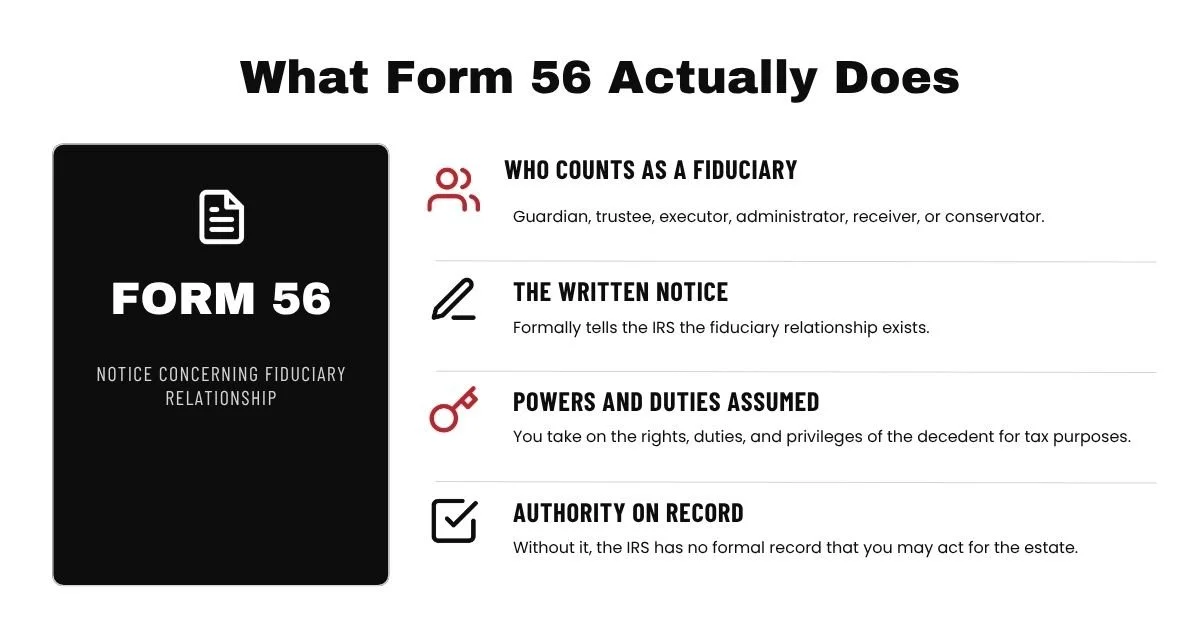
The IRS treats a fiduciary, a term that generally includes a guardian, trustee, executor, administrator, receiver, or conservator, as standing in the position of the taxpayer they represent.
Form 56 is the written notice that formally tells the IRS this relationship exists. Once filed, it notifies the IRS that you, as the fiduciary, are assuming the powers, rights, duties, and privileges of the decedent for tax administration purposes.
This matters practically because, without it on file, the IRS has no formal record that you are the person authorized to receive account information, respond to notices, or act on the estate's behalf.
When to File It
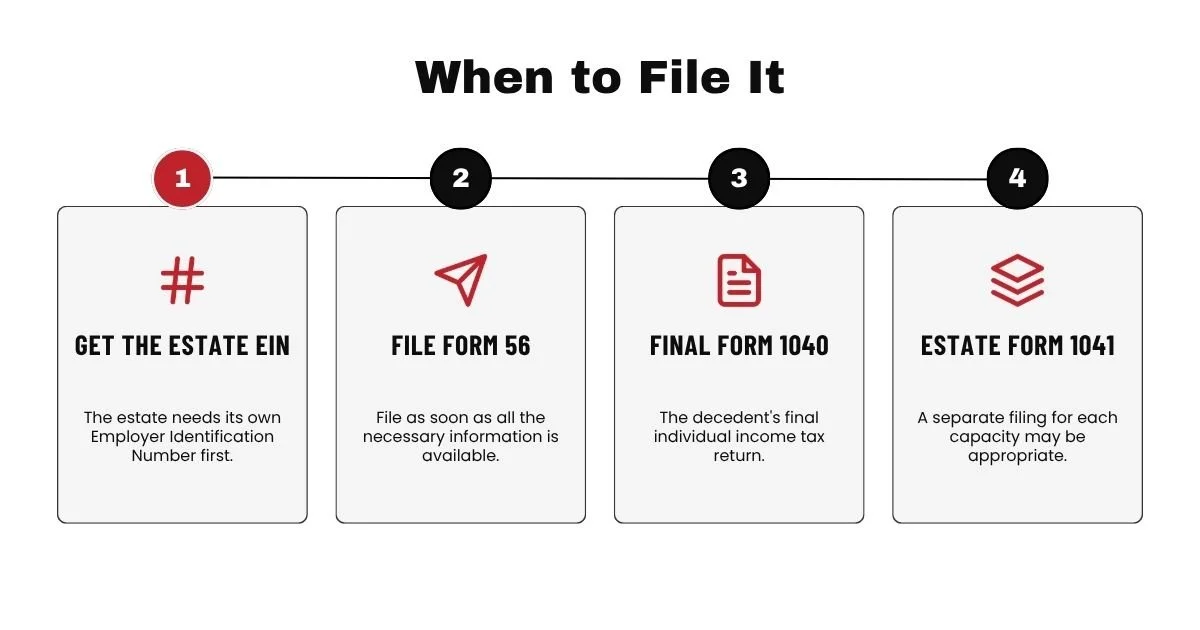
The IRS's guidance here is specific: file Form 56 as soon as all the necessary information, including the estate's Employer Identification Number, is available.
In practice, this generally means getting the EIN first. The estate needs its own EIN before Form 56 can be completed with that information, so the practical sequence is usually: obtain the EIN, then file Form 56.
Filing for More Than One Capacity
If you are filing both the decedent's final Form 1040 and a separate Form 1041 for the estate itself, you may be acting in what amounts to two related but distinct capacities, and a separate Form 56 filing for each may be appropriate.
When the Relationship Ends
Form 56 is not a one-time filing that stays relevant forever by default.
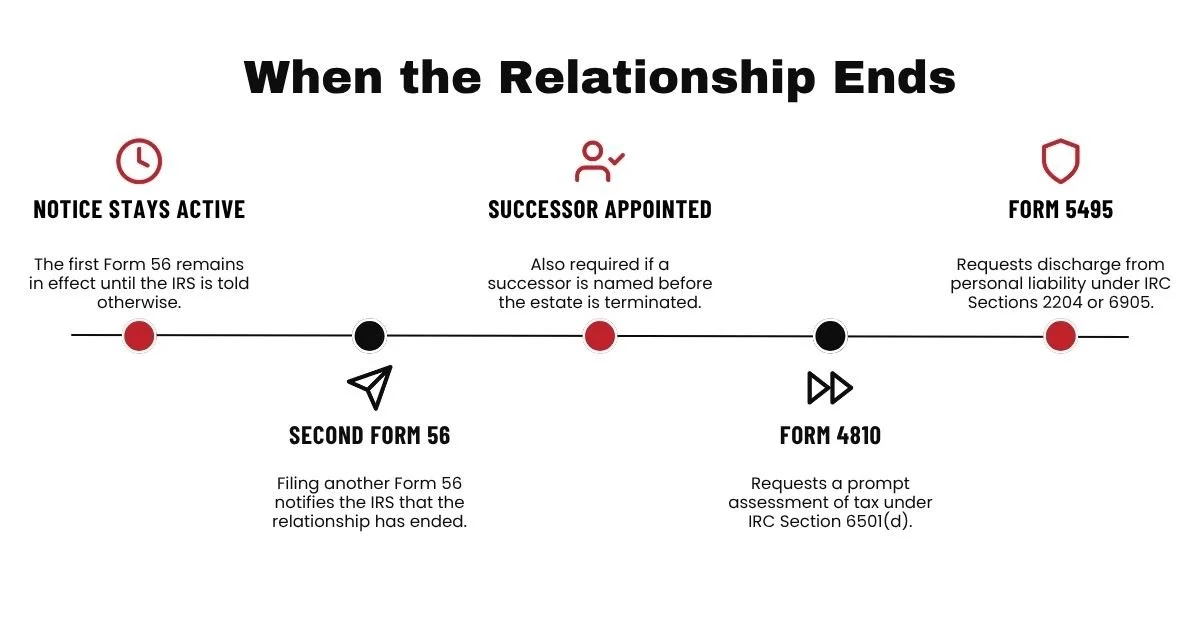
The notice remains in effect until you notify the IRS, by filing another Form 56, that your fiduciary relationship with the estate has ended.
This second filing is also required if a successor fiduciary is appointed while the estate has not yet been terminated.
At the point a fiduciary relationship is winding down, two additional forms are worth knowing by name: Form 4810, which can be used to request a prompt assessment of tax under IRC Section 6501(d), and Form 5495, which requests discharge from personal liability under IRC Sections 2204 or 6905.
A Word on Insolvent Estates
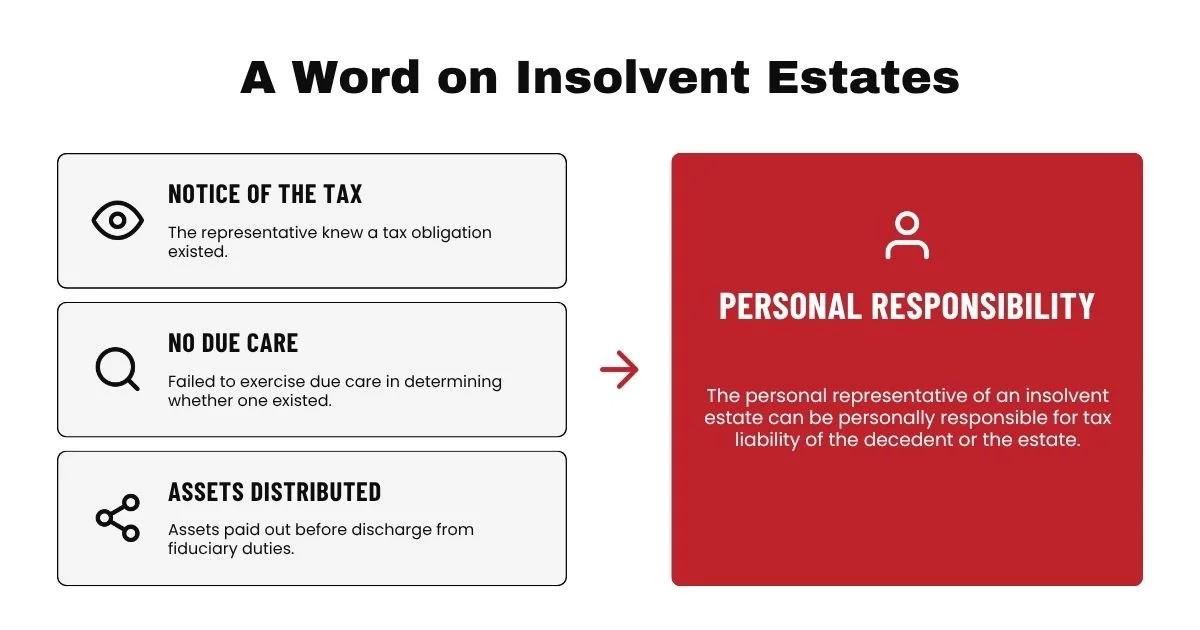
Publication 559 contains a detail worth flagging clearly rather than burying. The personal representative of an insolvent estate can be personally responsible for tax liability of the decedent or the estate if the representative had notice of the tax obligation, or failed to exercise due care in determining whether such an obligation existed, before distributing assets and before being discharged from duties.
This connects directly to a companion post in this cluster on executor personal liability, which goes into this in more depth.
I am flagging it here because it is directly relevant to the timing questions this post covers: filing Form 56 promptly, and understanding when your fiduciary duties actually end, are part of managing that exposure.
How I Approach Form 56 With Clients
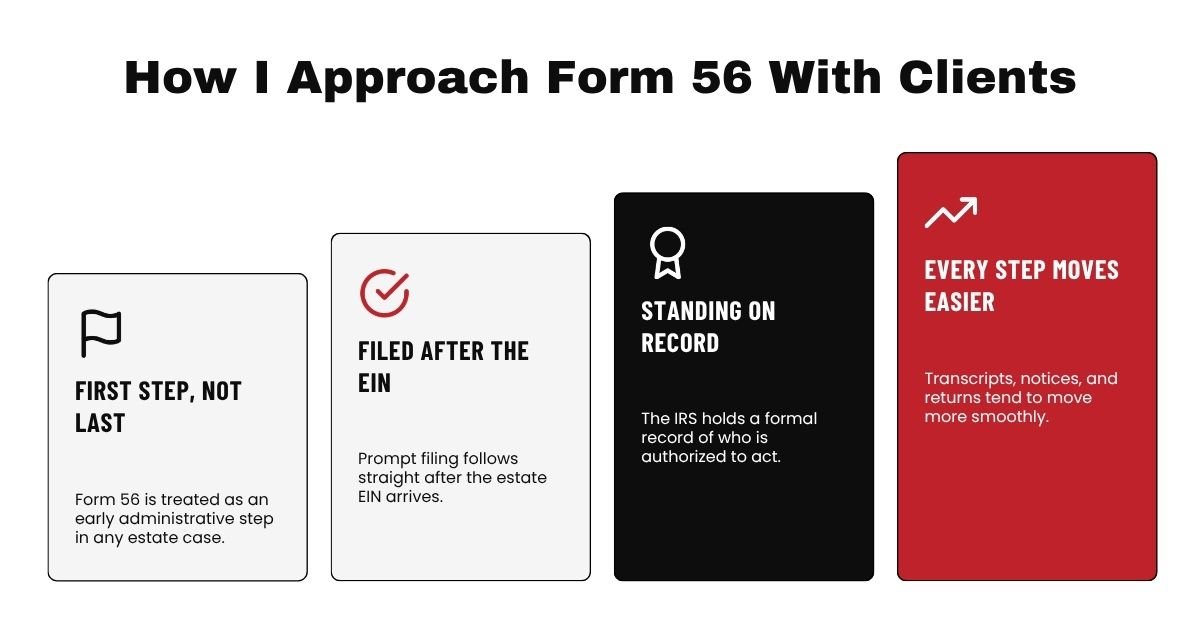
I generally treat Form 56 as one of the first administrative steps in any estate case, not an afterthought.
Getting it filed promptly, once the EIN is in hand, establishes your standing with the IRS early, which tends to make every subsequent step, requesting transcripts, responding to notices, filing returns, move more smoothly.
Frequently Asked Questions
-
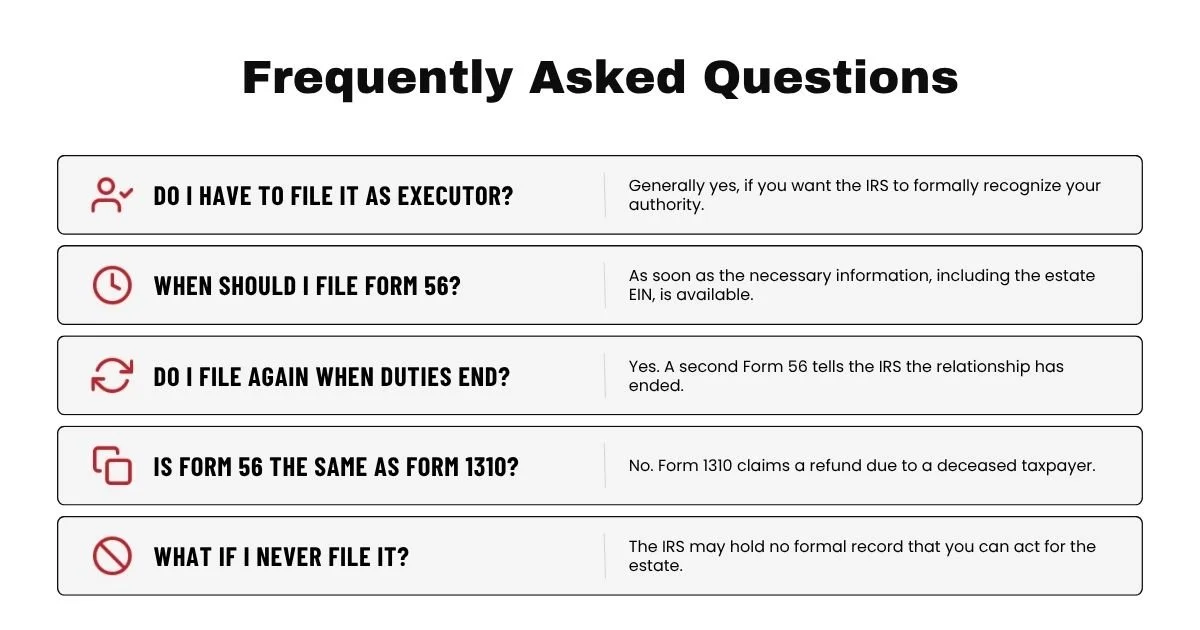
Generally, yes, if you want the IRS to formally recognize you as authorized to act on the estate's behalf for tax purposes.
-
As soon as the necessary information, including the estate's EIN, is available.
-
Yes. The notice stays in effect until you file another Form 56 to tell the IRS the fiduciary relationship has ended.
-
No. Form 1310 is used specifically to claim a refund due to a deceased taxpayer in certain circumstances. Form 56 establishes your general fiduciary authority with the IRS.
-
The IRS may not have a formal record that you are authorized to act on the estate's behalf, which can complicate getting account information or responding to notices efficiently.
Getting This Set Up Correctly From the Start
Form 56 is a small piece of paperwork with outsized practical consequences for how smoothly the rest of an estate's tax matters go.
I can help you get the EIN, complete Form 56 correctly, and get your fiduciary status formally on file with the IRS early.