

IRS Tax Relief Second Opinion
If you have already received an IRS tax relief recommendation, payment proposal, settlement quote, or professional service agreement, you may want an independent second opinion before moving forward.
An IRS tax relief second opinion examines whether the proposed strategy fits your actual tax account, financial circumstances, and collection risks. It may also identify questions that were not addressed during the first evaluation.
A second opinion does not guarantee that another option is available or that the original recommendation was wrong. Its purpose is to help you make an informed decision before committing money, signing documents, missing a deadline, or submitting a proposal to the IRS.
Do I qualify for tax relief? Find out with a free case review.
Call today: 24 Hours / 7 Days a Week or book online.
✔ Confidential ✔ No Pressure ✔ Personalized
I am Sergio Melendez, JD, EA. I earned my Juris Doctor degree and am federally licensed as an Enrolled Agent. I have worked in tax resolution since 2005.
At Semper Tax Relief, my team and I review IRS account information, financial records, proposed resolution strategies, professional service agreements, and important procedural deadlines.
When Should You Get a Tax Relief Second Opinion?
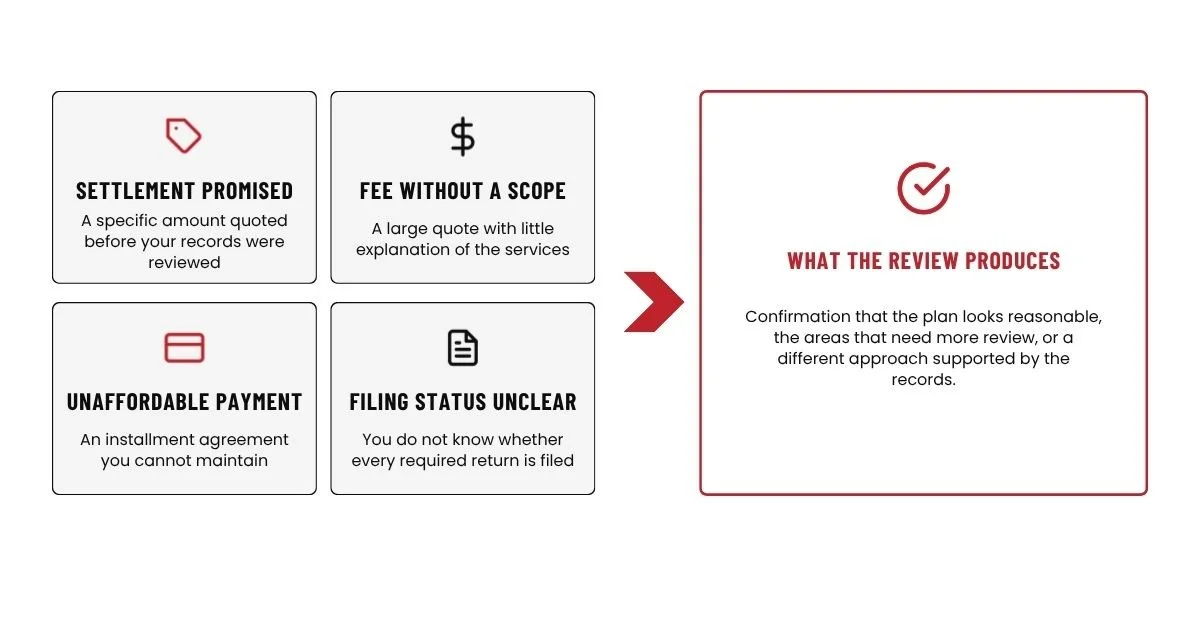
A second opinion may be helpful when you have questions about an IRS resolution recommendation or do not fully understand what a tax relief company is proposing.
Consider requesting a review when:
You were told that you qualify for an Offer in Compromise without a complete financial review.
A company promised to settle your tax debt for a specific amount before reviewing your IRS records.
You were quoted a substantial professional fee but received little explanation of the services included.
You were placed into an installment agreement that appears unaffordable.
You were told that Currently Not Collectible status would eliminate your tax debt.
You do not know whether all required tax returns have been filed.
You are unsure whether the IRS balance is correct.
You recently received a levy, lien, appeal, or collection notice.
Your case has been open for a long time without a clear status update.
You are considering changing representatives.
The proposed strategy does not address your business tax obligations.
You want to understand the advantages and limitations of more than one option.
A second opinion can confirm that the existing strategy appears reasonable, identify areas that require further review, or provide a different approach supported by the available records.
What Does an IRS Tax Relief Second Opinion Include?
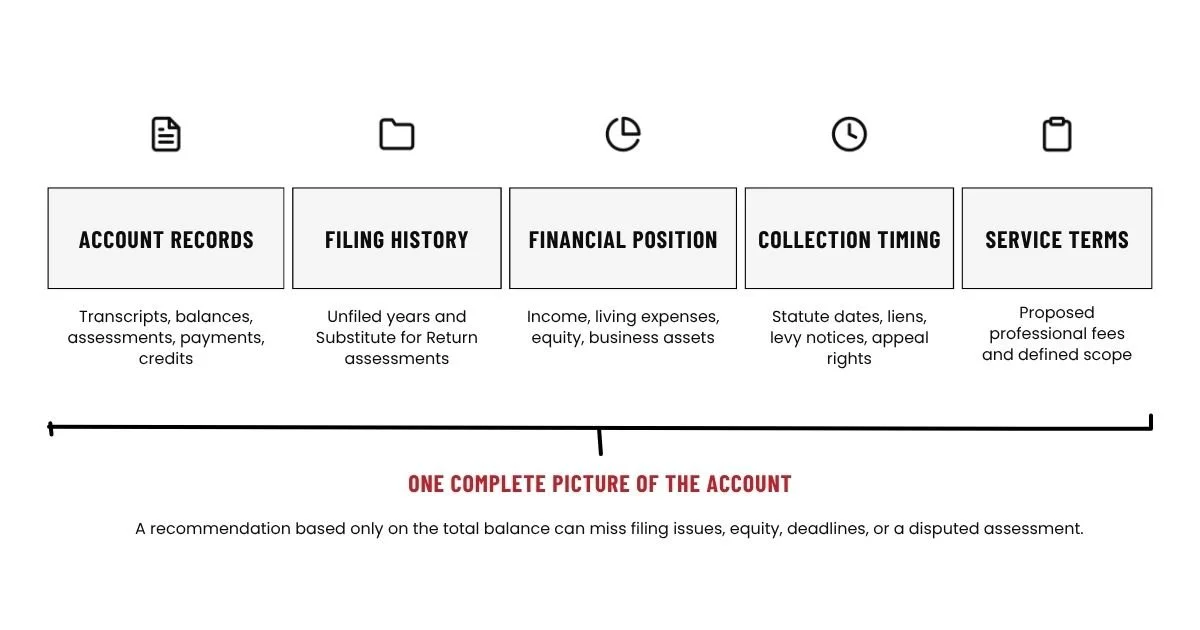
The scope depends on the complexity and status of the case. A useful second opinion should review more than the total amount owed.
The review may include:
IRS account transcripts.
Tax return transcripts.
Wage and income information.
Tax periods with balances due.
Unfiled or recently filed returns.
Substitute for Return assessments.
Audit or examination adjustments.
Penalties and accrued interest.
Payments and credits.
Existing installment agreements.
Prior Offer in Compromise submissions.
Currently Not Collectible history.
Federal tax lien filings.
Levy notices and appeal rights.
Collection Statute Expiration Dates.
Current income and necessary living expenses.
Bank accounts, investments, real estate, vehicles, and business assets.
Proposed professional fees and service terms.
Communications from the IRS or a current representative.
The review should connect the account facts to the proposed resolution. A recommendation based only on the total balance may overlook filing issues, equity, income, deadlines, enforcement risks, or a disputed assessment.
Questions a Second Opinion Should Answer
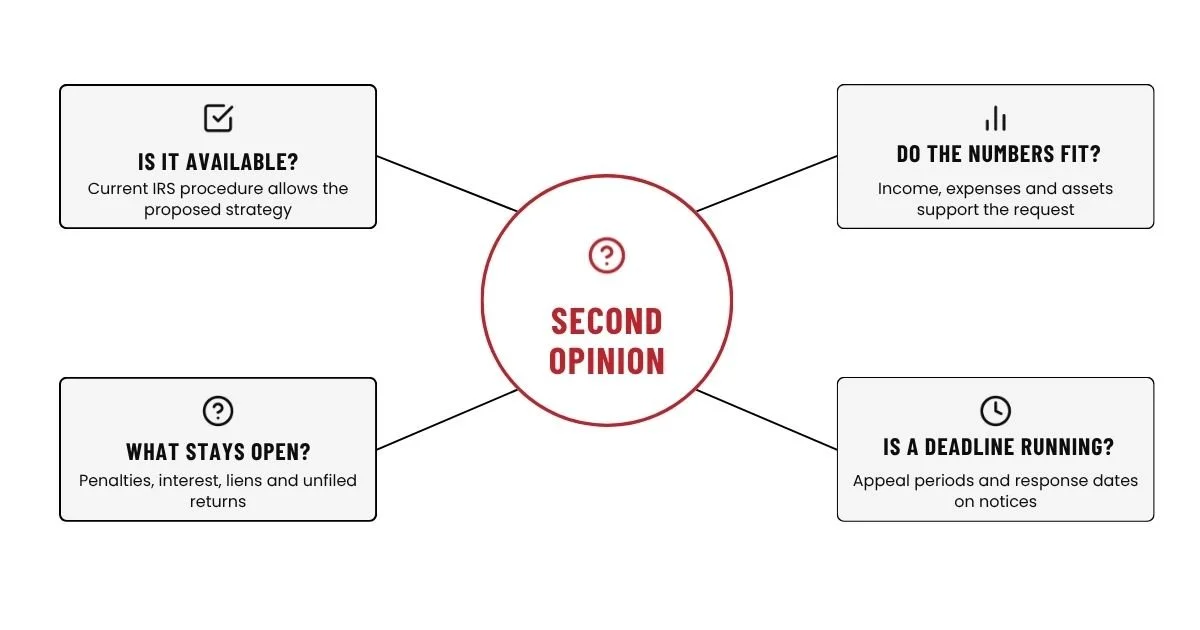
A second opinion should provide clear answers to practical questions such as:
Is the proposed strategy available under current IRS procedures?
Does the financial information appear to support the recommendation?
Have all required tax returns been filed?
Are current estimated payments or payroll tax deposits being made?
Does the taxpayer appear eligible to submit the proposed request?
What financial documents will the IRS require?
What does the proposed resolution accomplish?
What does the proposed resolution leave unresolved?
Will penalties and interest continue?
Could the IRS file a lien or pursue a levy?
Is an appeal deadline approaching?
Are there other options that should be compared?
Does the professional service agreement cover the necessary work?
What happens if the IRS rejects the request?
The result may be confirmation that the existing plan is reasonable. It may also reveal that additional records, compliance work, financial analysis, or a different procedure should be considered.
A Second Opinion on an Offer in Compromise
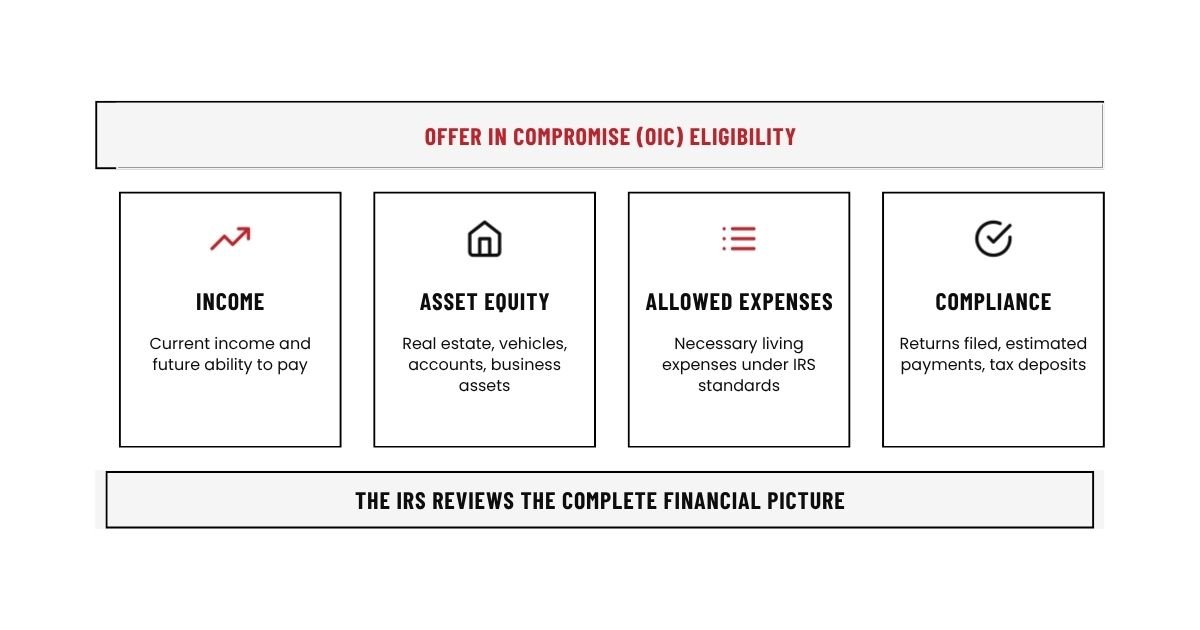
An Offer in Compromise may allow an eligible taxpayer to resolve an IRS liability for less than the full amount owed. It is not available merely because the taxpayer owes a large balance or cannot pay it immediately.
The IRS generally evaluates:
Income.
Necessary living expenses.
Bank accounts and investments.
Real estate equity.
Vehicle equity.
Business assets.
Future ability to pay.
Filing compliance.
Estimated tax payments.
Federal tax deposits for employers.
A second opinion may review whether the proposed offer amount reflects the financial information and whether the taxpayer appears eligible to apply.
It may also identify potential issues such as:
Unfiled returns.
Missing estimated payments.
Missing federal tax deposits.
Dissipated or transferred assets.
Incorrect property values.
Unverified expenses.
Excluded assets or income.
An open bankruptcy proceeding.
The ability to pay through another collection alternative.
An Offer in Compromise submission does not guarantee acceptance. The IRS may request additional records, adjust the financial analysis, require a higher offer, return the submission, or reject it.
A Second Opinion on an IRS Payment Plan
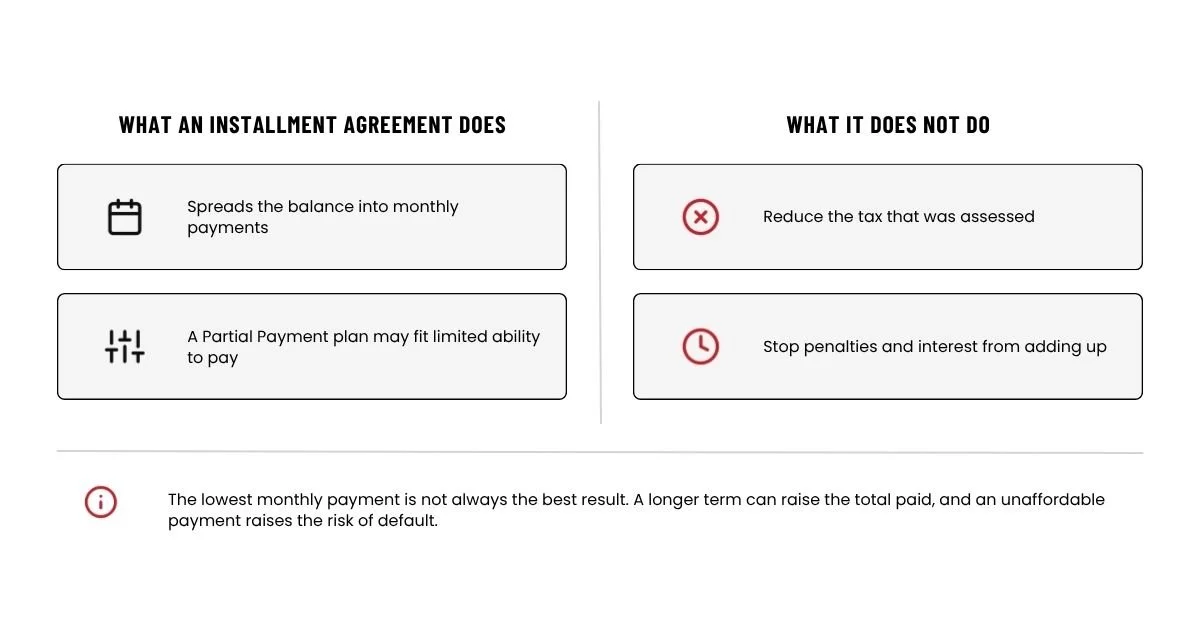
An installment agreement allows an eligible taxpayer to make monthly payments toward an IRS balance.
A payment plan does not ordinarily reduce the underlying tax, penalties, or interest. Penalties and interest generally continue while the balance remains unpaid.
A second opinion can evaluate:
Whether the proposed monthly payment appears affordable.
Whether the payment would satisfy the applicable IRS requirements.
Whether financial disclosure may be required.
Whether a federal tax lien determination may occur.
Whether direct debit is required or beneficial.
Whether a Partial Payment Installment Agreement should be considered.
Whether the proposed agreement will fully pay the balance before the collection deadline.
Whether future tax compliance can be maintained while making the payment.
The lowest monthly payment is not always the best result. A longer repayment period may increase the total amount paid because penalties and interest generally continue. An unaffordable payment may also increase the risk of default.
A Second Opinion on Currently Not Collectible Status
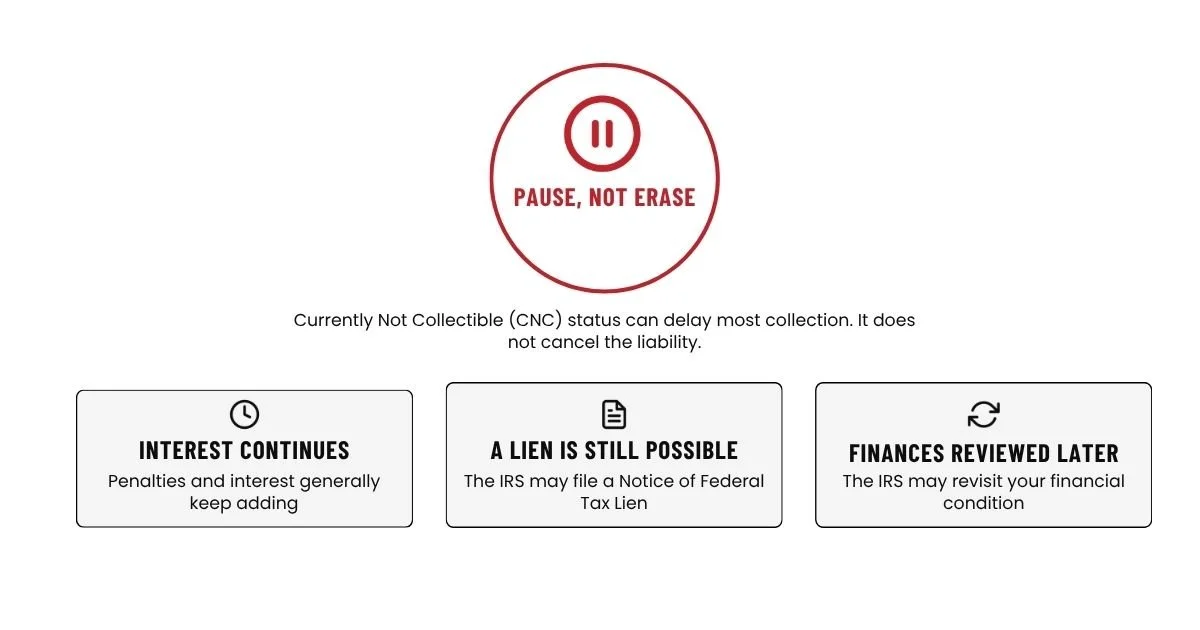
Currently Not Collectible status may temporarily delay most IRS collection activity when paying the tax debt would cause financial hardship.
This status does not forgive or cancel the liability. Penalties and interest generally continue, the IRS may file a Notice of Federal Tax Lien, and the IRS may review the taxpayer’s financial condition later.
A second opinion may examine:
Household income.
Necessary living expenses.
Available cash.
Bank accounts and investments.
Real estate and vehicle equity.
Business assets.
Current filing compliance.
Current estimated tax payments or federal tax deposits.
Whether the financial information supports a hardship request.
Whether another collection alternative should be compared.
The review may also identify expenses that require documentation or amounts the IRS could limit under its collection standards.
A Second Opinion on a Partial Payment Installment Agreement
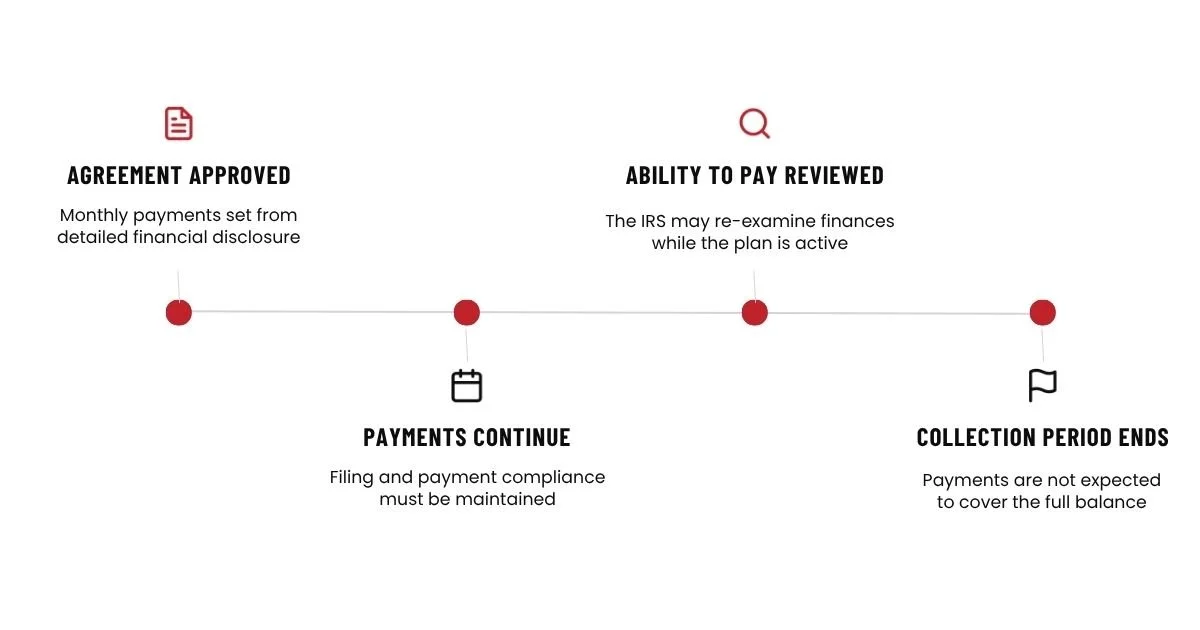
A Partial Payment Installment Agreement may allow an eligible taxpayer to make monthly payments that are not expected to pay the entire balance before the collection period expires.
The IRS may require detailed financial disclosure and may review the taxpayer’s ability to pay while the agreement remains active. The taxpayer must also remain compliant with future filing and payment obligations.
A second opinion may evaluate:
The proposed monthly payment.
Remaining collection time.
Income and allowable expenses.
Asset equity.
Potential changes in financial circumstances.
Whether the taxpayer can maintain current tax compliance.
Whether an Offer in Compromise or another option should also be considered.
A Partial Payment Installment Agreement does not automatically remove penalties, interest, or an existing federal tax lien.
A Second Opinion on Penalty Relief
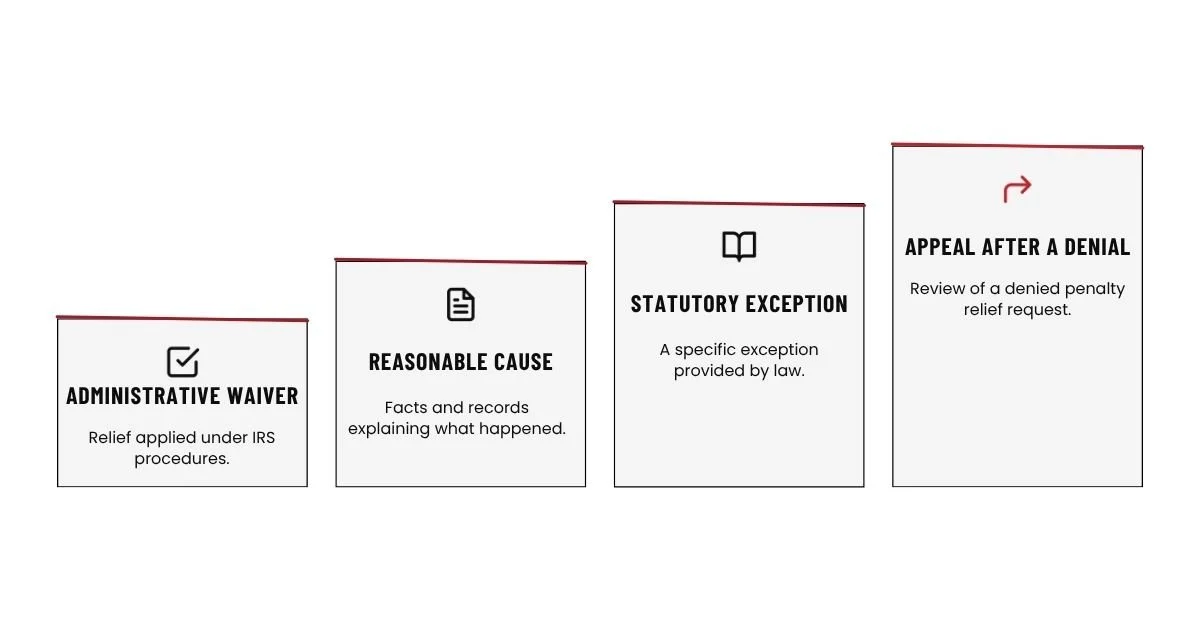
The IRS may remove certain penalties when a taxpayer meets the requirements for an administrative waiver, reasonable cause relief, a statutory exception, or another recognized basis.
A second opinion can review:
The type of penalty assessed.
The tax period involved.
Prior filing and payment compliance.
The reasons for the late filing, late payment, or deposit failure.
The timing and duration of the circumstances.
Actions taken to comply after the problem occurred.
Documents supporting the request.
Whether an appeal may be available after a denial.
Penalty relief is not based only on the size of the penalty or the taxpayer’s inability to pay. The applicable standard must be addressed with relevant facts and supporting records.
Interest generally cannot be removed simply because the taxpayer is experiencing hardship. When an underlying penalty is removed, the interest attributable to that penalty is generally adjusted.
A Second Opinion When You Disagree With the IRS Balance
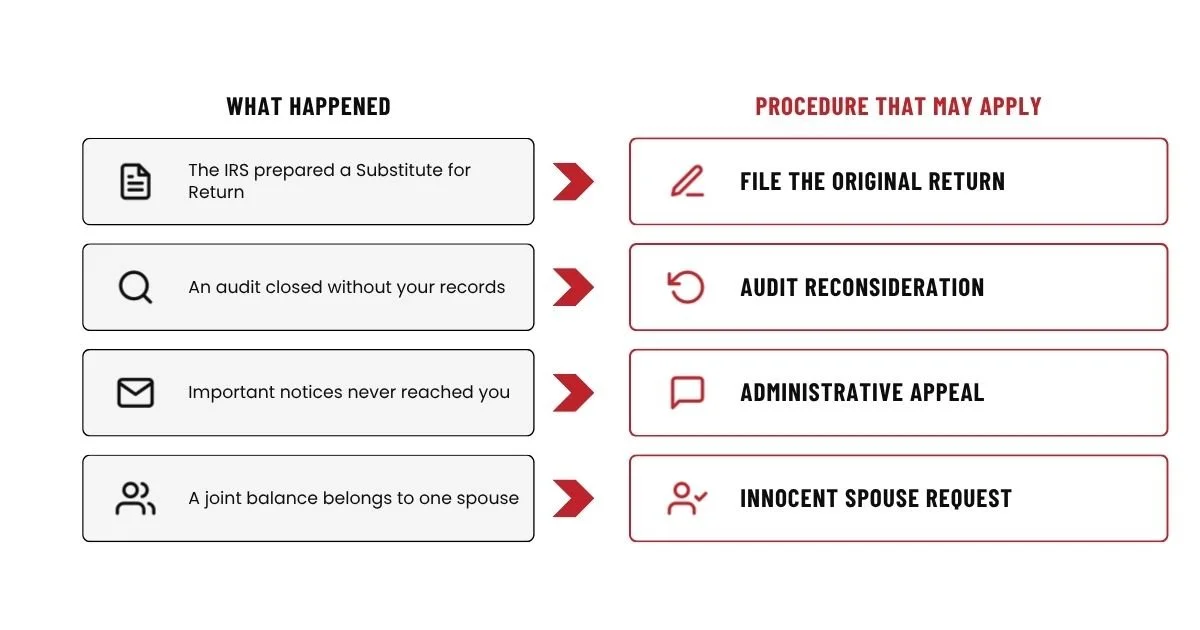
The correct strategy may involve challenging or correcting the liability instead of selecting a payment option.
A balance review may be appropriate when:
The IRS prepared a Substitute for Return.
Income was reported under the wrong taxpayer identification number.
Cost basis or business expenses were not considered.
A payment was not properly applied.
An audit was completed without available records.
The taxpayer did not receive important notices.
Identity theft affected the account.
A joint liability may involve an innocent spouse issue.
The IRS made a mathematical or processing adjustment.
A prior amended return has not been addressed.
Different procedures apply to different types of disputes. Depending on the facts, the taxpayer may need an original return, amended return, audit reconsideration request, CP2000 response, identity theft submission, innocent spouse request, administrative appeal, or refund claim.
A second opinion should also consider whether a deadline limits the available procedure.
A Second Opinion on an IRS Appeal
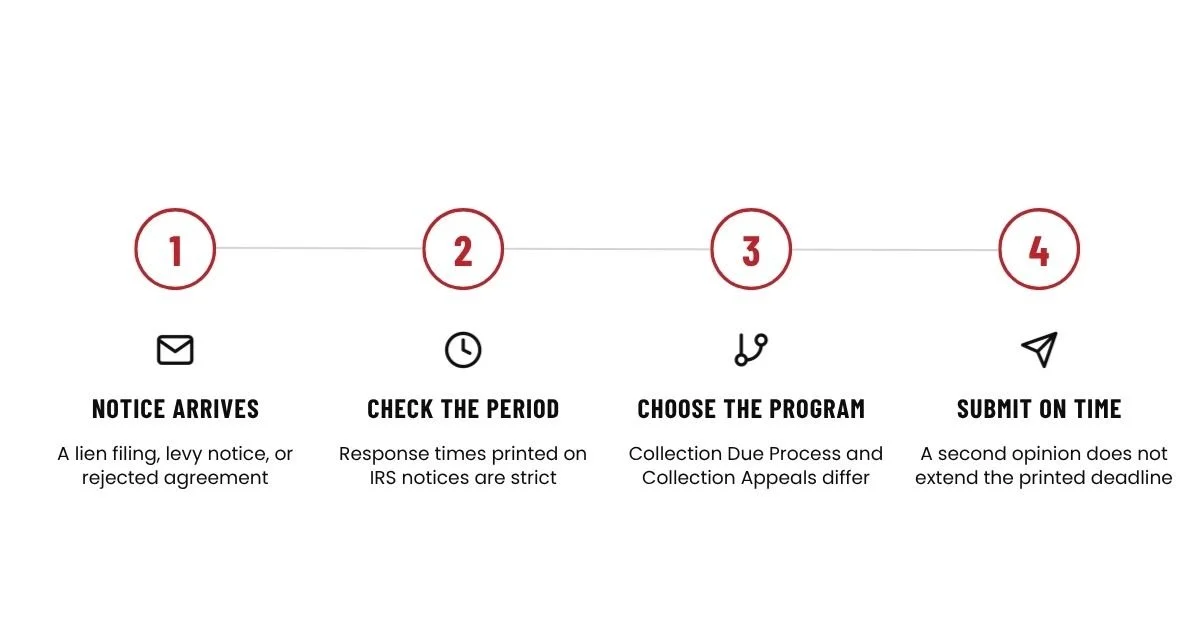
IRS notices can provide administrative appeal rights with strict response periods.
A second opinion may be helpful when you received:
A Notice of Federal Tax Lien filing.
A Final Notice of Intent to Levy and Notice of Your Right to a Hearing.
A proposed or completed levy action.
A rejected, modified, or terminated installment agreement.
A rejected Offer in Compromise.
An examination report or proposed tax adjustment.
A denial of penalty relief.
The Collection Due Process program and the Collection Appeals Program serve different purposes and provide different rights. Selecting one procedure may affect which issues can be raised later.
A second opinion does not extend the deadline printed on an IRS notice. If a response period is running, the notice should be reviewed immediately.
Reviewing a Tax Relief Company’s Service Agreement
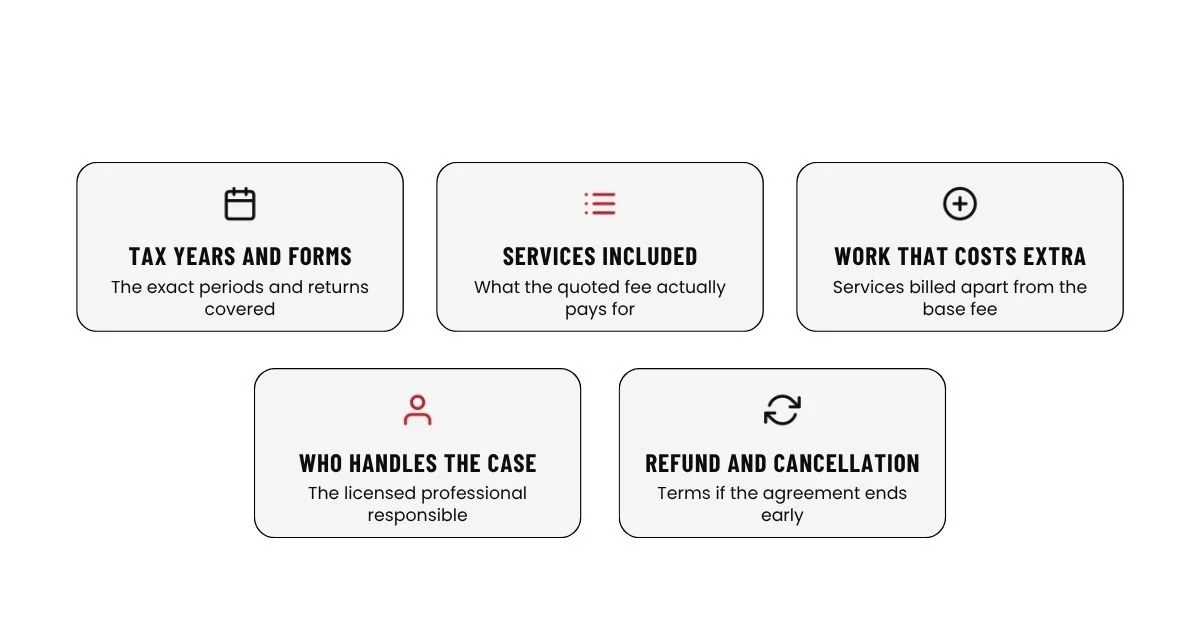
A professional service agreement should explain the work that will be performed and the limits of the representation.
Before signing or continuing with an agreement, consider whether it clearly identifies:
The taxpayer or business being represented.
The tax years and tax forms covered.
The specific services included.
Services that require an additional fee.
The professional responsible for the case.
How case updates will be provided.
The client’s responsibility to provide records.
The refund or cancellation terms.
Whether tax return preparation is included.
Whether appeal work is included.
Whether representation continues after an IRS rejection.
Whether state tax matters are included.
A low initial fee may cover only an investigation and not the actual resolution work. A larger fee may be reasonable for a complex case but should be connected to a defined scope of services.
A second opinion can help identify questions to ask before signing, but it does not replace a legal review of contractual rights when a dispute already exists.
Warning Signs That Deserve Additional Review
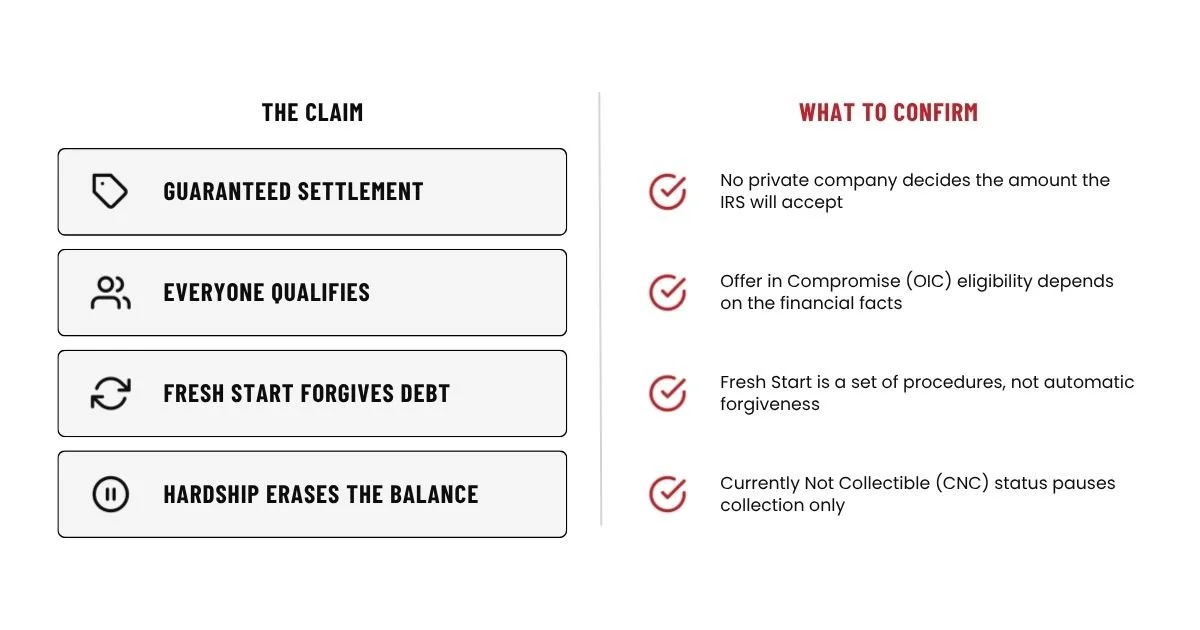
Some marketing claims should be examined carefully before you pay a fee or authorize representation.
Warning signs may include:
A guaranteed settlement amount before financial records are reviewed.
A promise that everyone qualifies for an Offer in Compromise.
Statements that the IRS Fresh Start initiative automatically forgives tax debt.
A claim that Currently Not Collectible status permanently eliminates the balance.
A demand for immediate payment before the services are explained.
Refusal to identify the licensed professional responsible for the case.
Advice to ignore IRS correspondence.
A recommendation that does not address unfiled returns or current tax obligations.
A proposal based only on the amount owed.
No discussion of assets, income, expenses, or collection deadlines.
A promise that an application will automatically stop every IRS collection action.
These signs do not automatically prove misconduct. They indicate that the recommendation, agreement, and underlying account should be reviewed carefully.
What If You Already Hired Another Tax Relief Company?
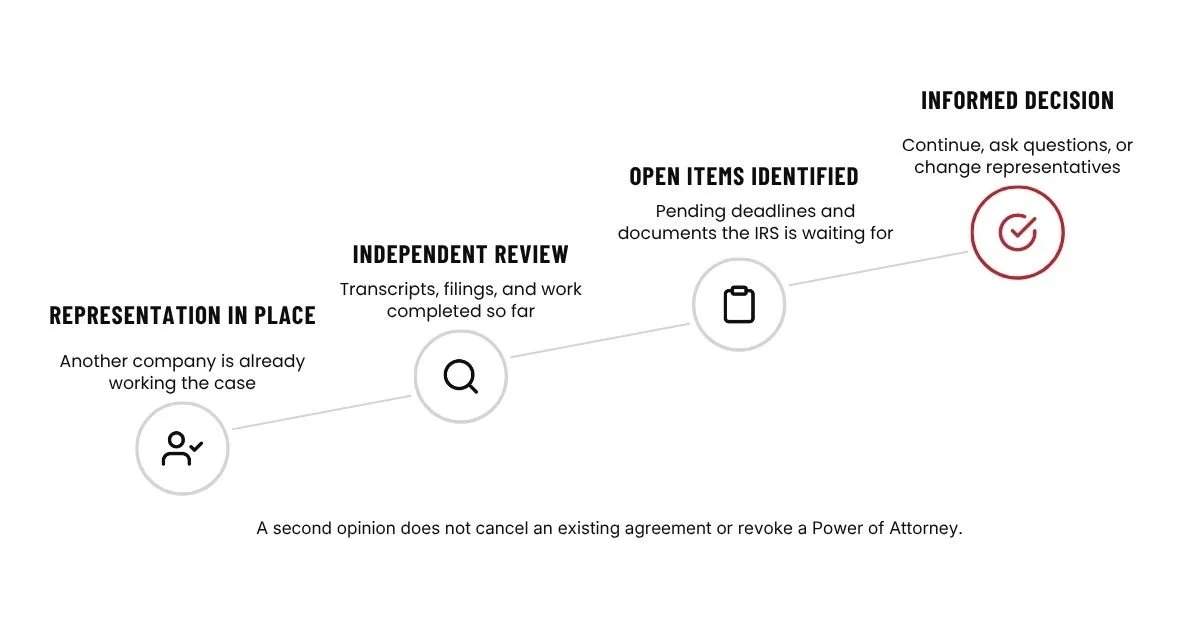
You can request a second opinion while another representative is working on your case.
Before changing representation, it is helpful to determine:
What work has already been completed.
Which IRS transcripts have been obtained.
Whether a financial statement was prepared.
Whether any application or appeal was submitted.
Which deadlines are pending.
Whether the IRS is waiting for documents.
Whether the current representative has negotiated a deadline or hold.
What fees have been earned or remain unpaid.
Which original records are held by the current company.
Obtaining a second opinion does not automatically cancel an existing service agreement or revoke a Power of Attorney. Those steps must be handled separately if you decide to change representatives.
Changing representation during an active appeal, examination, or collection deadline should be coordinated carefully to avoid missed communications or incomplete submissions.
What Documents Should You Provide for a Second Opinion?
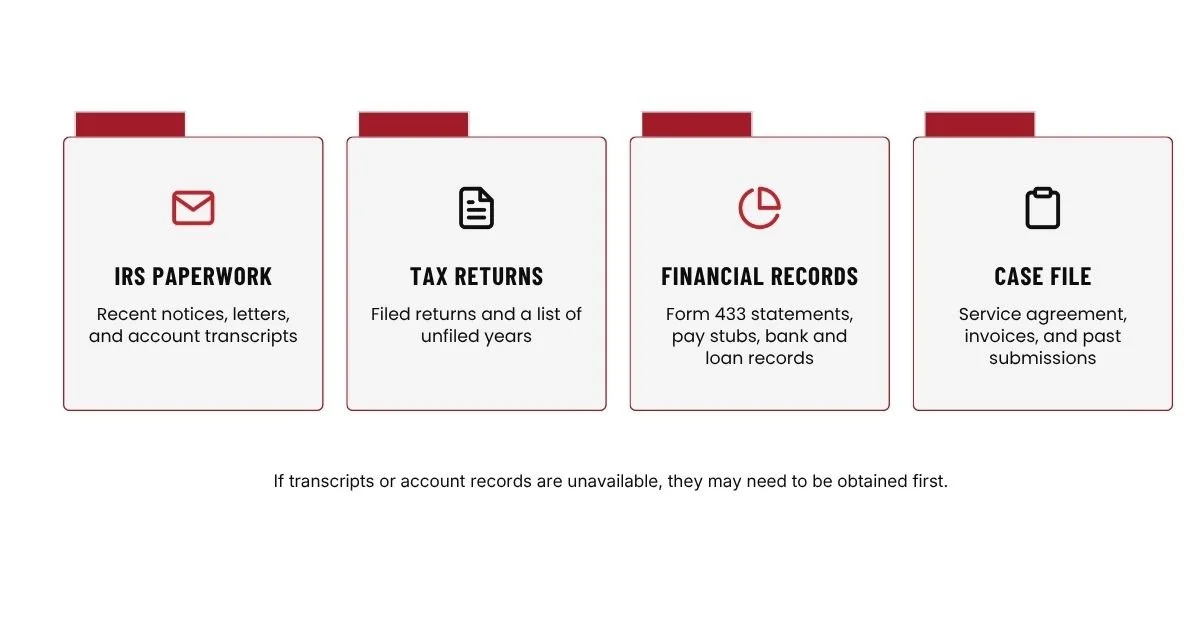
The following records may help produce a more complete review:
Recent IRS notices and letters.
IRS account transcripts.
Filed tax returns.
A list of unfiled tax years.
Form 433 documents or other financial statements.
Recent pay statements.
Profit and loss statements.
Bank and investment account statements.
Mortgage and vehicle loan statements.
Property valuation records.
Prior Offer in Compromise documents.
Existing installment agreement terms.
Appeal requests and decisions.
The current professional service agreement.
Invoices and payment records.
Emails or written case updates from the existing representative.
Copies of documents submitted to the IRS.
If transcripts or account records are unavailable, they may need to be obtained before a complete recommendation can be made.
How Semper Tax Relief Reviews a Proposed Resolution
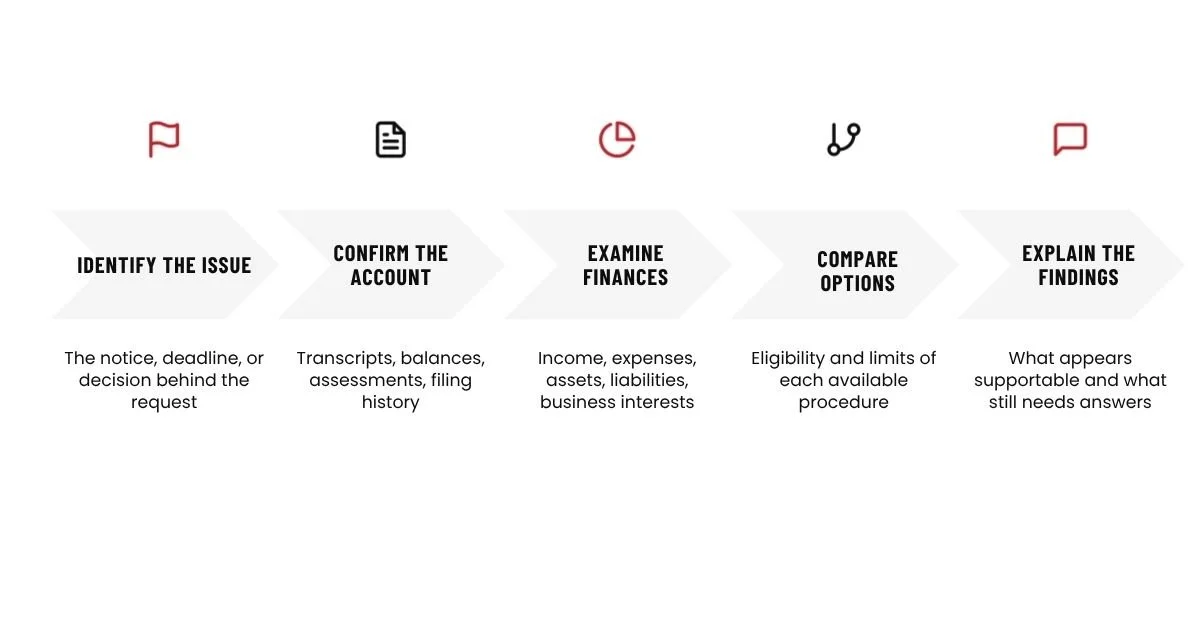
Step 1, Identify the Immediate Issue
We review the notice, pending deadline, collection action, or decision that caused you to request a second opinion.
Step 2, Confirm the IRS Account
When authorized, we review available IRS transcripts, balances, tax periods, assessments, payments, filing history, and collection information.
Step 3, Examine Financial Information
We evaluate income, necessary expenses, assets, liabilities, and business interests when they affect the proposed resolution.
Step 4, Review the Existing Recommendation
We examine what was proposed, why it was recommended, what services are included, and which assumptions support the strategy.
Step 5, Compare Available Options
We compare the proposed resolution with other potentially available procedures, including their eligibility requirements and limitations.
Step 6, Explain the Findings
We explain whether the current approach appears supportable, what additional information is needed, and which questions should be addressed before you proceed.
A second opinion may confirm the original plan. It does not require you to change representatives or hire Semper Tax Relief for further services.
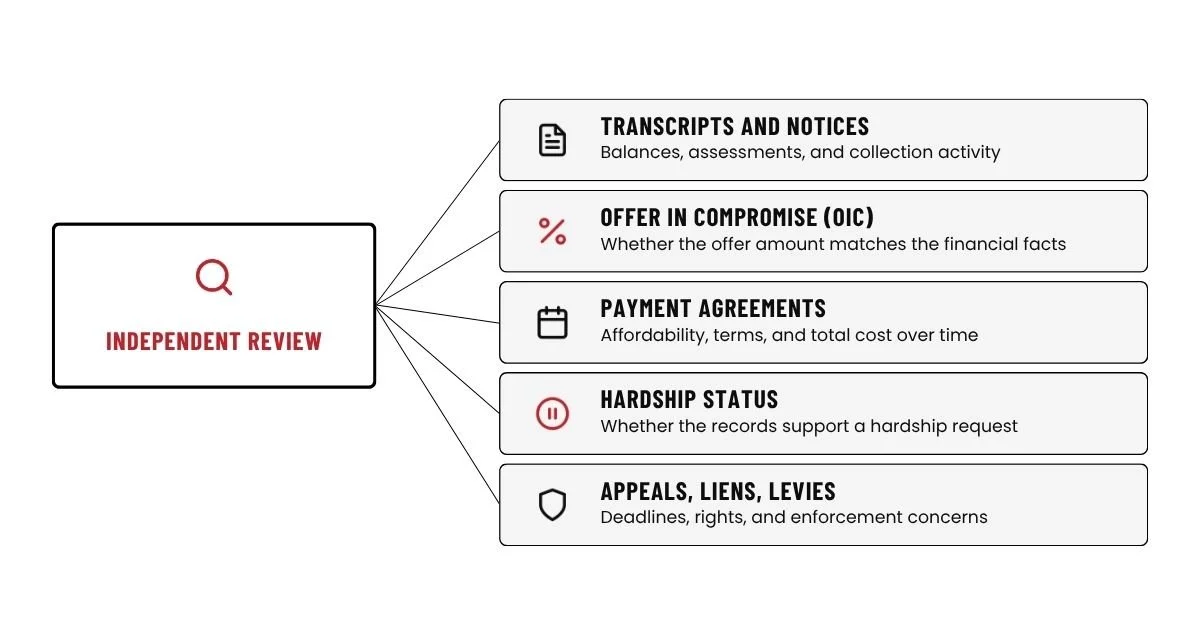
How Semper Tax Relief Can Help
Semper Tax Relief can provide an independent review of an existing or proposed IRS tax resolution strategy.
Our review may include:
Examining IRS transcripts and notices.
Identifying unresolved filing requirements.
Reviewing a proposed Offer in Compromise.
Evaluating an existing or proposed installment agreement.
Reviewing a hardship or Currently Not Collectible recommendation.
Evaluating a Partial Payment Installment Agreement.
Reviewing penalty relief requests.
Identifying liability disputes or correction procedures.
Reviewing collection appeal options.
Evaluating federal tax lien and levy concerns.
Reviewing the tax related scope of a professional service agreement.
Comparing potential IRS collection alternatives.
Identifying missing documents or unsupported assumptions.
Explaining the practical next steps.
The purpose is to give you a clearer understanding of the account and the proposed strategy. IRS decisions remain subject to applicable law, procedures, documentation, eligibility, and agency discretion.
Why Work With Semper Tax Relief?
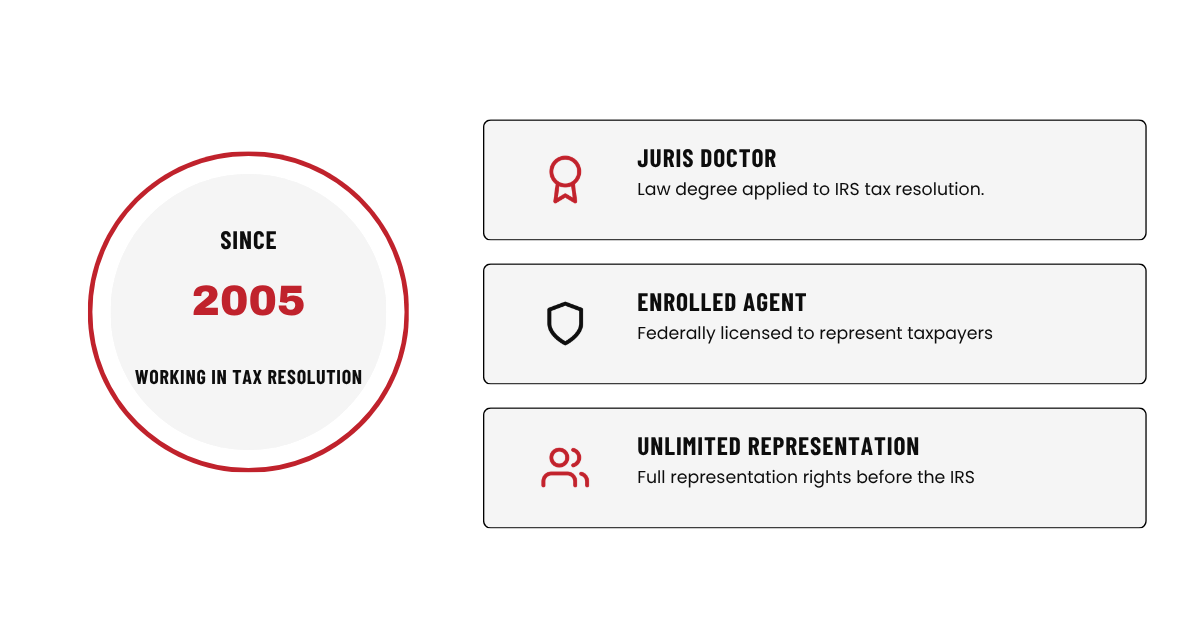
I have worked in tax resolution since 2005. I earned my Juris Doctor degree and am federally licensed as an Enrolled Agent with unlimited representation rights before the IRS.
I review tax relief recommendations by connecting the proposed strategy to the IRS account, financial records, collection deadlines, and procedural requirements.
I will not assume that the prior recommendation is wrong. If the existing strategy appears appropriate, I will explain why. If important issues were missed, I will identify them and explain which alternatives may deserve consideration.
The goal is to help you make a better informed decision before spending additional money or submitting a proposal that may not fit your circumstances.
Frequently Asked Questions About IRS Tax Relief Second Opinions
-
Yes. You may have another qualified professional review the case while you are represented.
The review does not automatically cancel your existing agreement or revoke the current Power of Attorney.
-
No. Requesting a second opinion does not suspend collection or extend a response deadline.
Any active notice, levy warning, appeal period, or document request must still be addressed through the appropriate procedure.
-
A preliminary assessment may identify whether an offer appears worth considering, but a reliable evaluation generally requires IRS account information and a review of income, expenses, assets, filing compliance, and current payment obligations. The IRS makes the final determination.
-
An Offer in Compromise cannot be guaranteed by a private company.
The IRS evaluates eligibility, financial information, supporting documents, and the amount it believes can reasonably be collected.
-
Not necessarily. The review may identify another payment amount or resolution option, but the result depends on IRS rules, financial information, remaining collection time, and the type of agreement involved.
-
The review can compare notices, transcripts, tax returns, assessments, payments, and account activity. Some disputes require additional records or a separate IRS correction, reconsideration, appeal, or refund procedure.
-
No. A second opinion does not require you to hire Semper Tax Relief for ongoing representation.
You may use the findings to ask your existing representative questions or decide what you want to do next.
-
Request the review as soon as possible if an IRS notice contains a deadline. A second opinion does not extend that deadline, and the time available may affect which procedural rights remain available.
Get an Independent Review of Your IRS Tax Relief Plan
Before you agree to a payment, submit an Offer in Compromise, sign a service agreement, or change representatives, make sure you understand the proposed strategy.
Semper Tax Relief can review your IRS account, financial circumstances, existing recommendation, and potential alternatives. You will receive a direct explanation of what appears supportable, what remains uncertain, and which next steps may be appropriate.
Speak with Sergio Melendez, JD, EA, about your IRS account and the resolution plan you are considering.