

California SMLLC Tax Debt Relief
A California single member LLC can owe the Franchise Tax Board even when the business is treated as a disregarded entity for federal income tax purposes.
That distinction causes a lot of confusion.
For federal income tax purposes, an individually owned disregarded SMLLC commonly reports its business activity on the owner's Form 1040, often through Schedule C.
California still generally requires the LLC itself to file Form 568 and can separately charge the LLC annual tax and applicable LLC fee.
That means one business can have several tax problems at the same time:
The LLC owes the California $800 annual tax
The LLC owes an additional California LLC fee
Form 568 returns are missing
The individual owner owes California personal income tax from the business activity
The LLC has penalties and interest
The FTB has started collection
The LLC has been suspended
I help California SMLLC owners separate those issues, determine what the FTB account actually shows, get required filings current, and evaluate the payment or settlement procedures that may be available.
Do I qualify for tax relief? Find out with a free case review.
Call today: 24 Hours / 7 Days a Week or book online.
✔ Confidential ✔ No Pressure ✔ Personalized
I am Sergio Melendez, JD, EA. I have worked in the tax profession since 2005 and represent taxpayers in federal and California tax matters.
No particular FTB payment plan, Offer in Compromise, penalty relief, or collection result is automatic.
Who We Help With California SMLLC Tax Debt
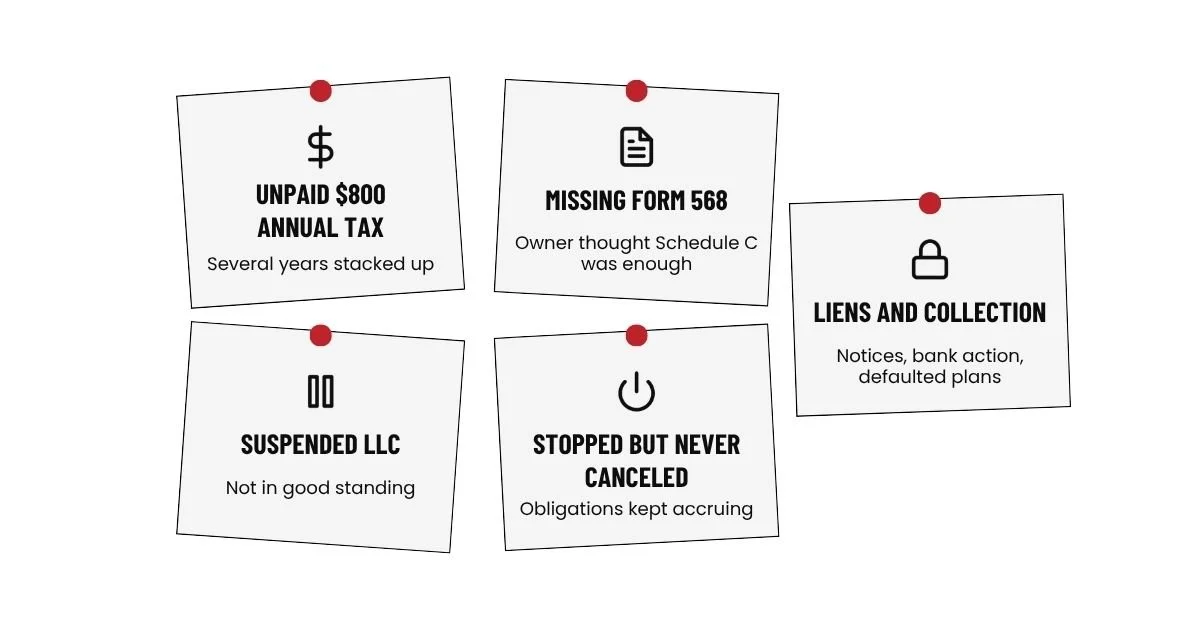
This service is for owners of California single member LLCs dealing with unpaid Franchise Tax Board liabilities.
Common situations include:
Several years of unpaid $800 annual LLC tax
Missing Form 568 returns
California LLC fees that were never paid
Penalties and interest
FTB collection notices
State tax liens
Bank collection activity
A payment plan that defaulted
An LLC that stopped operating but was never properly canceled
A suspended SMLLC
An owner who thought Schedule C was the only required tax filing
An LLC that changed tax classification
An LLC with both federal and California tax problems
Before proposing a resolution, I first determine which liabilities belong to the LLC and which belong to the individual owner.
Why a Single Member LLC Can Owe California Tax Separately From Its Owner

California generally follows the federal classification of a single member LLC as a disregarded entity when that classification applies.
But California does not disregard the LLC for every tax purpose.
A California SMLLC can still have its own obligations to:
File Form 568
Pay the annual LLC tax
Pay the LLC fee when applicable
Those obligations are separate from the owner's personal California income tax return.
Federal Schedule C Does Not Replace California Form 568
For an individually owned disregarded SMLLC, the business income and expenses may generally appear on Schedule C of the owner's federal Form 1040.
California still generally requires a separate Form 568 for the LLC.
Filing the owner's Form 540 does not automatically satisfy the LLC's Form 568 requirement.
The Owner Can Owe Personal Income Tax Too
The LLC annual tax and LLC fee are entity level California obligations.
The owner may separately owe California personal income tax on the business income reported through the owner's return.
That means paying one account does not necessarily satisfy the other.
I review both accounts when the tax problem involves a disregarded SMLLC.
The California $800 Annual LLC Tax in 2026
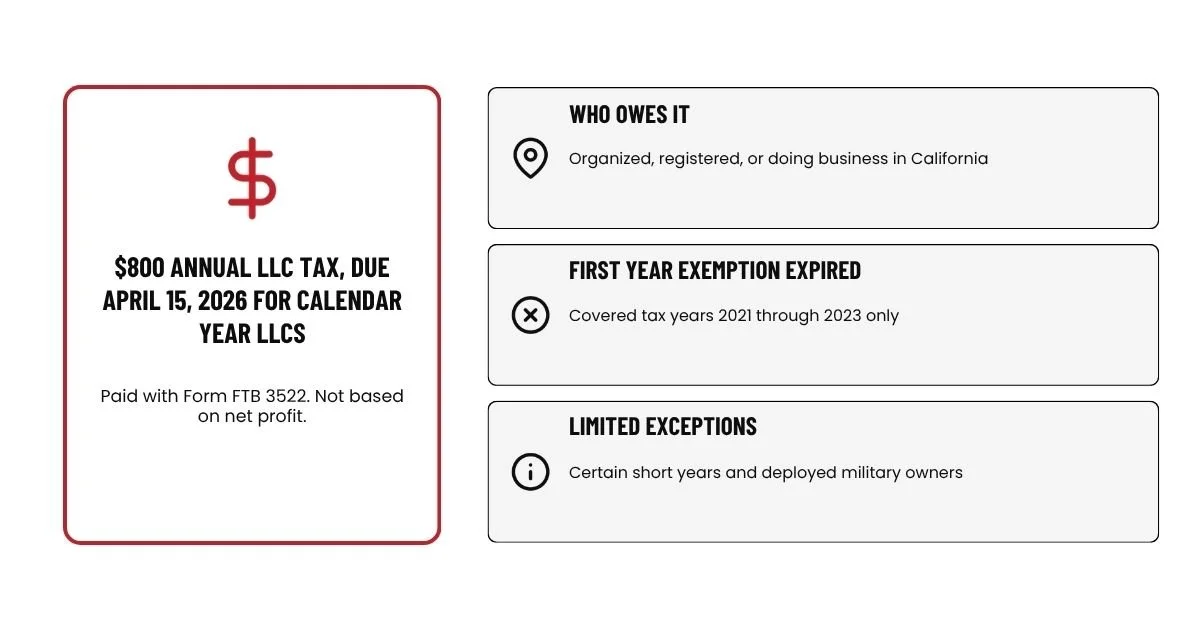
California generally imposes an $800 annual tax on an LLC that is:
Organized in California
Registered with the California Secretary of State
Doing business in California
For a calendar year LLC, the annual tax is generally due by the 15th day of the fourth month after the beginning of the taxable year.
For 2026, that generally means April 15, 2026 for a calendar year SMLLC.
Form FTB 3522 is used for the annual LLC tax payment.
The Temporary First Year Exemption Has Expired
California previously provided a temporary first taxable year exemption for certain LLCs for tax years beginning on or after January 1, 2021 and before January 1, 2024.
That temporary provision has expired.
A new qualifying California LLC formed in 2026 should not assume its first $800 annual tax is automatically waived.
No Profit Does Not Automatically Eliminate the $800 Tax
The annual tax is not calculated from net business profit.
An LLC can potentially owe the annual tax even when:
The business lost money
Revenue was low
No owner distribution was made
The business stopped operating during the year
Different exceptions can apply, including certain short taxable years and qualifying deployed military owned businesses.
Those exceptions should be reviewed before assuming the annual tax is due or not due.
California LLC Fees Can Be Added to the $800 Annual Tax

The $800 annual tax is not the only possible California LLC charge.
An additional LLC fee can apply when the LLC's California total annual income reaches $250,000.
The current fee schedule is:
California total annual income from $250,000 through $499,999:
$900 fee
California total annual income from $500,000 through $999,999:
$2,500 fee
California total annual income from $1,000,000 through $4,999,999:
$6,000 fee
California total annual income of $5,000,000 or more:
$11,790 fee
The LLC Fee Is Based on Total Income, Not Net Profit
This is an important distinction.
The California LLC fee is based on total income from sources derived from or attributable to California under the applicable Form 568 rules.
It is not simply calculated from the net profit shown on Schedule C.
A business can therefore have a relatively small net profit and still trigger an LLC fee if total California income reaches the applicable threshold.
The Estimated LLC Fee Has Its Own Deadline
An LLC expecting to owe the fee generally estimates and pays it by the 15th day of the sixth month of the current taxable year using Form FTB 3536.
An underpayment of the estimated LLC fee can result in a separate penalty.
The current penalty is generally 10 percent of the underpaid estimated fee, subject to applicable exceptions.
Why California SMLLC Tax Debt Can Grow Quickly
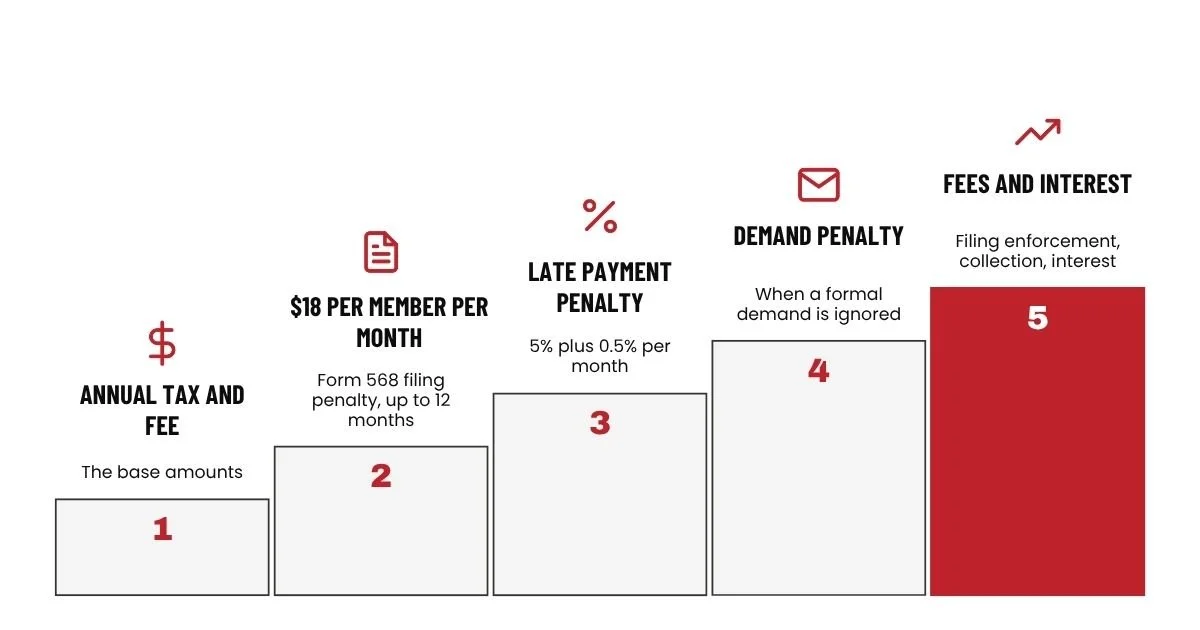
A California LLC tax balance can involve more than the original $800 annual tax.
Depending on the account, the balance may include:
Annual LLC tax
LLC fee
Late filing penalties
Late payment penalties
Estimated LLC fee penalties
Filing enforcement fees
Collection fees
Interest
Several years of missing returns can create separate liabilities for each taxable year.
Form 568 Has Its Own Filing Penalty
California can assess a penalty when an LLC required to file Form 568 files late or provides incomplete required information.
For current rules, that penalty is generally $18 for each member for each month or part of a month the failure continues, for up to 12 months.
For a typical one member SMLLC, that can generally reach $216 for a particular return.
Other delinquent filing and payment penalties can also apply depending on the unpaid tax or fee.
Late Payment Penalties Can Apply to Unpaid Tax and Fees
California generally imposes a late payment penalty beginning at 5 percent of the unpaid amount.
An additional one half of 1 percent can generally apply for each month or part of a month the amount remains unpaid, subject to the applicable maximum.
Interest can also continue.
A Demand to File Can Add Another Penalty
If the FTB issues a formal demand for a required return and the taxpayer does not comply, a separate demand penalty may apply.
That is one reason an FTB filing notice should not be ignored even when the owner believes no tax is due.
Missing Form 568 Returns Should Be Addressed Before the Tax Debt Strategy

The first part of an SMLLC tax debt case is usually filing compliance.
The FTB needs the required returns before it can accurately determine the account balance and before many collection alternatives can be approved.
I first review:
Which Form 568 returns are missing
Whether the LLC was actually required to file
When the LLC began operating
When the LLC stopped operating
Whether it remained registered with the Secretary of State
California total income
Annual tax payments
Estimated LLC fee payments
Prior FTB notices
Entity classification
Once those facts are established, the actual FTB balance can be evaluated.
An LLC That Stopped Operating Can Still Have Filing Problems
Simply closing the bank account or stopping business activity does not necessarily terminate California LLC obligations.
California generally continues to require the LLC annual tax and returns until the appropriate closing requirements are satisfied.
If the entity was never formally canceled, additional taxable years may have opened on the FTB account.
That should be reviewed before filing a series of returns or paying several annual tax assessments.
What FTB Collection Actions Can Affect an SMLLC?
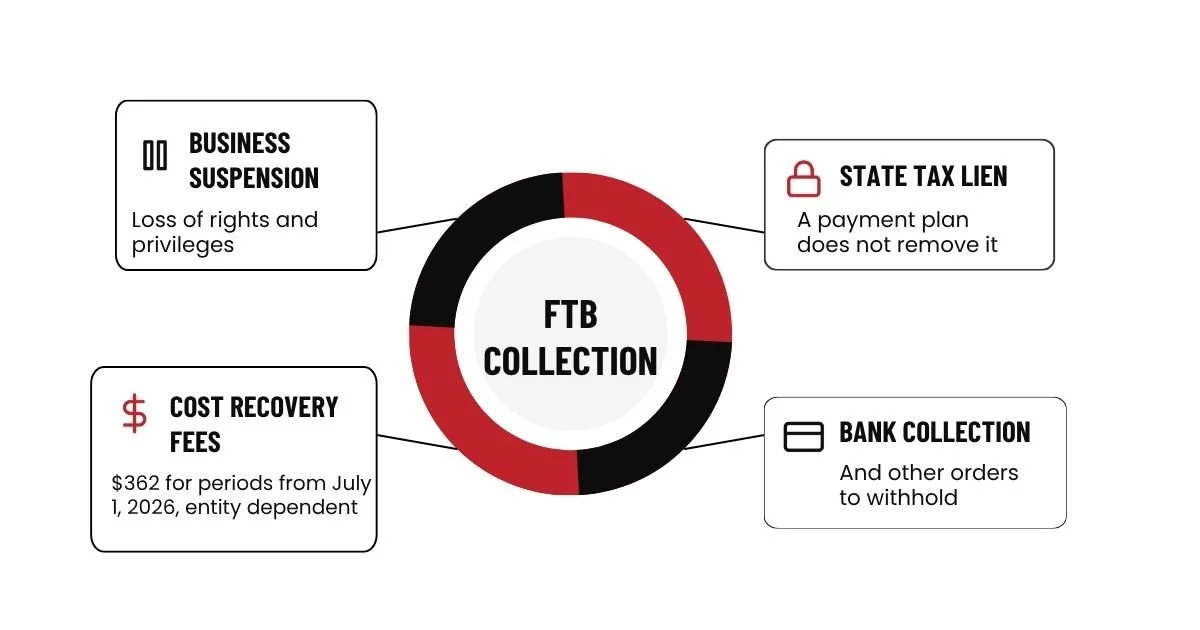
When an LLC tax balance remains unpaid, the FTB can use state collection procedures.
Possible actions can include:
State tax lien
Bank collection action
Other orders to withhold
Collection cost recovery fees
Business suspension
The exact procedure depends on the account and collection stage.
A State Tax Lien and a Payment Plan Are Separate Issues
The FTB may file a state tax lien to protect California's interest while a balance remains unpaid.
Entering a payment plan does not automatically remove an existing lien.
The lien and the underlying tax debt should be reviewed separately.
Collection Fees Can Be Added
California can charge collection cost recovery fees when involuntary collection becomes necessary.
Those fees can change over time.
For current periods beginning July 1, 2026, FTB lists a $362 collection cost recovery fee for LLCs treated as partnerships and certain other business types.
The entity's tax classification should be confirmed before assuming a particular fee applies.
FTB Business Payment Plans for California SMLLC Tax Debt

A California business payment plan may be available when the LLC cannot pay the FTB balance in full.
The standard business self service criteria are narrower than the personal income tax payment plan rules.
A business may generally be eligible when:
The amount due does not exceed $25,000
The balance can be paid within 12 months
All required tax returns have been filed
The FTB can still review ability to pay and compliance history.
The FTB Charges a Business Payment Plan Fee
The current business installment agreement setup fee is $50, which is generally added to the balance.
The fee can change.
The FTB May Ask for Financial Information
A business payment plan is not guaranteed merely because the balance is below $25,000.
The FTB may request financial information as a condition of approval.
It may also file a state tax lien.
The business should be prepared to document its ability to make the proposed payment while remaining current with future tax obligations.
Larger or Longer Payment Requests May Need Direct Review
A business that owes more than the standard online threshold or needs longer than the typical 12 month period should not assume that no arrangement is possible.
The account may require direct FTB contact and additional financial review.
The proposed payment should be based on the entity's actual ability to pay and the FTB's collection requirements.
What If Form 568 Returns Are Still Missing but the FTB Wants Payments?

California has a Provisional Payment Plan procedure for some businesses that are not yet eligible for a formal payment plan because required returns remain missing.
Under current FTB terms, an approved business Provisional Payment Plan generally requires the business to file its missing required returns within 30 days of the approval notice.
Once the delinquent returns are filed and processed, the FTB reevaluates eligibility for a formal payment plan.
A Provisional Plan Does Not Replace Filing Compliance
The provisional procedure gives the taxpayer a path to make payments while finishing the missing returns.
It does not eliminate the filing requirement.
The business also agrees to remain current with future returns and applicable tax payments.
That makes the filing project and collection plan part of the same overall strategy.
California FTB Offer in Compromise for an SMLLC
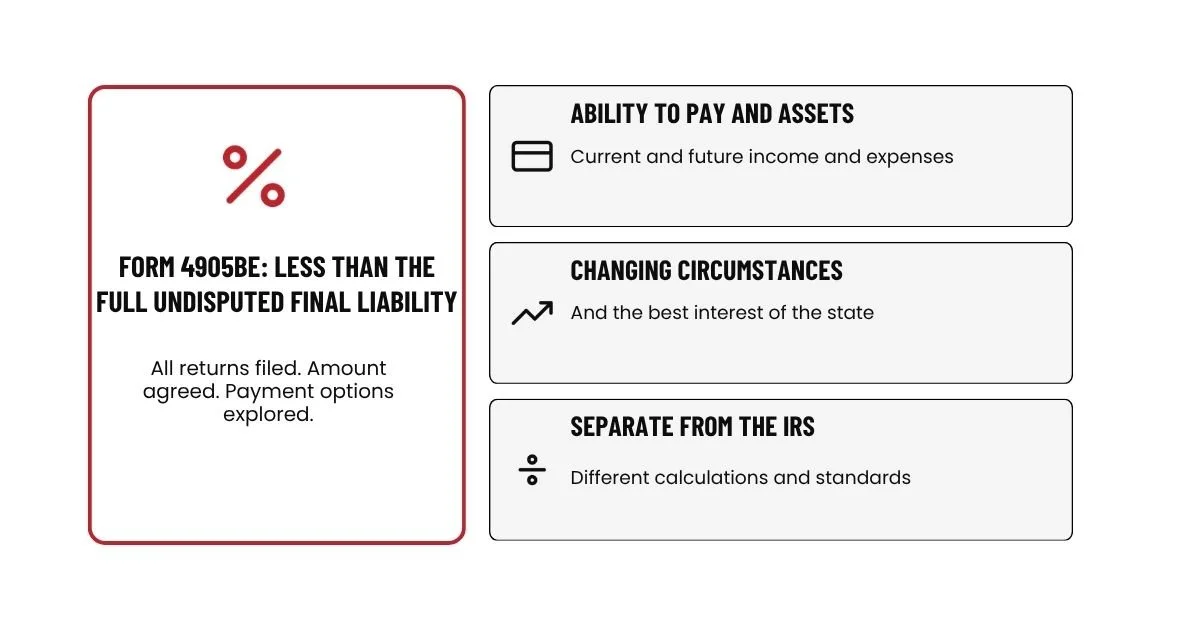
The Franchise Tax Board has an Offer in Compromise program for qualifying business entities that cannot pay their undisputed final tax liability in full.
An accepted offer can allow the FTB to accept less than the full amount owed.
Not every SMLLC qualifies.
Filing Compliance Is Required Before an FTB Offer
Before applying, the business generally must:
File all required tax returns
Agree with the amount owed
Explore payment options
For business entities, the current FTB application is Form 4905BE.
The FTB Reviews Ability to Pay and Assets
The FTB considers factors including:
Ability to pay
Value of assets
Current income
Future income
Current expenses
Future expenses
Possible changes in financial circumstances
Whether the offer is in the best interest of the state
The offer must be supported by the business's actual financial circumstances.
An FTB Offer Is Separate From an IRS Offer
California independently evaluates its own Offer in Compromise.
An IRS Offer in Compromise does not automatically settle an FTB balance.
The agencies can use different calculations, procedures, and acceptance standards.
If the owner owes both federal and California tax, I review the two liabilities separately.
Can California LLC Penalties Be Reduced?
Some FTB penalties may be eligible for relief when the taxpayer can establish an applicable legal or administrative basis.
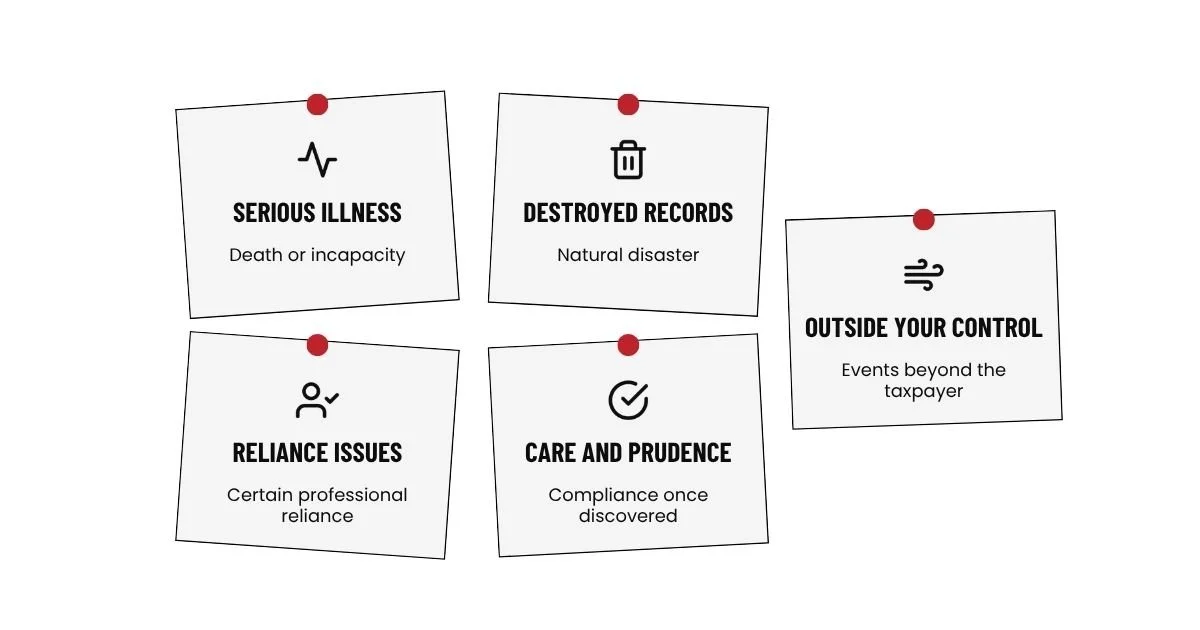
Reasonable cause can apply to certain penalties.
The facts need to show why the filing or payment failure occurred and what the business did to comply once the problem was discovered.
Possible facts can include:
Serious illness
Death or incapacity
Destruction of records
Natural disaster
Events outside the taxpayer's control
Certain reliance issues
Other facts showing reasonable business care and prudence
Penalty relief should not be assumed.
The specific penalty, tax year, notice, filing history, and supporting records should be reviewed first.
What If the California SMLLC Is Suspended?
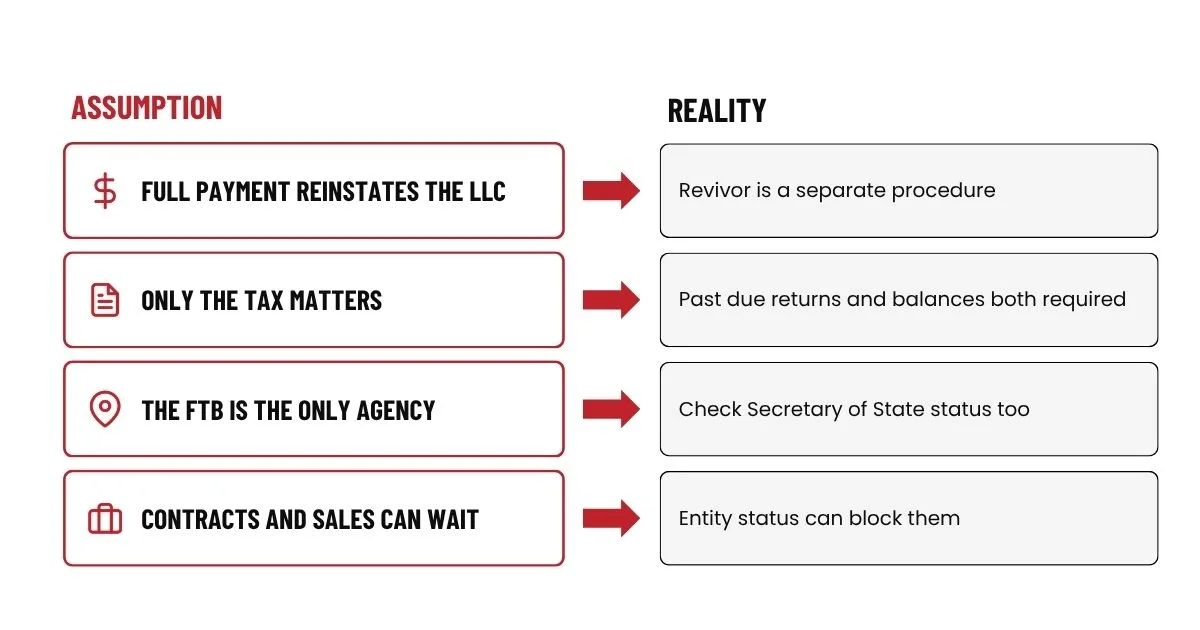
FTB suspension is a separate business status issue that can arise when an LLC does not file required returns or pay taxes, penalties, fees, or interest.
A suspended LLC is not in good standing.
California states that a suspended entity can lose important rights, powers, and privileges.
Paying the Tax Debt Does Not Automatically Revive the LLC
The FTB specifically warns that payment in full under a payment plan does not by itself reinstate an entity that was already not in good standing.
Additional revivor procedures can be required.
For an LLC, that generally includes:
Filing past due returns
Addressing outstanding FTB balances
Filing the applicable revivor request
The exact status should also be checked with the California Secretary of State.
Suspension and Tax Debt Should Be Coordinated
If the business needs to sign contracts, sell property, close legally, defend litigation, or continue operations, the entity status can become as important as the payment arrangement.
I review whether the case involves only tax debt or also requires a separate revivor strategy.
What If the LLC Is No Longer Operating?
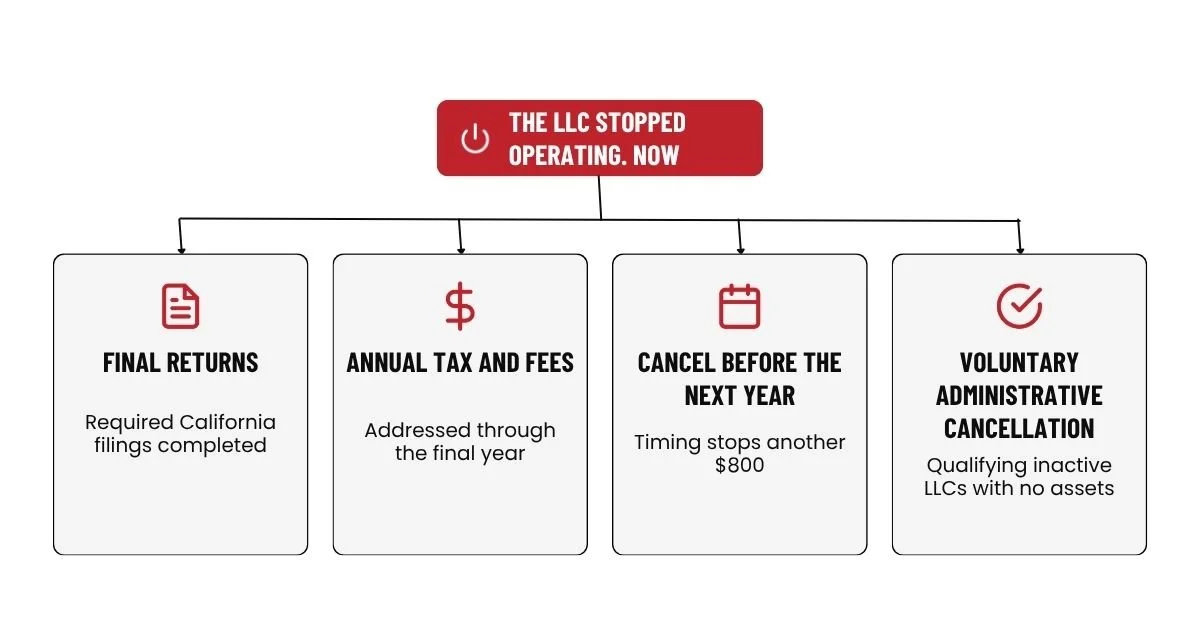
A closed business should not automatically continue accumulating future California LLC obligations.
But stopping business activity alone is not the same as legally canceling the entity.
The final tax filings and Secretary of State cancellation procedures should be reviewed.
California Generally Requires Final Filing and Cancellation Steps
An LLC generally needs to:
File required final California returns
Address the annual LLC tax and applicable fees
Complete the proper California cancellation procedure
Timing matters.
If the cancellation documents are filed after another taxable year begins, another annual tax or return may potentially become due.
Voluntary Administrative Cancellation May Apply to Certain Domestic LLCs
California has a voluntary administrative cancellation procedure for certain qualifying domestic LLCs that have stopped doing business or never operated and have no remaining assets.
When the program requirements are met and the Secretary of State formally cancels the entity, the FTB may abate certain qualified taxes, interest, fees, and penalties.
This procedure does not simply erase every historical liability.
The LLC must meet the statutory program requirements and the FTB reviews the entity's filing, payment, operating, and asset history.
California SMLLC Tax Debt and Federal Schedule C Problems Can Overlap

A disregarded SMLLC owner can have both California entity problems and federal individual income tax problems.
For example:
The LLC may owe:
Form 568 annual tax
California LLC fee
FTB penalties
The owner may separately owe:
Federal Form 1040 income tax
Self employment tax
California personal income tax
That means a complete case can involve several taxpayer accounts.
Paying the FTB Does Not Resolve the IRS Account
A California FTB payment agreement covers California debt.
It does not place IRS debt into a payment plan.
Likewise, an IRS resolution does not automatically address the LLC's California entity obligations.
I separate the agencies and accounts before presenting a resolution strategy.
What Records Should I Gather for an SMLLC FTB Tax Debt Review?

Useful records can include:
FTB notices
Form 568 returns
FTB account statements
Annual tax payment records
Forms FTB 3522
Forms FTB 3536
California Secretary of State records
Articles of Organization
EIN confirmation
Federal Schedule C returns
California Form 540 returns
Profit and loss statements
Bank statements
Business income reports
Prior year bookkeeping
Records showing when the business began
Records showing when the business stopped
Cancellation documents
Prior payment plan documents
State tax lien notices
MyFTB account records
If several years of financial records are missing, historical bookkeeping may need to be reconstructed before the Form 568 filing and LLC fee calculations can be completed.
Our California SMLLC Tax Debt Relief Process
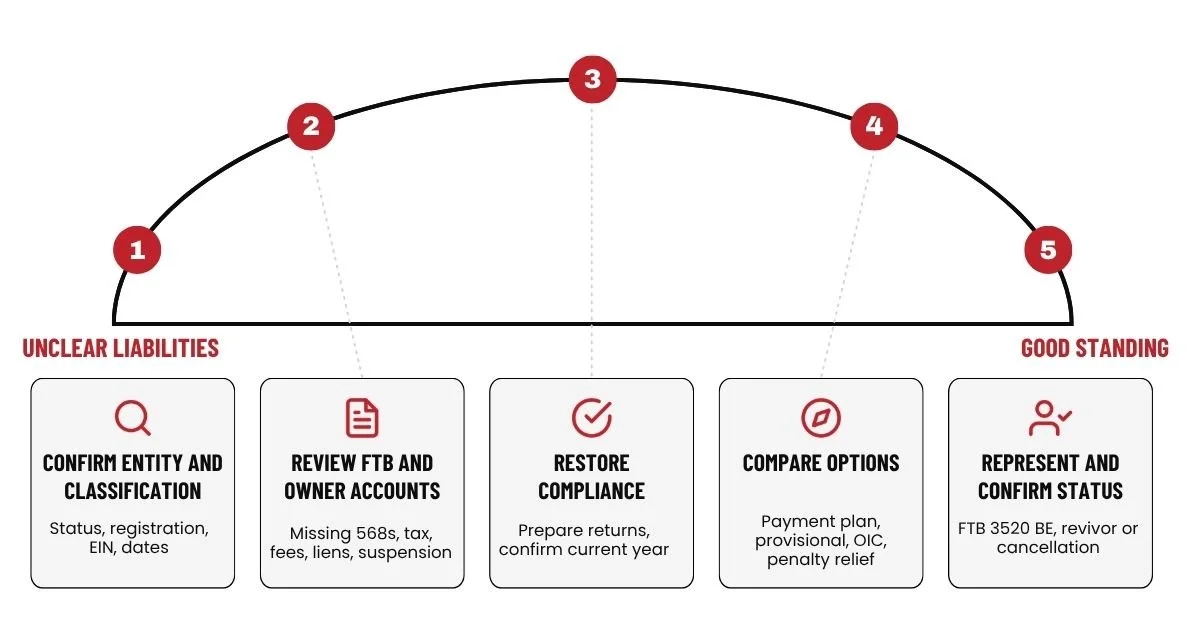
I use a structured review because California SMLLC cases can involve several different liabilities.
Step 1, Confirm the Entity and Tax Classification
I review:
California LLC status
Secretary of State registration
Federal tax classification
Owner information
EIN
When the entity began
Whether it is still operating
Step 2, Review the FTB Account
I identify:
Tax years
Missing Form 568 returns
$800 annual tax assessments
LLC fees
Penalties
Interest
Collection fees
Liens
Payment plans
Suspension status
Step 3, Review the Owner's Related Tax Accounts
For a disregarded individually owned SMLLC, I also determine whether there are related:
Schedule C filing problems
California personal income tax balances
IRS tax balances
The owner's liabilities and the LLC liabilities are kept separate.
Step 4, Restore Filing Compliance
Missing Form 568 returns are prepared when required.
If bookkeeping is incomplete, the financial records may need to be reconstructed first.
Step 5, Confirm Current Compliance
For an operating LLC, we review:
Current Form 568 requirements
Current annual tax
Current estimated LLC fee
Owner estimated income tax obligations
Keeping the current year compliant can be important when requesting an FTB collection alternative.
Step 6, Review the Financial Position
Depending on the requested resolution, I review:
Cash
Business bank accounts
Assets
Income
Expenses
Ability to pay
Future business activity
Whether the company remains viable
Step 7, Compare the FTB Options
The available procedure can include:
Full payment
Business payment plan
Provisional Payment Plan
Offer in Compromise
Penalty relief
Liability correction
Administrative review
Cancellation related procedures
Revivor when the entity is suspended
Step 8, Represent the Business Before the FTB
California uses Form FTB 3520 BE for a business entity Power of Attorney declaration.
When retained for representation, I can review account information, communicate with the FTB, submit supporting records, and present the applicable request within the scope of the authorization.
Step 9, Confirm the Business Status After the Tax Resolution
An FTB payment resolution does not necessarily fix Secretary of State standing or automatically cancel an inactive LLC.
Before considering the matter complete, I review whether additional revivor, final filing, or cancellation steps remain.
Common Mistakes With California SMLLC Tax Debt
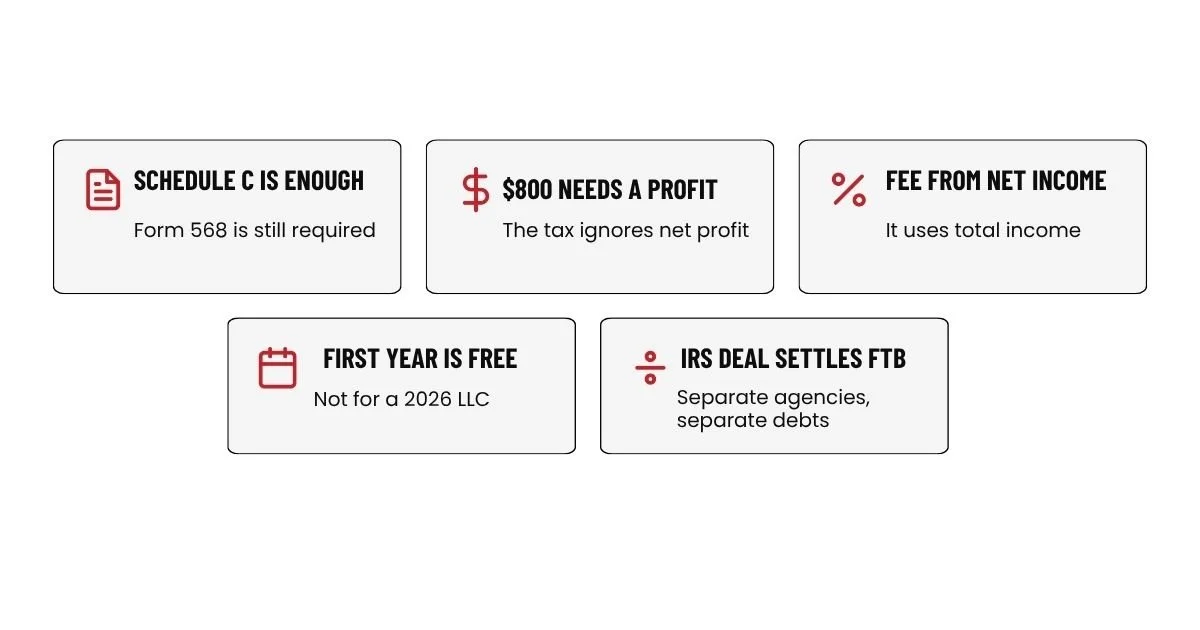
Assuming Schedule C Is the Only Tax Return
A disregarded SMLLC can still have a California Form 568 filing requirement.
Thinking the $800 Tax Applies Only When the LLC Makes a Profit
The annual LLC tax generally does not depend on net profit.
Forgetting the LLC Fee
A separate LLC fee can apply when California total income reaches $250,000.
Calculating the LLC Fee From Net Income
The fee is based on California total income under the applicable rules, not simply Schedule C net profit.
Assuming the First Year Is Free in 2026
The temporary first year annual tax exemption covered tax years beginning from 2021 through 2023.
It does not generally apply to a newly formed 2026 LLC.
Paying the Owner's Personal Tax but Ignoring the LLC Account
The owner and LLC can have separate California tax obligations.
Stopping Business Without Canceling the LLC
Failure to properly close the entity can allow additional filing periods and annual tax obligations to continue.
Assuming a Payment Plan Automatically Fixes Suspension
A suspended entity generally has separate revivor requirements.
Assuming an IRS Settlement Also Settles California
The FTB independently evaluates its own debt and collection options.
Why Work With Semper Tax Relief for California SMLLC Tax Debt?

California single member LLC tax problems can involve more than one taxpayer and more than one agency.
I review:
Form 568 filing compliance
Annual LLC tax
LLC fee
Penalties and interest
FTB collection status
State tax liens
Payment plan eligibility
Offer in Compromise eligibility
Suspension
Cancellation
Federal Schedule C issues
Owner personal income tax
Business records
Current compliance
I am Sergio Melendez, JD, EA.
I have worked in the tax profession since 2005.
My Juris Doctor degree is an educational credential.
My federal authority to represent taxpayers before the IRS comes from my Enrolled Agent credential.
For California FTB matters, representation is established using the applicable California Power of Attorney procedure.
The objective is to identify the correct liabilities, restore the required filings, and then determine what FTB resolution is supported by the entity's financial and compliance facts.
Results depend on the LLC's filing history, tax classification, California income, business status, assets, financial condition, owner information, and applicable FTB rules.
Frequently Asked Questions About California SMLLC Tax Debt Relief
-
Generally, yes, when the LLC is organized in California, registered with the California Secretary of State, or doing business in California.
Exceptions can apply in specific circumstances.
For 2026, the temporary first year exemption that applied to certain LLCs during tax years 2021 through 2023 has expired.
-
Generally, yes.
A disregarded SMLLC can report its business activity on the owner's federal return while still having a separate California Form 568 filing requirement.
The federal Schedule C and California Form 568 serve different purposes.
-
A separate California LLC fee applies when total California annual income reaches $250,000.
The fee currently ranges from $900 to $11,790 depending on the applicable income level.
It is separate from the $800 annual tax.
-
Possibly.
Current standard business payment plan criteria generally include a balance of $25,000 or less, repayment within 12 months, and filing of all required returns.
The FTB can request financial information and can require or file a state tax lien.
Businesses outside the standard criteria may require direct review.
-
The FTB currently provides a Provisional Payment Plan procedure for some businesses that are not yet eligible for a formal payment agreement because returns remain missing.
An approved provisional plan generally requires the missing returns to be filed within 30 days of the approval notice.
The account is then reevaluated for a formal payment plan after the returns process.
-
Potentially.
The FTB Offer in Compromise program allows qualifying business entities to propose a lesser payment for an undisputed final liability.
Required returns generally must first be filed.
The FTB evaluates assets, income, expenses, ability to pay, future circumstances, and whether the offer is in the state's interest.
Approval is not guaranteed.
-
Yes.
California states that a business can be suspended or forfeited when it fails to file required returns or pay taxes, penalties, fees, or interest.
A suspended LLC loses important business rights and privileges.
Payment alone does not always complete the revivor process.
-
The FTB account should be reviewed immediately.
California generally continues annual tax and filing obligations until the appropriate closing requirements are met.
Depending on the facts, final returns, cancellation, revivor, or voluntary administrative cancellation procedures may need to be considered.
Get a Free California SMLLC Tax Debt Case Review
If your California single member LLC owes the Franchise Tax Board, start by determining exactly what the LLC account shows.
I can review:
Form 568 filing history
Missing tax years
$800 annual LLC tax
California LLC fees
FTB penalties
Interest
Collection fees
State tax liens
Business payment plan eligibility
Provisional Payment Plan options
Offer in Compromise considerations
Penalty relief
Suspension
Revivor issues
Cancellation issues
Federal Schedule C problems
Owner California tax balances
Related IRS tax debt
You do not need to know which California tax relief option applies before requesting the review.
Bring the FTB notices, prior returns, LLC records, financial statements, and Secretary of State documents currently available.
I can help identify the filing and payment problems and determine what procedures may be available.