

IRS Identity Theft Help and Tax Account Representation
Did the IRS tell you that a tax return was already filed using your Social Security number? Did you receive an IRS identity verification letter for a return you did not file? Or is an identity theft problem holding up your legitimate tax return or refund?
Tax-related identity theft can create problems that go well beyond a stolen refund. A fraudulent return can affect IRS account records, delay your tax filing, generate notices you do not understand, or leave you trying to prove which tax information actually belongs to you.
Do I qualify for tax relief? Find out with a free case review.
Call today: 24 Hours / 7 Days a Week or book online.
✔ Confidential ✔ No Pressure ✔ Personalized
Semper Tax Relief assists taxpayers dealing with IRS identity theft and related tax account problems. We can review the IRS correspondence, determine which IRS procedure applies, help prepare the appropriate response, and represent you before the IRS when representation is permitted.
Not every identity theft case requires Form 14039. The correct response depends on what happened and which IRS notice you received.
Did Someone File a Tax Return Using Your Identity?

Tax-related identity theft generally occurs when someone uses another person's Social Security number or Individual Taxpayer Identification Number to file a fraudulent federal tax return or otherwise misuse that person's tax identity.
You may first discover the problem when your own tax return is rejected because the IRS already received another return using your information.
Other taxpayers first learn about the problem through an unexpected IRS letter, unexplained tax account activity, wages they never earned, or a refund connected to a return they never filed.
Common Signs of IRS Tax Identity Theft
You may need to investigate possible tax identity theft if:
Your electronically filed return is rejected because another return was already filed using your SSN or ITIN.
You receive an IRS identity verification letter for a tax return you did not file.
IRS transcripts show income, returns, or account activity you do not recognize.
You receive a tax refund even though you did not file a return.
The IRS sends a balance-due or collection notice involving a return or income that is not yours.
Someone used your Social Security number for employment, causing wages to appear under your tax account.
Your business receives IRS correspondence involving a return, Form W-2 filing, or EIN activity you did not authorize.
If something does not match your actual filing history, it is worth reviewing before responding to the IRS.
Received an IRS Identity Theft or Identity Verification Letter?
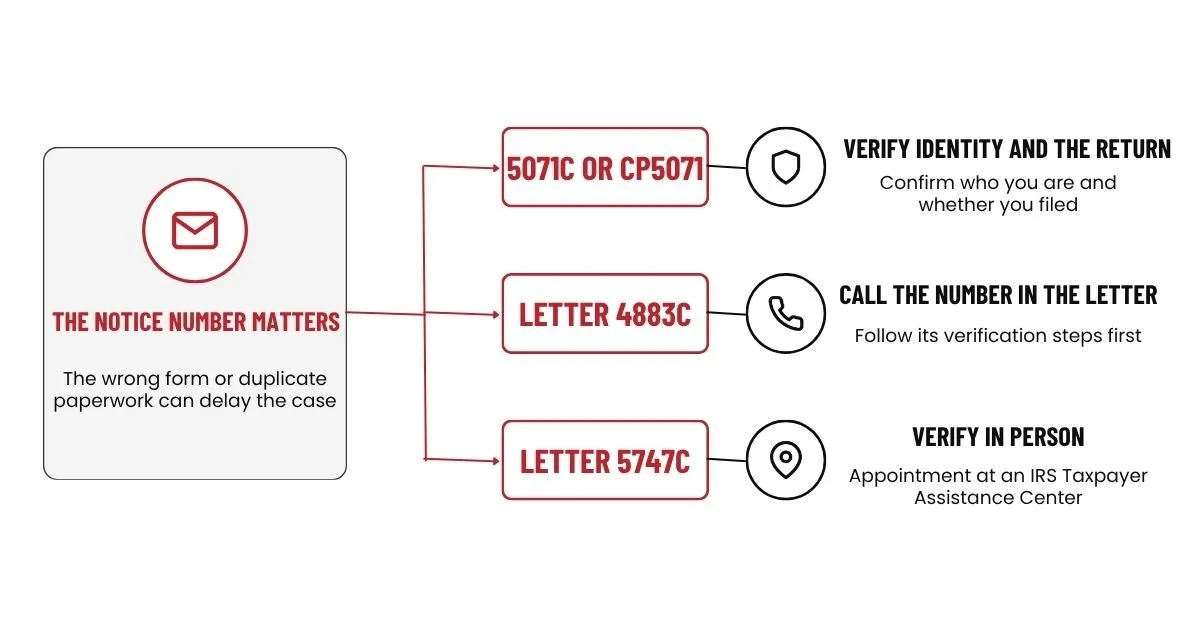
The notice number matters.
The IRS uses several different procedures when a tax return is flagged for possible identity theft. Responding with the wrong form or sending unnecessary duplicate documentation can delay the case further.
IRS Letter 5071C or CP5071 Series
A 5071C or CP5071 series notice generally means the IRS received a federal income tax return using your SSN or ITIN and wants you to verify both your identity and whether you filed the return.
If you did file the return, verification generally must be completed before the IRS continues processing it.
If you did not file the return, telling the IRS that through the verification procedure can identify the filing as potentially fraudulent.
IRS Letter 4883C
Letter 4883C is another potential identity-theft verification letter.
Instead of automatically submitting an Identity Theft Affidavit, taxpayers should generally follow the verification instructions and telephone number contained in the IRS letter.
IRS Letter 5747C
Letter 5747C may require identity verification through an in-person appointment at an IRS Taxpayer Assistance Center.
The documentation and procedure can differ from online or telephone verification, making it important to review the actual letter before responding.
Do You Need to File IRS Form 14039?
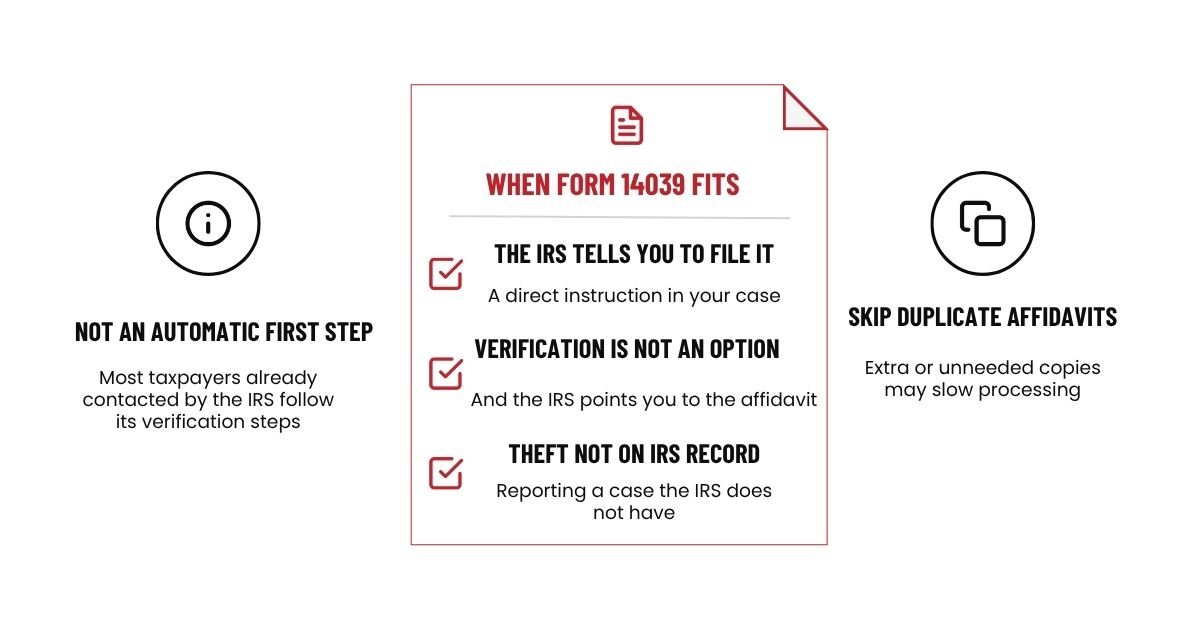
Form 14039 is the IRS Identity Theft Affidavit, but it is no longer appropriate to treat the form as the automatic first step for every suspected identity theft case.
The IRS currently states that most taxpayers do not need to file Form 14039 when the agency has already contacted them and provided a specific identity-verification procedure.
Form 14039 may be appropriate when:
The IRS specifically instructs you to file it.
You cannot use the IRS Identity and Tax Return Verification Service and the IRS directs you to the affidavit process.
You need to report possible tax-related identity theft that the IRS does not already have on record.
Your SSN or ITIN was used in a qualifying tax-related identity theft situation covered by the form.
Submitting unnecessary or duplicate identity theft affidavits may slow processing.
Semper Tax Relief can review the circumstances before a response is submitted so you know whether Form 14039, identity verification, correspondence, or another procedure fits the situation.
How Semper Tax Relief Can Help With IRS Identity Theft
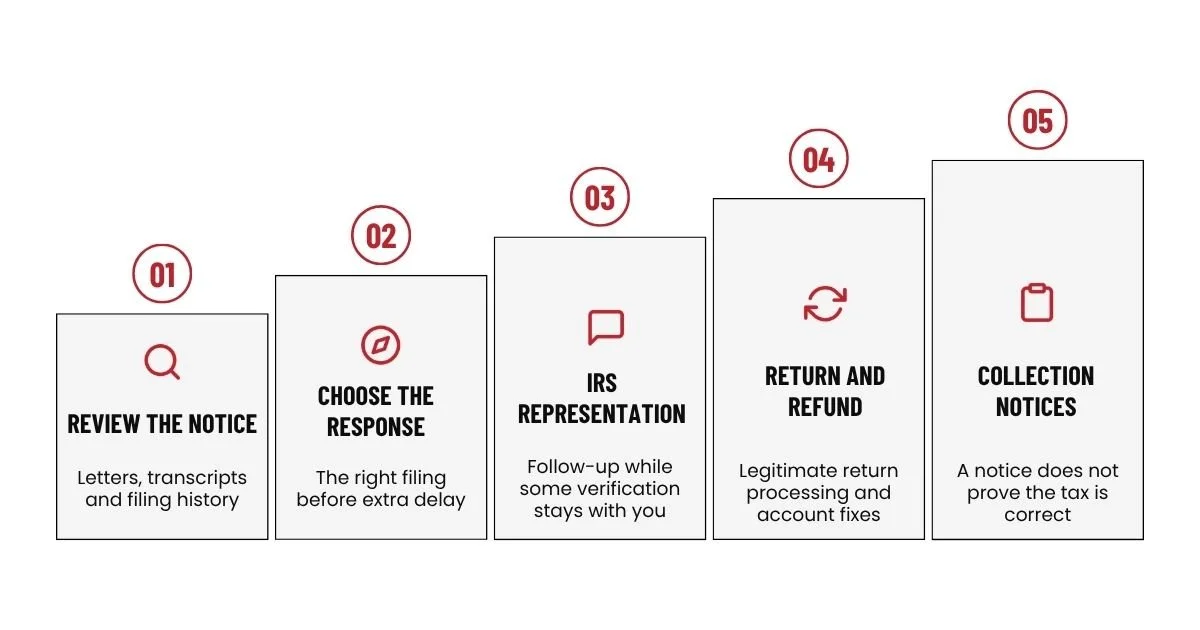
Identity theft cases often involve more than submitting one form. The tax account may need to be reviewed, the legitimate return may still need to be processed, and IRS correspondence may continue while the identity theft case is pending.
Review the IRS Notice and Tax Account
We can review your IRS letter, available transcripts, filing history, and the tax years involved to identify what appears to have happened and which IRS process applies.
Determine the Correct IRS Response
Depending on the case, the next step may involve identity verification, Form 14039, written correspondence, a legitimate tax return, supporting documentation, or another IRS procedure.
Our goal is to determine what should be submitted before unnecessary filings create additional delay.
IRS Representation and Follow-Up
When authorized representation is available, we can communicate with the IRS, review account information, respond to tax issues connected with the identity theft, and help track unresolved account problems.
Some identity-verification steps must still be completed personally by the taxpayer. Representation does not replace identity authentication when the IRS requires your direct participation.
Address Tax Return and Refund Problems
A fraudulent filing may prevent your legitimate return from processing normally.
We can help identify the filing issue and work through the tax-account side of the case, including legitimate return processing, account corrections, notices, and refund-related complications.
Review Related IRS Collection Notices
Identity theft sometimes surfaces because the taxpayer receives a balance-due notice or collection letter for tax connected with a return, income, or activity that does not belong to them.
Receiving a collection notice does not automatically mean the underlying tax assessment is correct.
We can review how the balance arose and determine what IRS procedure may be available to dispute or correct the account.
IRS Identity Protection PIN Help
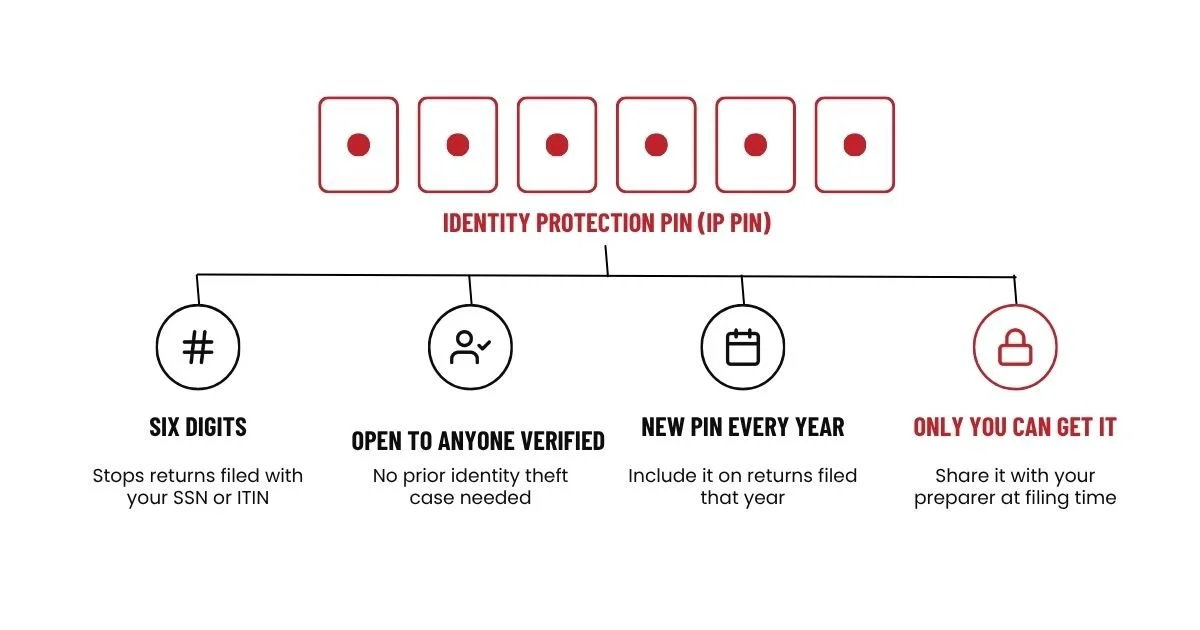
An Identity Protection PIN, commonly called an IP PIN, is a six-digit number used by the IRS to help prevent someone else from filing a federal tax return using your SSN or ITIN.
The program is available to taxpayers who can verify their identity, even if they have not previously been confirmed as an identity theft victim.
A new IP PIN is generated each year.
If you have an IP PIN, it must generally be included on federal tax returns filed during that year, including qualifying prior-year returns.
A tax professional cannot obtain an IP PIN on your behalf. You must complete the IRS identity-verification process yourself and provide the PIN to your tax professional when it is time to file your return.
Business Identity Theft and EIN Fraud
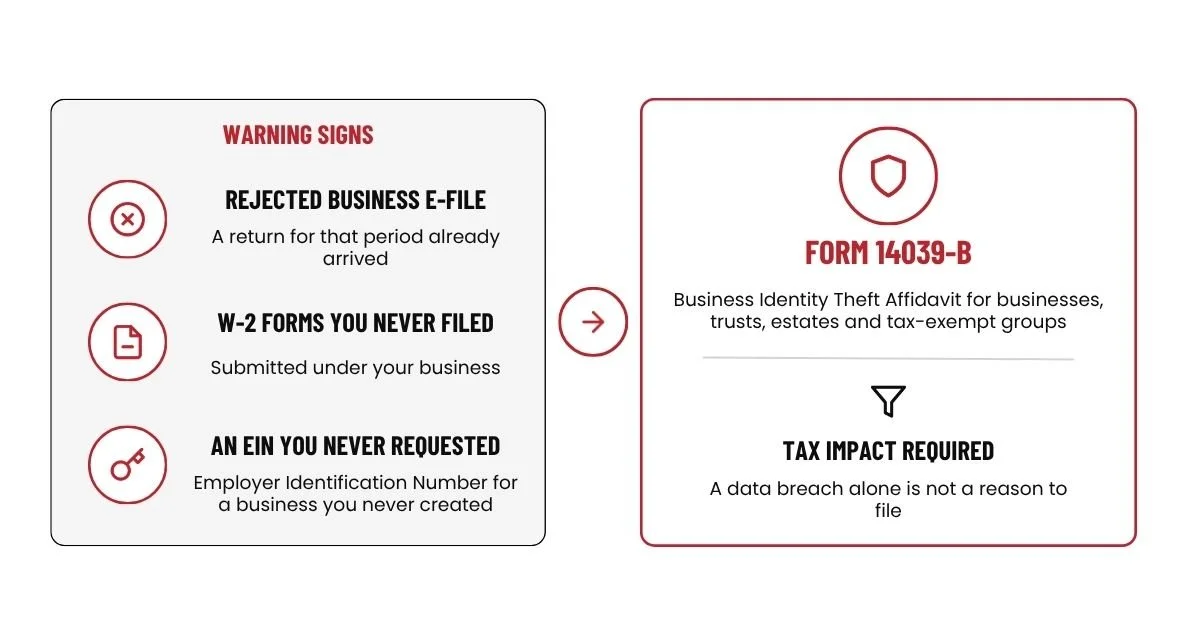
Identity theft is not limited to individual Social Security numbers.
Businesses, trusts, estates, and tax-exempt organizations can also have their identifying information misused.
Signs of IRS Business Identity Theft
You may have a business identity theft issue if:
The IRS rejects an electronically filed business return because another return was already received for the same tax period.
You receive an IRS notice concerning a business tax return you never filed.
Forms W-2 were reportedly submitted under your business that you did not file.
The IRS claims your business owes a balance connected with unauthorized filings.
You receive an EIN for a business you never created or never requested.
IRS Form 14039-B
Form 14039-B, Business Identity Theft Affidavit, is used for qualifying identity theft involving businesses, estates, trusts, and tax-exempt organizations.
This is separate from the Form 14039 used for individuals.
The IRS cautions businesses against filing Form 14039-B merely because a data breach occurred. There generally must be a tax-related impact or another circumstance covered by the form.
If your EIN or business tax account appears to have been compromised, we can review the IRS correspondence and help determine the appropriate response.
California Tax Identity Theft and the Franchise Tax Board
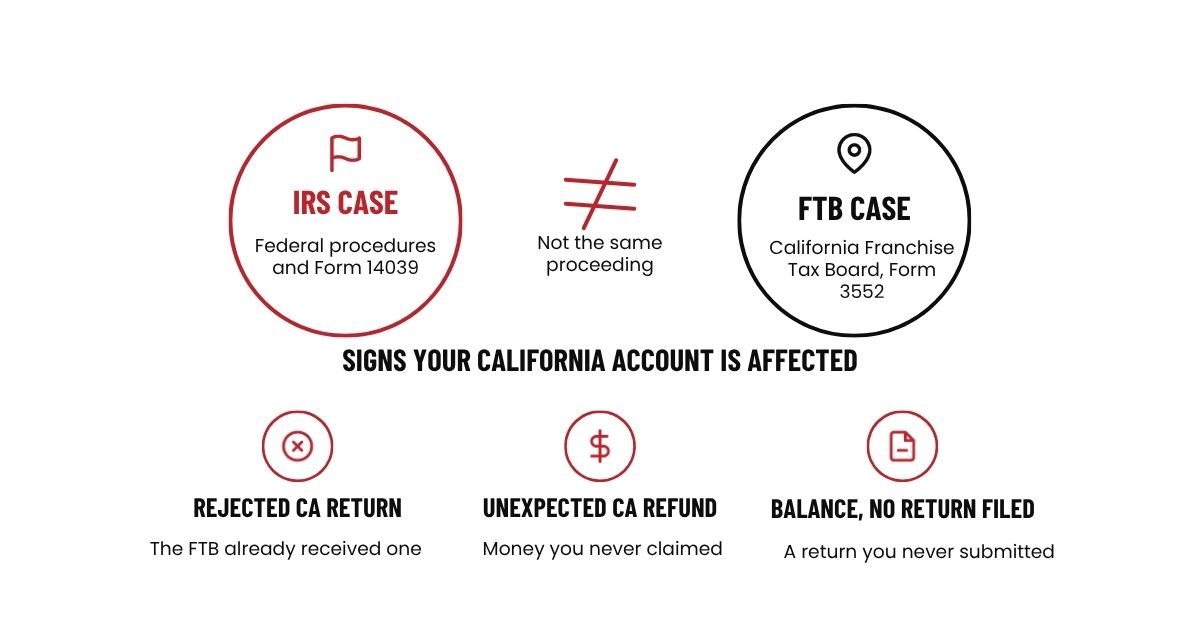
Federal and California identity theft issues may need to be handled separately.
California's Franchise Tax Board can flag and review California tax accounts when another person uses a taxpayer's information to report wages, file a return, or obtain a fraudulent state refund.
California taxpayers may discover the problem after:
A California return is rejected because the FTB already received another return.
Multiple taxpayers appear to be using the same SSN.
The taxpayer receives an unexpected California refund.
The FTB shows a balance for a return the taxpayer never filed.
A data breach exposes information that may affect the taxpayer's California tax account.
The FTB has its own identity-theft reporting procedures, including FTB Form 3552 in applicable cases.
A federal IRS identity theft case and a California FTB identity theft case should not be treated as if they are the same proceeding.
How Long Does an IRS Identity Theft Case Take?
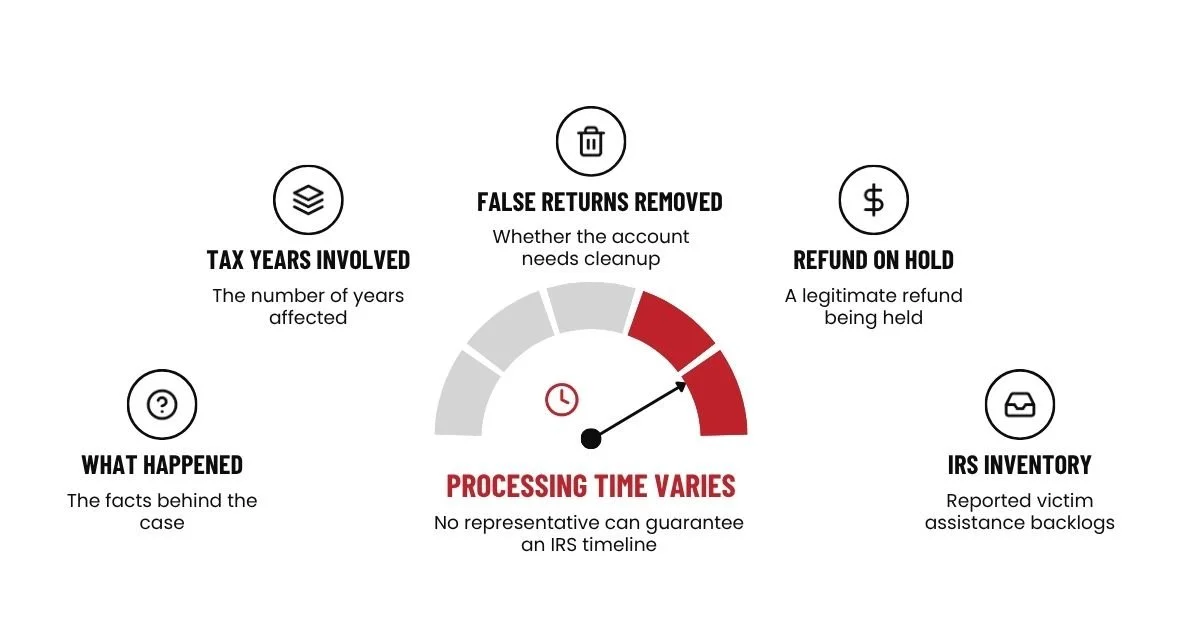
IRS identity theft cases can take substantially longer than ordinary tax-account matters.
Processing times vary based on what occurred, the number of tax years involved, whether fraudulent returns must be removed from the account, whether a legitimate refund is being held, and current IRS inventory.
The IRS has reported significant backlogs in Identity Theft Victim Assistance cases.
That makes it especially important to submit the correct response, avoid duplicate filings, respond to requests for information, and keep complete records of what has already been submitted.
Professional representation cannot guarantee a particular IRS processing time, but it can help keep the tax-account side of the case organized and identify issues requiring additional action.
IRS Identity Theft Frequently Asked Questions
-
Start by identifying exactly how you learned about the duplicate return. If your own electronic return was rejected or the IRS sent an identity verification notice, the required procedure may differ.
Review the IRS notice before automatically filing Form 14039.
-
Generally, no. If the IRS sent a 5071C or another identity-verification letter, follow the verification procedure identified in the notice.
The IRS specifically advises taxpayers not to file Form 14039 when the verification process applies unless instructed otherwise.
-
A qualified representative may be able to communicate with the IRS and assist with related tax-account issues under a valid power of attorney.
However, certain identity-verification procedures require the taxpayer's direct participation.
-
No. The taxpayer must obtain or retrieve the IP PIN through the IRS's identity-verification process. Once obtained, you can provide it to the tax professional preparing your return.
-
Do not assume the balance is correct. A return filed through identity theft can produce tax-account activity that does not belong to you.
The underlying return, tax period, and account transcript should be reviewed before determining the appropriate response.
-
The IRS may hold a legitimate refund while it investigates the fraudulent filing and determines which return belongs to the taxpayer.
Identity theft cases involving refunds can take considerable time, particularly when manual account corrections are required.
-
Form 14039 is the Identity Theft Affidavit for qualifying individual identity theft situations.
Form 14039-B is the Business Identity Theft Affidavit and is used for qualifying business, trust, estate, or tax-exempt organization identity theft matters.
-
If you receive an EIN you did not request, first determine whether someone legitimately requested it on your behalf.
If no legitimate explanation exists, the IRS has procedures for reporting the unauthorized EIN, including Form 14039-B when applicable.
-
If your California tax account or California return is affected, you may also need to report the issue to the California Franchise Tax Board. The FTB has procedures separate from the IRS.
-
No. An IP PIN helps prevent fraudulent federal tax returns from being filed using your SSN or ITIN.
It does not prevent someone from using your identity for credit accounts, banking fraud, employment fraud, or other types of identity theft.
Get Help With an IRS Identity Theft Problem
You should not have to guess whether an IRS identity theft letter requires online verification, a telephone response, Form 14039, a tax return, supporting documentation, or another procedure.
Semper Tax Relief can review the IRS notice and the tax-account problem with you and explain the next steps based on your situation.
We assist individuals and businesses dealing with:
IRS identity theft letters
Duplicate tax return filings
Form 14039 issues
Form 14039-B business identity theft
IRS identity verification
Fraudulent EIN activity
Delayed tax returns and refunds
IRS balances connected with unauthorized filings
California FTB identity theft issues