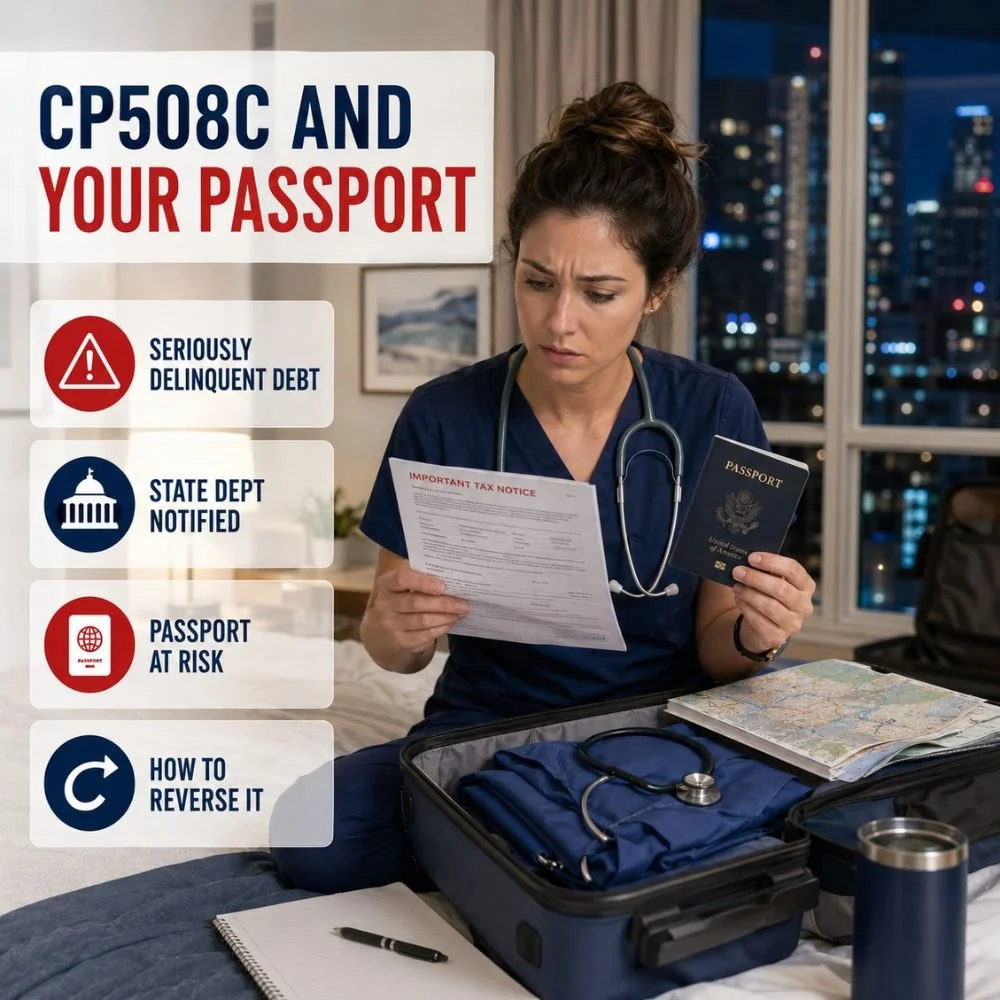
If you received a CP508C notice, I want you to understand exactly what just happened. The IRS has certified your tax debt as seriously delinquent and notified the State Department. This can affect your ability to get a new passport, renew an existing one, or in some cases keep the one you have.
I want to walk through exactly what triggers this, and more importantly, how to reverse it.
TLDR;
- CP508C notifies you that the IRS has certified your tax debt as seriously delinquent to the U.S. State Department, which can lead to denial of a new passport, denial of a renewal, or revocation of an existing passport.
- As of 2026, the threshold is more than $66,000 in combined tax, penalties, and interest, adjusted annually for inflation.
- Certification generally requires more than just owing above the threshold. The IRS must have also filed a Notice of Federal Tax Lien with exhausted appeal rights, or issued a levy.
- Certain debts are excluded from certification, including debt in Currently Not Collectible status, debt under an accepted payment arrangement, and debt tied to a pending Collection Due Process hearing or innocent spouse claim.
- The IRS generally reverses certification within 30 days once the debt is resolved, no longer meets the threshold, or the certification was made in error.
- If you have imminent international travel plans, the IRS can generally expedite the reversal process if you have an open passport application.
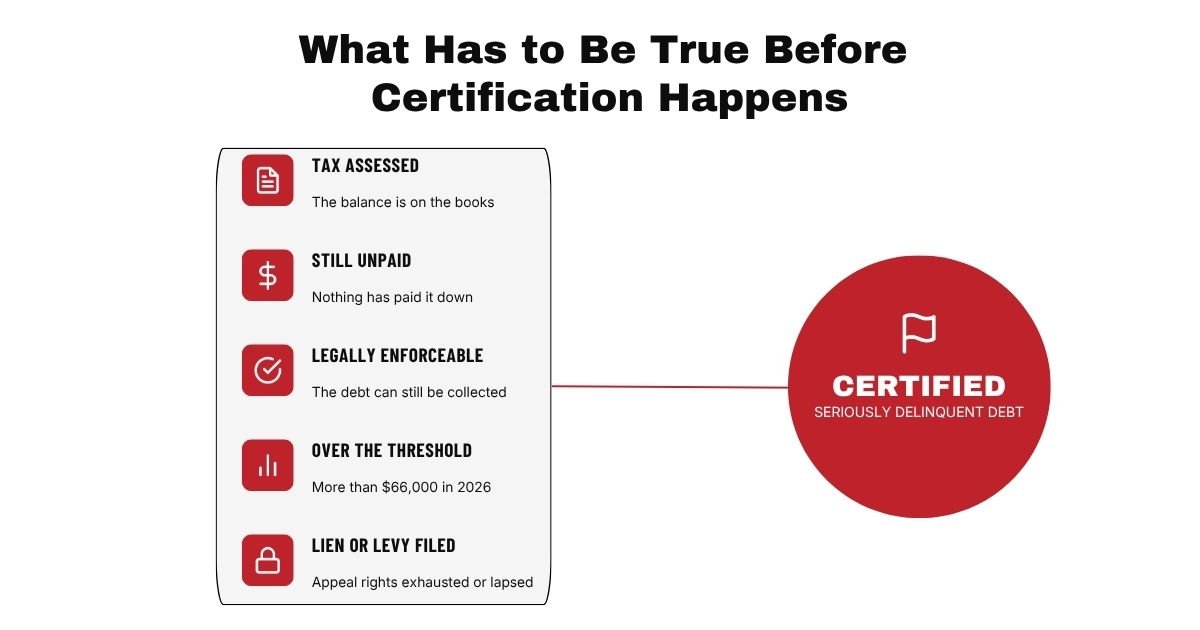
What Has to Be True Before Certification Happens
Owing a large tax debt alone is not enough to trigger this.
According to the IRS's own guidance, certification generally requires the debt to be assessed, unpaid, legally enforceable, above the current threshold, and tied to either a filed Notice of Federal Tax Lien with exhausted or lapsed appeal rights, or an IRS levy.
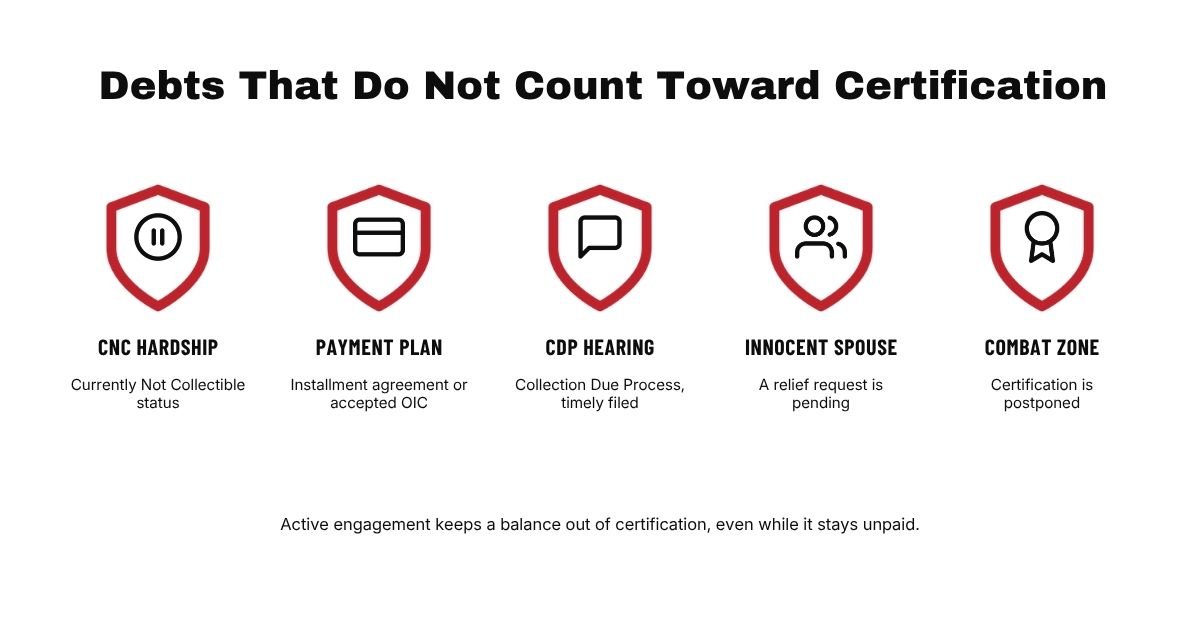
Debts That Do Not Count Toward Certification
The IRS specifically excludes several categories of debt from being considered seriously delinquent for this purpose, including debt that is currently in Currently Not Collectible status due to hardship, debt covered by an accepted installment agreement or an IRS-accepted Offer in Compromise that will fully satisfy the debt, debt where a timely
Collection Due Process hearing has been requested, and debt tied to a pending innocent spouse relief request.
The IRS also generally postpones certification for taxpayers serving in a designated combat zone.
This matters practically because it means active engagement with the IRS, an existing payment plan, an appeal, or hardship status, generally protects you from this specific consequence, even while a balance remains outstanding.
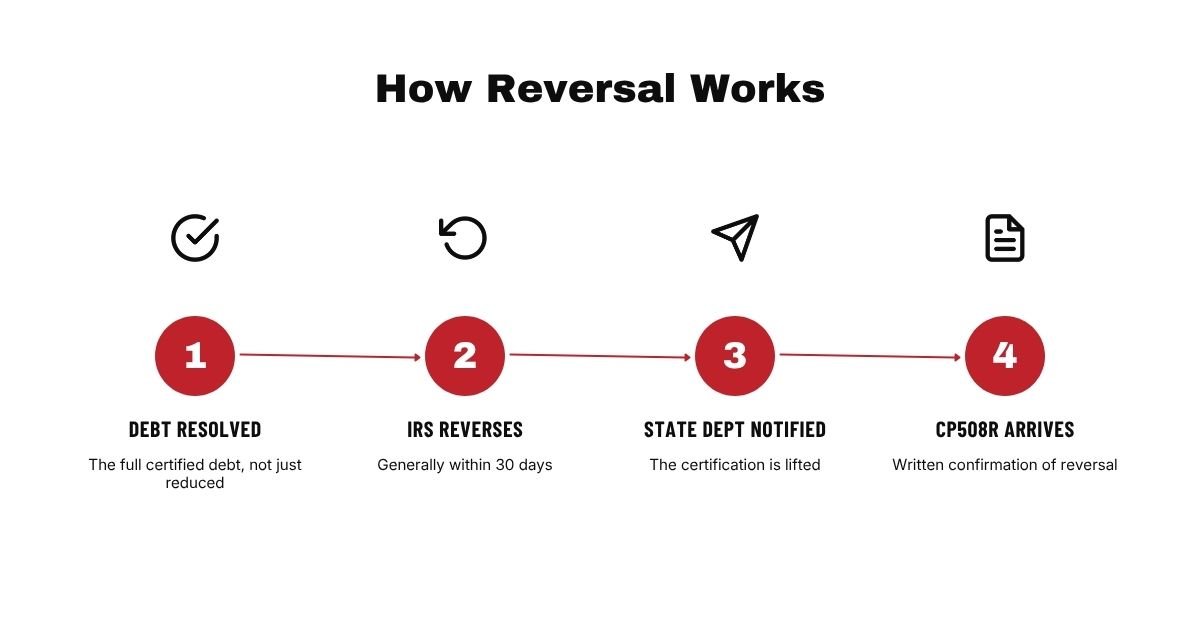
How Reversal Works
Once the debt is fully resolved, becomes legally unenforceable, no longer meets the threshold, or the certification is determined to be erroneous, the IRS generally reverses the certification and notifies the State Department, generally within 30 days.
You will generally receive a separate notice, CP508R, confirming the reversal.
I want to flag an important nuance here. The IRS generally will not reverse certification simply because a partial payment brought the balance under the threshold, or because the collection statute expired on part of the debt while other certified debt remains.
The full certified debt generally needs to be resolved, not just reduced below the dollar line.
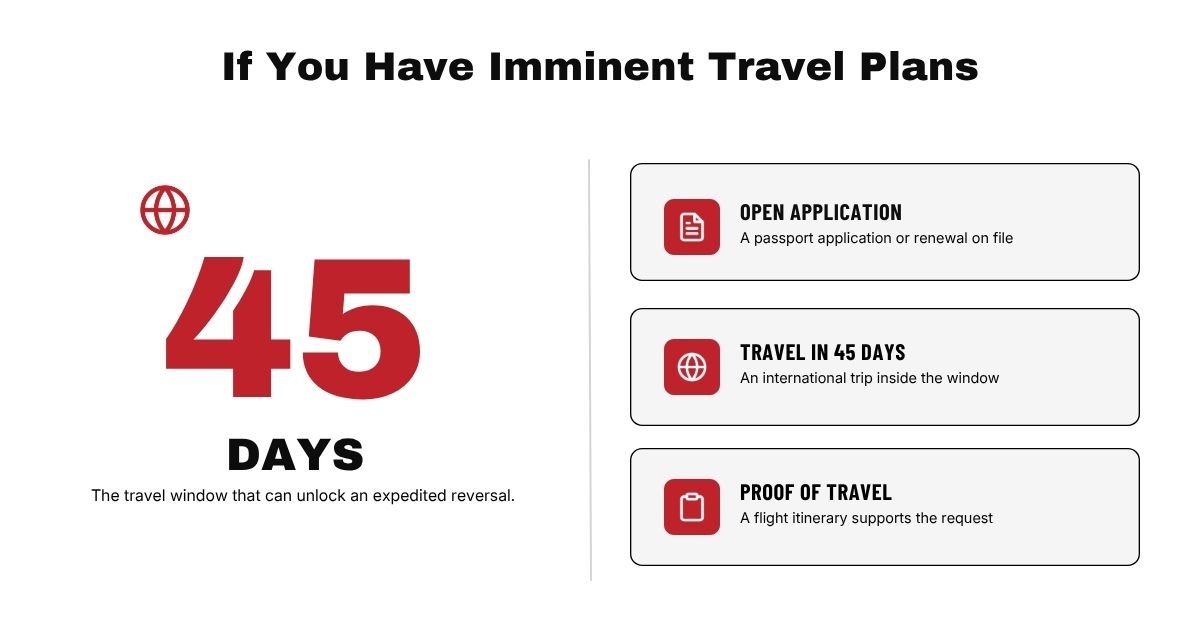
If You Have Imminent Travel Plans
If you have an open passport application or renewal request and international travel plans within the next 45 days, the IRS generally allows for an expedited reversal process, which can shorten typical processing timelines. Being able to provide documentation of the scheduled travel, such as a flight itinerary, generally helps support this request.
This is worth acting on quickly rather than waiting, since thestandard reversal process without an expedite request can take meaningfully longer.
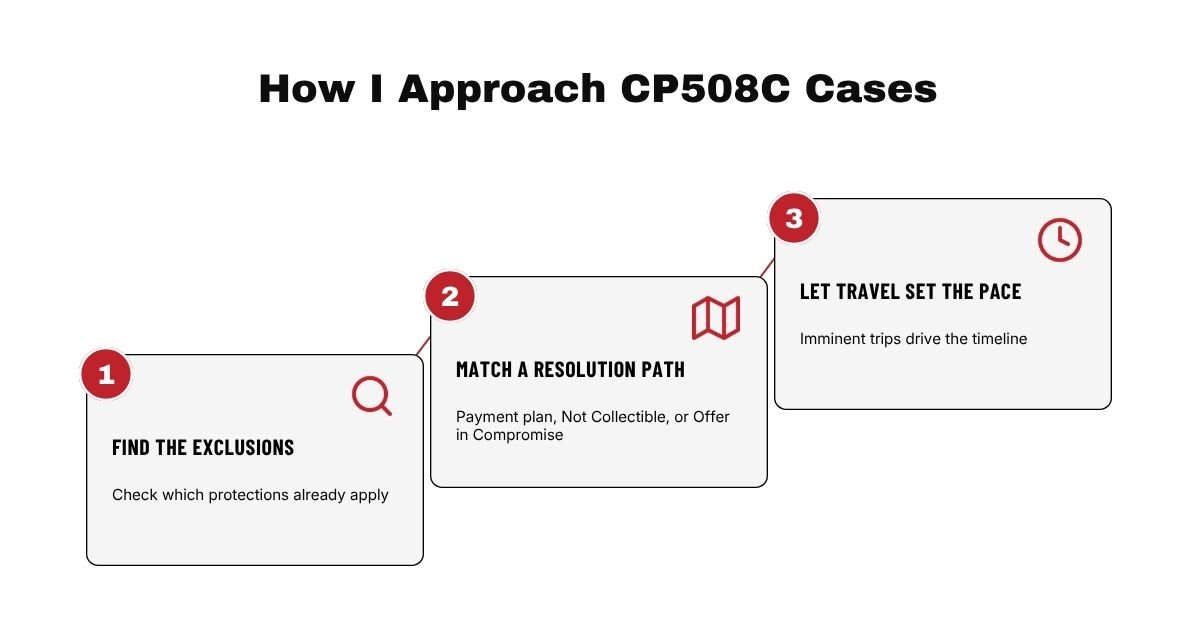
How I Approach CP508C Cases
Because passport certification requires both a large balance and a filed lien or levy, by the time someone comes to me with a CP508C notice, the situation has generally already been building for a while.
My first priority is usually identifying which of the specific exclusions might already apply, or which resolution path, an installment agreement, CNC status, or an OIC, would both address the underlying debt and qualify for reversal. If travel is imminent, that timeline drives everything else.
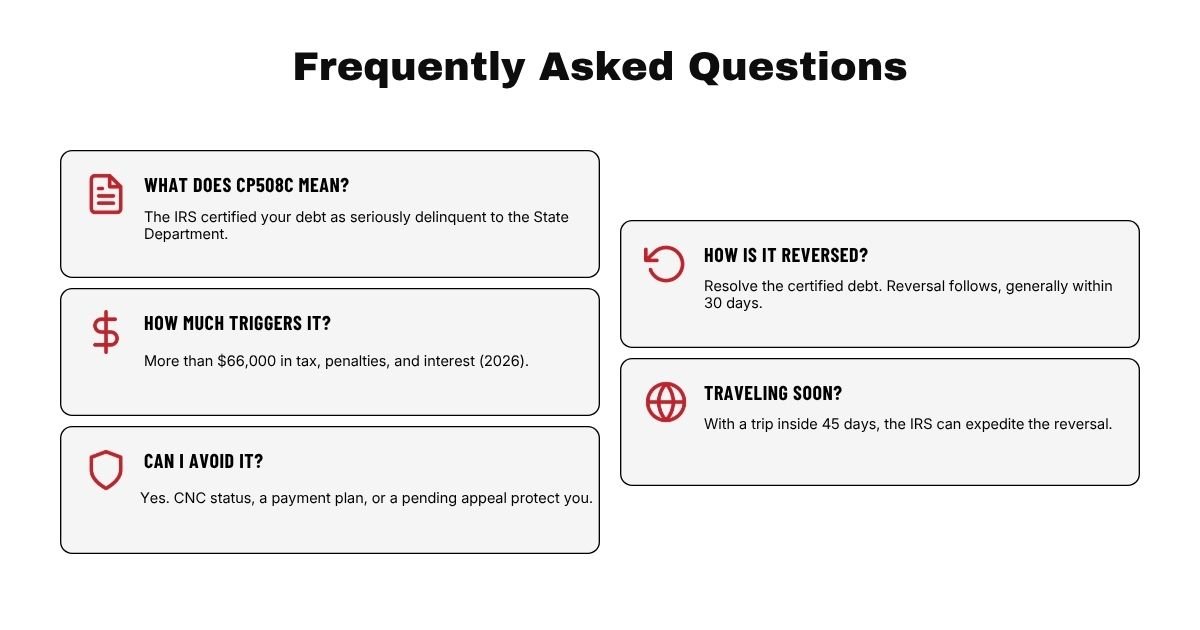
Frequently Asked Questions
-
It means the IRS has certified your tax debt as seriously delinquent to the State Department, which can affect your ability to get, renew, or keep a passport.
-
As of 2026, more than $66,000 in combined tax, penalties, and interest, adjusted annually for inflation.
-
Generally yes, if your debt is in Currently Not Collectible status, covered by an accepted payment arrangement, or tied to a pending Collection Due Process or innocent spouse claim.
-
Generally by fully resolving the certified debt, which then triggers a
reversal generally within 30 days, along with notice CP508R confirming it.
-
If you have an open passport application and travel plans within 45 days, the IRS can generally expedite the reversal process if you provide documentation of your travel plans.
Resolving Certified Tax Debt
If your passport is at risk because of a CP508C certification, the path forward generally requires resolving the underlying debt, not just addressing the passport consequence directly.
I offer a free case review to help you understand your fastest realistic path to resolving the certified debt and getting your certification reversed.