
If you did not file a tax return and the IRS filed one for you, I want you to understand one thing clearly before anything else: that return almost certainly overstates what you actually owe, and you generally have the ability to replace it with your own, more accurate return.

TLDR;
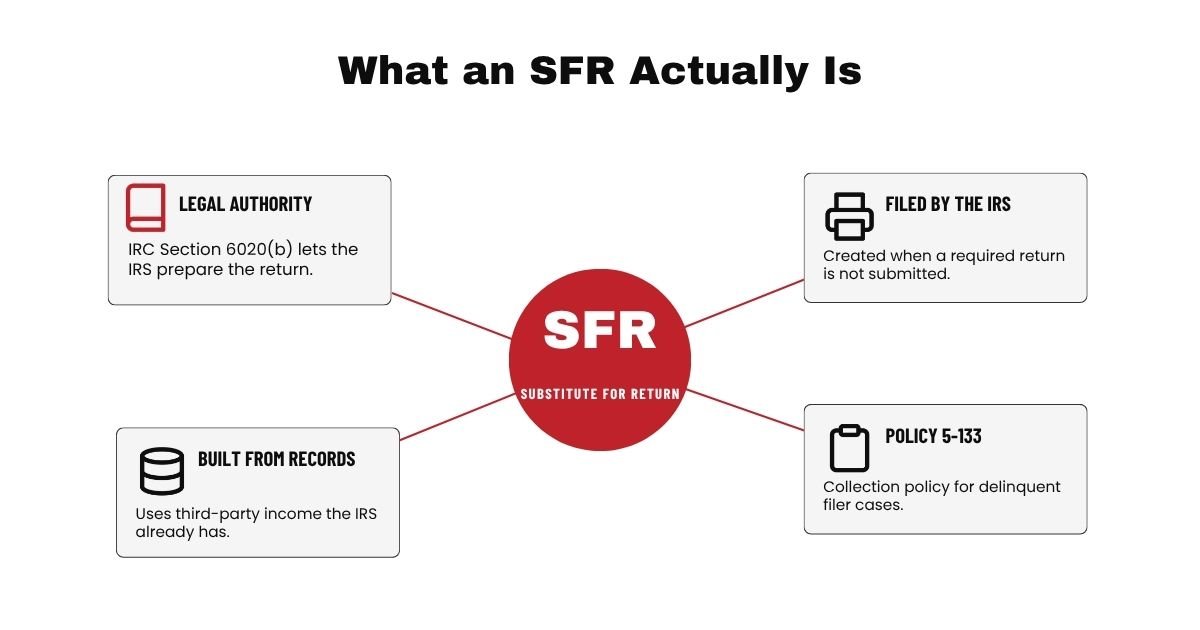
- A Substitute for Return, or SFR, is a return the IRS prepares on your behalf under IRC Section 6020(b) when you have not filed a required return.
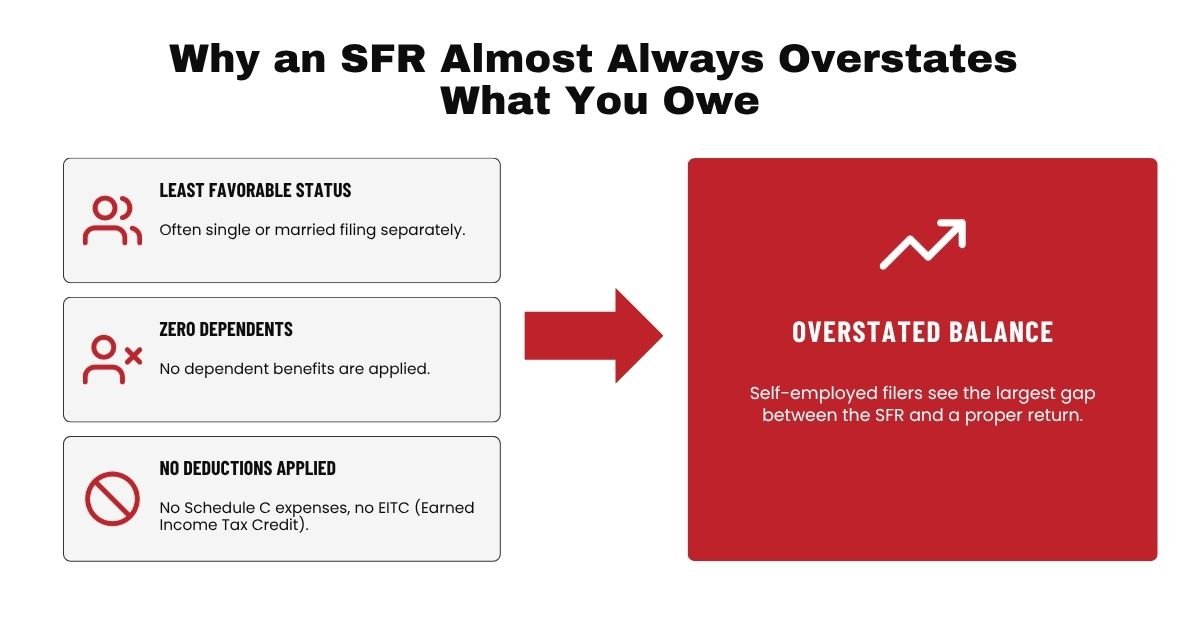
- An SFR is generally built using only third-party information the IRS already has, W-2s, 1099s, and similar reports, using the least favorable filing status and zero dependents, with no deductions, business expenses, or credits applied.
- Because of this, an SFR typically produces a tax bill significantly higher than what a properly prepared return would show.
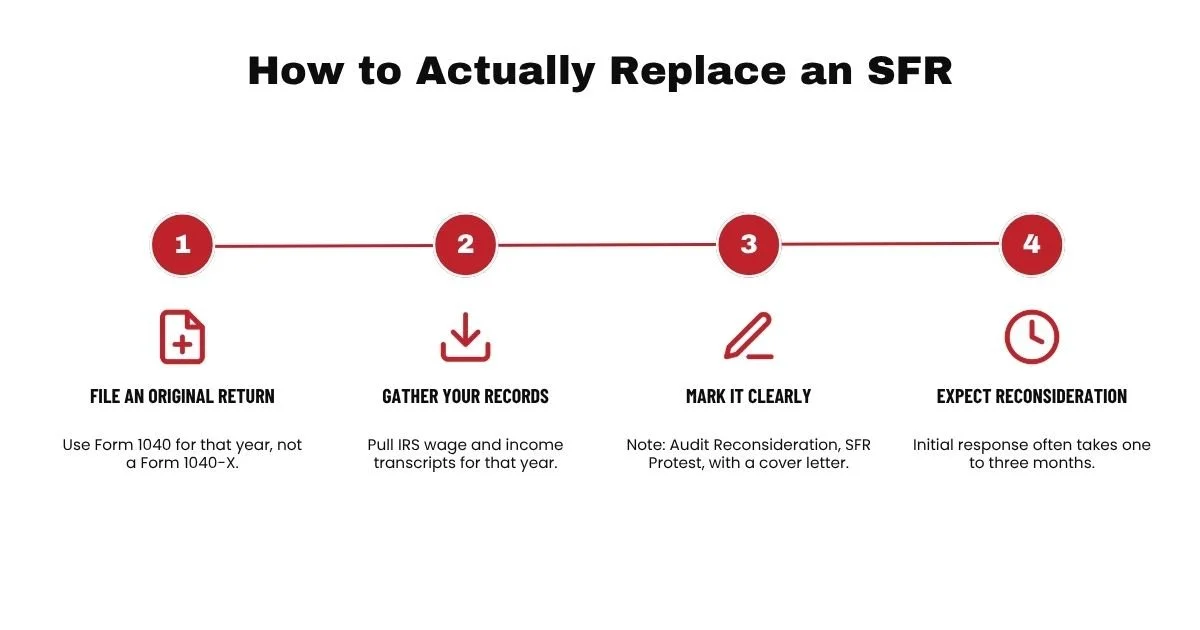
- You can generally replace an SFR by filing your own original return for that year, which the IRS processes as an audit reconsideration.
- This is not done by filing a Form 1040-X, since there is no taxpayer-filed original return to amend. You file the original Form 1040 for that year instead.
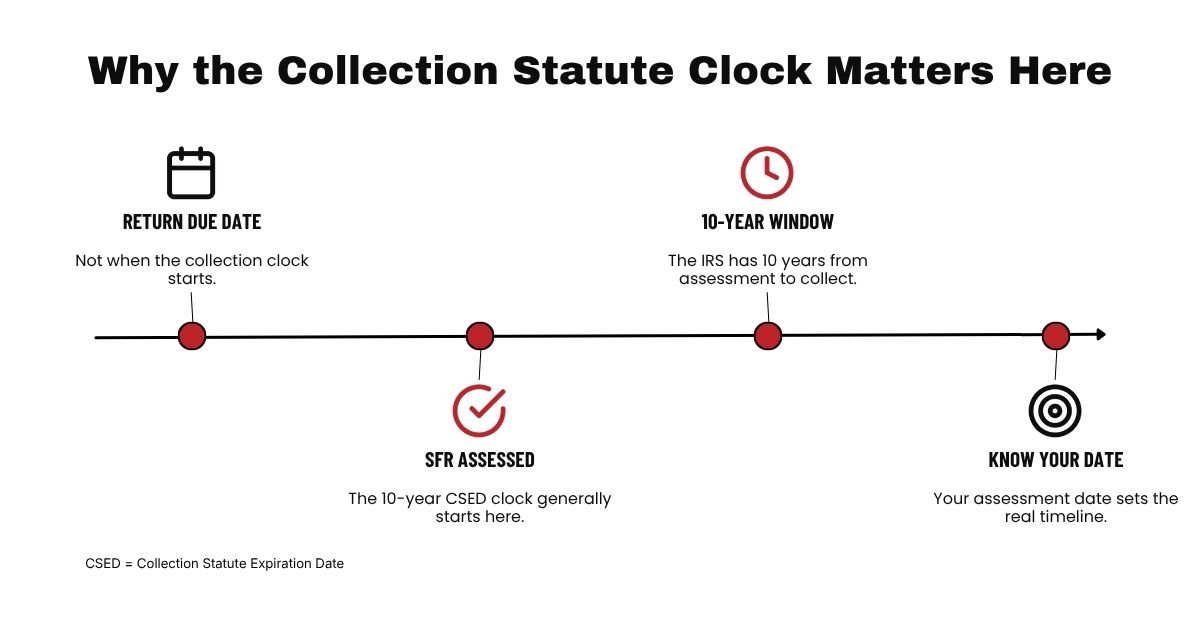
- The CSED, the 10-year window the IRS has to collect, generally begins when the SFR tax is formally assessed, not the date the return was originally due.
Sample - change pic
What an SFR Actually Is
Under IRC Section 6020(b), the IRS has authority to prepare and assess tax based on a return when a required return has not been filed. The IRS's own Automated Substitute for Return program describes this authority as allowing the IRS to assess tax based on reported income information when a person fails to submit a required return.
The Collection policy addressing delinquent filer cases generally follows what is referred to as Policy Statement 5-133.
Why an SFR Almost Always Overstates What You Owe
This is the part that catches people off guard, and it is also the reason replacing an SFR is often one of the single highest-value moves available to a nonfiler.
The IRS builds an SFR entirely from third-party information it already has on file, W-2s, 1099s, and similar reports. It generally applies the least favorable filing status available, often single or married filing separately, along with zero dependents and the standard deduction. It does not include business expenses on a Schedule C, cost basis on investment sales, mortgage interest, or credits like the Earned Income Tax Credit, even for taxpayers who would otherwise qualify.
The practical effect is significant. Self-employed taxpayers with legitimate, unclaimed business expenses often see the largest gap between the SFR assessment and what a properly prepared return would Show.
How to Actually Replace an SFR
File Your Own Original Return, Not an Amendment
This is one of the most common points of confusion. Because no taxpayer-filed return exists for that year, there is nothing to amend. You generally file an original Form 1040 for that specific tax year, using that year's form, not the current year's, not a Form 1040-X.
Gather Your Actual Records
Pulling your IRS wage and income transcripts for that year is generally the most reliable starting point, since they show every W-2, 1099, and K-1 the IRS already has on file for you. From there, bank statements, receipts, and other records help fill in deductions and credits the SFR never accounted for.
Mark the Return Clearly
Practitioners generally recommend clearly marking the return as a replacement for the SFR, sometimes with language like "Audit Reconsideration, SFR Protest" written at the top, along with a cover letter referencing the original SFR notice.
Expect the Audit Reconsideration Process
Once filed, the IRS generally treats this as an audit reconsideration rather than a routine filing, since the case is technically already under an SFR-based assessment. This process generally takes longer than a normal return, often one to three months for an initial response, and requires more supporting documentation than filing on time would have.
Why the Collection Statute Clock Matters Here
This connects directly to our companion post on the 10-year collection statute. For an SFR, the 10-year CSED clock generally begins when the IRS formally assesses the SFR-based tax, not the date the original return was due.
This means the collection clock on an SFR balance may have started later than you would expect, and understanding your actual assessment date is just as important here as it is for any other tax debt.
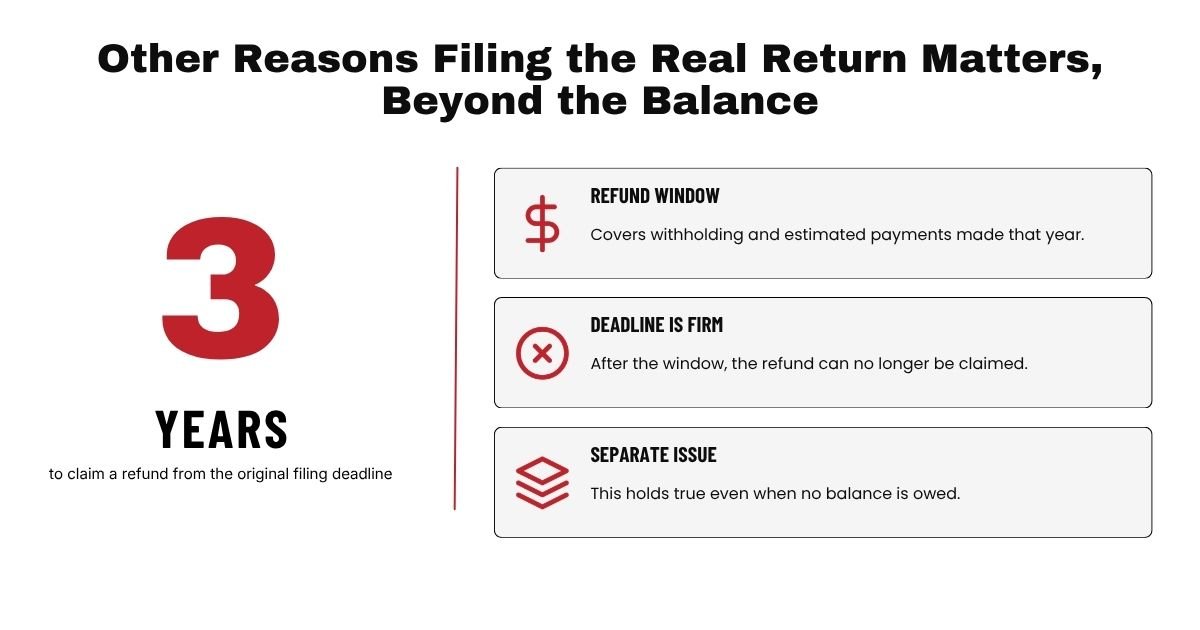
Other Reasons Filing the Real Return Matters, Beyond the Balance
Reducing the assessed tax is usually the primary motivation, but there are other real consequences worth knowing about. You generally only have 3 years from the original filing deadline to claim a refund for withholding or estimated payments made for that year, so significant delay can mean losing money you were otherwise owed entirely, separate from any balance due question.
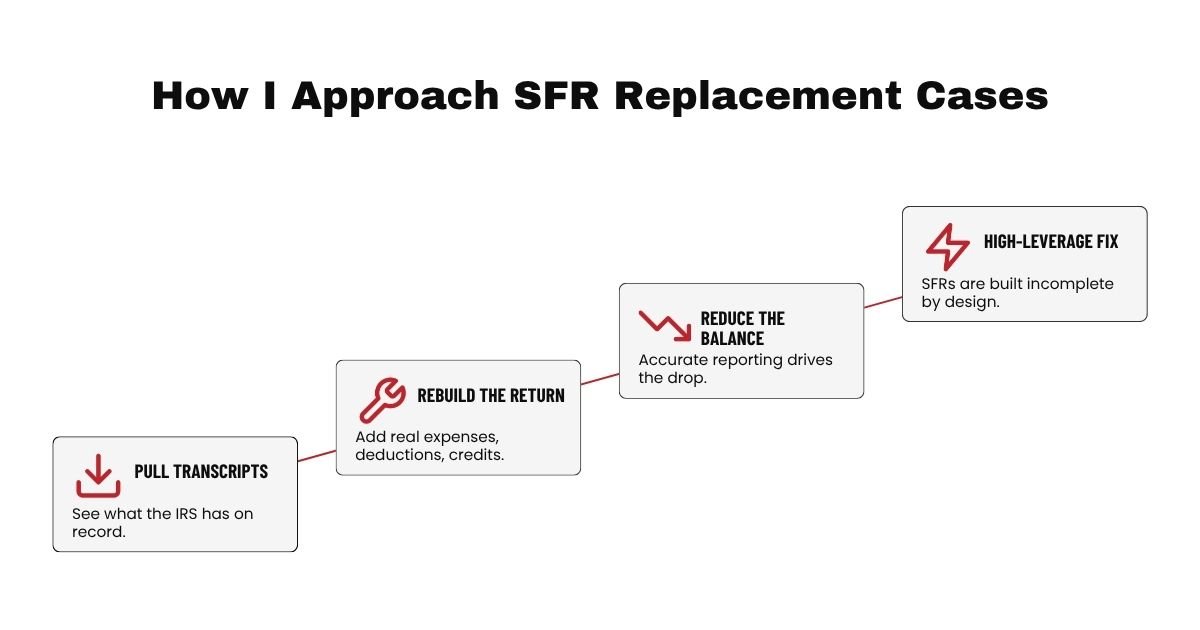
How I Approach SFR Replacement Cases
When someone comes to me with an SFR-based balance, I want to pull the wage and income transcripts first, before anything else, since that tells me exactly what the IRS already has on record. From there, reconstructing an accurate return, one that actually reflects real business expenses, real deductions, and real credits, is often where the biggest reduction in the balance comes from.
This is genuinely one of the higher-leverage things I do for nonfiler clients, precisely because SFRs are built to be incomplete by design.
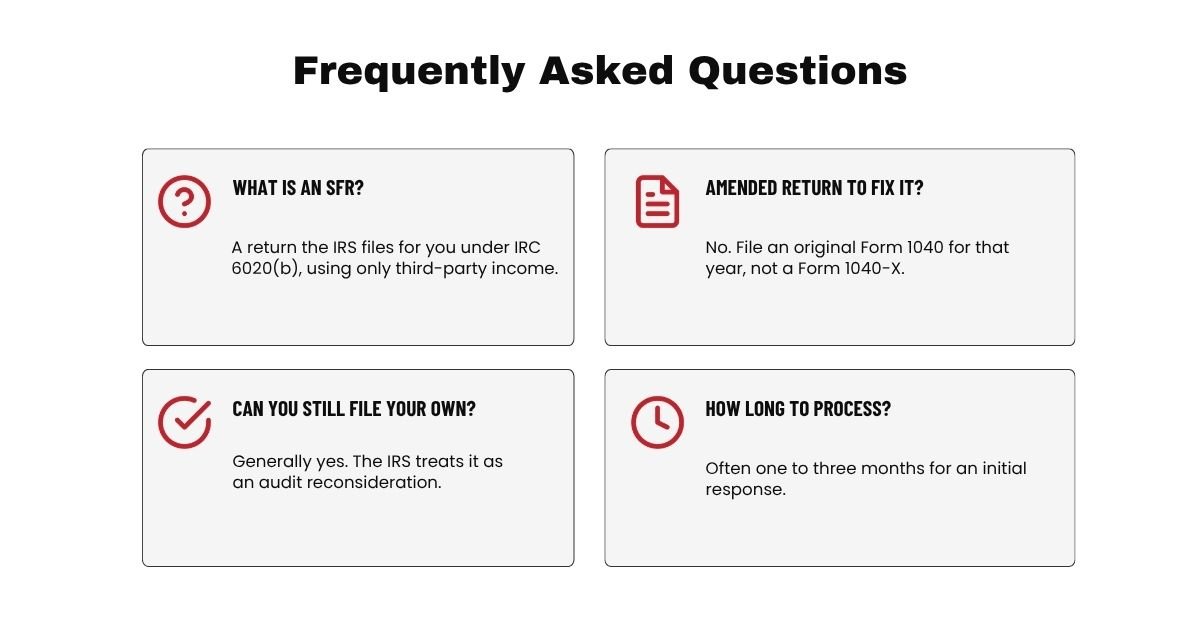
Frequently Asked Questions
-
A return the IRS prepares on your behalf under IRC Section 6020(b) when you have not filed a required return, using only third-party income information and no deductions or credits.
-
Because it does not include any deductions, business expenses, or credits you may be entitled to, and generally uses the least favorable filing status available.
-
Generally yes, by filing your original return for that year, which the IRS processes as an audit reconsideration.
-
No, generally not a Form 1040-X. Since no taxpayer-filed return exists for that year, you file an original Form 1040 for that specific tax year instead.
-
Generally one to three months for an initial response, though this can vary and often takes longer than a normal, on-time filing would.
Replacing an Inflated SFR Balance
If the IRS filed a return for you and the balance looks far higher than it should, there is a real, well-established path to correcting it.
I offer a free case review to help you understand what your actual liability likely is and walk through replacing an SFR with an accurate return.