
If you have heard that creditors can only take 25 percent of your paycheck, I want to correct that before you assume it applies to the IRS too.
It does not. The IRS calculates wage garnishment completely differently, and for most people, it takes significantly more than 25 percent.
I want to walk through exactly how the calculation works, so you know what to actually expect rather than relying on a number that does not apply here.

TLDR
- The IRS is not subject to the 25 percent disposable income cap that applies to most private creditors under the Consumer Credit Protection Act.
- Instead, the IRS uses a fixed exempt amount table in Publication 1494, based on your filing status, number of dependents, and how often you are paid, and takes everything above that amount.
- For many taxpayers, this results in the IRS taking somewhere between 50 and 70 percent or more of net pay, far above what a typical creditor could take.
- If you do not return the exemption paperwork to your employer within 3 days of receiving it, your exempt amount is generally calculated as if you are single with no dependents, the lowest exemption available.
- The IRS generally must send a Final Notice of Intent to Levy, with a 30-day window to respond or request a hearing, before wage garnishment can begin.
- The garnishment generally continues until the IRS releases the levy, the debt is paid, or the collection statute expires.
Why the 25 Percent Rule Does Not Apply Here
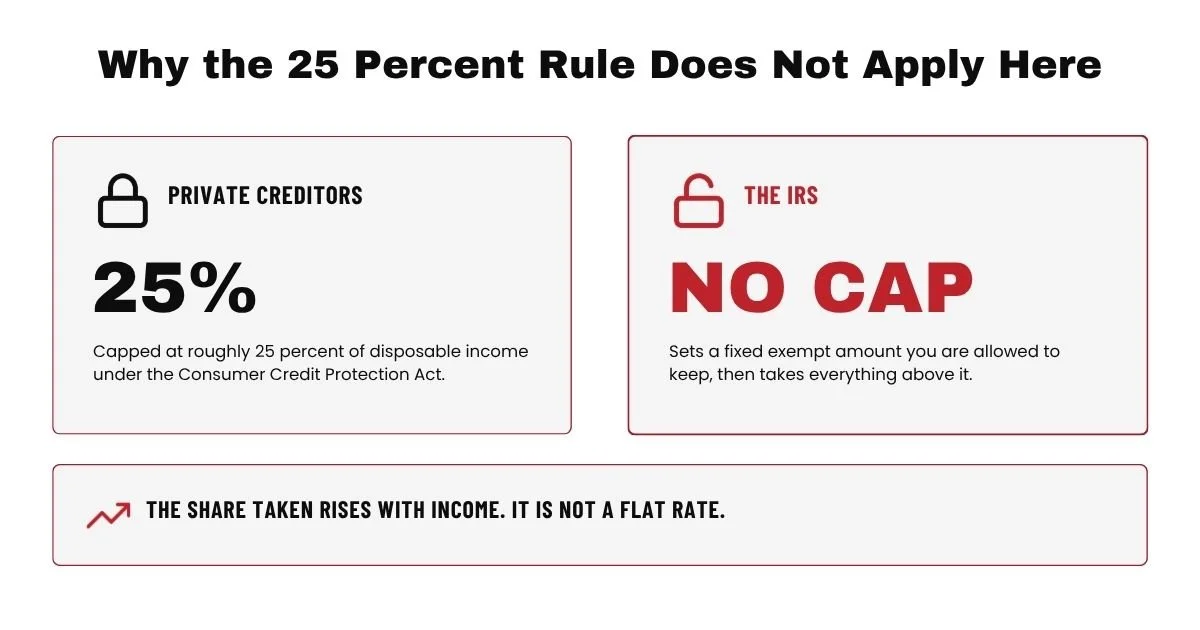
Most private debt collectors are capped by the Consumer Credit Protection Act at taking roughly 25 percent of your disposable income.
The IRS is not subject to that cap. Instead of limiting what it can take, the IRS calculation works the opposite way: it determines a fixed amount you are allowed to keep, called the exempt amount, and takes everything above that.
This distinction matters enormously in practice, because it means the percentage the IRS actually takes depends heavily on your income level, not a flat rate. A higher earner can lose a much larger share of their paycheck than the 25 percent figure most people have in their head.
How the Exempt Amount Is Actually Calculated
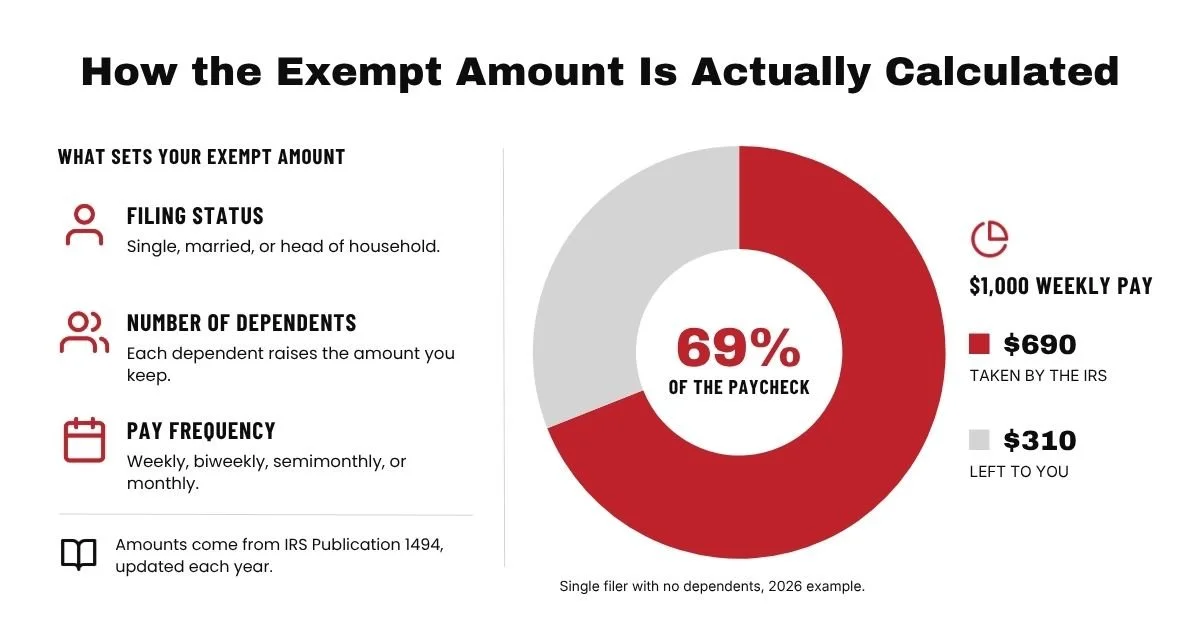
The exempt amount, the portion of your paycheck the IRS must leave you, comes from IRS Publication 1494, which is updated annually and takes into account your filing status, your number of dependents, and how frequently you are paid
To illustrate how significant the gap can be: multiple current sources describe a single filer with no dependents earning $1,000 per week in 2026 as being left with roughly $309 to $310 per week, meaning the IRS takes approximately $690, or around 69 percent of that paycheck.
The Three-Day Window That Determines Your Exemption
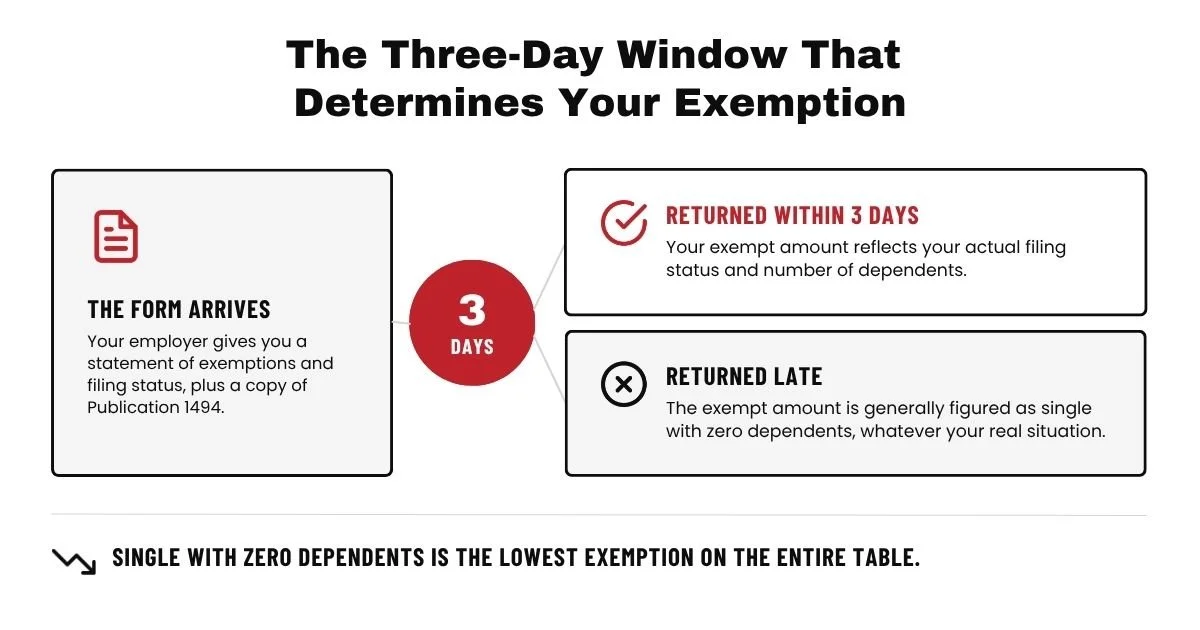
This is a detail that gets missed constantly, and it can cost hundreds of dollars per paycheck if handled incorrectly. When your employer receives the wage levy, they are generally required to give you a statement of exemptions and filing status to complete, along with a copy of Publication 1494.
You generally have 3 days to return that paperwork to your employer.
If you miss that 3-day window, your exempt amount is generally calculated as if you are single with zero dependents, regardless of your actual filing status or family situation.
This is the lowest exemption on the entire table, and multiple sources describe this as one of the most common, avoidable mistakes in wage garnishment cases.
What Happens If You Have Multiple Jobs
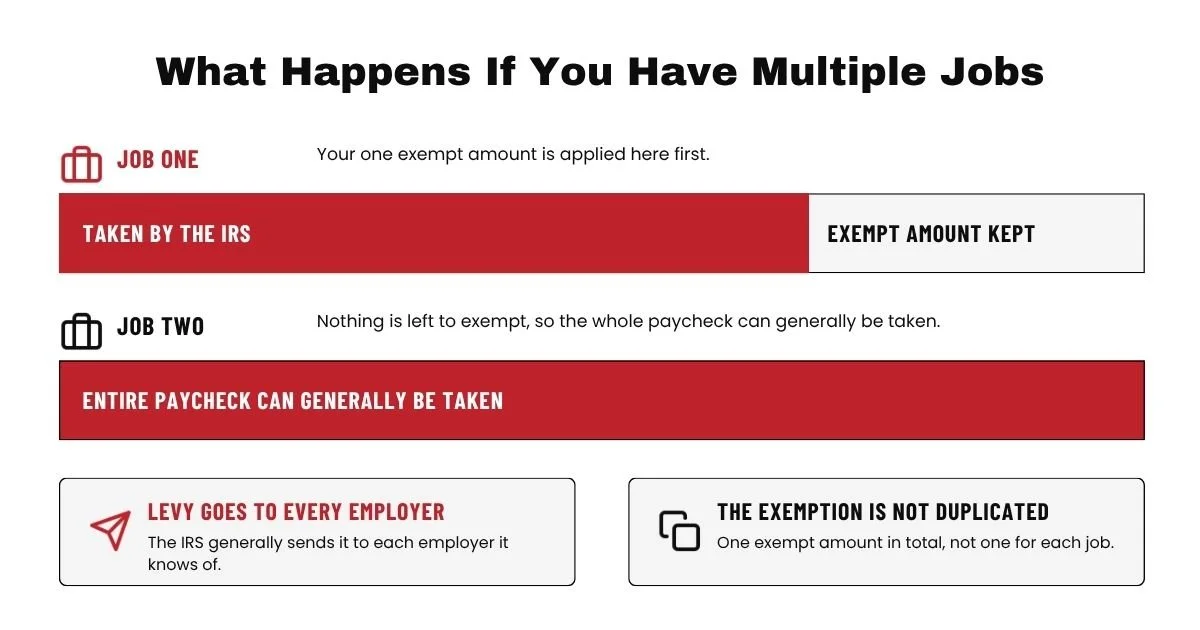
The IRS generally sends the wage levy to every employer it is aware of. If your primary job's paycheck already covers your full exempt amount, the IRS can generally take the entire paycheck from a second job, since the exemption is not duplicated across multiple employers.
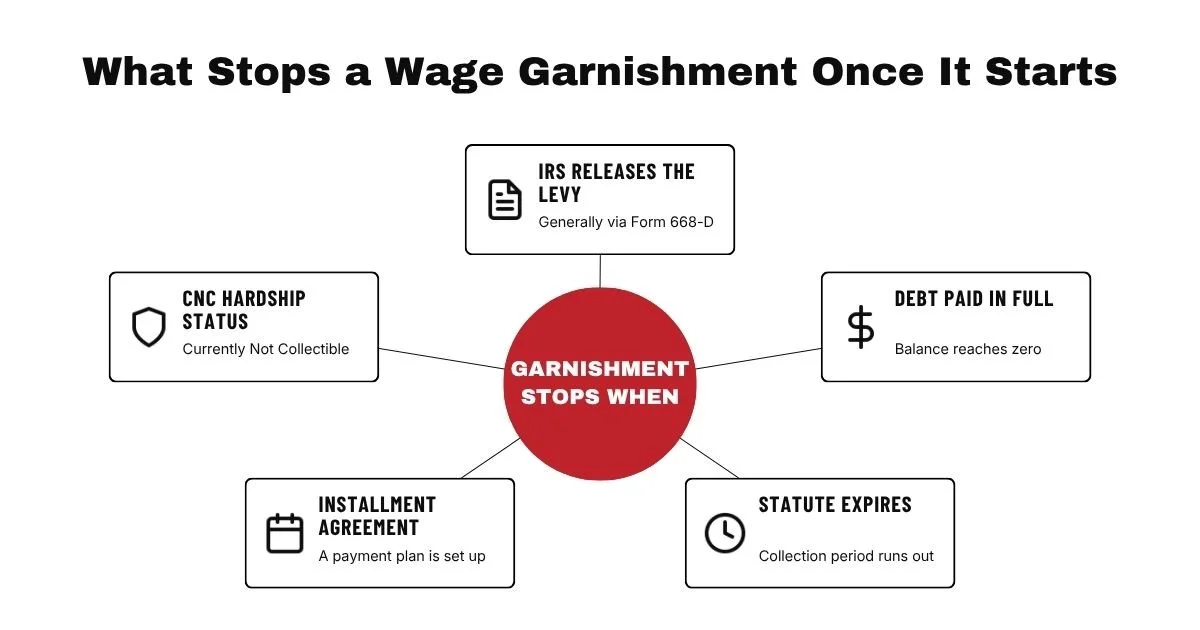
What Stops a Wage Garnishment Once It Starts
The garnishment generally continues, pay period after pay period, until one of a few things happens: the IRS formally releases the levy, generally via Form 668-D, the underlying debt is paid in full, or the collection statute of limitations expires.
Several resolution paths can generally result in the IRS releasing an active wage levy, including setting up an installment agreement, demonstrating Currently Not Collectible hardship status, or in some cases successfully requesting a Collection Due Process hearing if the garnishment began without proper notice.
These are covered in more depth in our companion posts on IRS collection options.
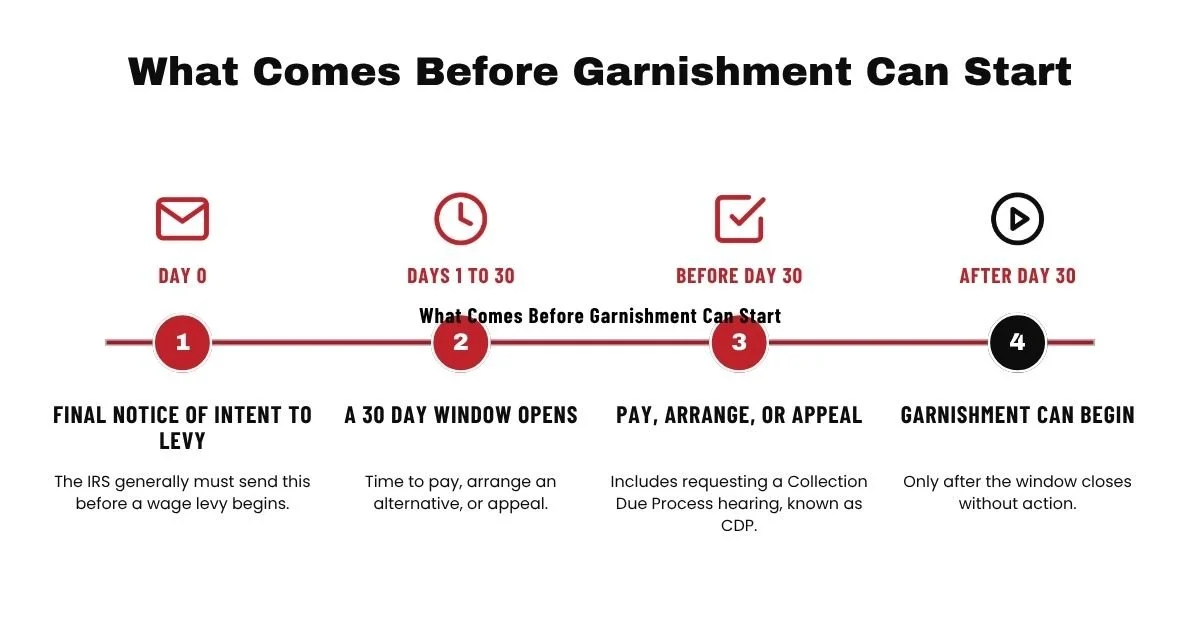
What Comes Before Garnishment Can Start
Wage garnishment does not happen without warning. The IRS generally must send a Final Notice of Intent to Levy, which starts a 30-day window during which you can pay, set up an alternative arrangement, or request a Collection Due Process hearing before the garnishment actually begins.
This is covered in more depth in our companion post on IRS tax levies versus liens, but I want to emphasize it here specifically: that 30-day window is the single most effective point to act before a garnishment starts, rather than after.
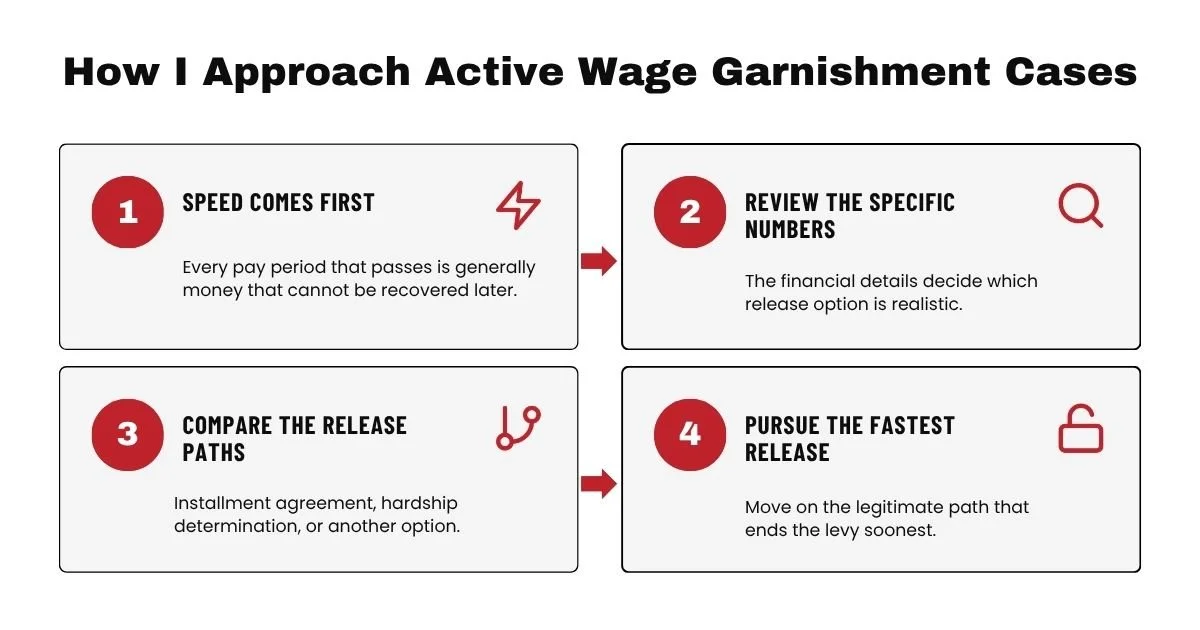
How I Approach Active Wage Garnishment Cases
When someone comes to me with an active wage garnishment already underway, the priority is almost always speed. Every pay period that passes with the garnishment in place is money that cannot be recovered after the fact in most circumstances.
My first step is generally identifying the fastest legitimate path to a release, whether that is an installment agreement, a hardship determination, or another option, based on the specific numbers involved.
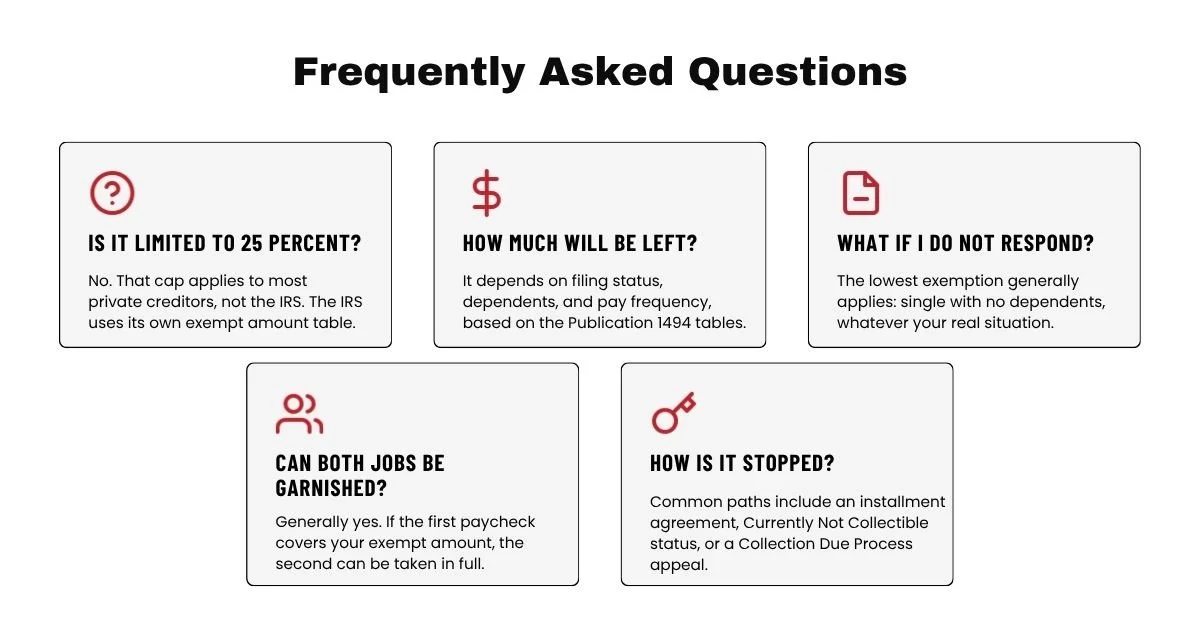
Frequently Asked Questions
-
No. That 25 percent cap applies to most private creditors under the Consumer Credit Protection Act, not the IRS.
The IRS uses its own exempt amount table and can generally take significantly more. -
It depends on your filing status, dependents, and pay frequency, based on the IRS Publication 1494 tables.
-
Your exempt amount is generally calculated using the lowest available exemption, single with no dependents, regardless of your actual situation. Responding within the 3-day window generally protects your correct exemption amount.
-
Generally yes, if your primary paycheck already covers your exempt amount, the IRS can take the entire second paycheck.
-
Common paths generally include setting up an installment agreement, qualifying for Currently Not Collectible status, or successfully appealing through a Collection Due Process hearing if proper notice was not given.
Which option fits depends on your specific financial situation.
If Your Wages Are Already Being Garnished
If the IRS is already taking money from your paycheck, time matters. Every pay period that passes is generally money that cannot be recovered once it is gone.
I offer a free case review to look at your specific situation and identify the fastest realistic path to getting a wage garnishment released.