
Yes, technically, the IRS can seize and sell your primary residence to satisfy unpaid tax debt.
I want to answer that directly rather than dance around it. But I also want to walk through just how rare this actually is, and how many legal hurdles exist between an unpaid tax bill and someone actually losing their home, because the reality is far less alarming than the question itself sounds.

TLDR
- The IRS can legally seize a primary residence under IRC Section 6334, but only with written approval from a U.S. District Court judge or magistrate.
- A primary residence is completely exempt from seizure if the total tax debt is $5,000 or less.
- Home seizures are extremely rare in practice. One frequently cited figure describes the IRS issuing over 305,000 third-party levies in a recent year while physically seizing property in only 96 cases.
- Internal IRS procedure requires the highest level of seizure approval for a principal residence specifically, judicial approval, compared to lower approval levels required for other types of property.
- The IRS generally pursues far easier collection tools first, bank levies, wage garnishment, and other assets, long before a home seizure is even considered.
- This protection applies specifically to a primary residence. Rental properties, vacation homes, and investment real estate do not receive the same protection.
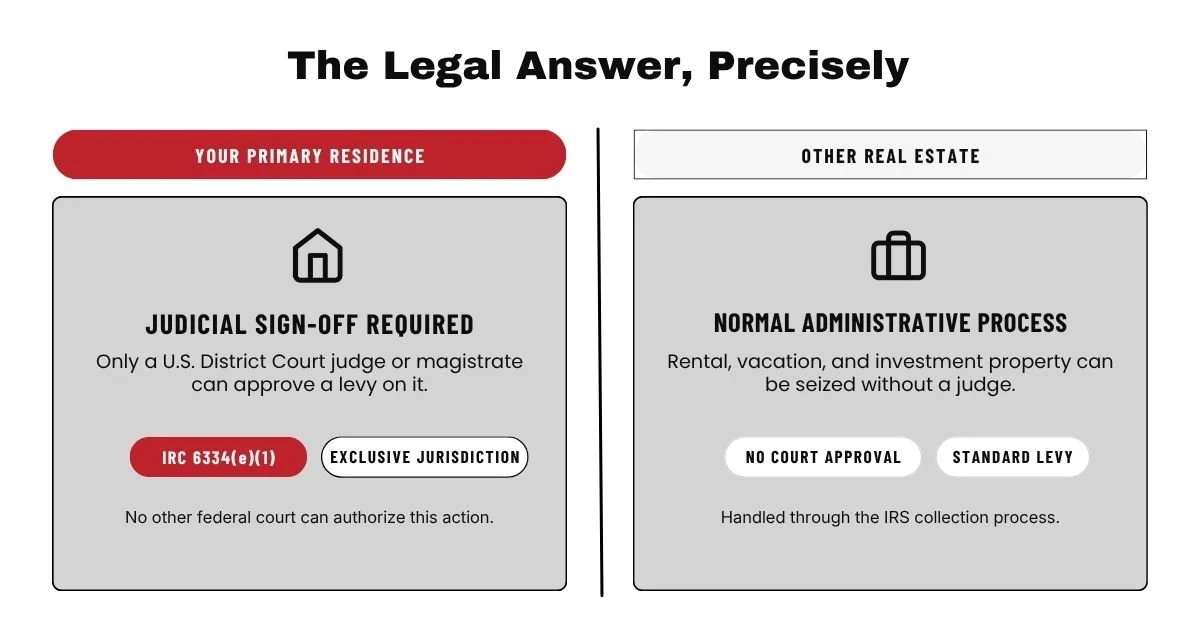
The Legal Answer, Precisely
Under IRC Section 6334(e)(1), the IRS can obtain approval to levy a taxpayer's principal residence, but this requires written approval from a judge or magistrate of a United States District Court.
No other federal court can authorize this specific action, district courts have exclusive jurisdiction over this decision.
This court approval requirement does not apply to other real estate you might own. Rental properties, vacation homes, and investment real estate can generally be seized through the IRS's normal administrative process, without going in front of a judge first.
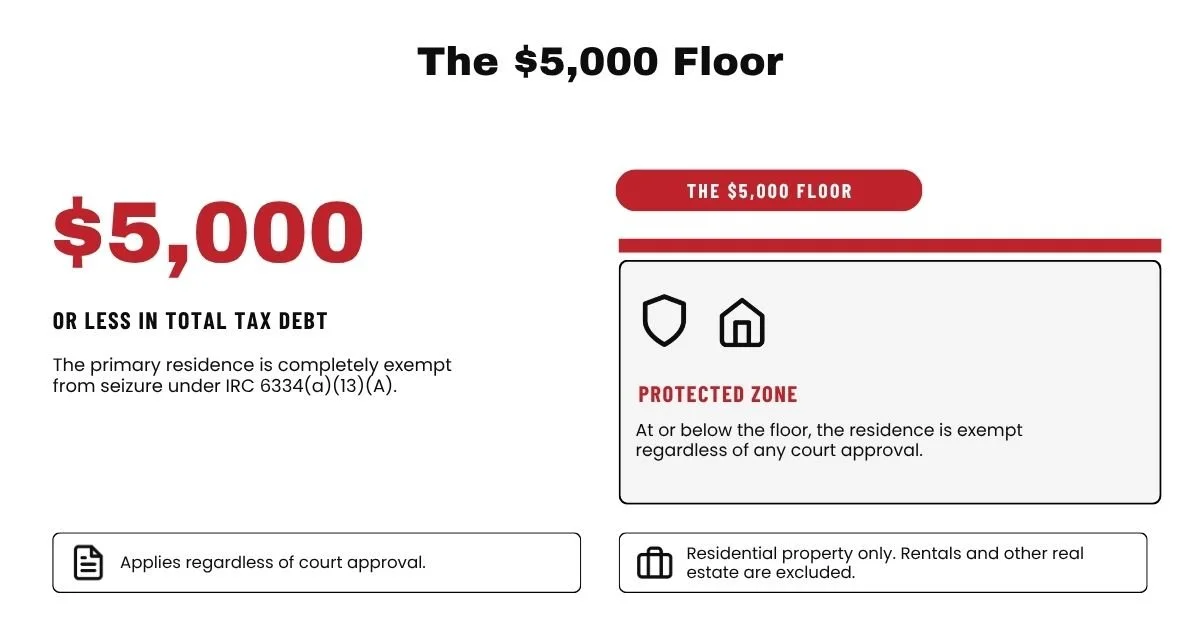
The $5,000 Floor
There is a separate, additional protection worth knowing about. If your total tax debt is $5,000 or less, real property used as a residence by you, or by someone else in your household rent-free, is completely exempt from seizure under IRC Section 6334(a)(13)(A), regardless of court approval.
This floor applies specifically to residential property. It does not extend the same protection to rental property or other real estate you might own.
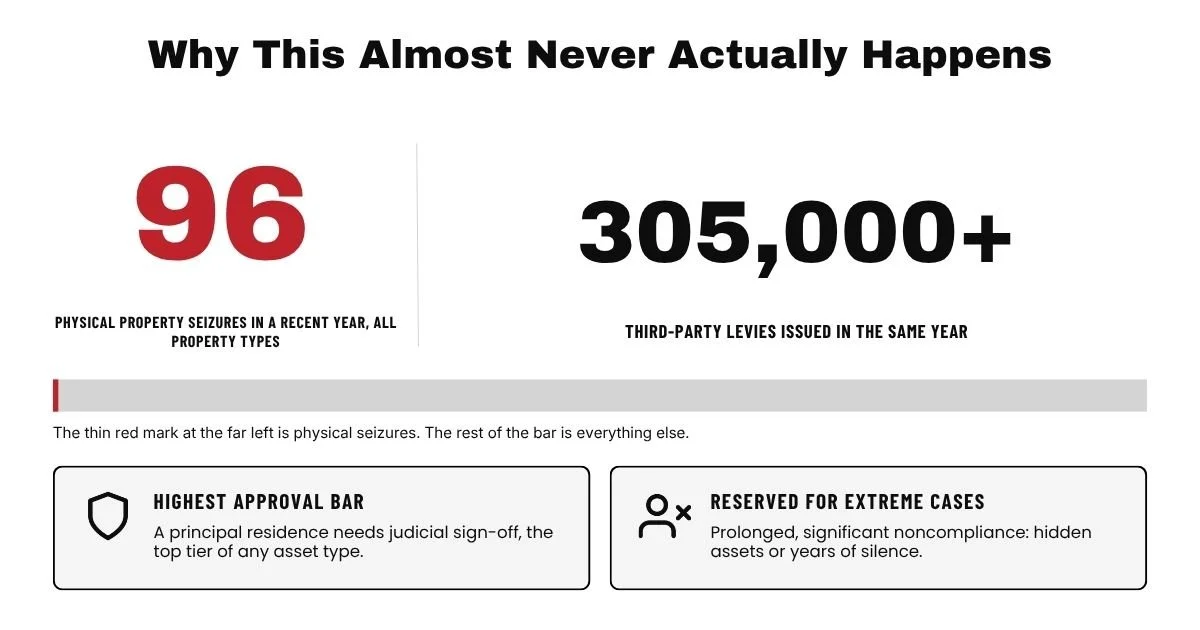
Why This Almost Never Actually Happens
I want to move from the legal framework to the practical reality, because they are quite different. Internally, the IRS treats a principal residence seizure as requiring the highest level of approval of any asset type.
IRS procedure specifically designates judicial approval as the required level for a principal residence, compared to group manager approval for a personal residence that is not the primary one, or area director approval for real property used in a trade or business.
Beyond the procedural hurdle, there is a practical one: seizing and selling a home is expensive and slow for the IRS relative to easier collection tools like a bank levy or wage garnishment, which do not require court involvement at all.
Multiple sources describe home seizures as reserved for cases involving significant, sustained noncompliance, situations where a taxpayer has disappeared, hidden assets, or ignored the collection process entirely over an extended period, rather than routine collection cases.
One frequently cited statistic illustrates just how rare this is: in a recent year, the IRS reportedly issued over 305,000 third-party levies while physically seizing property in only 96 cases total, across all property types, not just homes.

What Generally Happens Before a Home Is Even At Risk
By the time a home seizure could theoretically be on the table, a long sequence of other steps has generally already occurred: a notice sequence, a Final Notice of Intent to Levy with your right to a 30-day Collection Due Process hearing, and typically enforcement attempts against easier targets like bank accounts and wages first.
This connects directly to our companion posts on the IRS notice sequence and Collection Due Process rights.
The honest takeaway is that if you are responding to notices and communicating with the IRS or a representative, in almost every case, the situation resolves through a payment plan, hardship status, or settlement long before a home is ever genuinely at risk.
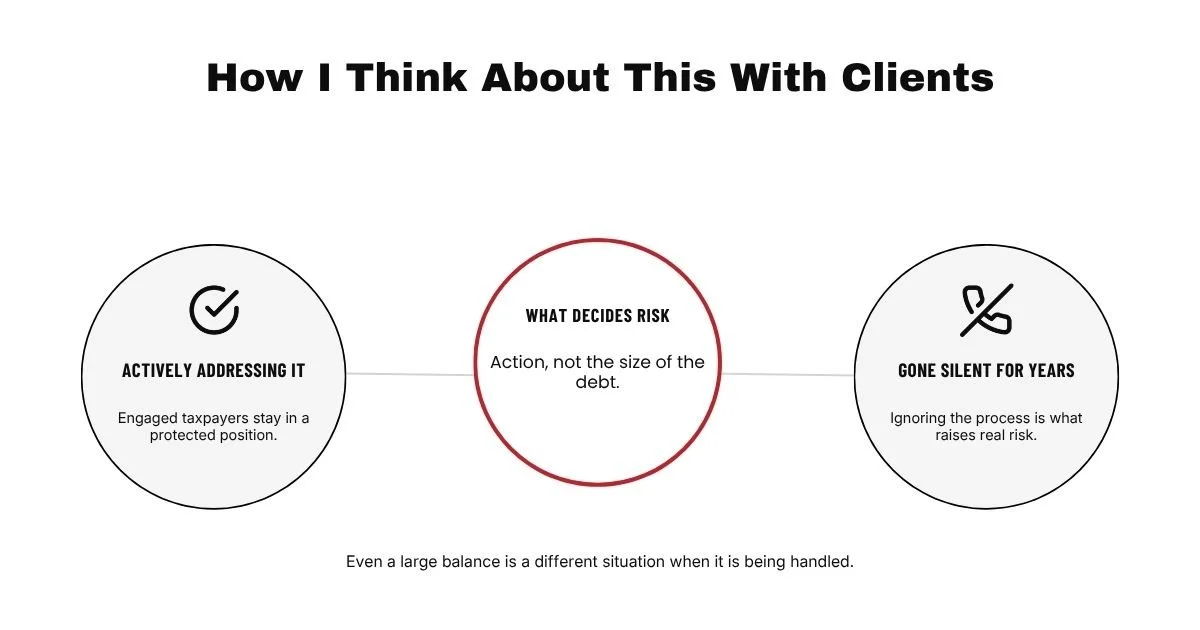
How I Think About This With Clients
I want to be direct about something. In my experience, the home seizure question comes from fear more than from an actual imminent risk in the vast majority of cases I see.
What actually determines whether a home is at risk is not the size of the debt alone, it is whether the situation is being actively addressed.
A taxpayer engaging with the process, even one who owes a substantial amount, is in a fundamentally different position than one who has gone silent for years.
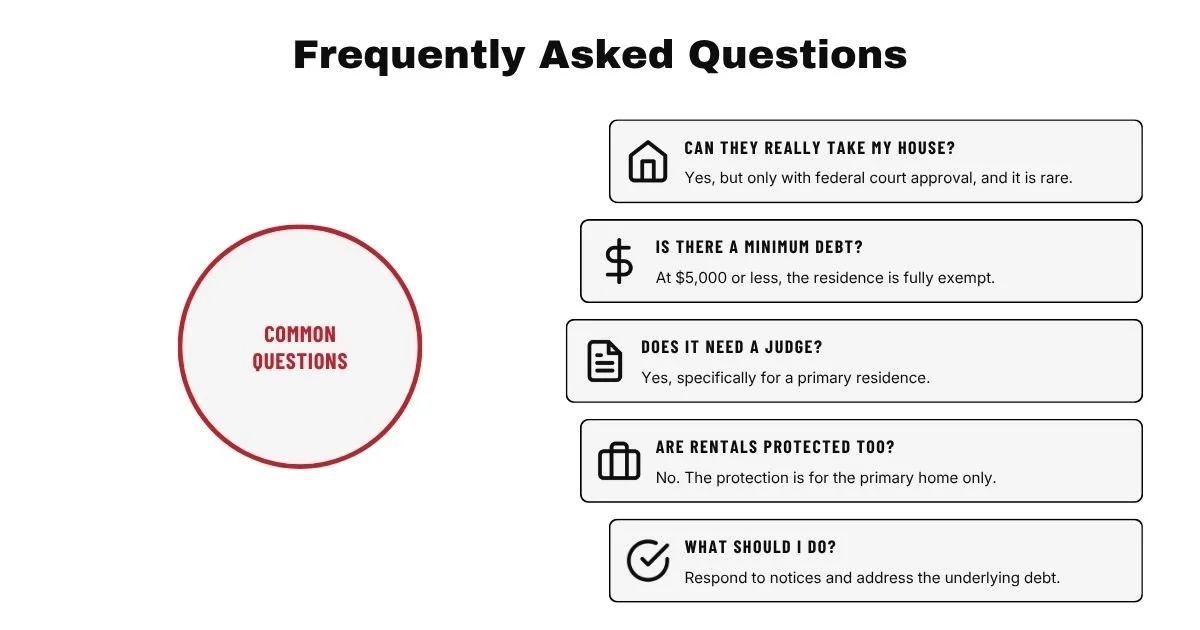
Frequently Asked Questions
-
Legally, yes, under narrow circumstances requiring federal court approval. Practically, it is extremely rare and generally reserved for cases involving prolonged, significant noncompliance.
-
Yes. If your total tax debt is $5,000 or less, your residence is completely exempt from seizure regardless of other factors.
-
Yes, specifically for a primary residence. This is a higher bar than what applies to other types of property the IRS might seize.
-
No. The court approval requirement and related protections apply specifically to a primary residence, not to rental property, vacation homes, or investment real estate.
-
Responding to IRS notices and addressing the underlying debt, through a payment plan, hardship status, or another resolution path, generally keeps a situation from escalating anywhere close to the point where home seizure becomes a realistic concern.
Addressing the Underlying Debt Before Fear Takes Over
If you are worried about losing your home over back taxes, the most effective thing you can do is address the underlying debt directly rather than let the notices sit unopened. In the overwhelming majority of cases, there are resolution paths that never come close to putting your home at risk.
I offer a free case review to look at your specific situation and give you a realistic, honest picture of where you actually stand.