
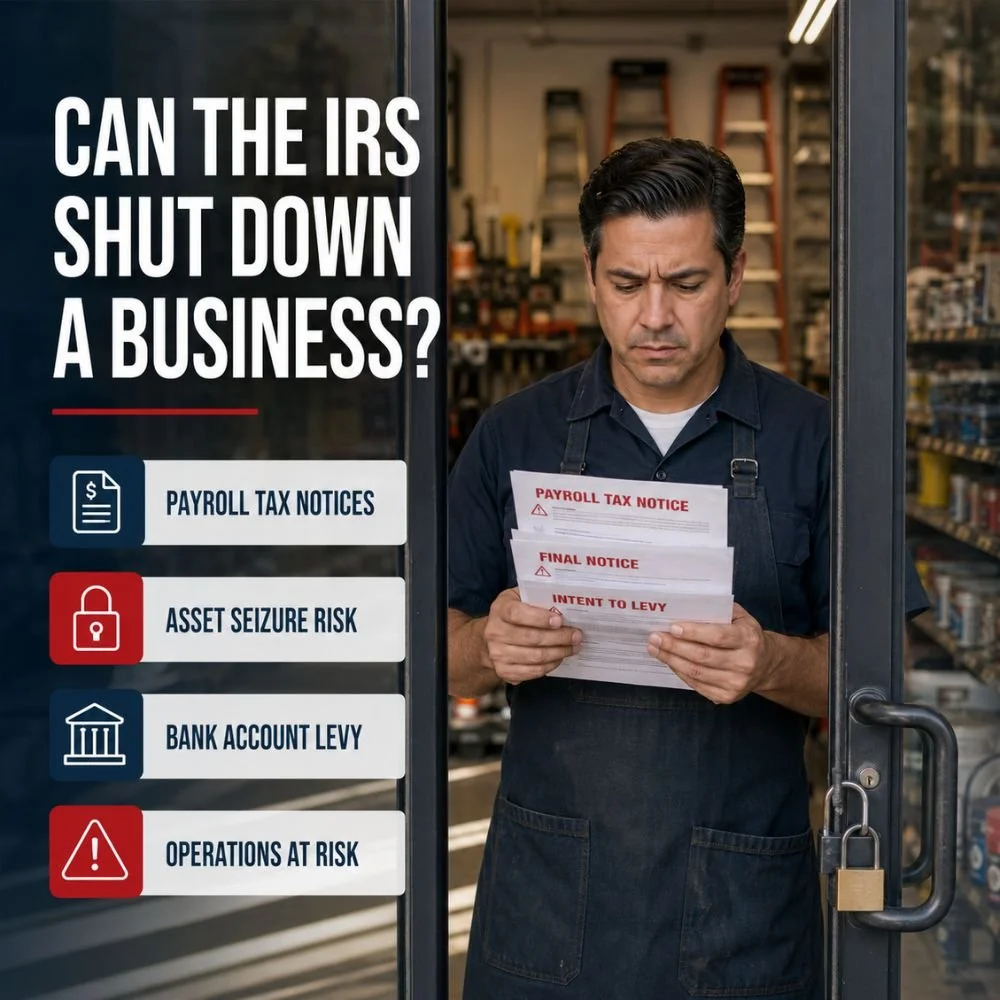
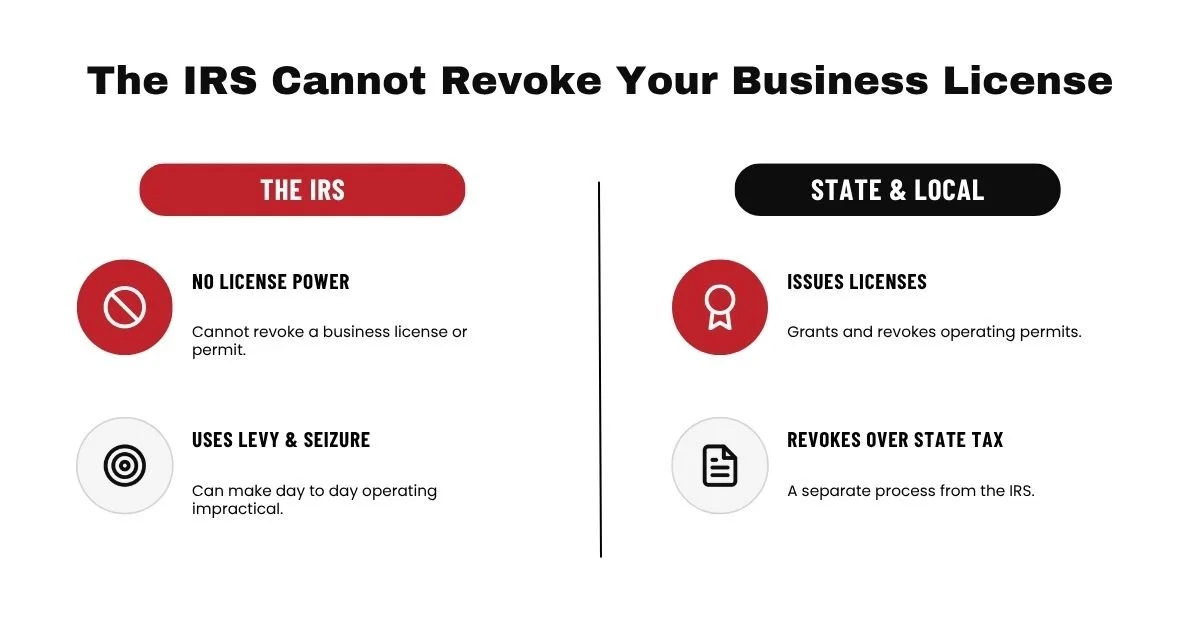
I want to draw a distinction most content on this topic blurs together. The IRS generally cannot revoke your business license, that authority belongs to state and local agencies. What the IRS can do is seize enough of your business's assets, bank accounts, equipment, inventory, and receivables, that operating becomes practically impossible. The end result can look the same. The legal mechanism is different, and understanding that difference matters for how you respond.
TLDR;
- The IRS generally does not have direct authority to revoke a business license or force a legal closure the way a state licensing agency can. Its power comes through asset seizure and levy authority instead.
- The IRS can seize physical business assets, equipment, inventory,
vehicles, and real estate, and can levy bank accounts and amounts owed to the business by other parties.
- The IRS cannot enter your business to seize assets without your permission or a court-ordered warrant, under IRC Section 6331(j).
- Business shutdown through IRS enforcement is relatively rare, since it is costly and time-consuming for the agency, and it generally pursues other collection tools first.
- Payroll tax debt is weighed far more heavily than other business tax debt, since it involves money withheld from employees and is treated as trust fund money.
- You generally have a right to appeal a seizure or levy through the Collection Appeals Program, generally within 10 business days after assets are seized.
The IRS Cannot Revoke Your Business License
This is worth stating clearly because it gets conflated constantly. Business licenses and operating permits are generally issued and revoked by state and local agencies, not the IRS. Some states can revoke a business license or sales tax permit over unpaid state taxes, but that is a separate process from anything the IRS does.
What the IRS can do instead is use its levy and seizure authority in a way that has a similar practical effect, making it impossible to continue operating even though the legal right to operate technically remains intact.
What the IRS Can Actually Seize
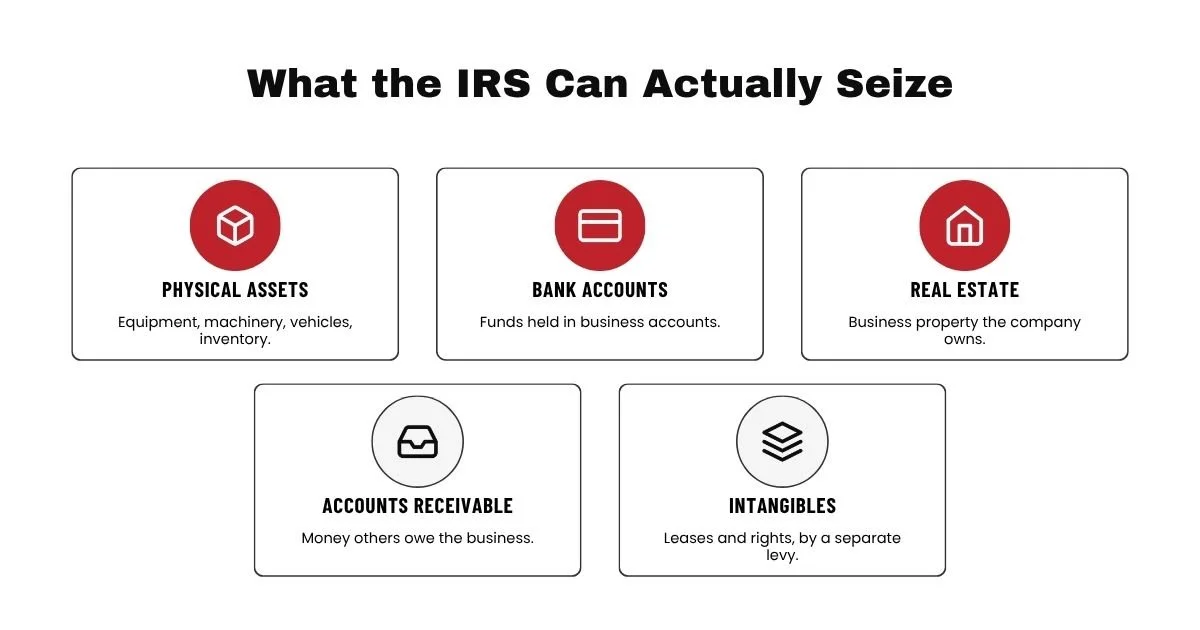
The IRS's levy authority reaches essentially all property and rights to property, which for a business generally includes physical assets like equipment, machinery, vehicles, and inventory, as well as bank accounts and business real estate.
Because a business does not receive a paycheck the way an individual does, the IRS cannot garnish wages from a business the way it would from an individual employee. Instead, it can intercept payments owed to the business by other parties, essentially levying accounts receivable.
Seizing intangible assets, such as accounts receivable or a leasehold interest, generally requires the IRS to issue a specific levy on those assets separately, it is not automatically included just because physical property was seized.
The IRS Cannot Just Walk In
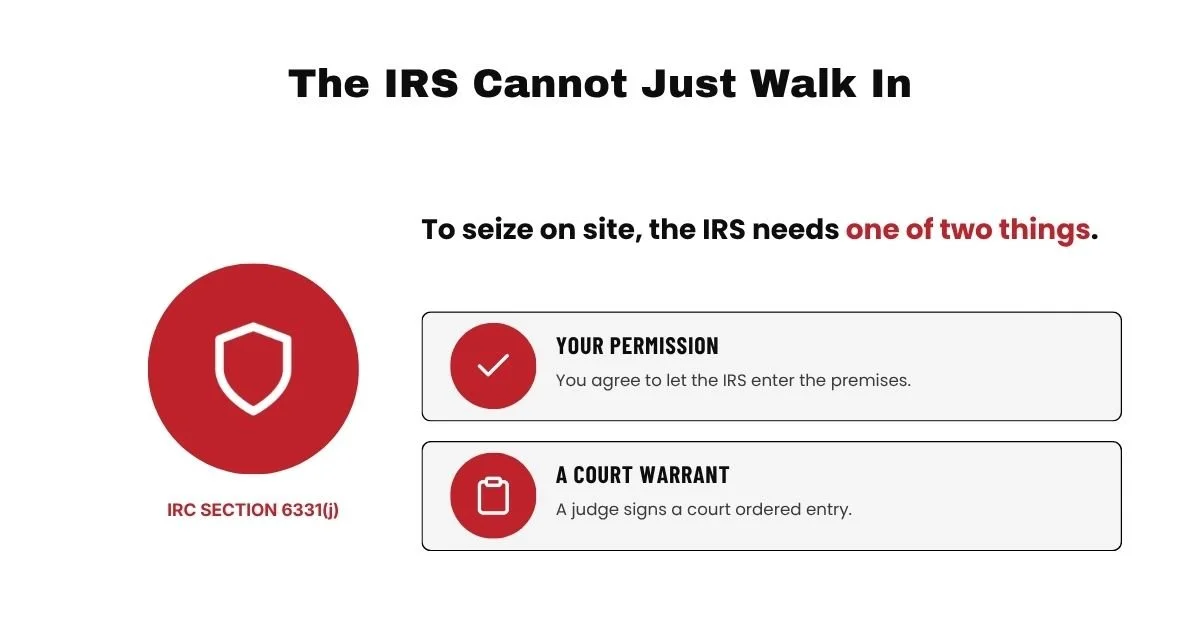
A protection worth knowing about: under IRC Section 6331(j), the IRS generally cannot enter your business premises to seize assets without either your permission or a court-ordered warrant.
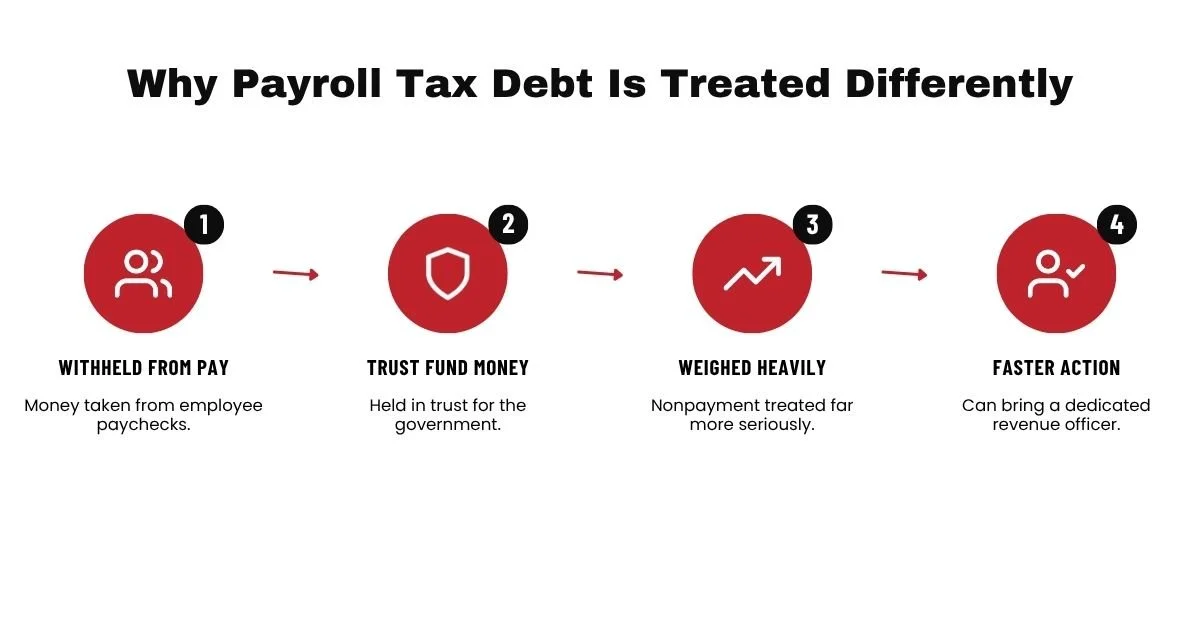
Why Payroll Tax Debt Is Treated Differently
If your business has payroll tax debt, the calculus changes significantly. The portion of payroll tax withheld from employee pay is considered trust fund money, and the IRS generally treats nonpayment of that specific portion far more seriously than general business tax debt.
This connects directly to our companion posts on the Trust Fund Recovery Penalty and business payroll tax debt, since payroll tax noncompliance is generally what moves a case toward faster, more aggressive enforcement, including the assignment of a dedicated revenue officer.
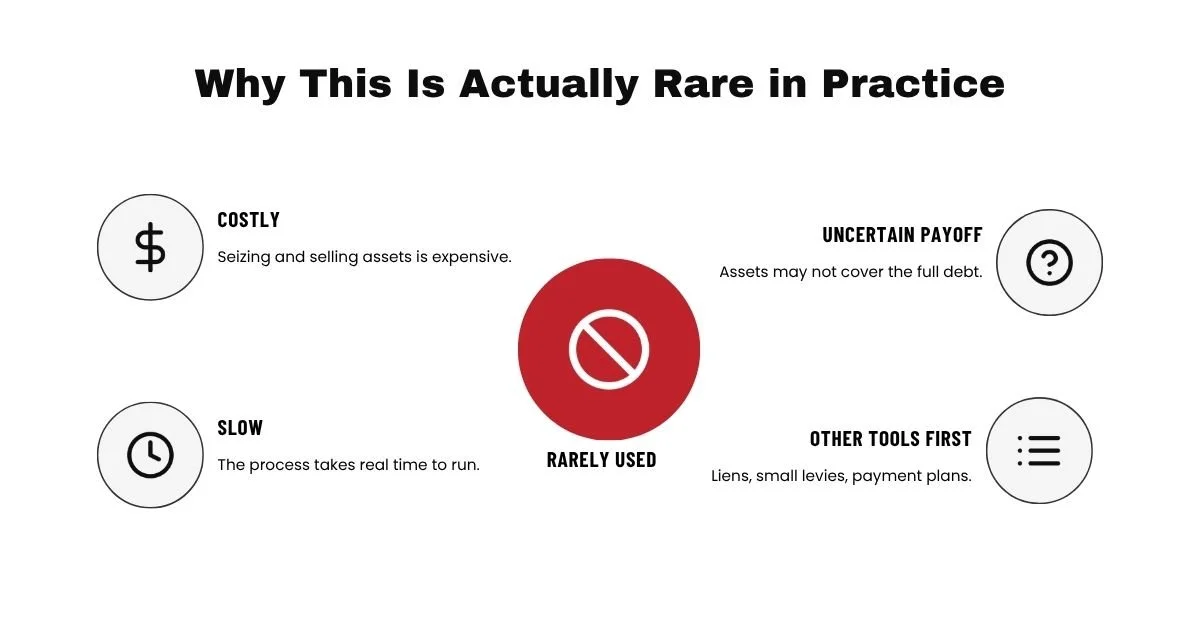
Why This Is Actually Rare in Practice
Despite the broad legal authority described above, multiple sources describe actual business shutdown through IRS enforcement as relatively uncommon. Seizing and liquidating business assets is expensive and time-consuming for the IRS, and doing so does not guarantee the tax debt gets fully resolved either, particularly if the assets do not sell for enough to cover what is owed.
The IRS generally has other tools it prefers to use first: liens, smaller-scale levies, and negotiated resolutions like installment agreements, all of which are less disruptive and less resource-intensive than a full seizure and liquidation.
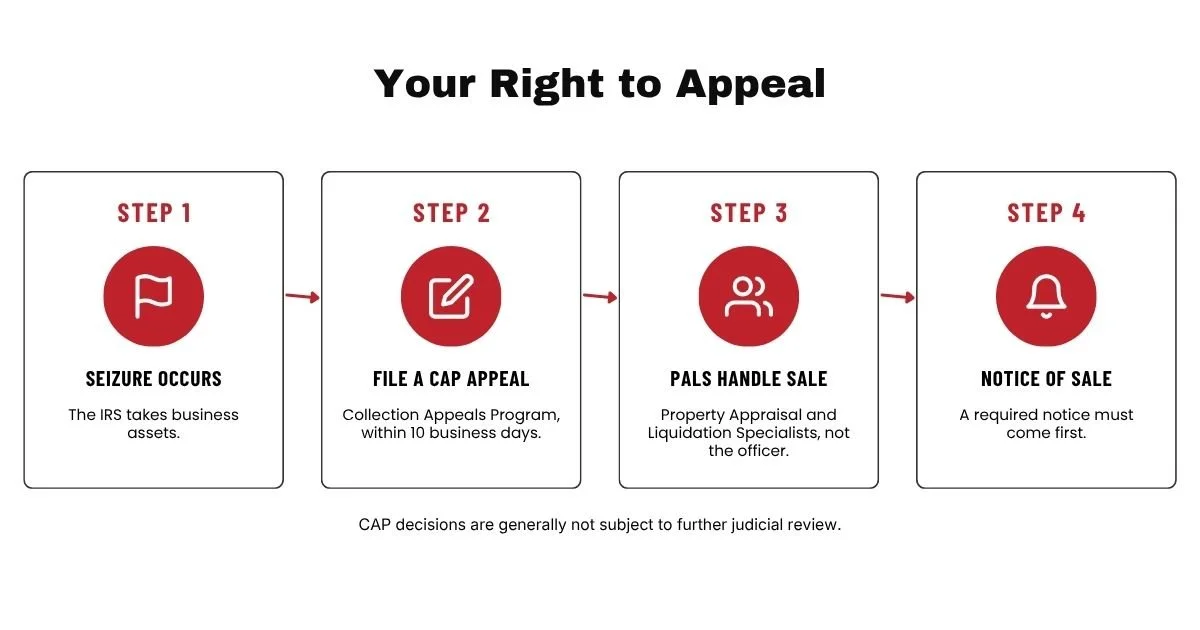
Your Right to Appeal
If the IRS has seized or is about to seize business assets, you generally have the right to appeal through the Collection Appeal Program, generally within 10 business days after a seizure occurs. Note that CAP decisions are generally not subject to further judicial review.
If a seizure has occurred, the revenue officer generally does not sell the property directly. Instead, specialized IRS personnel, Property Appraisal and Liquidation Specialists, generally handle the sale, and a required notice of sale process must occur first.
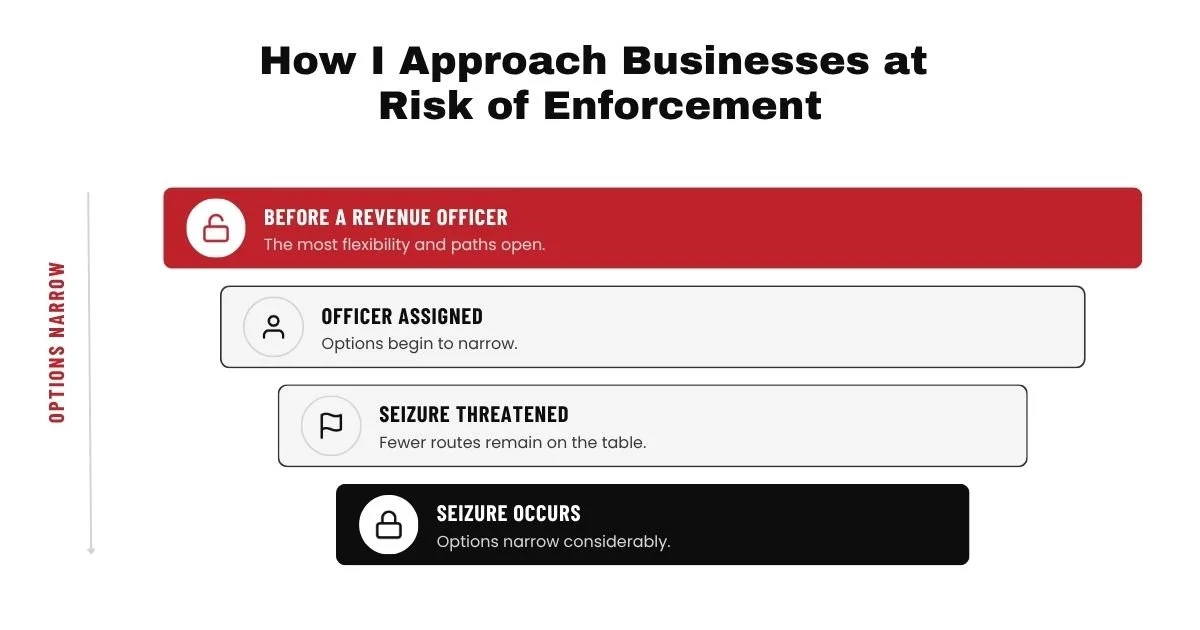
How I Approach Businesses at Risk of Enforcement
When a business owner comes to me concerned about this level of enforcement, my first priority is almost always figuring out where the case actually stands in the collection timeline, whether a revenue officer has been assigned, whether a seizure has already occurred or is just being threatened, since the available options narrow considerably once enforcement actually begins.
Acting early, before a revenue officer is even assigned, generally preserves far more flexibility than responding after assets are already at risk.
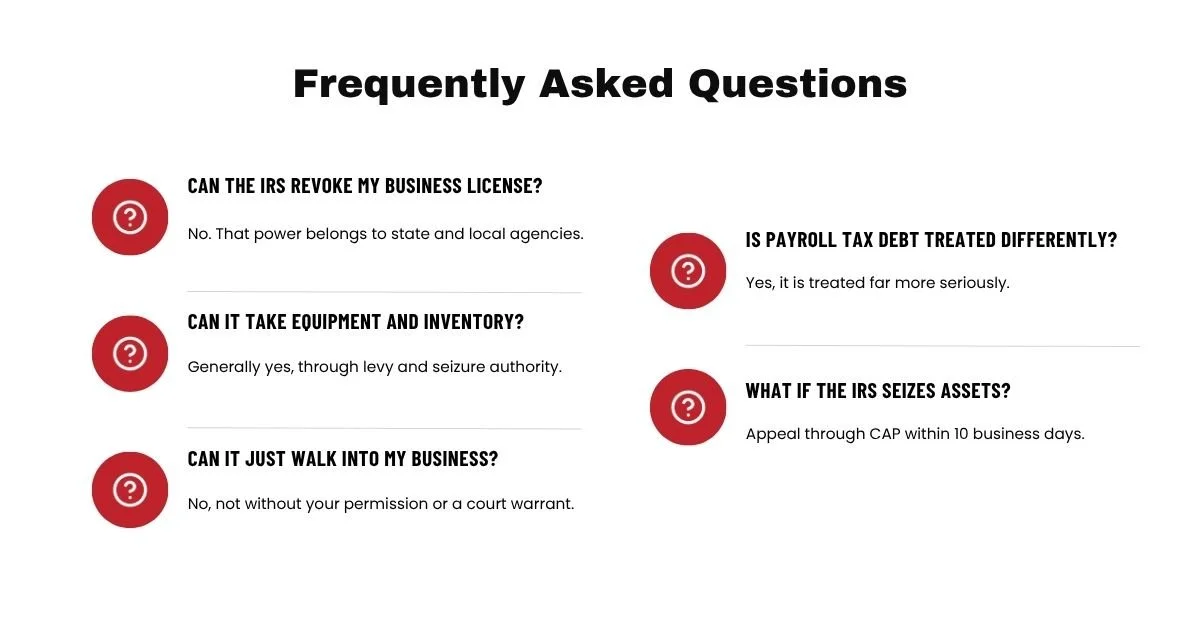
Frequently Asked Questions
-
No, generally not directly. That authority generally belongs to state
and local licensing agencies, though the IRS can use asset seizure in a
way that has a similar practical effect.
-
Generally yes, physical business assets are generally reachable through IRS levy and seizure authority, though the IRS typically pursues other
collection tools first.
-
Generally no, without your permission or a court-ordered warrant, under IRC Section 6331(j).
-
Yes, generally much more seriously, since it involves funds withheld from employees and treated as trust fund money.
-
You generally have the right to appeal through the Collection Appeals Program, generally within 10 business days of the seizure.
Protecting Your Business Before Enforcement Escalates
If you are worried about IRS enforcement reaching the point of asset seizure, acting early is generally the single biggest factor in how many options remain available to you.
I offer a free case review to look at where your business's case actually stands and what steps would protect your operations going forward.