
Death does not erase a federal tax lien. I want to state that plainly up front, because it is the single most important thing to understand before getting into the details, and it is also the point people most often get wrong.
What I want to walk through here is something most content on this topic misses: there are actually two different kinds of federal tax liens that can be relevant after someone dies, and they work differently.

TLDR:
- A regular federal tax lien, filed for unpaid income tax, is not extinguished by the taxpayer's death. It continues to attach to their property, and the IRS's authority to collect by levy also survives.
- Separately, if the estate is large enough to require Form 706, a distinct "silent" estate tax lien automatically attaches to the entire gross estate at the moment of death, whether or not property has yet come into the executor's control.
- The estate tax lien does not need to be recorded to be enforceable against a buyer, and it generally continues for up to 10 years from the date of death or until the estate tax is paid.
- If a tax lien attaches to jointly held property, what happens next generally depends on how the property was titled, tenancy by the entirety, joint tenancy, or tenancy in common, and each is treated differently.
- Selling real property from an estate with a Form 706 filing requirement generally requires applying for a discharge of the estate tax lien using Form 4422.
The Two Different Liens People Confuse
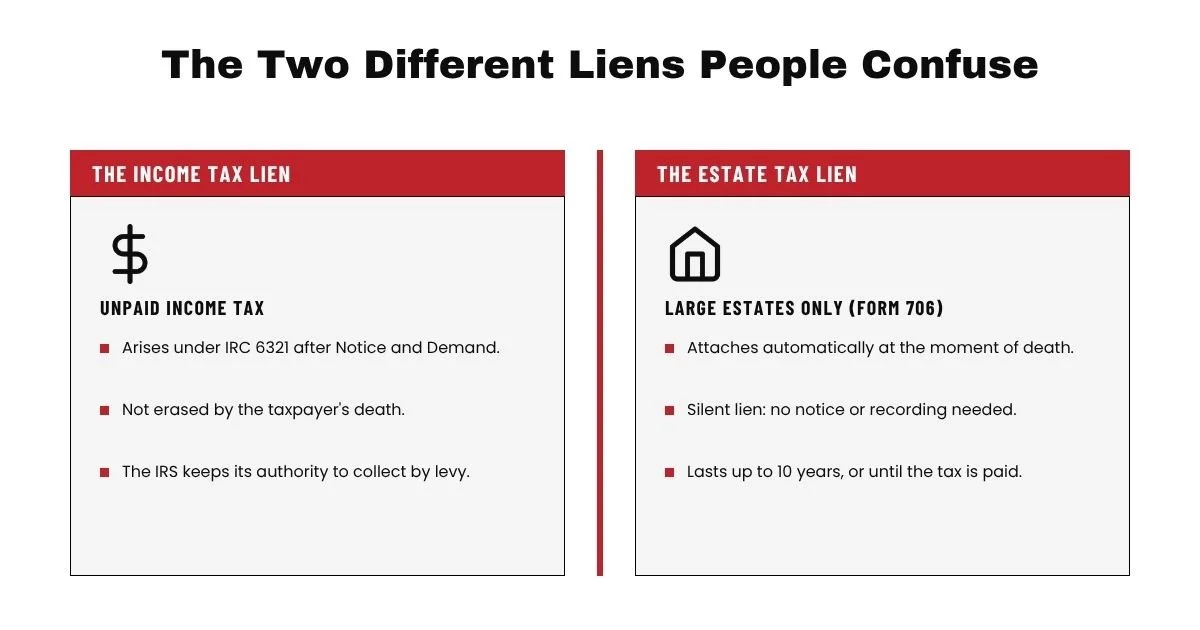
I want to separate these clearly, because conflating them leads to either unnecessary panic or false reassurance, depending on which one actually applies to a given situation.
The Regular Federal Tax Lien (Unpaid Income Tax)
This is the lien most people mean when they talk about "IRS tax debt." It arises under IRC Section 6321 once the IRS assesses a liability and sends a Notice and Demand for Payment, and it attaches to all of the taxpayer's property and rights to property.
This lien is not extinguished by the taxpayer's death. It continues to encumber their property, and the IRS's authority to collect that property by levy also survives death.
The Estate Tax Lien (A Completely Separate Thing)
This is the one most people have never heard of, and it only becomes relevant if the estate is large enough to trigger a Form 706 filing requirement, covered in depth in our companion post comparing Form 706 to the final income tax return.
Under IRC Section 6324(a), an estate tax lien automatically attaches at the moment of death to every part of the gross estate, even property that has not yet come into the executor's control. Unlike the regular tax lien, no assessment, notice, or demand is required to create it.
It is sometimes called a "silent lien" because it does not need to be publicly recorded to be enforceable, including against someone who later buys the property.
This lien generally continues for up to 10 years after the date of death, or until the estate tax is paid in full, whichever comes first.
What This Means If You Are Selling Inherited Property
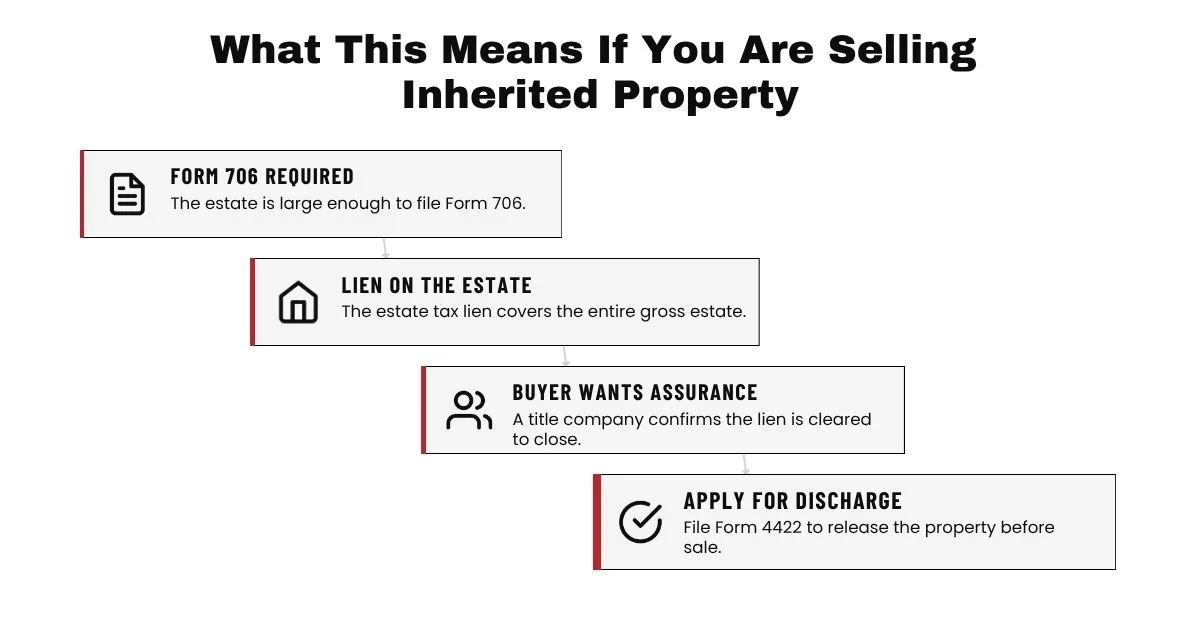
This is where the distinction actually matters in a practical, real world way. If the estate had a Form 706 or Form 706-NA filing requirement, the federal estate tax lien attaches to the entire gross estate, and a title company or buyer will generally want assurance that lien has been addressed before closing.
The IRS's own guidance is direct: if you are administering an estate with a Form 706 filing requirement and the property is being sold, you generally apply for a discharge of the estate tax lien using Form 4422,
Application for Certificate Discharging Property Subject to Estate Tax Lien.
For estates that did not trigger a Form 706 filing requirement, this specific "silent lien" is not in play, but a regular federal tax lien tied to the decedent's unpaid income tax could still be, if one existed before death.
How Jointly Held Property Is Treated
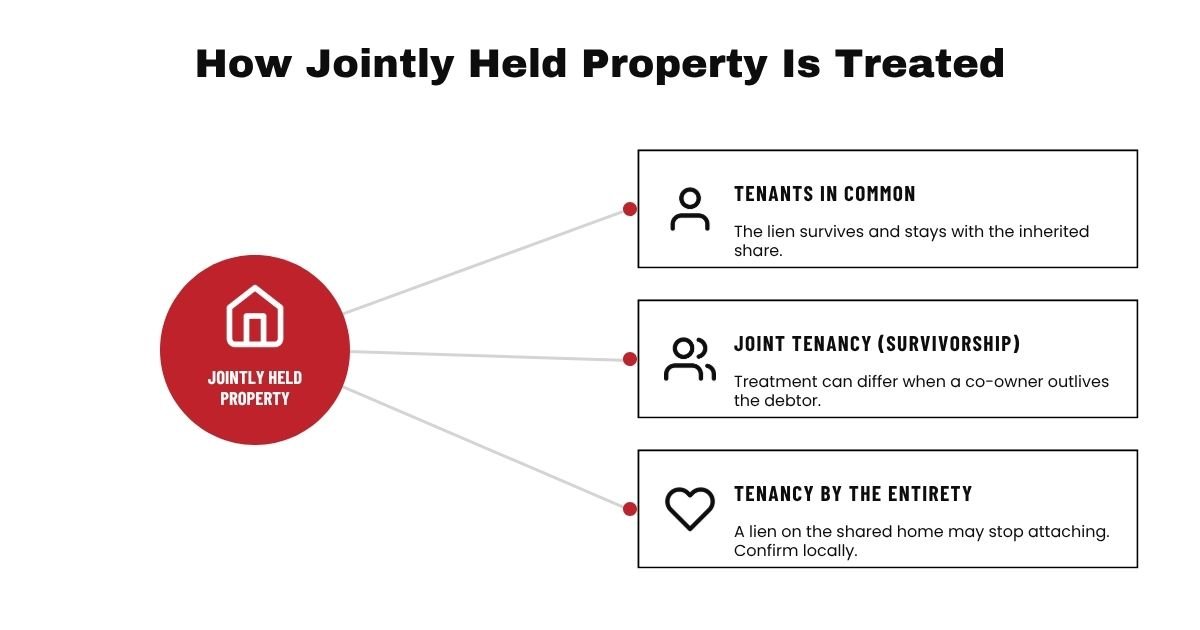
Property titling matters significantly here, and the rules differ depending on the type of joint ownership involved.
For property held as tenants in common, if a tax lien attaches to one owner's interest and that owner dies, the lien generally survives and continues to encumber that interest, now in the hands of the heirs or whoever inherited it.
For property held as joint tenants with right of survivorship or tenancy by the entirety, the treatment can differ. Some guidance indicates that when the delinquent taxpayer dies and is survived by a non-delinquent co-owner, a lien tied specifically to that jointly held property may cease to attach to it going forward.
How I Approach This With Families
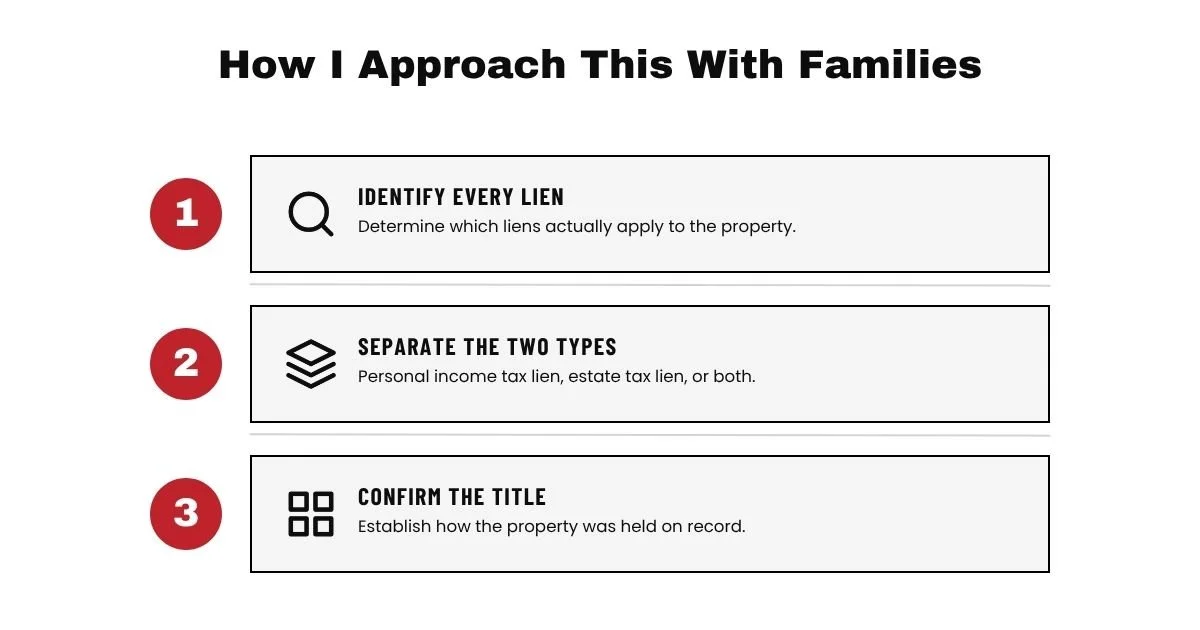
When someone comes to me with a lien question tied to an inherited property, my first step is always figuring out which lien we are actually dealing with, the decedent's personal income tax lien, a separate estate tax lien, or both, and how the property was titled.
Those three facts determine everything else about how to move forward, and guessing at any of them tends to create more confusion, not less.
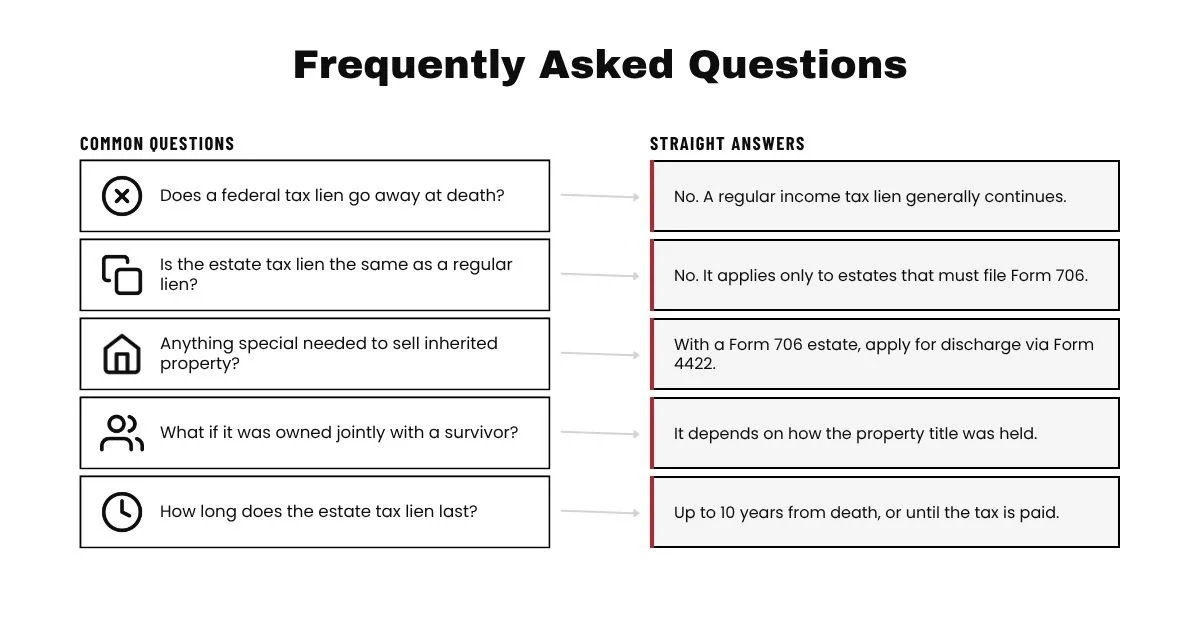
Frequently Asked Questions
-
No. A regular federal tax lien for unpaid income tax generally continues to attach to the decedent's property after death, and the IRS generally retains its authority to collect against that property.
-
No, they are different. The estate tax lien only applies to estates large enough to require Form 706, arises automatically at death without any IRS notice, and is separate from a lien tied to unpaid income tax.
-
If the estate had a Form 706 filing requirement, generally yes, you would apply for a discharge of the estate tax lien using Form 4422 before selling.
-
The treatment depends heavily on how the property was titled.
-
Generally up to 10 years from the date of death, or until the estate tax is paid in full.
Sorting Out a Lien on Inherited Property
If you are dealing with a lien on property you inherited, or you are an executor trying to sell estate property with a lien question hanging over it, this is exactly the kind of situation where getting the specific facts right matters more than a general answer.
I offer a free case review to help you understand which lien applies to your situation and what needs to happen before you can move forward.