
Being named trustee comes with a specific set of tax duties that people often do not fully appreciate until a problem has already developed.
I want to walk through what a trustee is actually responsible for when it comes to a trust's IRS obligations, and where that responsibility can become personal.

TLDR
- A trustee is the fiduciary responsible for filing Form 1041 and ensuring the trust's tax liability is paid.
- If a filing or payment is missed, penalties and interest generally fall on the trust first, but the consequences can extend to the trustee personally in specific circumstances.
- Courts have held trustees personally liable for tax deficiencies that resulted from negligence or a failure to follow the trust's own terms.
- A trustee's duty generally includes making required estimated tax payments, not just filing an annual return.
- Reviewing the trust's tax compliance early, rather than after a problem surfaces, is generally the most effective way for a trustee to limit personal exposure.
- This is separate from executor liability under the federal priority statute, covered in our companion posts on executor personal liability, though the underlying concern, personal responsibility for someone else's unpaid tax, is conceptually related.
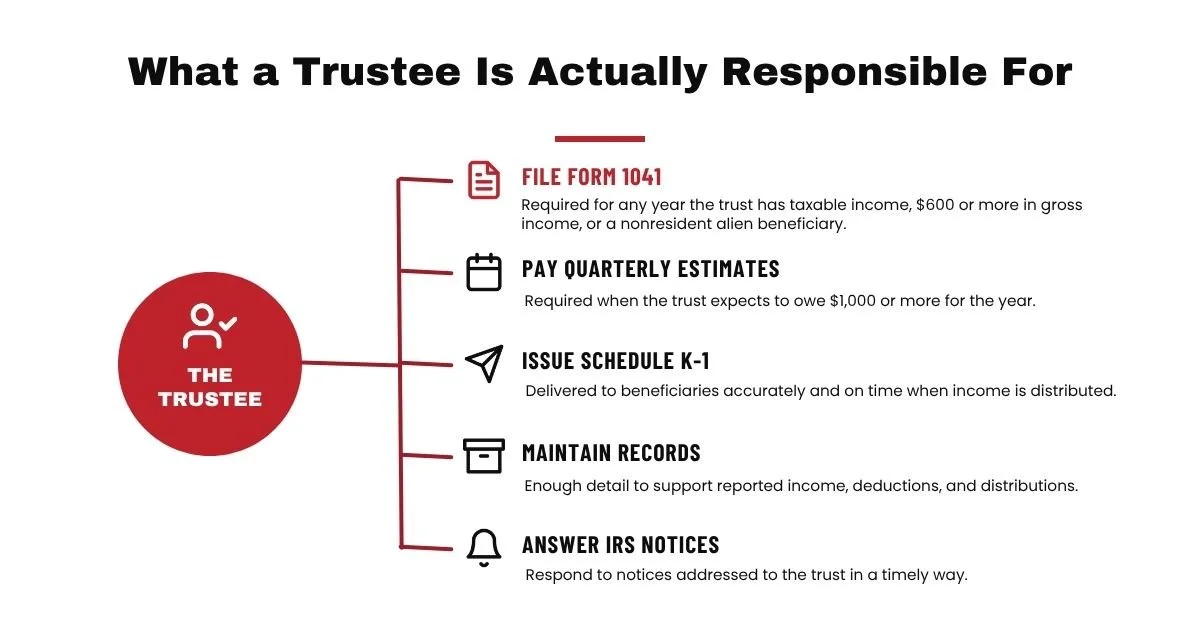
What a Trustee Is Actually Responsible For
As trustee, you are the fiduciary responsible for filing the trust's income tax return, Form 1041, for any year the trust has taxable income, $600 or more in gross income, or a nonresident alien beneficiary. This is not optional, and the deadline generally is not flexible without an extension properly filed.
Beyond the annual return itself, a trustee's tax responsibilities generally include:
- Making required quarterly estimated tax payments if the trust expects to owe $1,000 or more for the year
- Issuing Schedule K-1 to beneficiaries accurately and on time when income is distributed
- Maintaining records sufficient to support the trust's reported income, deductions, and distributions
- Responding to IRS notices addressed to the trust in a timely way
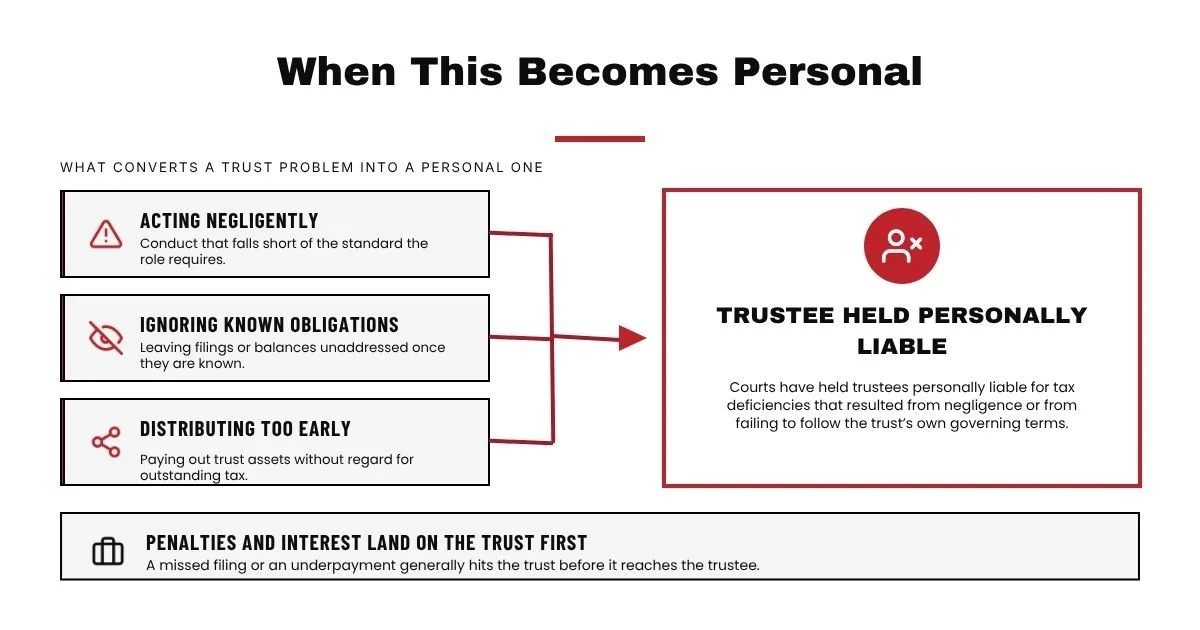
When This Becomes Personal
This is the part that deserves the most careful attention. Missing a filing or underpaying generally results in penalties and interest that land on the trust itself first. But courts have held trustees personally liable for tax deficiencies that resulted from negligence or from failing to follow the trust's own governing terms.
The general principle at work is one familiar from other fiduciary contexts covered elsewhere in this cluster: acting negligently, ignoring known obligations, or distributing trust assets without regard for outstanding tax liabilities tends to be what converts a trust-level problem into a personal one for the person managing it.
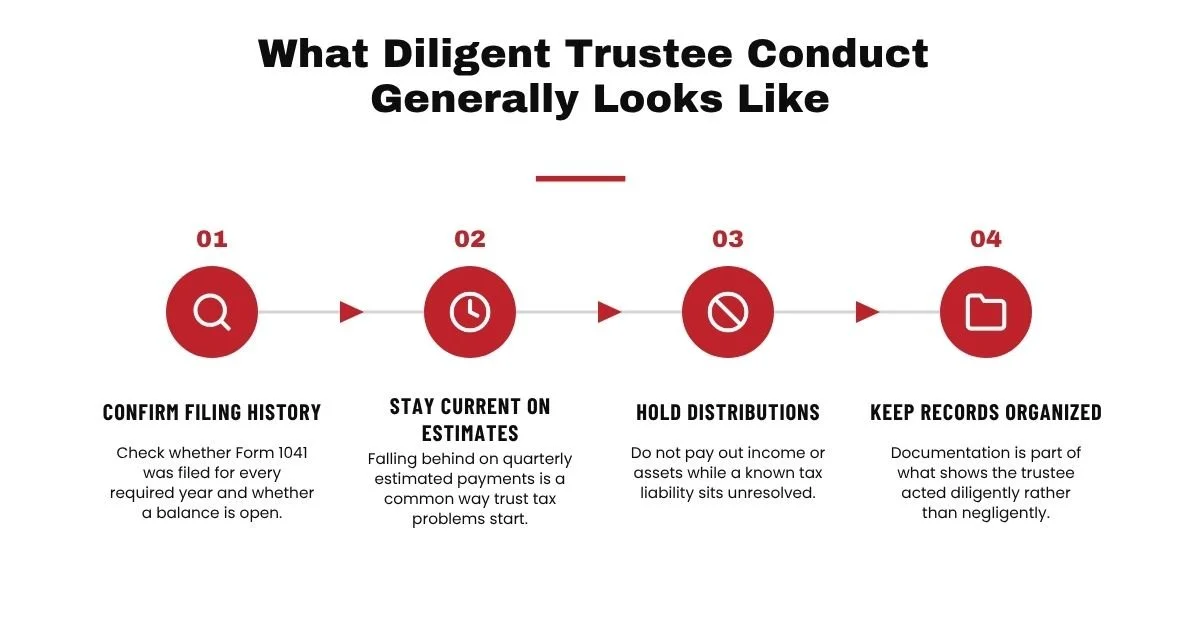
What Diligent Trustee Conduct Generally Looks Like
Rather than only describing the risk, I want to be direct about what reduces it. Based on the general fiduciary principles at work here, a trustee who wants to limit personal exposure generally should:
Confirm the Trust's Filing History
Before assuming everything is current, confirm whether Form 1041 has actually been filed for all required years, and whether any balance is outstanding.
Stay Current on Estimated Payments
Falling behind on quarterly estimated payments is one of the more common ways trust-level tax problems develop in the first place, often quietly, without anyone noticing until a return is filed and a balance comes due.
Do Not Distribute Ahead of Known Tax Obligations
Distributing trust income or assets to beneficiaries while a known tax liability sits unresolved is generally the kind of conduct that can support a finding of negligence if the trust cannot later cover its own tax debt.
Keep the Trust's Records Organized and Accessible
Good documentation is not just good practice, it is generally part of what demonstrates the trustee acted diligently rather than negligently if the trust's tax compliance is ever questioned.
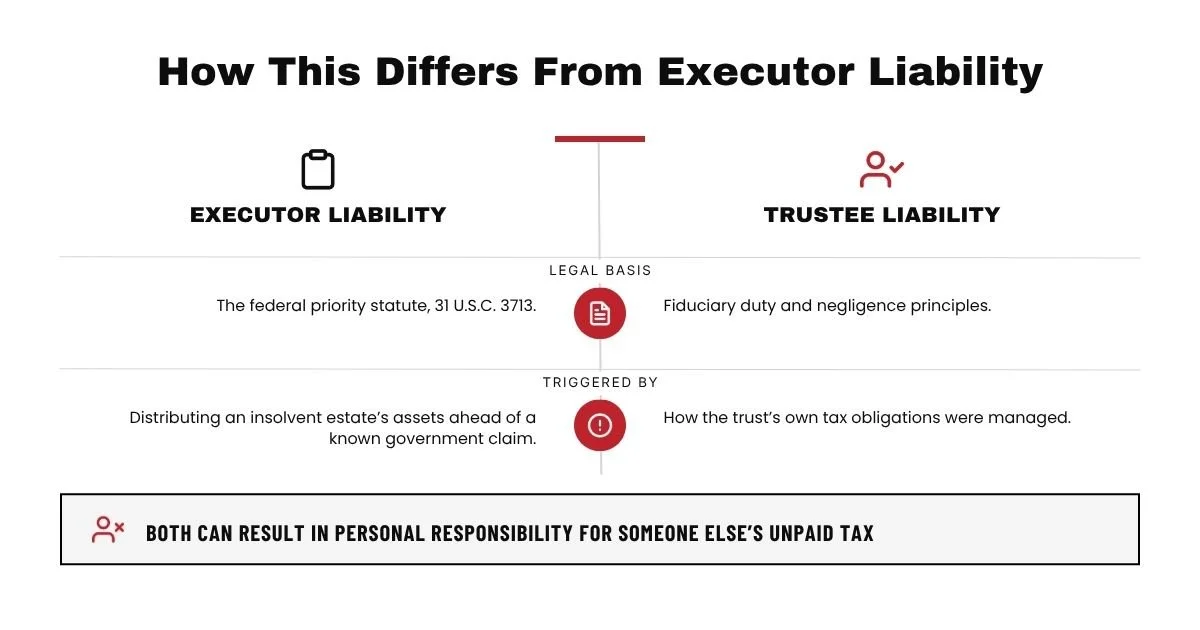
How This Differs From Executor Liability
It is worth being precise about a distinction I see people blur regularly. Executor personal liability under the federal priority statute, 31 U.S.C. 3713, covered in our companion posts in this cluster, applies to distributing an insolvent estate's assets ahead of a known government claim.
Trustee liability, as described above, is generally grounded more broadly in fiduciary duty and negligence principles tied to how the trust's own tax obligations were managed.
How I Work With Trustees
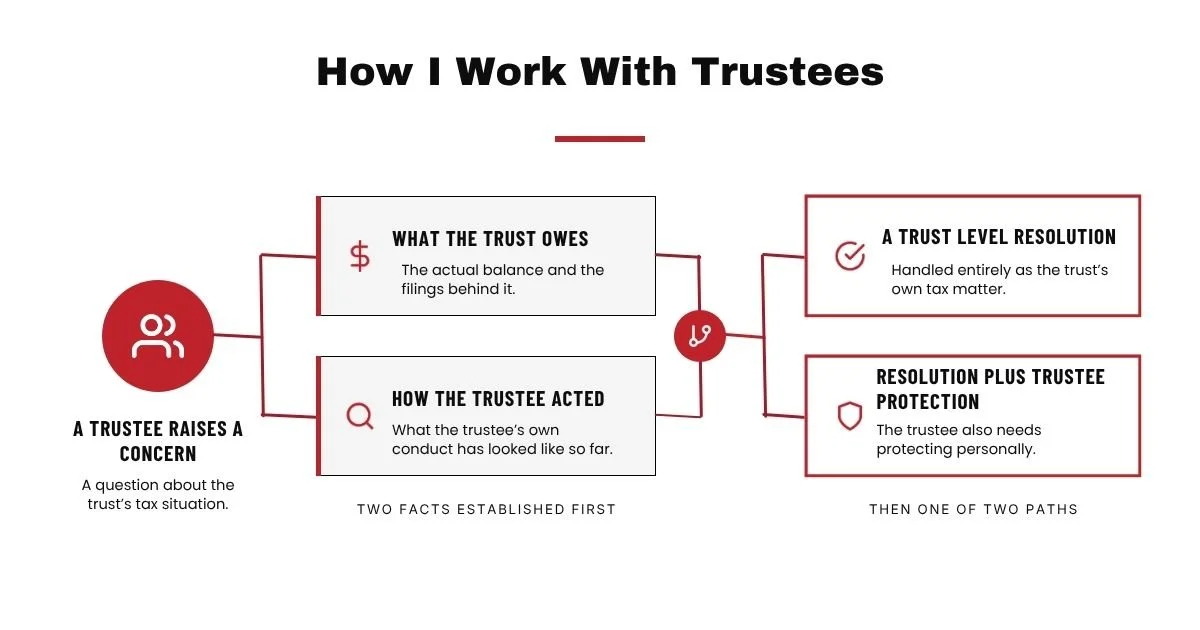
When a trustee comes to me concerned about a trust's tax situation, I want to establish two things quickly: what the trust actually owes, and what the trustee's own conduct has looked like up to this point.
Those two facts together generally determine whether we are dealing with a straightforward trust-level resolution or something that also requires protecting the trustee personally.
Frequently Asked Questions
-
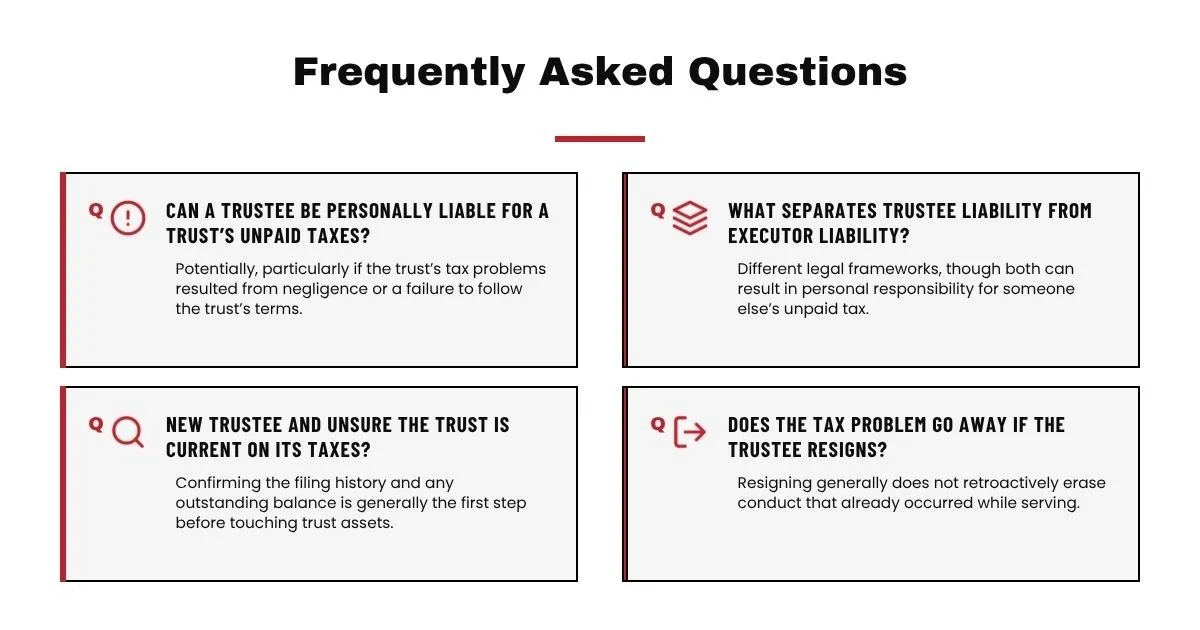
Potentially, particularly if the trust's tax problems resulted from negligence or a failure to follow the trust's terms.
-
They rest on different legal frameworks, executor liability generally ties to the federal priority statute governing insolvent estates, trustee liability generally ties to broader fiduciary duty and negligence principles, though both can result in personal responsibility for someone else's unpaid tax.
-
Confirming the trust's filing history and any outstanding balance is generally the first and most important step before doing anything else with trust assets.
-
Resigning generally does not retroactively erase conduct that already occurred while you were serving.
Protecting Yourself as Trustee
If you are serving as trustee and want to understand exactly where you stand, both in terms of the trust's tax compliance and your own personal exposure, that is worth confirming directly rather than assuming.
I offer a free case review to help you understand the trust's actual tax situation and what steps would protect you going forward.