
Finding out that a house you are set to inherit has an IRS lien on it is unsettling, and I want to walk through what that actually means in practice, because the reality is usually more manageable than it initially feels.

TLDR;
- Inheriting a house does not erase a federal tax lien that was already attached to it. The lien generally follows the property.
- Which specific lien you are dealing with matters. A lien tied to the decedent's personal unpaid income tax works differently than the separate "silent" estate tax lien that only arises for estates large enough to require Form 706.
- Inheriting the house does not, by itself, make you personally responsible for the underlying tax debt. The lien attaches to the property, not automatically to you as a person.
- If you want to sell the property, the lien generally needs to be addressed first, either paid off from the sale proceeds, discharged, or otherwise resolved, before a buyer's title company will clear the transaction.
- If the estate had a Form 706 filing requirement, selling generally requires applying for a discharge of the estate tax lien using Form 4422.
- This article covers federal liens specifically. If the property also has a California FTB lien, that is a separate process running under state law.
The Lien Generally Follows the Property, Not You Personally
This is the distinction I want to make clear first, because it addresses the most common fear I hear from heirs. A federal tax lien attaches to property. Inheriting property that already has a lien on it does not automatically make you personally liable for the underlying tax debt the way, for example, co-signing a loan would.
What it does mean is that the property itself remains encumbered. The lien generally has to be dealt with before you can sell, refinance, or, in some cases, fully use the property free and clear.
Figuring Out Which Lien You Are Actually Dealing With
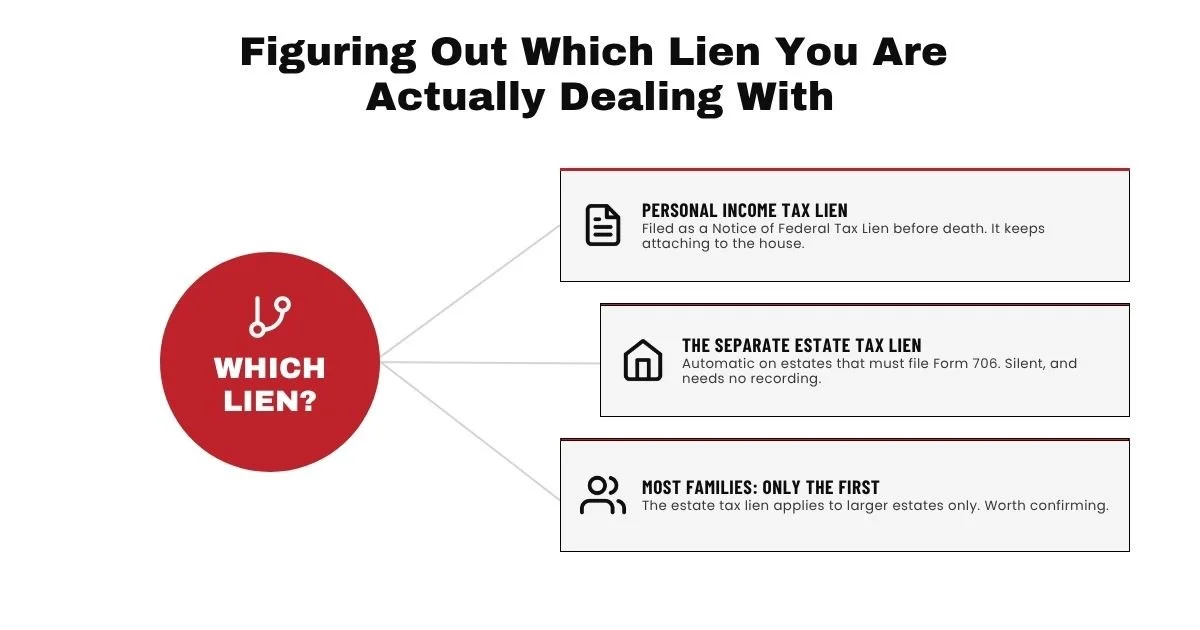
As covered in more depth in our companion post on federal tax liens after death, there are two different liens that could be involved, and knowing which one applies to your situation changes what happens next.
A Lien for the Decedent's Personal Unpaid Income Tax
If the decedent owed personal income tax and the IRS had filed a Notice of Federal Tax Lien before death, that lien generally continues to attach to their property after death, including a house that passes to Heirs.
The Separate Estate Tax Lien
If the estate was large enough to trigger a Form 706 filing requirement, a distinct estate tax lien automatically attached to the entire gross estate the moment the person died, whether or not that has been formally recorded anywhere. This lien does not need to be publicly recorded to be enforceable, including against you as the new owner.
For most families, this second lien will not apply, since it only comes into play for larger estates. But it is worth confirming rather than assuming, particularly if you are not sure whether Form 706 was required or filed for the estate.
What This Means If You Want to Keep the House
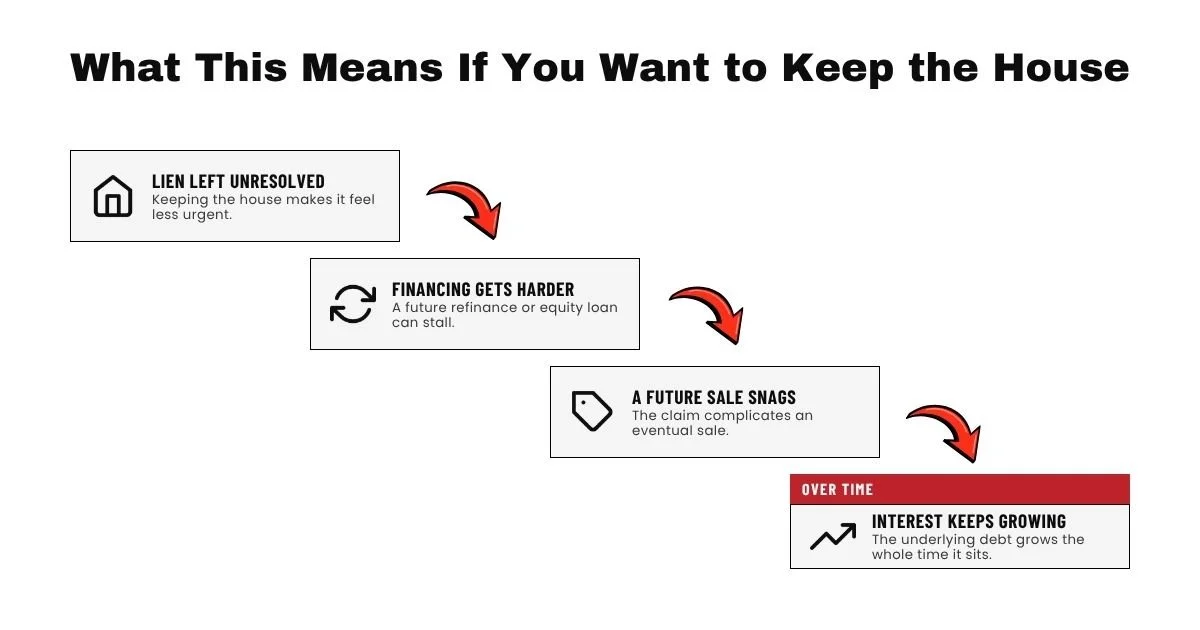
If you plan to keep and live in the house rather than sell it, an unresolved lien is less immediately urgent, but it is not something to ignore indefinitely. It can complicate a future refinance, a home equity loan, or an eventual sale, and interest may continue accruing on the underlying debt the entire time it sits unresolved.
What This Means If You Want to Sell
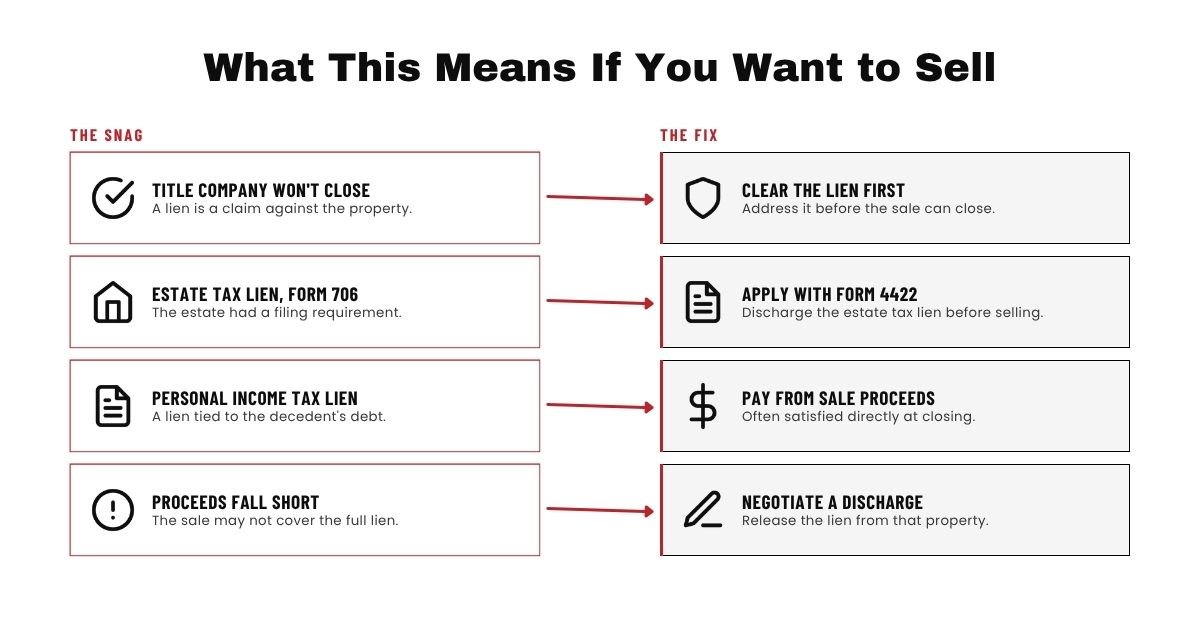
This is where the lien becomes an immediate, practical problem rather than a background concern. A title company handling the sale will generally want the lien addressed before closing, since it represents a claim against the property that could follow it even after sale in some circumstances.
If the estate had a Form 706 filing requirement, the IRS's own guidance directs the executor to apply for a discharge of the estate tax lien using Form 4422, Application for Certificate Discharging Property Subject to Estate Tax Lien, before selling.
If instead you are dealing with a lien tied to the decedent's personal income tax debt, the more common path is generally to pay off the lien, often directly from the sale proceeds at closing, or to negotiate a discharge of the lien from that specific property if the sale proceeds do not fully satisfy it.

Federal vs California - Do Not Assume the Same Rules Apply
Everything above describes federal tax liens. If the property also has a California Franchise Tax Board lien recorded against it, that runs under separate California law with its own release and discharge process.
How I Help Families in This Situation
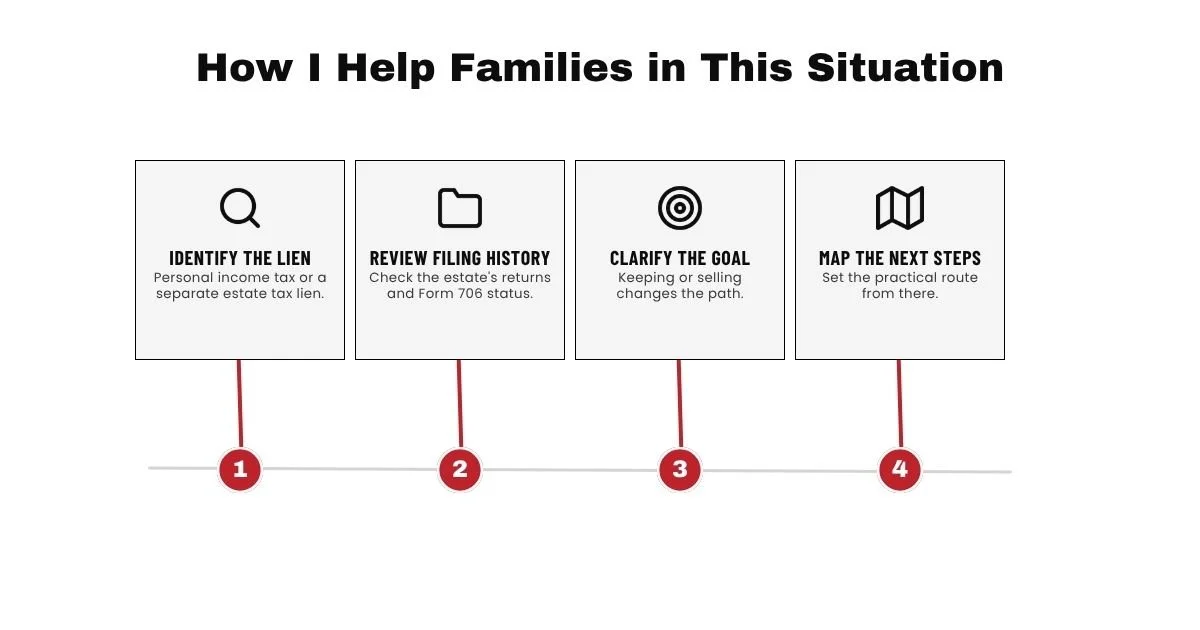
When someone comes to me because they have inherited a property with a lien attached, the first thing I want to establish is which lien is actually involved, the decedent's personal tax debt or a separate
estate tax lien, and what the estate's own filing history looks like. From there, whether the goal is keeping the house or selling it changes the practical next steps significantly, so I want to understand that early too.
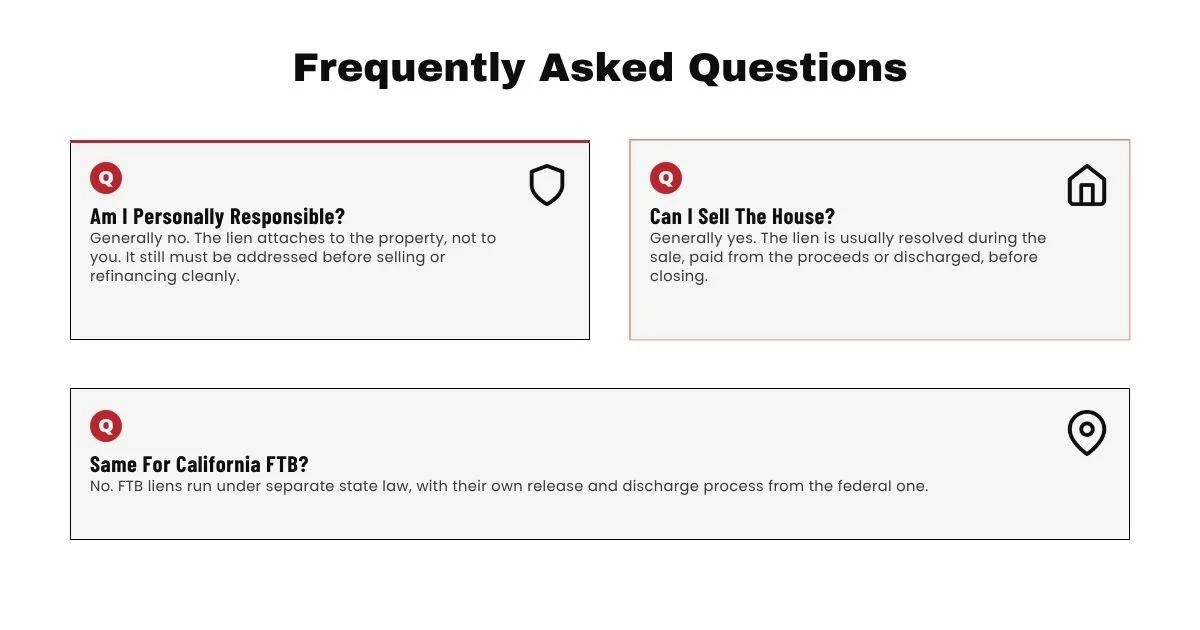
Frequently Asked Questions
-
Generally no, not automatically. The lien attaches to the property itself, not to you personally, though it does need to be addressed before the property can be sold or refinanced cleanly.
-
Generally yes, but the lien typically needs to be resolved as part of
the transaction, either paid from the proceeds or formally discharged,
before the sale can close cleanly.
-
Check the county recorder where the property is located or ask a title company to run a title search. Federal tax liens are public records. For inherited property, additional estate tax liens may also need to be checked.
-
The property may still be sold. In some cases, the IRS can discharge its lien from the property even if the sale does not pay the full tax debt. The remaining balance may still be owed.
-
No, FTB liens run under separate state law and have their own process.
Sorting Out a Lien on Property You Inherited
If you have inherited a property and discovered there is a lien attached to it, figuring out exactly which lien it is and what your realistic options are is usually the most useful first step.
I offer a free case review to help you understand the lien situation on your specific property and what resolving it would actually involve.