
Who Is Responsible for a Deceased Person's Unfiled Tax Returns
When someone dies with tax returns that were never filed, the obligation does not simply disappear. Someone generally needs to step in and file them, and I want to walk through exactly who that generally is, because this is one of the most common questions I get from families dealing with this for the first time.
TLDR;
- The personal representative of the estate, generally the executor or administrator, is responsible for filing the decedent's final income tax return and any returns that were not filed for prior years.
- A surviving spouse may, under certain circumstances, be able to file returns for the decedent as well.
- If someone died after a tax year closed but before that year's return was filed, the personal representative generally still must file it, and it is treated as a regular return, not the final return.
- Unfiled years do not disappear because someone died. If they remain unfiled, the IRS may prepare a Substitute for Return using available data, which typically produces a higher balance than a properly prepared return would.
- Getting all missing returns filed gives the executor and any beneficiaries a clearer, more accurate picture of what the estate actually owes before assets are distributed.
- This article covers federal filing obligations. California has separate state filing requirements for a deceased person - see the callout below.
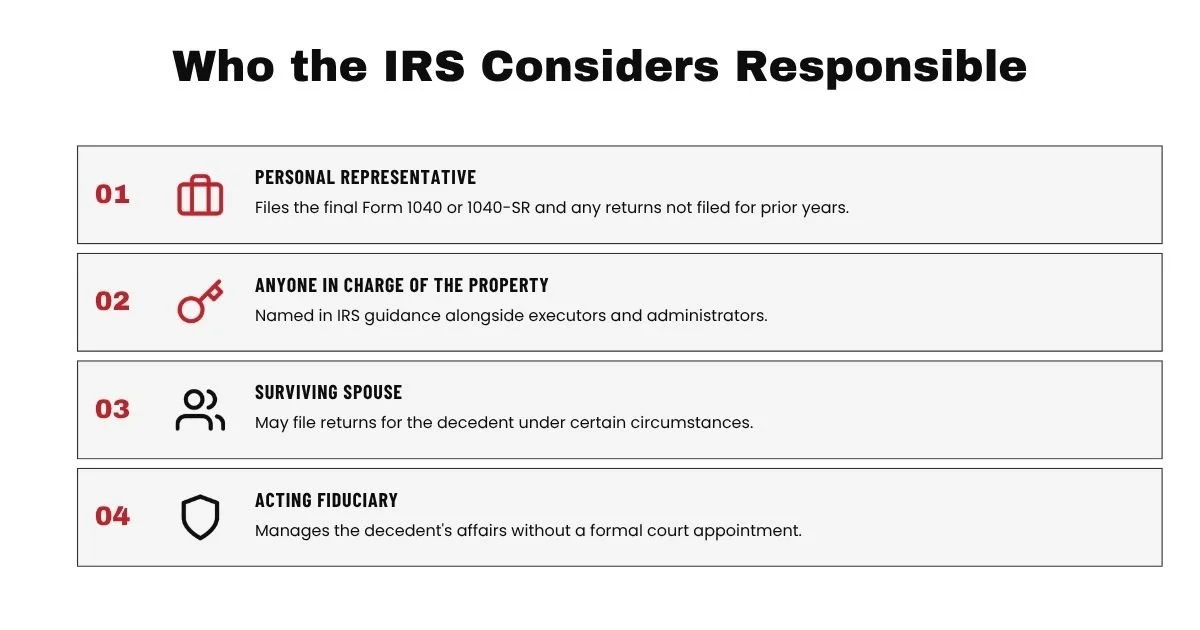
Who the IRS Considers Responsible
The IRS's own guidance is direct on this point. The personal representative of an estate, an executor, administrator, or anyone else in charge of the decedent's property, is responsible for filing any final individual income tax return and the estate tax return of the decedent when due.
Publication 559 states this even more specifically: the personal representative must file the final Form 1040 or 1040-SR of the decedent for the year of death, and any returns that were not filed for preceding years.
What If There Is No Appointed Executor
If a court has not yet appointed a personal representative, or there is no will, the obligation does not simply vanish. A surviving spouse may, under certain circumstances, be able to file returns for the decedent. Beyond that, someone who is acting in a fiduciary capacity, managing the decedent's affairs even without formal court appointment, may take on this responsibility.
A Return That Was Due Before Death, Not the Final Return
One detail people often get wrong: if someone died after a tax year closed but before that year's return was filed, the return for that already-closed year is not treated as the "final return." It is a regular return for that year, and the personal representative is still responsible for filing it.
For example, if someone passed away in March 2026 and had not yet filed their 2025 return, that 2025 return is a standard return, separate from the 2026 final return that will also need to be filed.
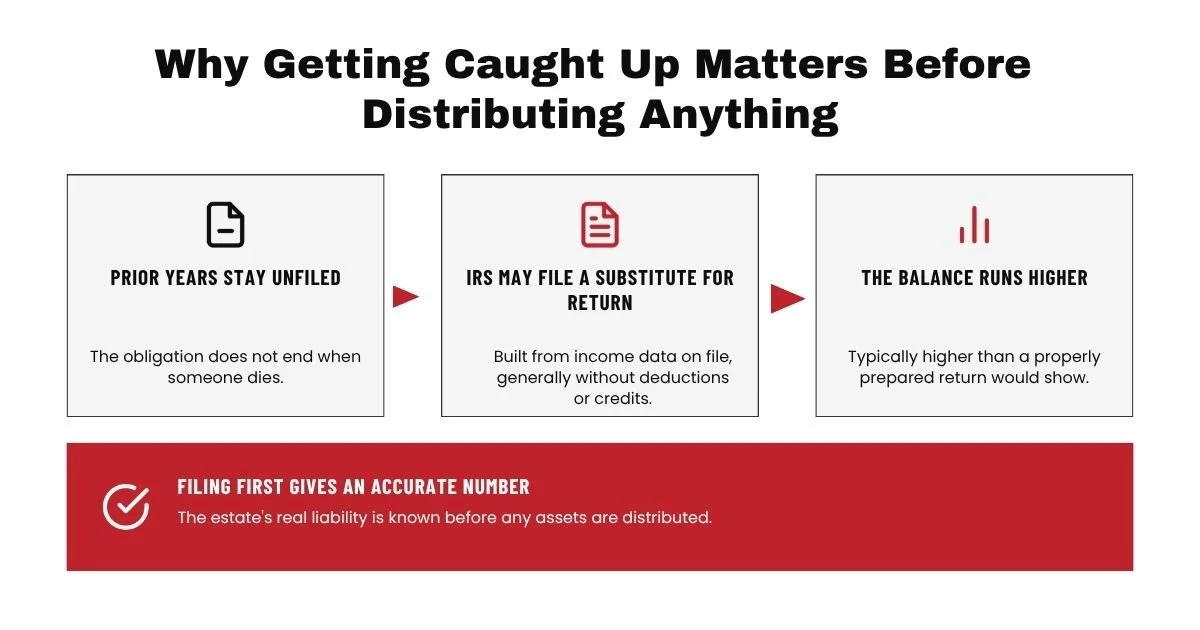
Why Getting Caught Up Matters Before Distributing Anything
I want to be direct about why this step cannot be skipped, even when it feels like the least urgent item on a long list of things a grieving family has to handle.
If prior-year returns remain unfiled, the IRS may prepare a Substitute for Return using whatever income data it has on file, generally without including deductions or credits the decedent would have been entitled to.
This typically produces a liability higher than what a properly prepared return would show.
Filing the actual returns, even late, generally gives the personal representative and any beneficiaries an accurate number to work with before deciding how to handle the estate's assets and debts. Distributing assets before knowing the real liability is one of the more common mistakes I see, and it can create complications addressed more fully in our companion post on executor personal liability.

Federal vs California - Do Not Assume the Same Rules Apply
Everything above describes federal filing obligations under IRS guidance. California has its own separate filing requirements for a deceased taxpayer, administered by the Franchise Tax Board, and they do not automatically mirror the federal rules described here.
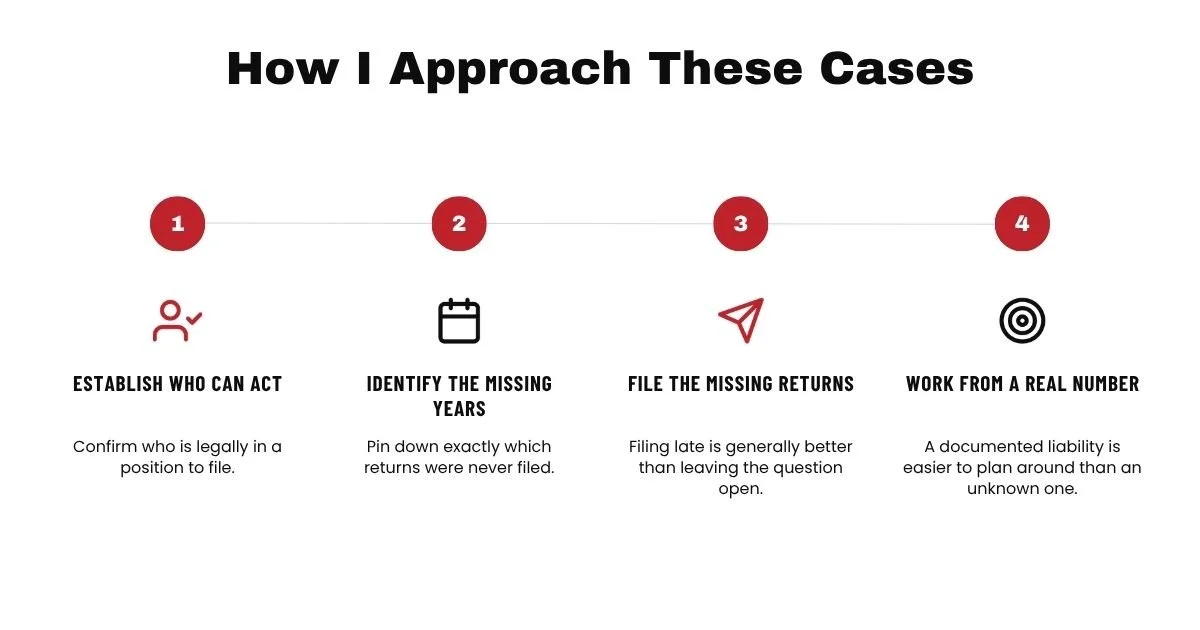
How I Approach These Cases
When a family comes to me after a loved one has passed with unfiled returns, the first thing I want to establish is simple: who is legally in a position to act, and what years are actually missing.
From there, getting the missing returns filed, even if it turns out the estate owes money, is almost always better than leaving the question open. An unknown liability tends to feel larger and more frightening than an actual, documented one.
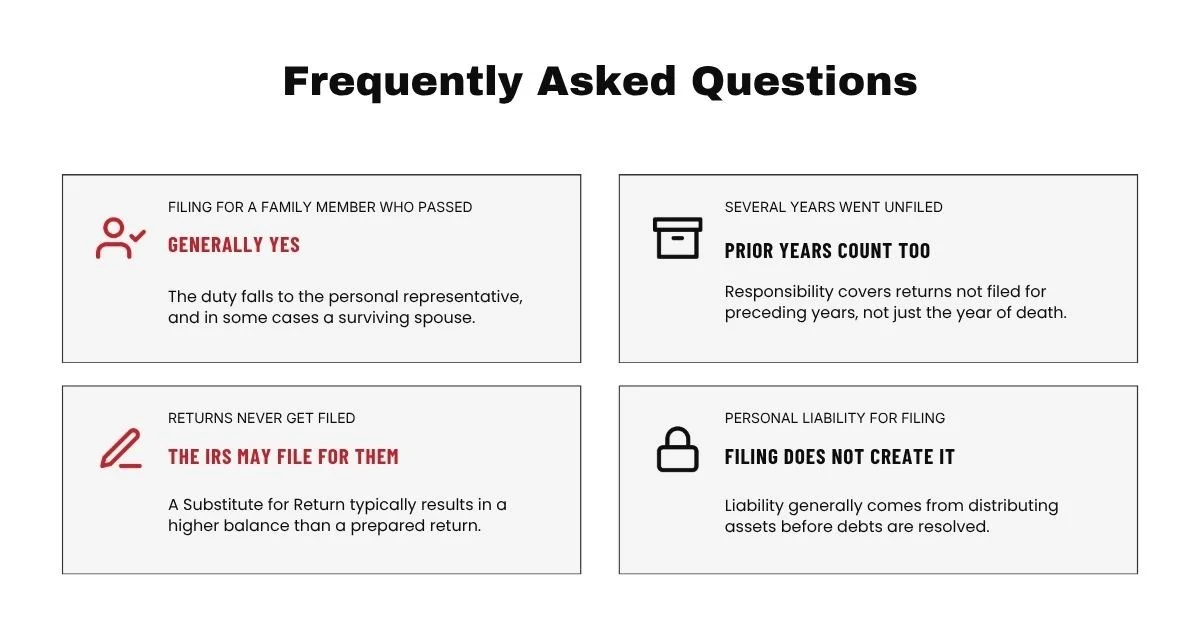
Frequently Asked Questions
-
Generally, yes, if you are the personal representative of the estate, executor, administrator, or in some cases a surviving spouse. The obligation to file does not end at death.
-
The personal representative is generally responsible for filing any returns that were not filed for preceding years, not just the year of death.
-
The IRS may prepare a Substitute for Return using available data, which typically results in a higher balance than a properly prepared return.
The debt does not simply go away because the returns were never filed.
-
Filing the return itself does not generally create personal liability.
Personal liability as an executor generally arises from separate rules around distributing estate assets before resolving debts, which is covered in our companion post on executor liability.
-
There is no specific deadline tied to death itself, but delaying generally allows penalties and interest to continue growing, and can complicate settling the estate.
Getting the Full Picture Before Moving Forward
If you are handling a loved one's affairs and are not sure whether all their tax returns were filed, that is usually the first thing worth confirming before anything else moves forward with the estate.
I offer a free case review to help pull the decedent's filing history, identify what is actually missing, and map out what filing those returns would look like.