What Happens to IRS Tax Debt When Someone Dies
This is a topic I do not see covered nearly enough, and I think that is because it sits at the intersection of two things people generally avoid thinking about at the same time, grief and tax debt. But if you are an executor, a surviving spouse, or an adult child sorting through a parent's affairs, this is often one of the first practical questions you actually need answered.
A tax debt does not disappear when someone dies. What happens to it, and who becomes responsible for addressing it, depends on a few specific factors I want to walk through clearly.

TLDR
- A tax debt generally survives death. It does not automatically get
forgiven.
- The deceased person's final individual income tax return generally
still needs to be filed, covering income through the date of death.
- The estate, not typically an individual heir personally, is generally responsible for paying outstanding tax debt from estate assets before those assets are distributed to beneficiaries.
- If a court-appointed representative exists, they generally handle the filing. If not, the IRS has a process for someone else to step in.
- A federal tax lien tied to the debt generally does not disappear simply because the taxpayer died.
- This article covers general federal income tax treatment. Estate tax (a separate tax on the estate itself) and California-specific issues are addressed in dedicated posts within this cluster - see the callouts below.

The Final Return Still Has to Be Filed
Generally, the final individual income tax return of a deceased person is prepared and filed the same way as if the person were alive, reporting all income up to the date of death and claiming all eligible credits and deductions.
If the deceased person had unfiled returns from prior years, the surviving spouse or representative may need to address those as well, not just the final year.
Who Is Responsible for Filing
Usually, the person filing the final return is named in the decedent's will or appointed by a court. When there is no surviving spouse or court appointed representative, a personal representative can still file the return.
If a refund is due and the person filing is not a surviving spouse filing jointly or a court-appointed representative, Form 1310 generally needs to be attached to claim that refund.
Who Actually Pays a Tax Debt After Death
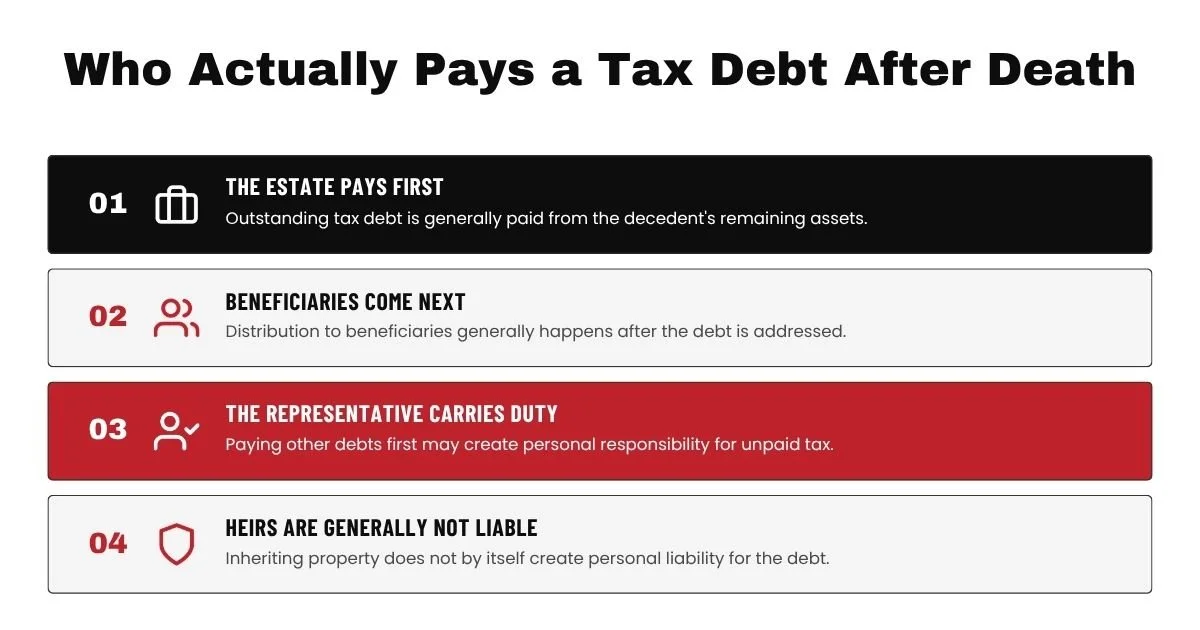
This is generally where the most confusion and fear comes in, so I want to be precise. In general terms, the estate, meaning the decedent's remaining assets under the control of the executor or personal representative, is responsible for paying outstanding tax debt, and this generally happens before assets are distributed to beneficiaries.
When Does It Become the Executor's Personal Problem
This is the part that generates the most anxiety, and I want to address it directly rather than dance around it. If estate assets that could have covered a known tax debt are instead distributed to beneficiaries or used to pay other debts first, the personal representative may, in certain circumstances, become personally responsible for that unpaid tax debt.
What This Does Not Mean
An heir or beneficiary who simply inherits property or receives a distribution is generally not personally liable for the decedent's tax debt purely by virtue of being an heir. Personal liability, where it exists at all, generally attaches to the personal representative's handling of estate assets, not to beneficiaries receiving what they were properly entitled to receive.
Does a Federal Tax Lien Survive Death
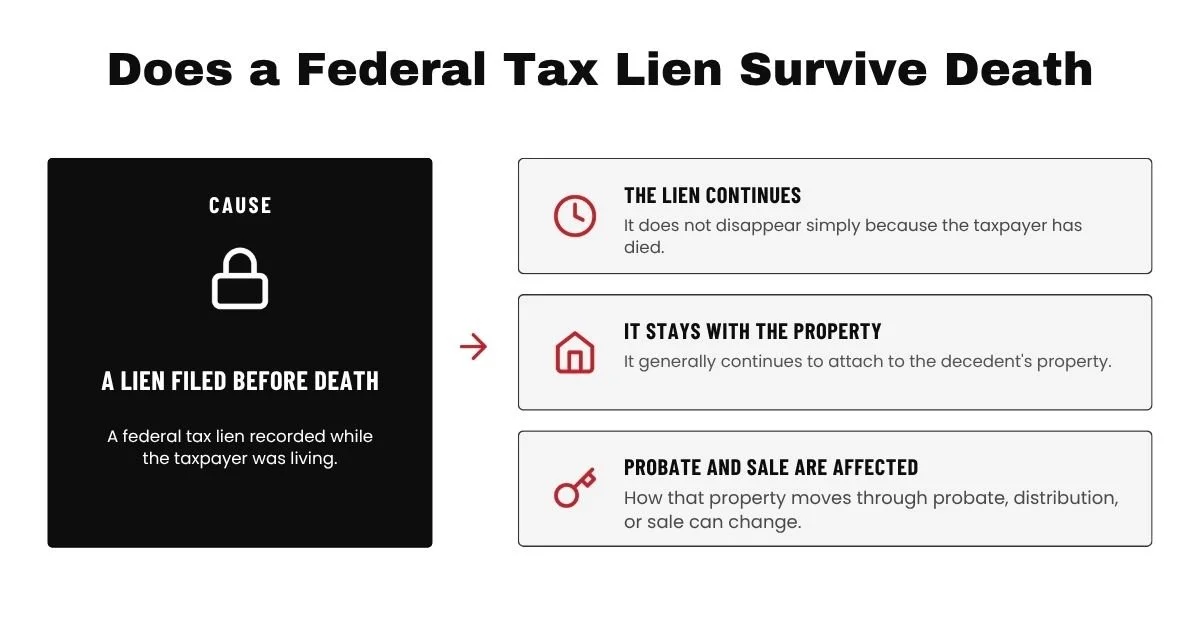
Generally, yes. A previously filed federal tax lien does not disappear simply because the taxpayer has died. It generally continues to attach to the decedent's property, which can affect how that property moves through probate or is eventually distributed or sold.
What the IRS Generally Still Offers After Death
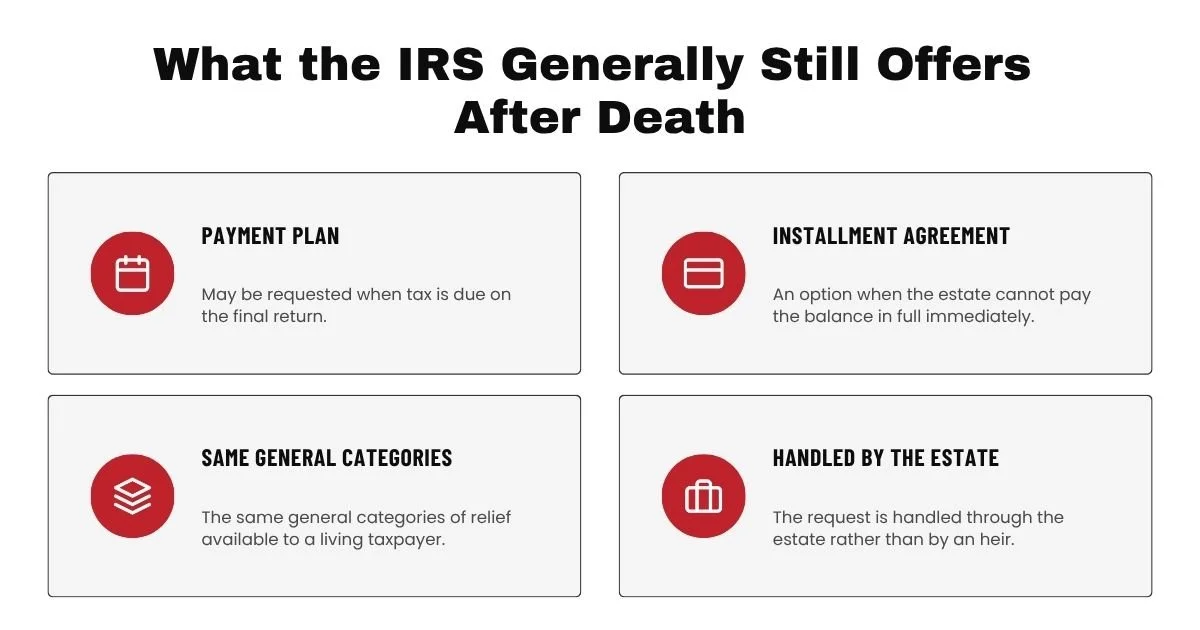
If tax is due on the final return and the estate cannot pay it in full immediately, the filer may still be able to request a payment plan or installment agreement, the same general categories of relief available to a living taxpayer, just administered through the estate.

A Note on Filing Status for a Surviving Spouse
A surviving spouse with dependent children may be able to file as a Qualifying Surviving Spouse for two years after their spouse's death, which allows use of joint return tax rates and the higher standard deduction if not itemizing.
How This Fits Into the Bigger Picture
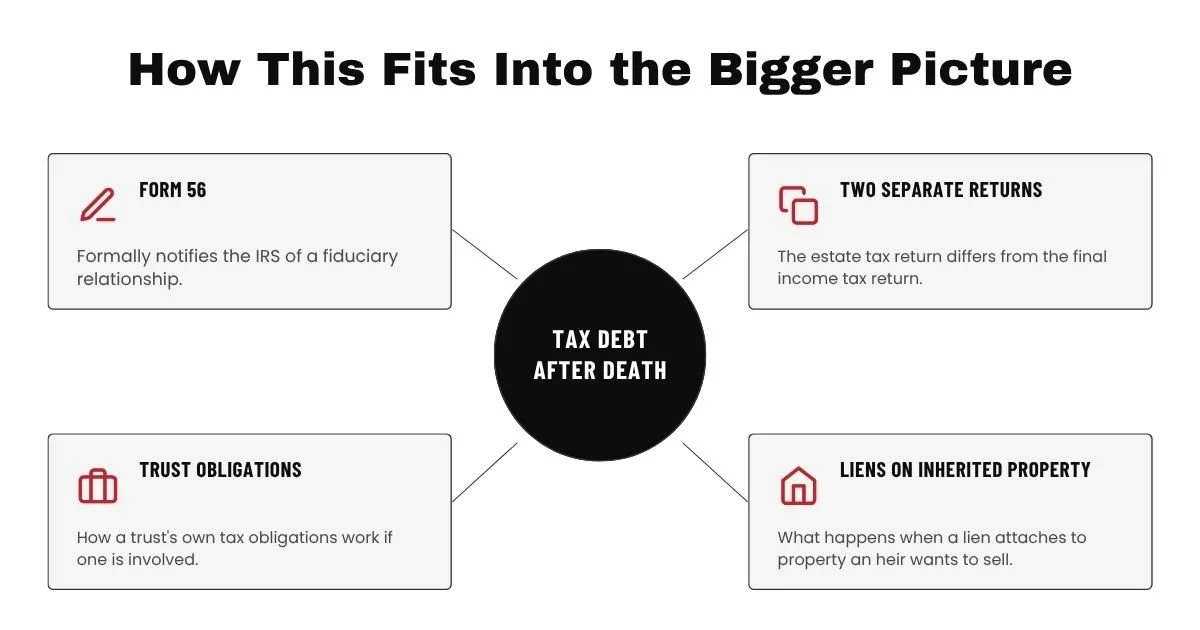
This post is intentionally general, because "what happens to tax debt when someone dies" touches several more specific situations that each deserve their own detailed treatment: filing Form 56 to formally notify the IRS of a fiduciary relationship, the difference between the estate tax return and the final income tax return, how a trust's own tax obligations work if one is involved, and what happens when a lien is attached to property an heir is trying to inherit or sell.
How I Approach These Cases
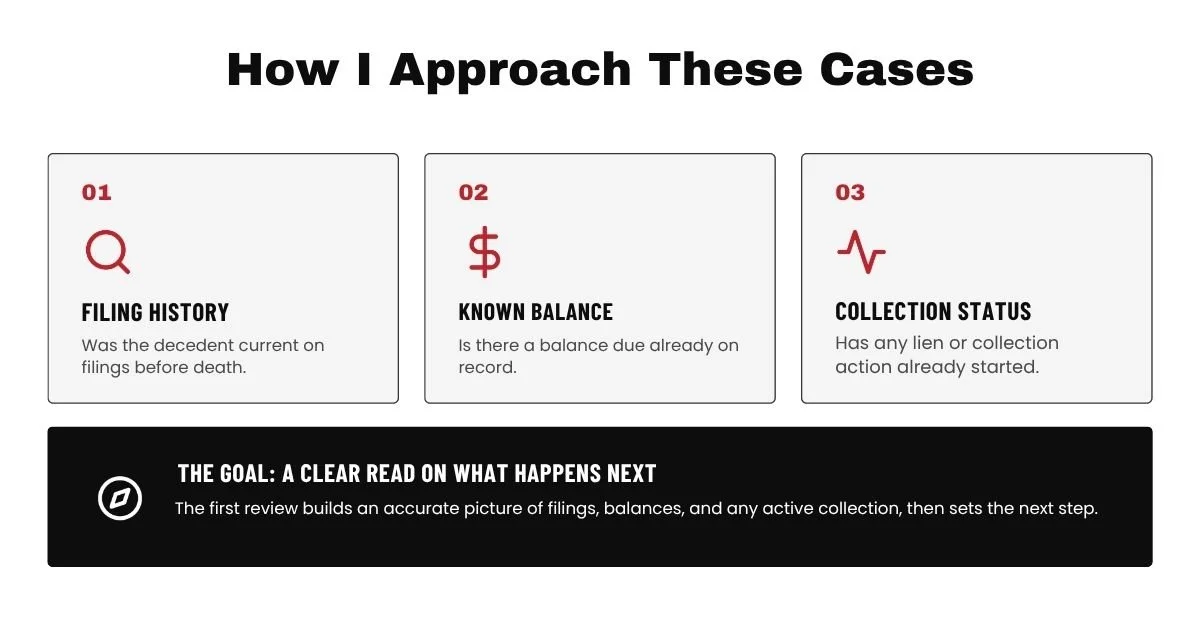
When someone comes to me as an executor or surviving family member, the very first thing I want to understand is the actual filing picture, was the decedent current on filings before death, is there a known balance due, and has any lien or collection action already started. Grief makes this an especially hard time to also be managing a tax problem, and my goal is to give you a clear, calm read on what actually needs to happen next, not add to the overwhelm.
Frequently Asked Questions
-
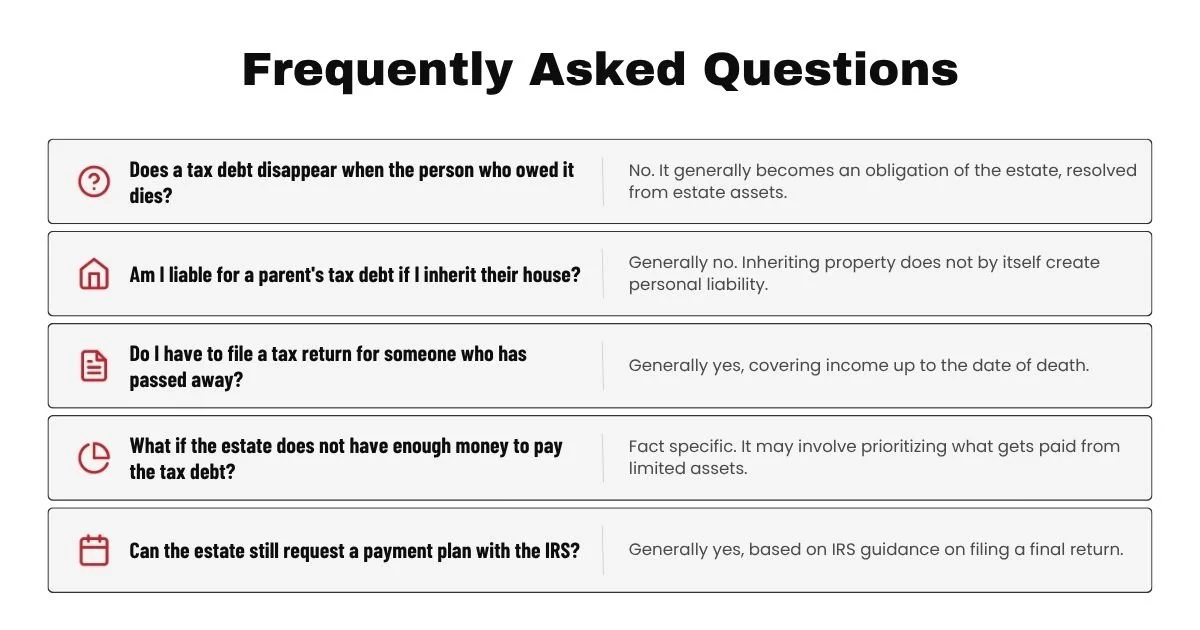
No. It generally becomes an obligation of the estate, to be resolved from estate assets, rather than being forgiven.
-
Generally no, simply inheriting property does not by itself create personal liability for the decedent's tax debt.
-
Generally yes, a final individual income tax return covering income up to the date of death is typically stilln required.
-
This is a fact-specific situation that may involve prioritizing what gets paid from limited estate assets. Professional guidance is especially important here, since paying other debts before a known tax debt can create personal exposure for the person handling the estate.
-
Generally yes, based on IRS guidance on filing a final return, though this draft flags for further confirmation whether every resolution option available to a living taxpayer applies identically to an estate.
You Do Not Have to Sort This Out Alone
Handling a loved one's tax affairs after they have passed is not something most people have any preparation for, and the stakes, both financial and emotional, are real. Understanding what actually happens to the debt, and what your actual responsibility is versus what fear tells you it might be, is the first step toward handling this calmly rather than reactively.
I offer a free case review for executors and family members navigating exactly this situation.