
What Triggers an IRS Audit: Common Red Flags on Individual Returns
I want to clear something up right away, because it changes how you should think about audit risk. The IRS does not pull returns at random out of a stack. Most examinations start with a computer-generated score, not a person deciding to look closer at you specifically.
Understanding how that scoring actually works, and what generally raises it, takes a lot of the mystery and fear out of this topic.

LTDR
- Most individual returns are scored by the IRS's Discriminant Function System, commonly called the DIF score, which compares your return against statistical norms for similar taxpayers.
- The IRS has never published the exact DIF formula, so specific thresholds are not publicly known.
- Returns are also flagged separately through document matching, when reported income does not match W-2s, 1099s, and other third-party filings.
- A high DIF score means a return enters a review queue, not that an examiner has already found a problem.
- Audit rates generally increase with income level, though certain patterns can raise risk regardless of income.
- The standard IRS assessment window is generally 3 years from filing, extending to 6 years for a substantial understatement of income, and with no time limit for fraud or unfiled returns.
How the IRS Actually Selects Returns for Audit
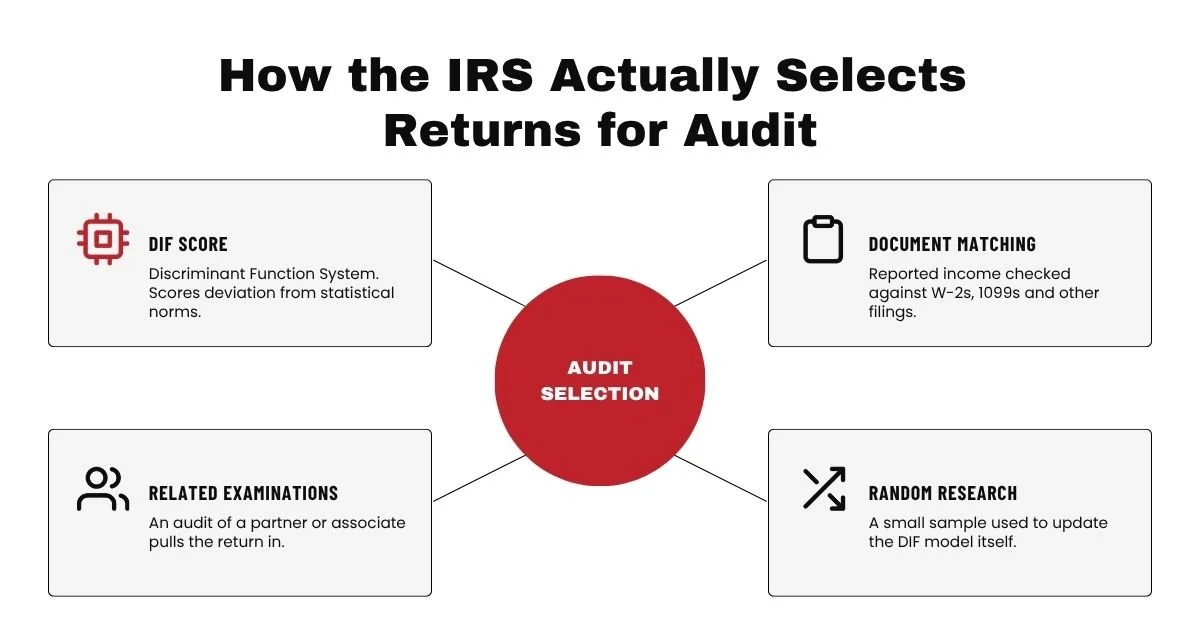
The primary tool is the Discriminant Function System, or DIF. It is a computer-generated score assigned to a return based on how much it deviates from statistical norms for taxpayers with similar income, occupation, and filing characteristics.
The exact formula is not publicly disclosed, and the IRS does not release specific score thresholds. What is known comes from years of aggregated audit outcome data, not an official published rulebook.
A high DIF score generally means the return enters a manual review queue where an IRS classifier applies human judgment before a formal examination is opened. A high score by itself does not mean a problem has been found. It means the return has been flagged for a closer look.
Separately from DIF, the IRS runs an automated document matching process, comparing what you reported against W-2s, 1099s, and other third-party information returns filed on your behalf. A mismatch generally generates an automated notice, which is a different process than a full examination, but can still lead to one depending on the size and nature of the discrepancy.
A smaller number of returns are selected through related examinations, meaning an audit of a business partner or associate pulls your return in for review, or through the IRS's random research program used to update the DIF model itself.
Patterns That Generally Raise Audit Risk
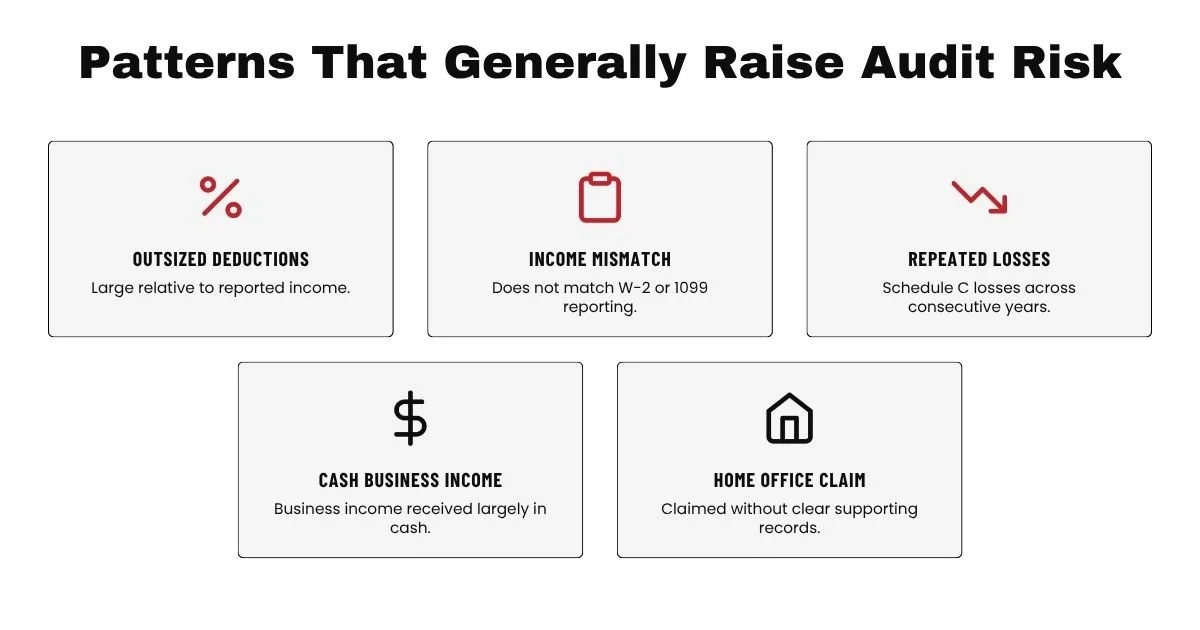
None of the following guarantees an audit, and none of them should be avoided if they legitimately apply to your situation. What they generally have in common is that they increase deviation from statistical norms, which is what the DIF system is built to detect.
- Deductions that are large relative to reported income
- Round numbers used across multiple expense categories, which can read as estimation rather than documented recordkeeping
- Income that does not match third-party W-2 or 1099 reporting
- A pattern of Schedule C losses claimed across multiple consecutive years
- Large charitable contributions relative to income
- Cash-intensive business income
- Home office deductions claimed without clear supporting documentation
How Far Back the IRS Can Look
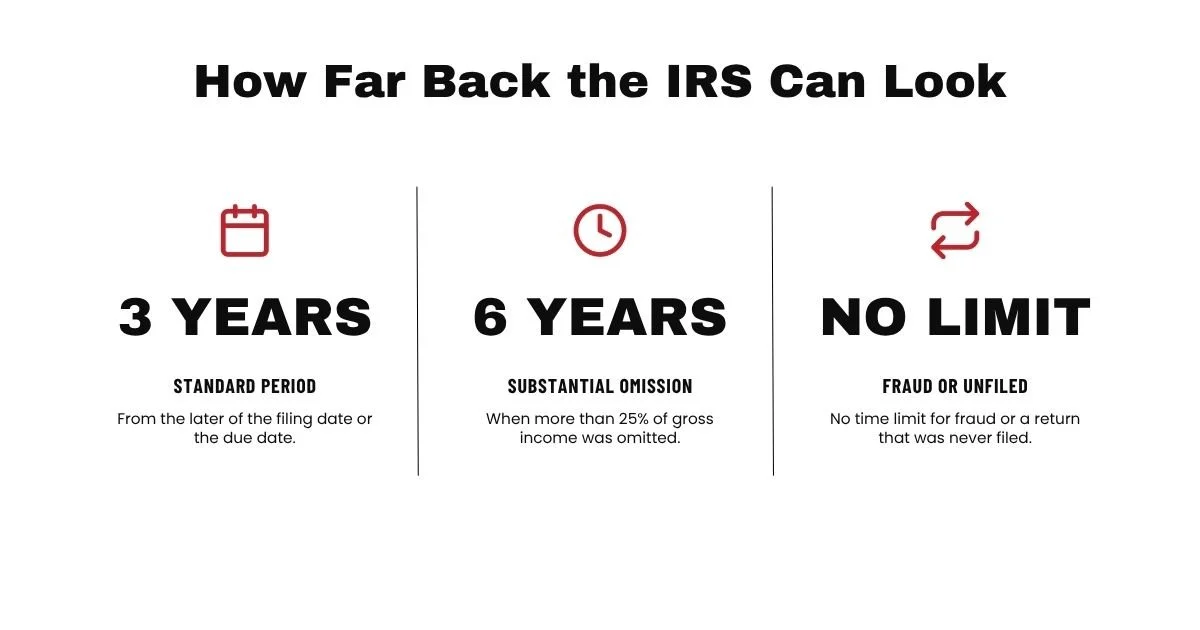
Once a return is selected, how far back the IRS can actually assess additional tax depends on what is found.
- The standard assessment period is generally 3 years from the later of the filing date or the due date
- If more than 25% of gross income was omitted, the period generally extends to 6 years
- For fraud, or for a return that was never filed, there is generally no time limit at all
What a High-Risk Pattern Does Not Mean
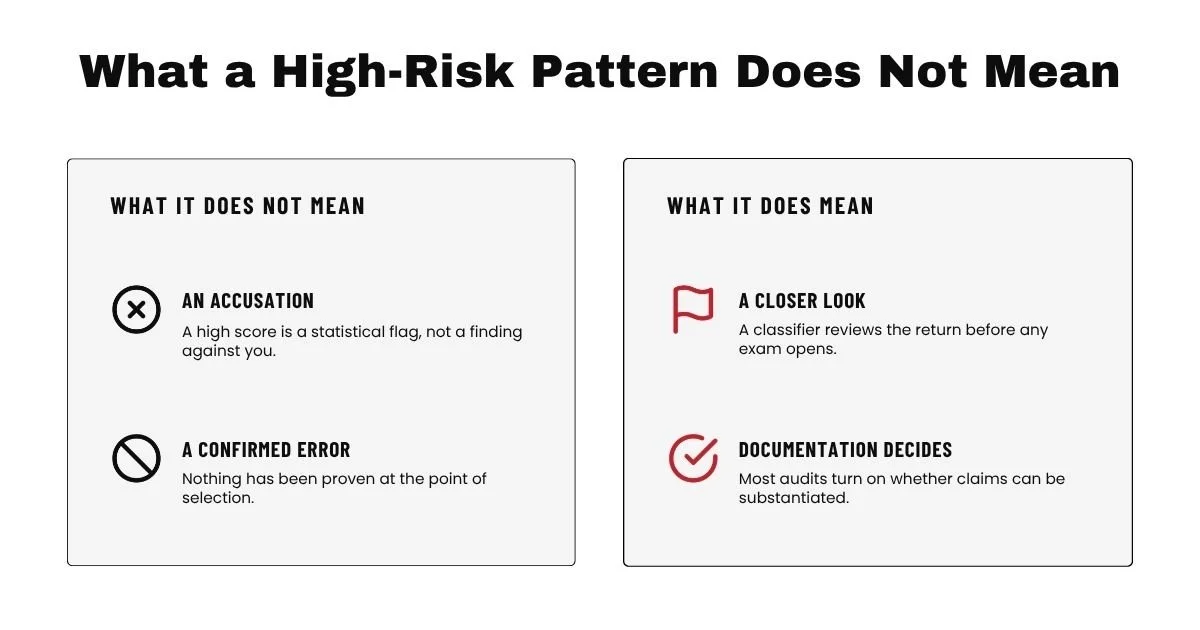
I want to be careful about the tone here, because a lot of audit content online is written to scare people into overreacting. A high DIF score is not an accusation. It is a statistical flag. Plenty of legitimately large deductions, real cash businesses, and genuine multi-year losses exist and are entirely defensible with the right documentation.
What actually matters once a return is selected is whether you can substantiate what you claimed. That is where most audits are actually won or lost, not at the point of selection.
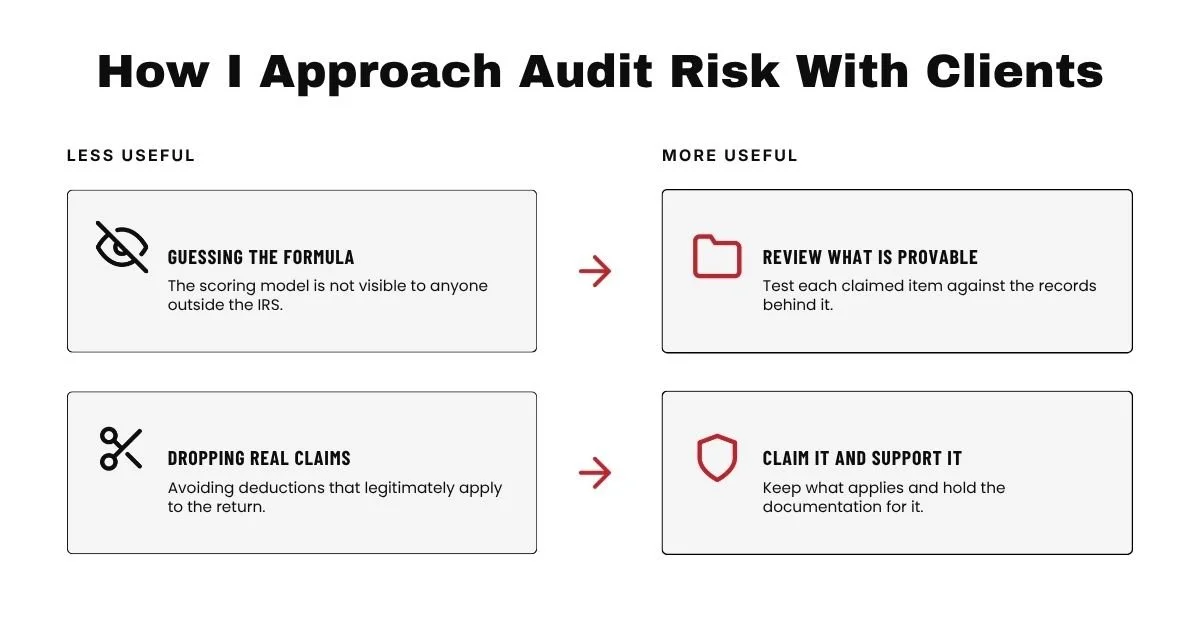
How I Approach Audit Risk With Clients
When I review a return for audit exposure, I am not looking for a way to avoid legitimate deductions. I am looking for whether the documentation behind each claimed item would hold up if the IRS asked for it. That is a very different exercise than trying to guess what the DIF algorithm does, since the algorithm itself is not something any of us can see directly.
Frequently Asked Questions
-
No. It is one factor that can contribute to a higher DIF score depending on how it compares to statistical norms, but it does not by itself trigger an audit, especially when properly documented.
-
Self-employment income generally involves more variables the DIF system evaluates, deduction categories, cash income potential, and Schedule C loss patterns, so it can carry somewhat higher scrutiny than a simple W-2 return. This does not mean self-employment itself is a red flag.
-
Not directly. Audit selection is generally based on deviation from statistical norms in income and deductions, not the size of a refund by itself.
-
No. Selection generally means a return was flagged for closer review, not that a specific error or discrepancy has already been confirmed. The outcome depends on the documentation you can provide.
-
Generally 3 years from filing, extending to 6 years for a substantial income omission, and with no limit at all for fraud or an unfiled return.
If You Are Worried About Audit Exposure
If you are looking at your own return and wondering whether something on it might draw attention, the useful question is not "will I get audited."
It is "could I document this if asked." That question is answerable right now, before any notice ever arrives.
I offer a free case review if you want a second set of eyes on your documentation before or after a return is filed.