
A trust is not just a legal document. For tax purposes, once it starts generating income, the IRS can treat it as its own taxpayer, separate from the person who created it and separate from the beneficiaries who will eventually receive its assets.
That means a trust can owe its own federal income tax, and someone is responsible for filing the return that reports it. I want to walk through when that filing requirement kicks in and what it actually means when a trust owes.

TLDR
- Form 1041 is used by the fiduciary of a trust or estate to report income, deductions, gains, losses, and any resulting tax liability.
- A trust generally must file Form 1041 if it has $600 or more in gross income for the year, has any taxable income, or has a beneficiary who is a nonresident alien.
- The fiduciary, generally the trustee, is legally responsible for filing the return and ensuring any tax owed is paid.
- When a trust distributes income to beneficiaries, that income generally passes through to the beneficiaries via Schedule K-1, and the beneficiaries report it on their own returns.
- Income the trust keeps rather than distributes is generally taxed to the trust itself, often at compressed tax brackets that reach the top rate much faster than individual brackets do.
- Trusts that expect to owe $1,000 or more in federal tax for the year generally must make quarterly estimated payments, just like individuals.
What Form 1041 Actually Reports
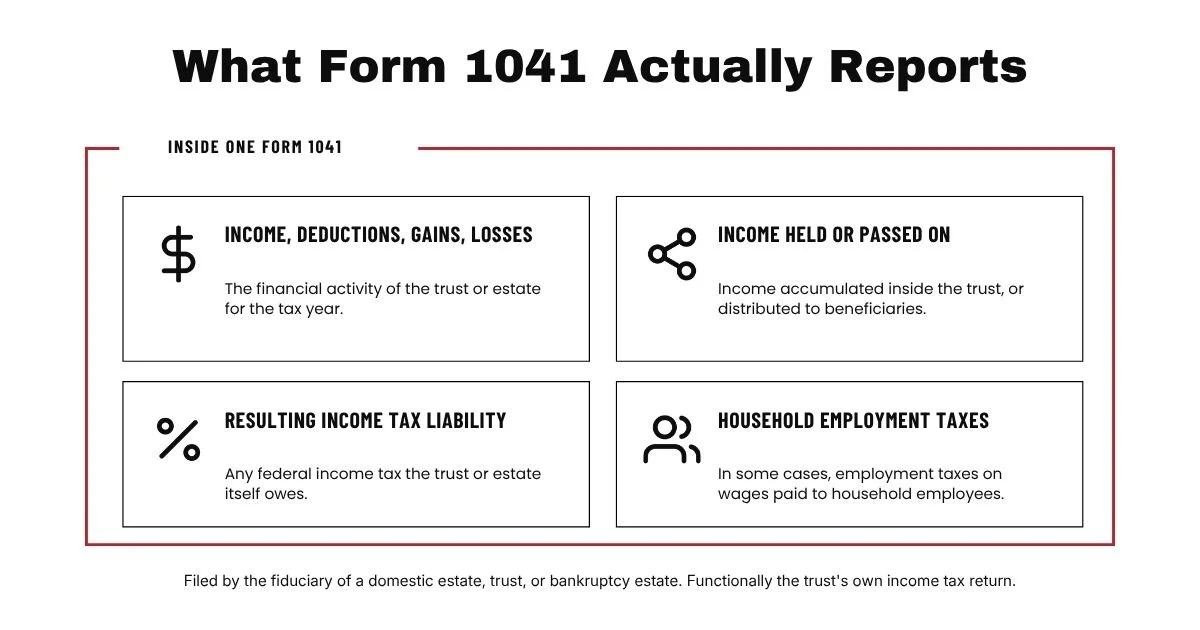
The fiduciary of a domestic estate, trust, or bankruptcy estate files Form 1041 to report the income, deductions, gains, and losses of the trust or estate, income that is either accumulated or distributed to beneficiaries, any resulting income tax liability, and in some cases employment taxes on wages paid to household employees.
This is functionally the trust's own income tax return, the same way Form 1040 is an individual's income tax return. The difference is that the "taxpayer" here is the trust itself, represented by whoever is legally acting as its fiduciary.
When Filing Is Required
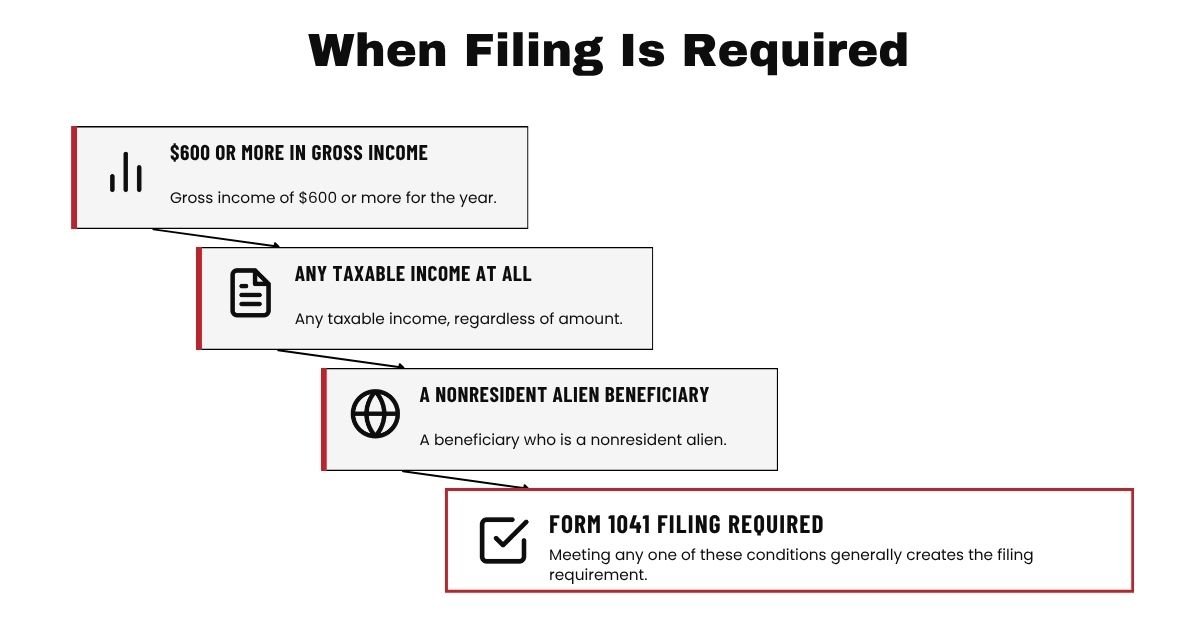
A trust generally must file Form 1041 if it has gross income of $600 or more during the year, has any taxable income at all regardless of amount, or has a beneficiary who is a nonresident alien.
Who Actually Pays the Tax, the Trust or the Beneficiary
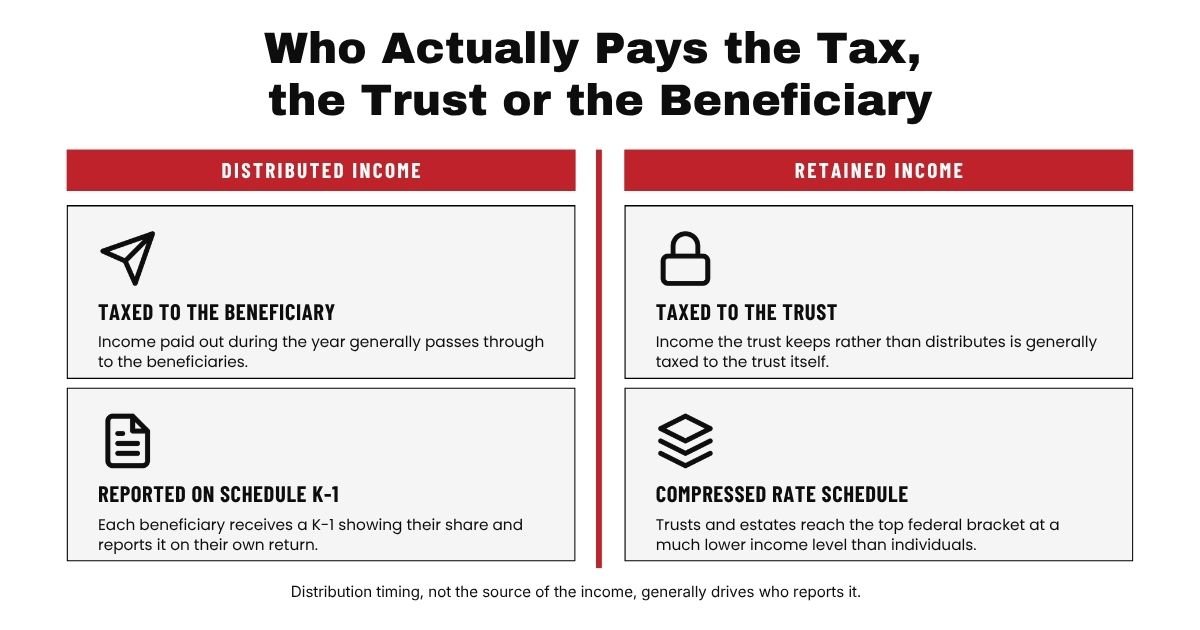
This is where trust taxation gets genuinely confusing, so I want to be precise about it. When a trust distributes income to its beneficiaries during the year, that income generally passes through to them. The trust prepares a Schedule K-1 for each beneficiary showing their share, and the beneficiary reports that income on their own individual return, not the trust's.
Income the trust keeps rather than distributes is generally taxed to the trust itself. This matters more than people expect, because trusts and estates are taxed under a compressed rate schedule that reaches the top federal income tax bracket at a much lower income level than individual brackets do.
In practice, this compressed bracket structure is part of why many trusts are structured to distribute income currently rather than accumulate it, though that is a planning decision that depends heavily on the trust's terms and the family's broader goals, not something to assume applies universally.
Estimated Payments and Deadlines
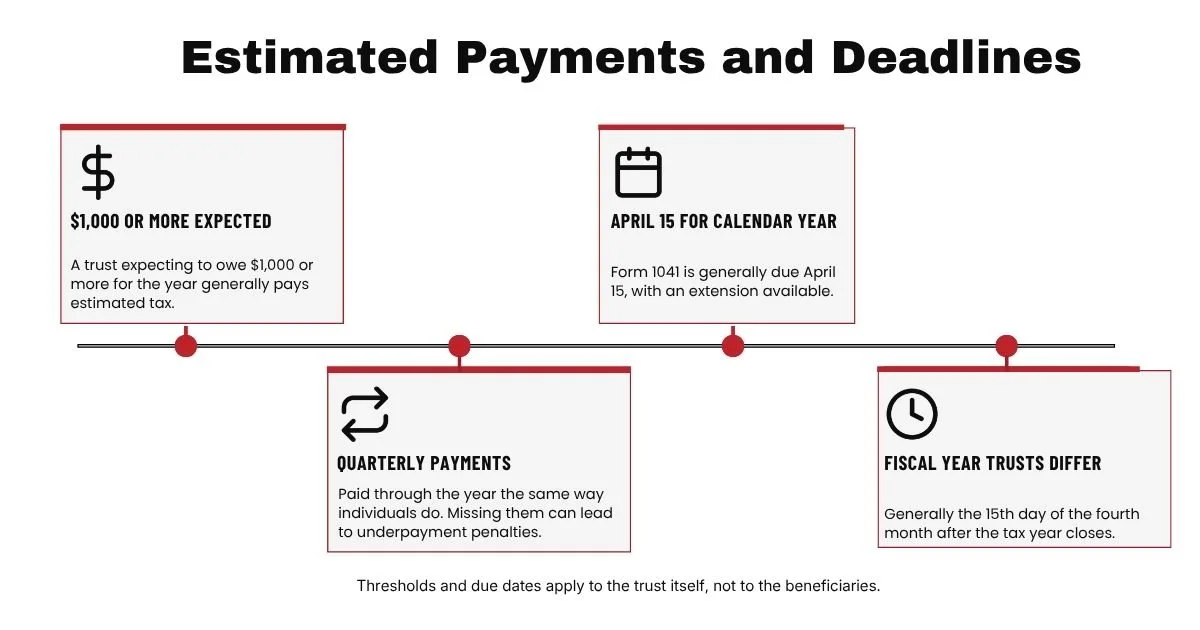
Just like an individual, a trust that expects to owe $1,000 or more in federal tax for the year generally must make quarterly estimated tax payments. Missing these can trigger underpayment penalties.
For calendar-year trusts, Form 1041 is generally due April 15, with an extension available. Trusts operating on a fiscal year follow a different deadline, generally the 15th day of the fourth month following the close of their tax year.
What Happens When a Trust Falls Behind
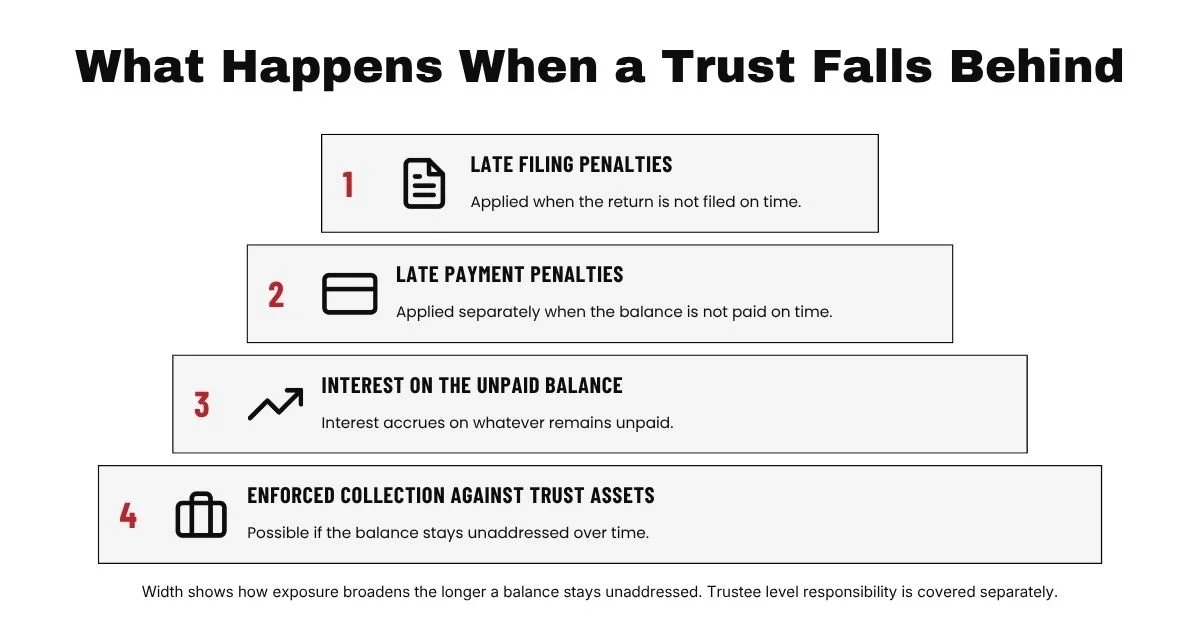
The same basic collection mechanics that apply to an individual who owes the IRS generally apply to a trust: penalties for late filing and late payment, interest that accrues on the unpaid balance, and eventually the possibility of enforced collection against trust assets if the debt goes unaddressed.
The more consequential question is usually not what happens to the trust, but what happens to the trustee personally. That is covered in depth in our companion post on trustee responsibilities when a trust has unresolved IRS tax problems, since trustee liability works differently than the personal liability rules that apply to an executor.
How I Approach Trust Tax Cases
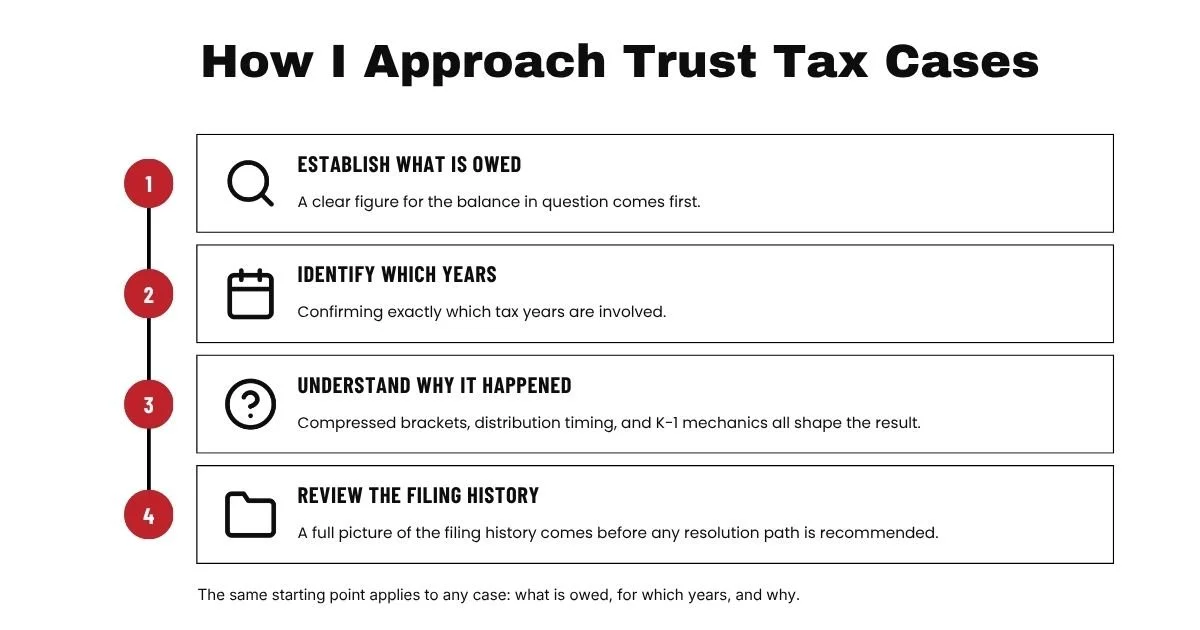
When a trustee comes to me because a trust has fallen behind on its tax obligations, my first step is usually the same as with any other case: establishing exactly what is owed, for which years, and why.
Trust taxation has enough structural quirks, compressed brackets, distribution timing, K-1 mechanics, that I want a clear picture of the trust's actual filing history before recommending any resolution path.
Frequently Asked Questions
-
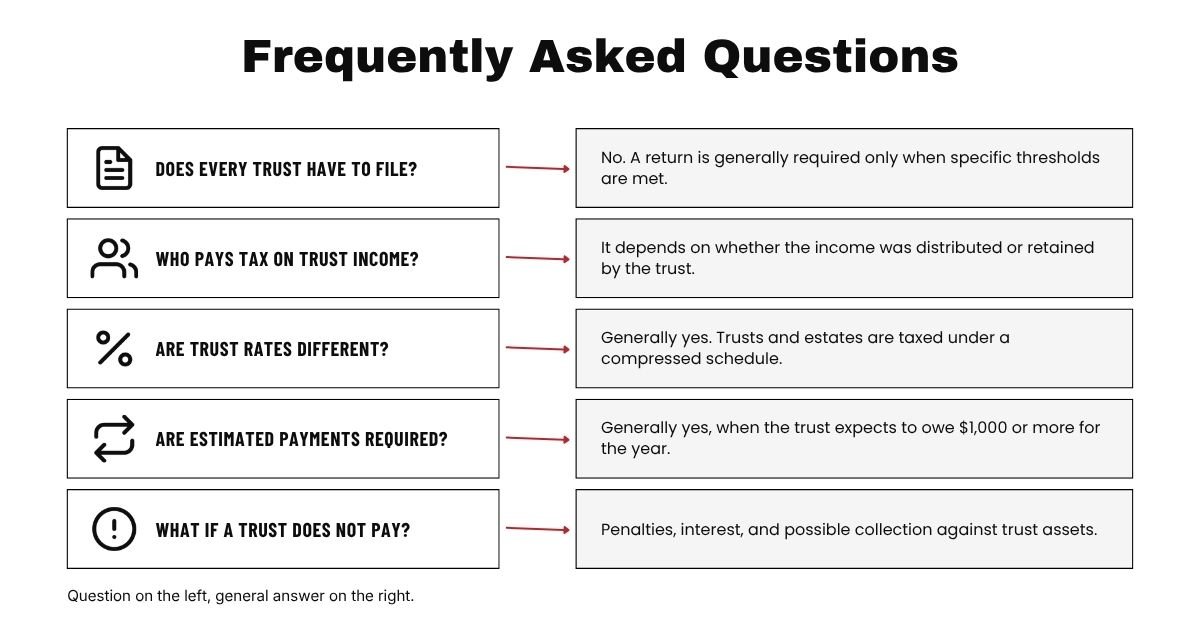
No. A trust generally only needs to file Form 1041 if it meets specific thresholds, generally $600 or more in gross income, any taxable income, or a nonresident alien beneficiary.
-
It depends on whether the income was distributed. Distributed income generally passes through to beneficiaries via Schedule K-1 and is taxed on their individual returns.
Income the trust retains is generally taxed to the trust itself.
-
Yes, generally. Trusts and estates are taxed under a compressed schedule that reaches the top tax bracket at a much lower income level than individual brackets.
-
Generally yes, if it expects to owe $1,000 or more in federal tax for the year.
-
Similar consequences to an individual who falls behind: penalties, interest, and potential enforced collection against trust assets.
Who becomes personally responsible depends on trustee-specific rules covered in our companion post on trustee responsibilities.
Sorting Out a Trust's Tax Situation
If you are serving as trustee and are not sure whether the trust is current on its filings, or if a trust you are involved with has fallen behind, this is worth sorting out directly rather than guessing.
I offer a free case review to help you understand exactly where the trust stands and what resolving any back taxes would look like.