
What Happens During an IRS Small Business Audit
If you are a small business owner who just learned your return was selected for examination, the uncertainty is usually worse than the process itself once you understand how it actually works. The IRS follows a defined structure for these exams, and knowing that structure ahead of time changes how you prepare. This article walks through how a small business audit typically unfolds, from the first letter to the final outcome.

TLDR
- Small business audits generally happen one of three ways: by mail (correspondence audit), at an IRS office, or in person at your business (field audit).
- A field audit is generally reserved for more complex cases and tends to involve a more thorough review of business records.
- The initial letter identifies which tax years and which specific items are under review, not necessarily the entire return.
- You generally have the right to representation throughout the process and are not required to meet with the examiner directly yourself.
- The outcome of most audits depends heavily on documentation, not on the initial selection itself.
- This article covers the federal IRS process. A California audit or inquiry from the FTB or CDTFA follows a separate process - see the callout below.

The Three Types of Audits
Correspondence Audit
A correspondence audit is conducted entirely by mail and is generally used for narrower issues, such as a specific deduction or credit that needs documentation. This is generally the least invasive type and often does not require any in-person meeting.
Office Audit
An office audit generally requires you or your representative to meet with an IRS examiner at a local IRS office, and typically covers a somewhat broader review than a correspondence audit.
Field Audit
A field audit is generally the most thorough type and is conducted in person, often at your place of business. This type is generally reserved for more complex returns, larger businesses, or situations where the examiner needs to see business operations directly.
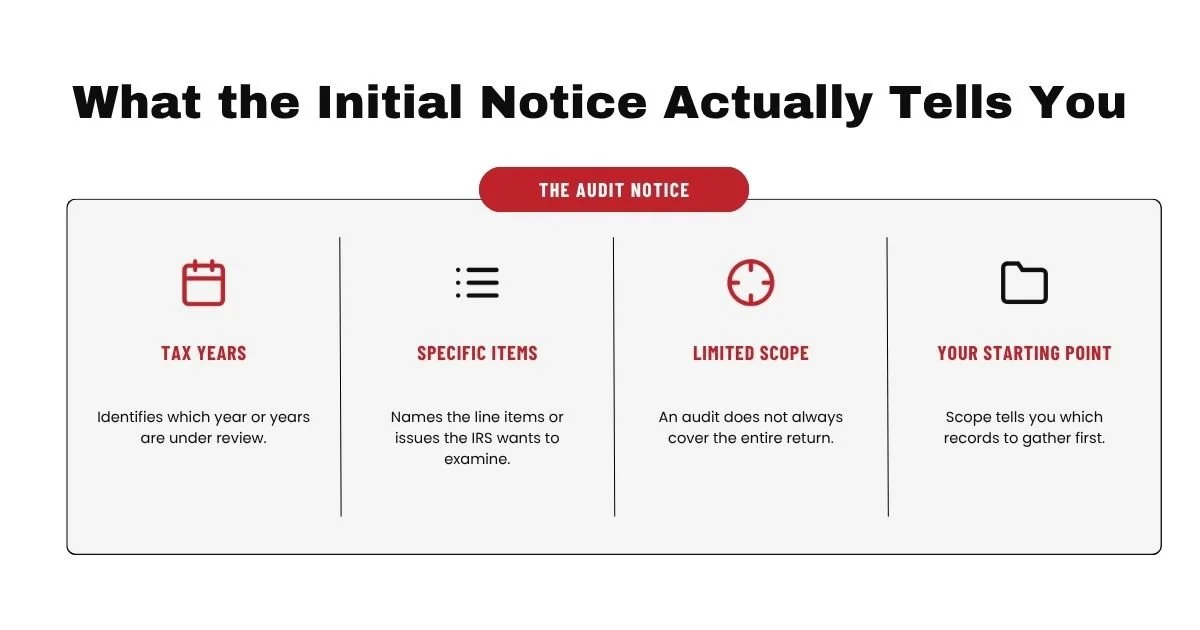
What the Initial Notice Actually Tells You
The letter that opens an audit generally identifies which tax year or years are under review and which specific line items or issues the IRS wants to examine. It is important to read this carefully, because an audit notice does not necessarily mean your entire return is being scrutinized.
In many cases, it is scoped to specific categories, such as income reporting, a particular deduction category, or expense substantiation.
Understanding the actual scope matters, because it tells you exactly what documentation to start pulling together rather than trying to reconstruct every record from every category at once.
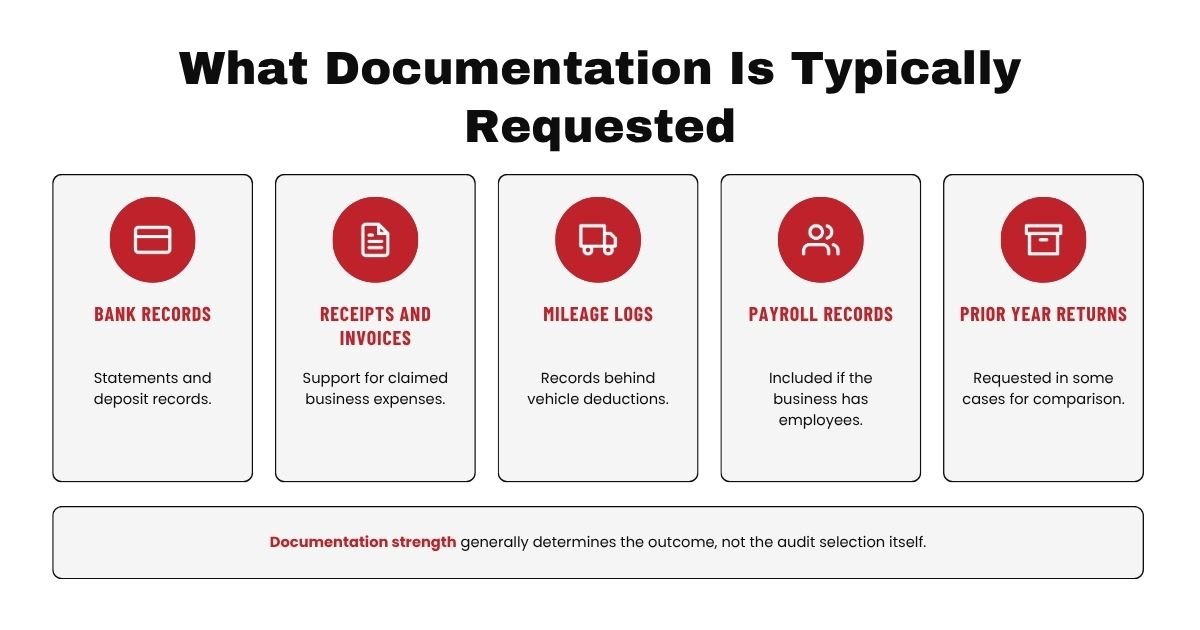
What Documentation Is Typically Requested
For a small business, examiners generally focus on documentation that substantiates reported income and claimed deductions:
- Bank statements and deposit records
- Receipts and invoices supporting claimed business expenses
- Mileage logs for vehicle deductions - Payroll records, if the business has employees
- Prior year returns, in some cases, for comparison.
The strength of your documentation, not the audit selection itself, is generally what determines the outcome.
A well-documented deduction rarely gets disallowed. A deduction with no supporting records is far more likely to be adjusted, regardless of whether the underlying expense was legitimate.
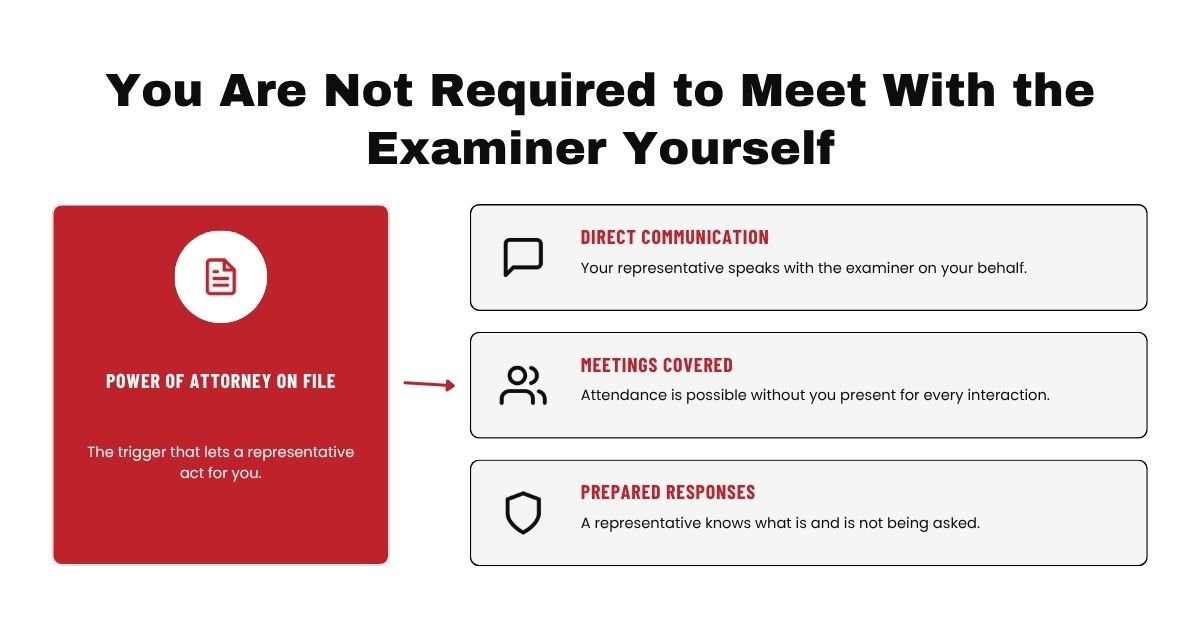
You Are Not Required to Meet With the Examiner Yourself
This is worth stating plainly, because I think a lot of business owners do not realize it.
Once a Power of Attorney is on file, your representative can generally communicate with the IRS examiner directly on your behalf, including attending meetings, without you being present for every interaction.
This matters for a practical reason beyond convenience. What you say in an unprepared conversation with an examiner can shape the direction of the audit in ways that are hard to undo.
Having someone who understands exactly what is and is not being asked generally reduces that risk.
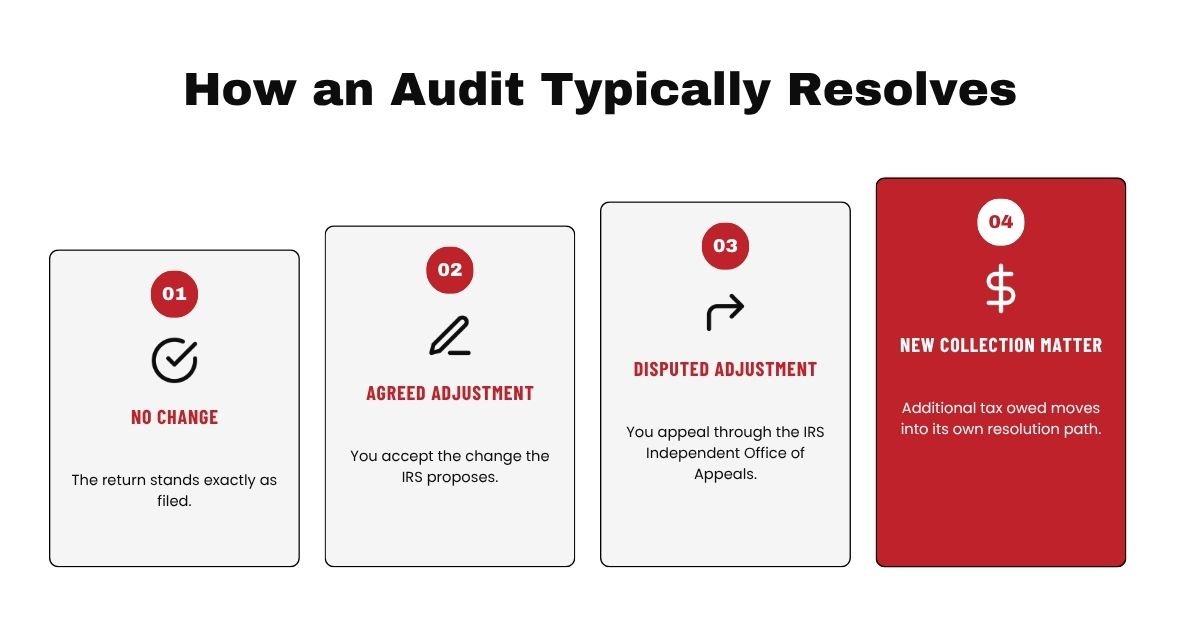
How an Audit Typically Resolves
Most audits end in one of a few ways: no change to the return, an agreed adjustment where you accept the IRS's proposed change, or a disputed adjustment where you disagree and pursue an appeal through the IRS Independent Office of Appeals.
If the audit does result in additional tax owed, that balance generally becomes a new collection matter, which may then require its own resolution path, whether that is payment in full, a payment plan, or another option depending on the amount and the business's financial situation.
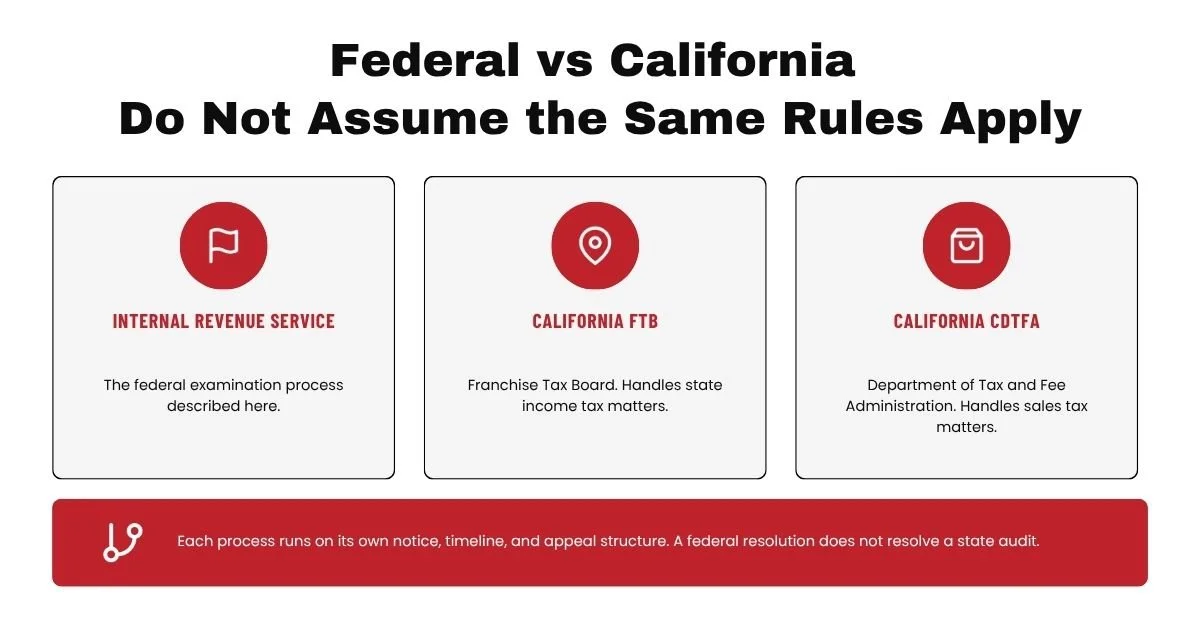
Federal vs California - Do Not Assume the Same Rules Apply
Everything above describes the federal IRS examination process. If your business also faces a state audit or inquiry, from the California Franchise Tax Board on income tax matters or the California Department of Tax and Fee Administration on sales tax matters, that process runs separately from the IRS and generally follows its own notice, timeline, and appeal structure.
A federal audit resolution does not resolve a state audit, and the two generally proceed independently even when they involve the same underlying business records.
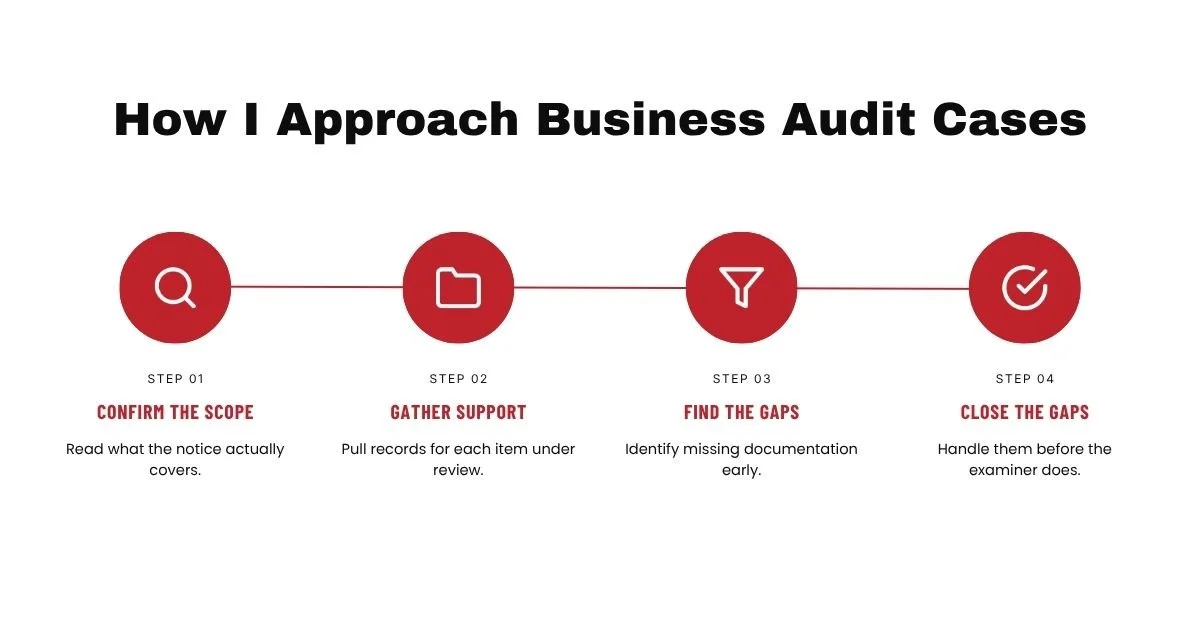
How I Approach Business Audit Cases
When a business owner comes to me facing an audit, my first priority is understanding the actual scope of the notice, not assuming the worst case.
From there, it is a documentation exercise: gathering what supports each item under review, identifying any gaps early, and addressing those gaps before the examiner does. The earlier a gap is identified and handled, the more options exist for closing it credibly.
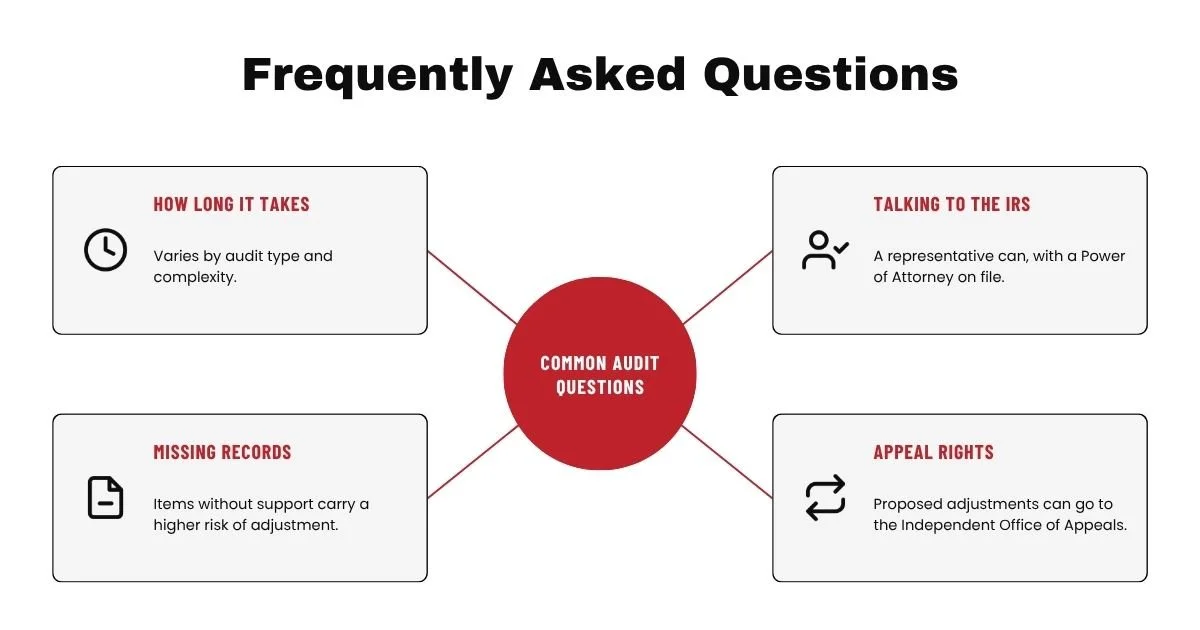
Frequently Asked Questions
-
It varies significantly by audit type and complexity. A narrow correspondence audit can resolve in a matter of months, while a field audit involving multiple years and categories can take considerably longer.
-
Yes. With a properly filed Power of Attorney, a representative can generally communicate with and meet the examiner on your behalf.
-
The item is at higher risk of being disallowed, though there may still be options depending on the type of expense and any secondary evidence available. This is very fact-specific and worth discussing directly rather than assuming the worst.
-
No. Audits can and do close with no change to the originally filed return when the documentation supports what was claimed.
-
You generally have the right to appeal a proposed adjustment through the IRS Independent Office of Appeals before the assessment becomes final.
Preparation Matters More Than the Notice Itself
An audit notice is stressful, but it is also a defined process with known stages, not an open-ended threat.
The outcome depends far more on your documentation and how the process is handled than on the fact that your return was selected in the first place.
I offer a free case review to look at your notice, understand the scope, and map out exactly what documentation the case will need.