Estate Tax Return (Form 706) vs Final Income Tax Return, What Is the Difference
These two get confused constantly, and I understand why. Both involve a deceased person, both involve the IRS, and both have "estate" or "final" somewhere in how people describe them.
But they are answering two completely different questions, and most families will only ever need one of them.

TLDR
- The final Form 1040 reports the decedent's income for the year up
until death. Nearly every decedent who had a filing requirement needs
one.
- Form 706 reports the value of everything the decedent owned at death and calculates whether federal estate tax is owed. Most estates do not need to file it.
- For decedents dying in 2026, Form 706 is generally required only if the gross estate plus adjusted taxable gifts exceeds $15,000,000 per person, following the permanent exemption set by the One Big Beautiful Bill Act.
- Even estates below that threshold may still need to file Form 706 to elect portability, transferring a deceased spouse's unused exclusion to the surviving spouse.
- Form 706 is generally due nine months after the date of death, with a possible six-month extension using Form 4768.
- Some states impose their own separate estate tax with a much lower threshold than the federal exemption - see the callout below. [Free
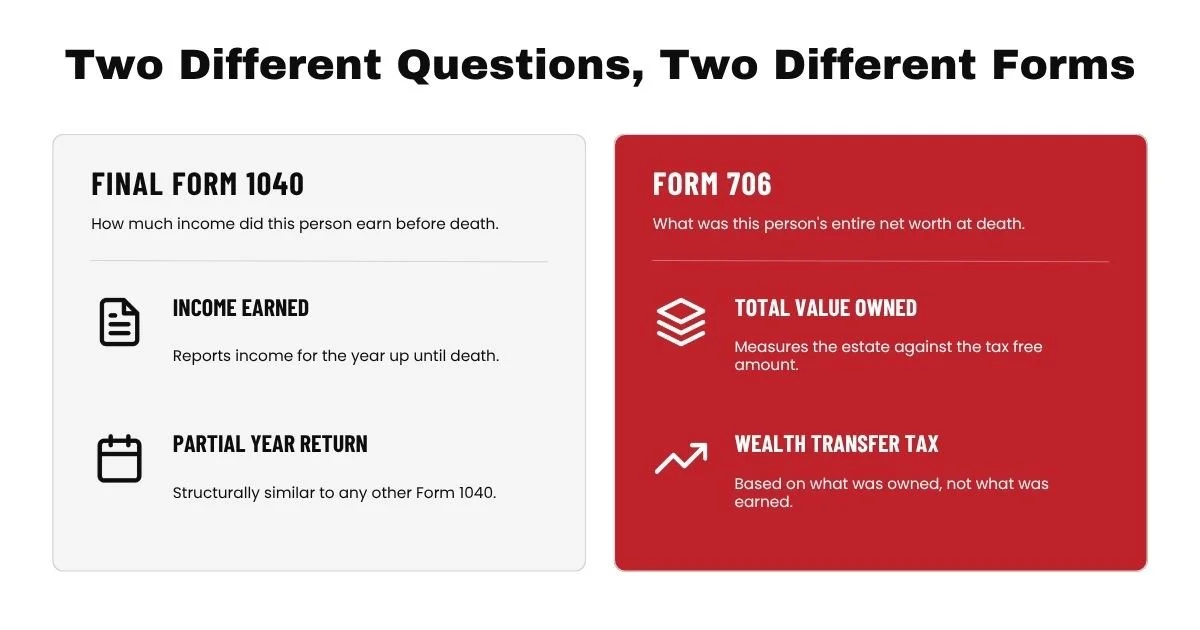
Two Different Questions, Two Different Forms
The final Form 1040 answers: how much income did this person earn before they died, and is any income tax owed on it.
This is an income tax return, structurally similar to any other 1040, just covering a partial year. Form 706 answers a completely different question: what was this person's entire net worth at the moment of death, and does the value of that estate exceed the amount the federal government allows to pass tax free.
This is a wealth transfer tax, not an income tax, and it is calculated on the total value of what was owned, not what was earned.
Who Actually Needs to File Form 706
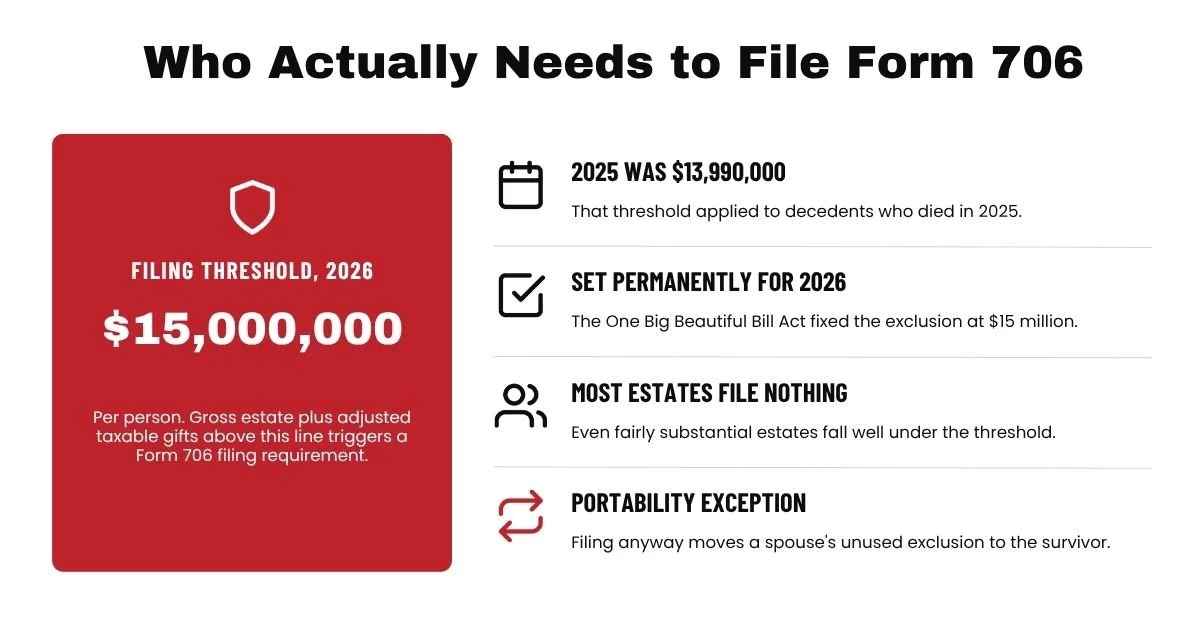
For decedents who died in 2025, Form 706 was required if the gross estate, plus adjusted taxable gifts and specific exemption, exceeded $13,990,000.
For 2026 and later years, the One Big Beautiful Bill Act permanently set the federal estate tax exclusion at $15,000,000 per person, so the earlier scheduled reduction of this exemption did not occur. This means the large majority of estates, even fairly substantial ones, do not owe federal estate tax and are not required to file Form 706 at all.
Filing Anyway for Portability
There is an important exception worth understanding even if an estate is well under the threshold. If the decedent was married, the executor can elect to transfer any unused portion of the decedent's exemption to the surviving spouse, called portability of the Deceased Spousal Unused Exclusion, or DSUE.
Making this election requires filing Form 706, even if no estate tax is actually owed. This is a planning opportunity, not a requirement, but it is one that gets missed often, since executors sometimes assume that because no tax is owed, no filing is needed.
When Form 706 Is Due
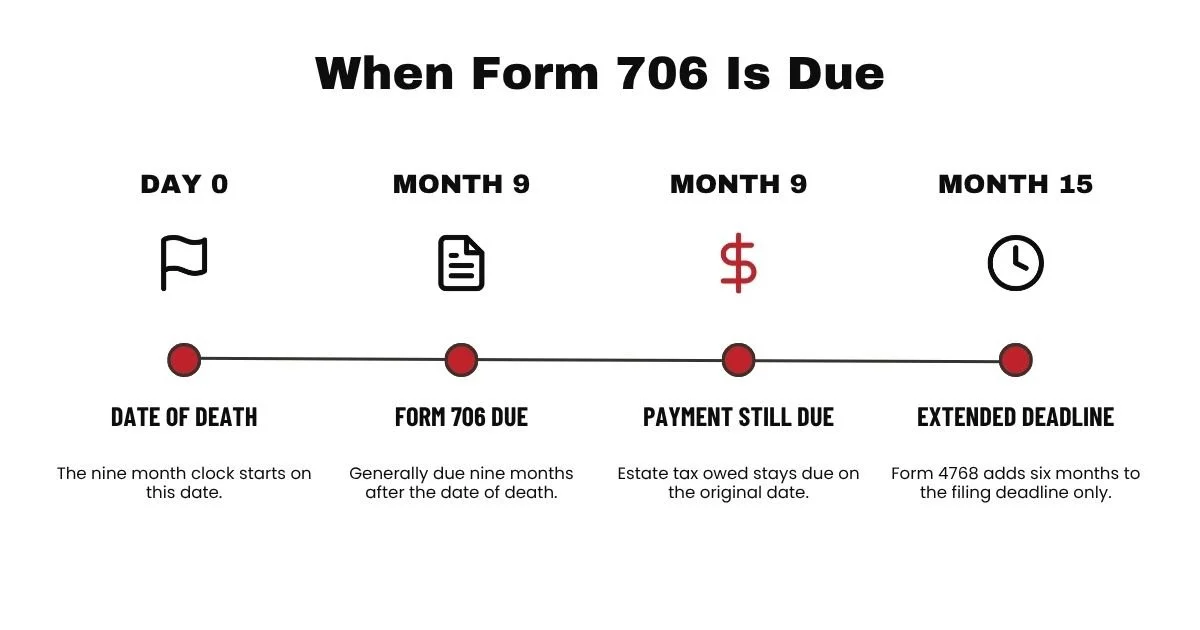
Form 706 is generally due nine months after the decedent's date of death. An automatic six-month extension is available by filing Form 4768 before the original deadline, though the extension applies to the filing deadline only.
Any estate tax owed is still due by the original nine-month date, and unpaid amounts generally accrue interest from that date regardless of the extension.

How the Two Forms Can Both Apply to the Same Estate
For a large estate, both forms are often needed, and they serve entirely separate purposes within the same estate administration. The final Form 1040 closes out the decedent's personal income tax obligations.
Form 706, if required, addresses the separate question of whether the transfer of their wealth at death triggers federal estate tax.
A third form, Form 1041, may also come into play if the estate itself generates income during administration, which is covered in our companion post on Form 1041 and trust income tax.
Federal vs California - Do Not Assume the Same Rules Apply
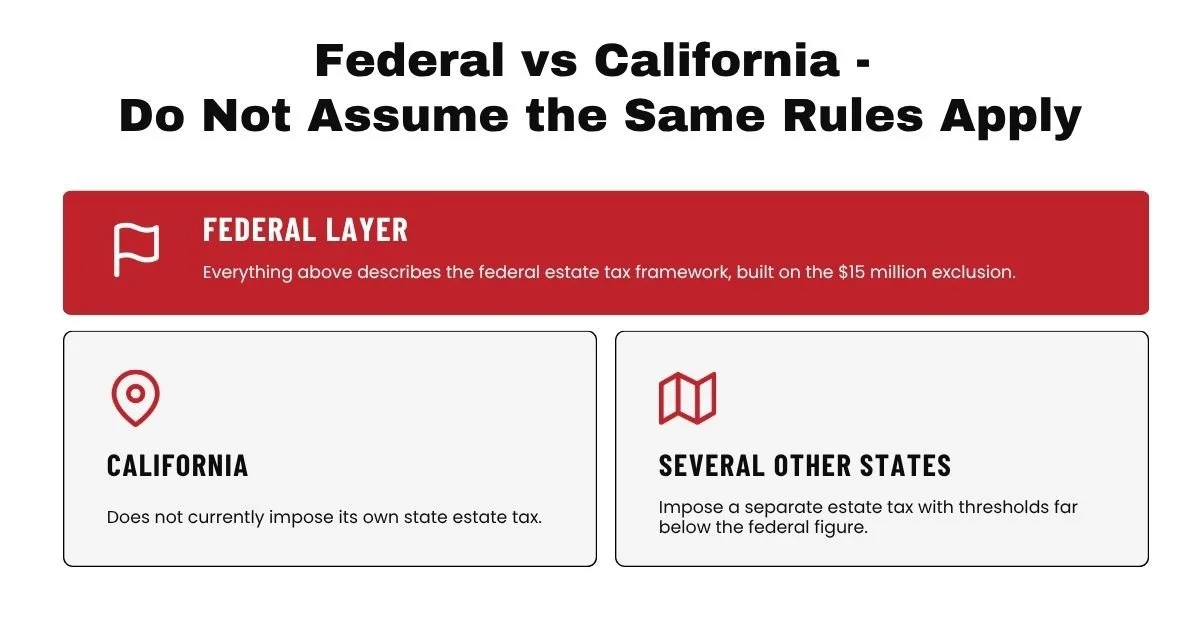
Everything above describes the federal estate tax framework. California does not currently impose its own state estate tax, but several other states do, with exemption thresholds far below the federal $15 million figure.
How I Help Families Sort This Out
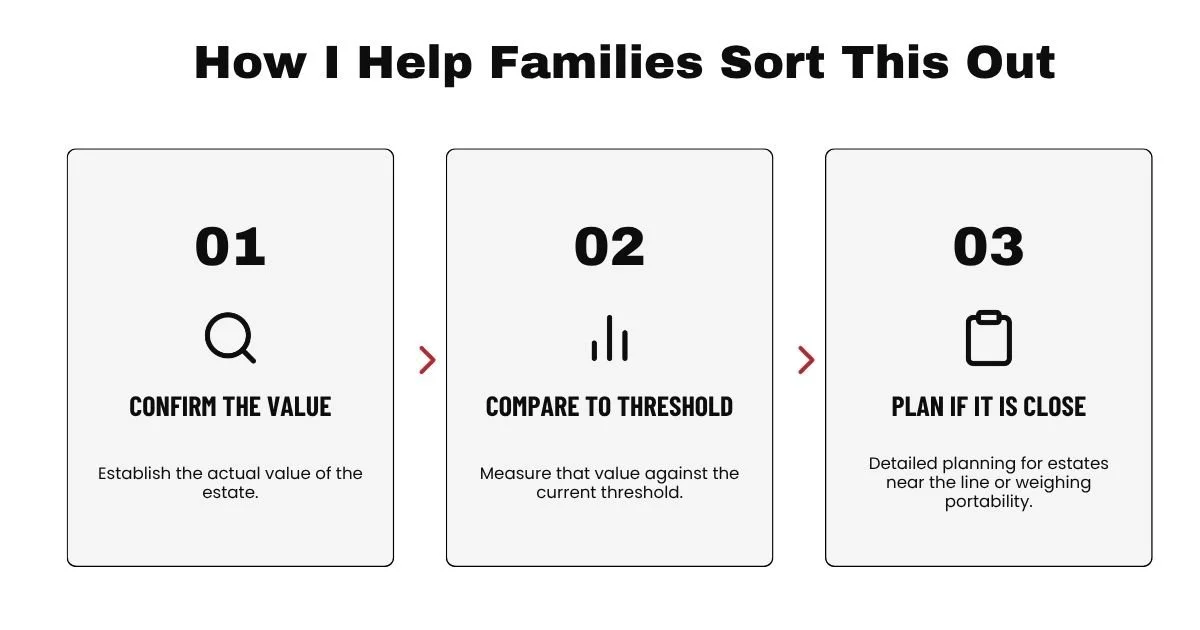
Most families who come to me are relieved to learn Form 706 does not apply to them at all, since the exemption threshold is high enough that the majority of estates fall well under it. My first step is usually just confirming the actual value of the estate against the current threshold, which tends to resolve the anxiety quickly.
For the smaller number of estates that are genuinely close to or over the line, or where portability is worth considering, that is where more detailed planning comes in.
Frequently Asked Questions
-
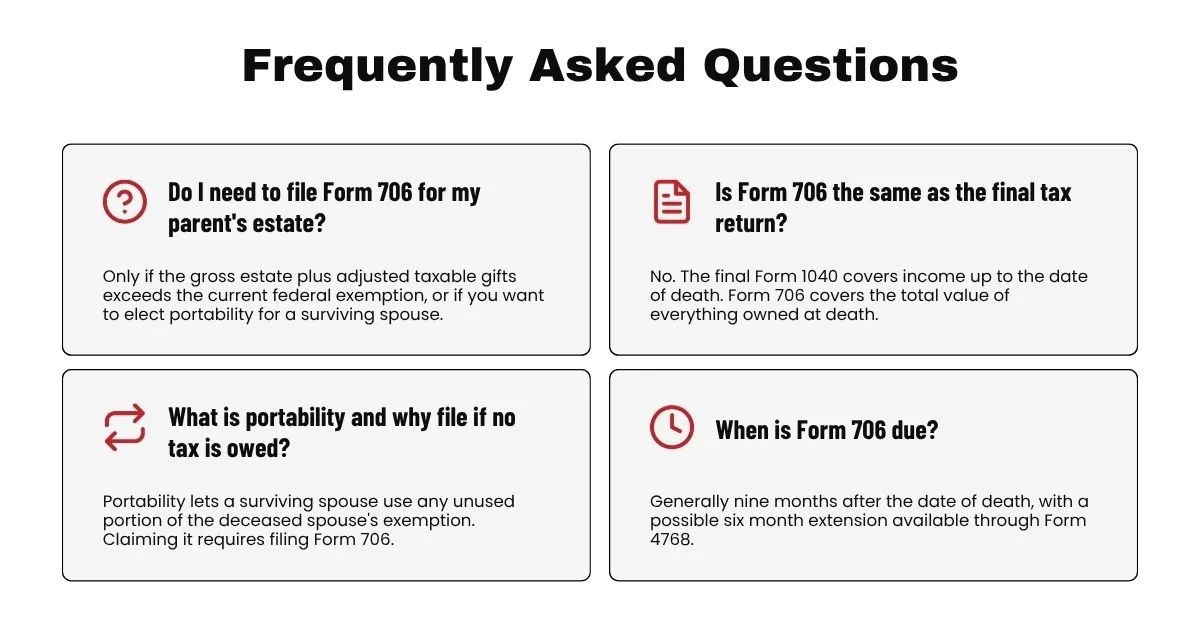
Only if the gross estate, plus adjusted taxable gifts, exceeds the current federal exemption threshold, or if you want to elect portability for a surviving spouse.
Most estates do not meet this threshold. -
No. The final Form 1040 covers the decedent's income up to the date of death. Form 706 covers the total value of everything they owned at death and whether estate tax is owed on it.
-
Portability lets a surviving spouse use any unused portion of the deceased spouse's exemption. Claiming it requires filing Form 706 even if the estate owes no tax on its own.
-
Generally nine months after the date of death, with a possible six-month extension available through Form 4768.
Figuring Out Which Forms Actually Apply to Your Situation
If you are not sure whether an estate you are handling needs to file Form 706, that is usually a quick thing to sort out once we look at the actual value of the assets involved.
I offer a free case review to help you understand exactly which filings, the final return, Form 706, and Form 1041 if applicable, actually apply to your situation.