Filing the Final Form 1040 for a Deceased Taxpayer, What Changes
A common misconception I run into is that a deceased person's tax return is some special, separate process.
Mostly, it is not. The IRS's own guidance is direct about this: the final individual income tax return of a deceased person is generally prepared and filed the same way as if the person were alive. What I want to walk through here are the specific things that actually do change, because those differences matter even though the overall process does not.
TLDR
- The final return reports all income the decedent received up to the date of death, and claims all eligible credits and deductions, just like a normal return.
- The taxable period simply ends on the date of death rather than running the full year.
- Who signs the return depends on the situation: a surviving spouse, a court-appointed personal representative, or someone acting informally on the decedent's behalf.
- Form 1310 is generally required to claim a refund unless the filer is a surviving spouse or a court-appointed representative attaching a copy of the court certificate.
- The IRS does not need a death certificate attached to the final return.
- The return is due on the normal filing deadline for that tax year, regardless of when during the year death occurred.
- Surviving spouses with dependent children may qualify for Qualifying Surviving Spouse filing status for up to two years after the spouse's death.
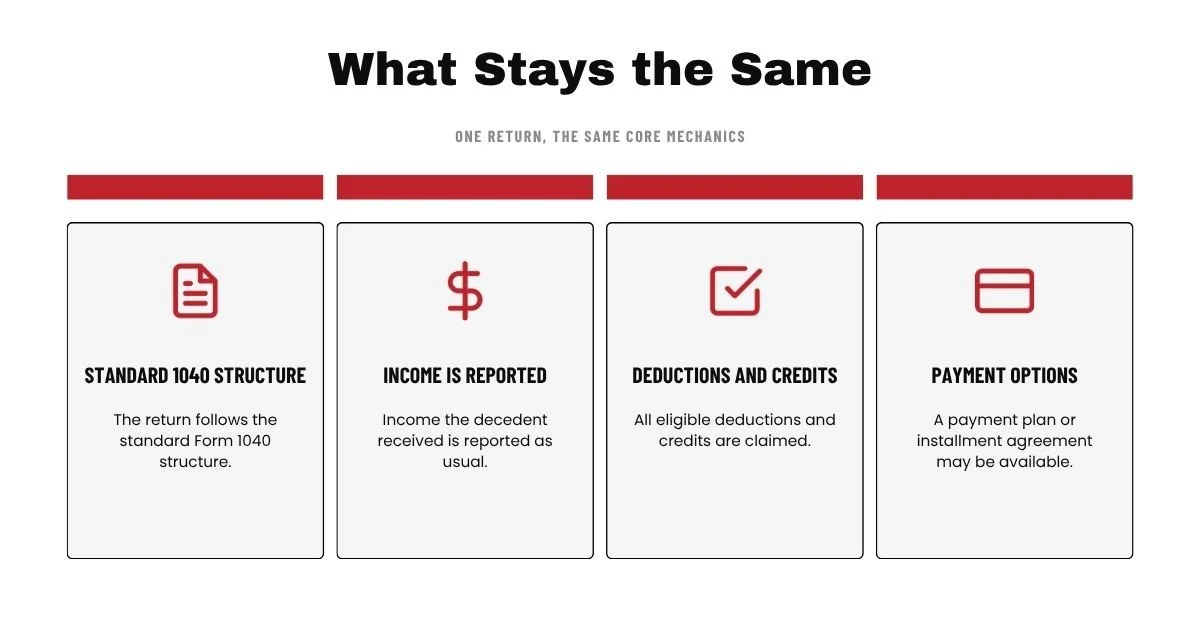
What Stays the Same
The core mechanics do not change. Income is reported, deductions and credits are claimed, and the return follows the standard Form 1040 structure.
If tax is due, it should be submitted with the return, and if paying in full is not possible, the estate may qualify for a payment plan or installment agreement just like a living taxpayer would.
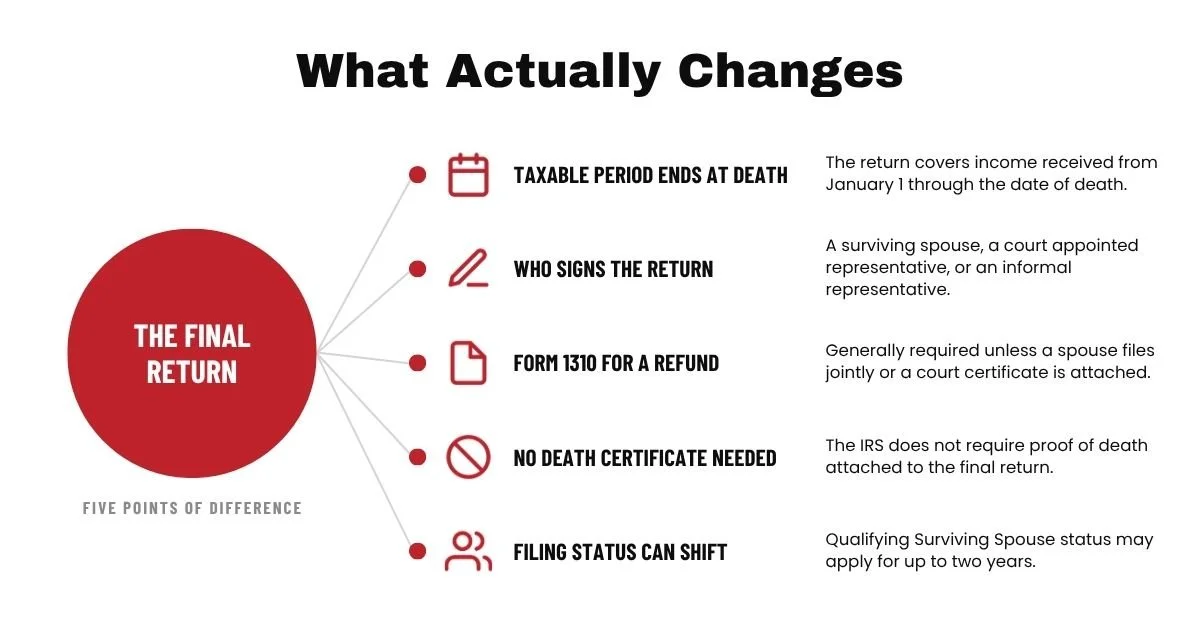
What Actually Changes
The Taxable Period Ends at Death
The most fundamental change is timing. The return covers income received from January 1 through the date of death, not the full calendar year.
For a taxpayer using the cash method of accounting, which is most individuals, this generally means only income actually or constructively received through the date of death is included
Income the decedent was entitled to but had not yet received at death, sometimes called income in respect of a decedent, is generally handled separately, reported by the estate or the beneficiary who receives it rather than on the decedent's final return.
Who Signs the Return
This depends on the situation:
- If there is a surviving spouse and no appointed representative, the surviving spouse writes "Filing as Surviving Spouse" in the decedent's signature space and signs normally in their own.
- If a personal representative has been appointed and it is not a joint return, the representative signs and attaches a copy of the court certificate showing their appointment. A power of attorney or a copy of the decedent's will is not acceptable evidence of this appointment.
- Someone in charge of the decedent's property without formal court appointment signs their own name followed by "Personal Representative."
Claiming a Refund May Require Form 1310
If the return shows a refund is due, Form 1310, Statement of Person Claiming Refund Due a Deceased Taxpayer, is generally required, with two notable exceptions: a surviving spouse filing a joint return does not need it, and a court-appointed representative attaching a copy of the court certificate does not need it either.
No Death Certificate Required
The IRS explicitly does not require a copy of the death certificate or other proof of death attached to the final return. The instruction is to keep it for your own records instead.
The Due Date Does Not Change Based on When Death Occurred
Regardless of when during the year someone passes away, the final Form 1040 is generally due at the same time it would have been due had death not occurred, the standard April filing deadline for the relevant tax year.
Filing Status Can Shift for a Surviving Spouse
A surviving spouse with a dependent child may be able to use Qualifying Surviving Spouse filing status for up to two years following the year of the spouse's death, which allows joint return tax rates and the higher standard deduction even though they are filing individually.
If Prior Years Were Never Filed
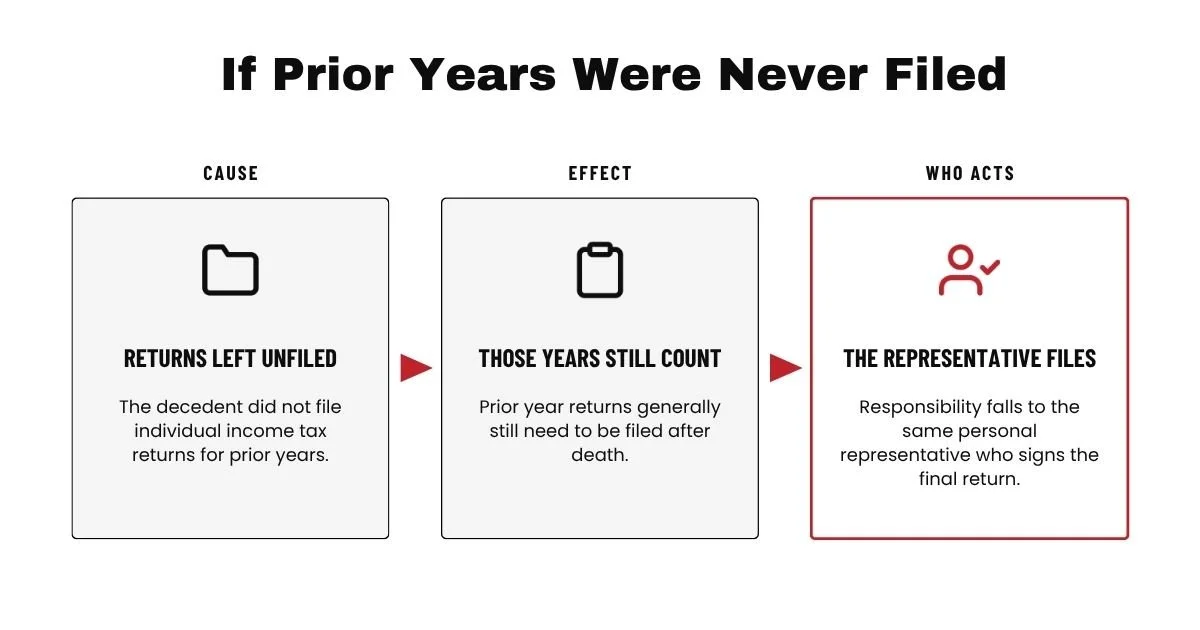
The final return is not necessarily the only return that needs attention. If the decedent had not filed individual income tax returns for years prior to their death, those generally need to be filed as well, and that responsibility falls to the same personal representative described above.
This is covered in more depth in our companion post on who is responsible for a deceased person's unfiled tax returns.

How I Approach Final Returns With Families
In my experience, the final return itself is rarely the hard part technically, since it largely follows familiar rules. The harder part is usually procedural: confirming who has legal standing to sign, gathering income records for a partial year, and making sure Form 1310 or a court certificate is attached correctly so a refund is not delayed.
Getting those details right the first time avoids a frustrating back and forth with the IRS during an already difficult time.
Frequently Asked Questions
-
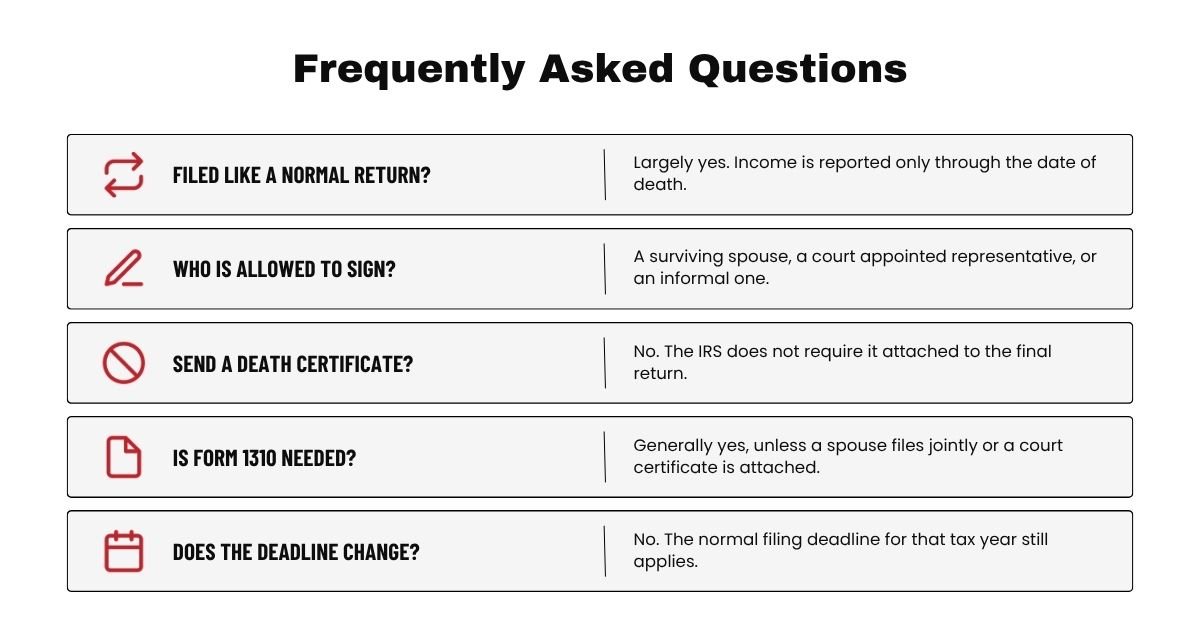
Largely yes.
The IRS states the final return is generally prepared and filed the same way as if the person were alive, with income reported only through the date of death. -
Generally a surviving spouse, a court-appointed personal representative, or someone acting informally as personal representative, depending on the circumstances.
-
No. The IRS explicitly does not require it attached to the final return.
-
Generally yes, unless you are a surviving spouse filing jointly or a court-appointed representative attaching a copy of your court certificate.
-
No. The final return is generally due on the normal filing deadline for that tax year regardless of when during the year death occurred.
Getting the Final Return Right the First Time
Filing a loved one's final return while grieving is difficult enough without the added stress of a rejected filing or a delayed refund because a form was missing.
I can help you confirm who should sign, what needs to be attached, and get this filed correctly.