IRS Form 2848 Power of Attorney: When You Need It and How to Fill It Out
If you want someone to deal with the IRS so you don’t have to, IRS Form 2848 is the official tool the IRS recognizes for you to be represented by a power of attorney. This form, called Power of Attorney and Declaration of Representative, gives your tax professional the authority to speak to the IRS, access your records, and represent you for specific years and issues. Your tax POA figuratively steps into your shoes when dealing with the IRS.
This guide is based on:
Official IRS sources, including Form 2848 instructions
Independent explanations from trusted tax platforms
IRS Publication 1: Taxpayer Bill of Rights
Real tax relief cases from my practice at Semper Tax Relief, including audits, Offer in Compromise work, and complex back-tax situations
IRS Form 2848 Summary
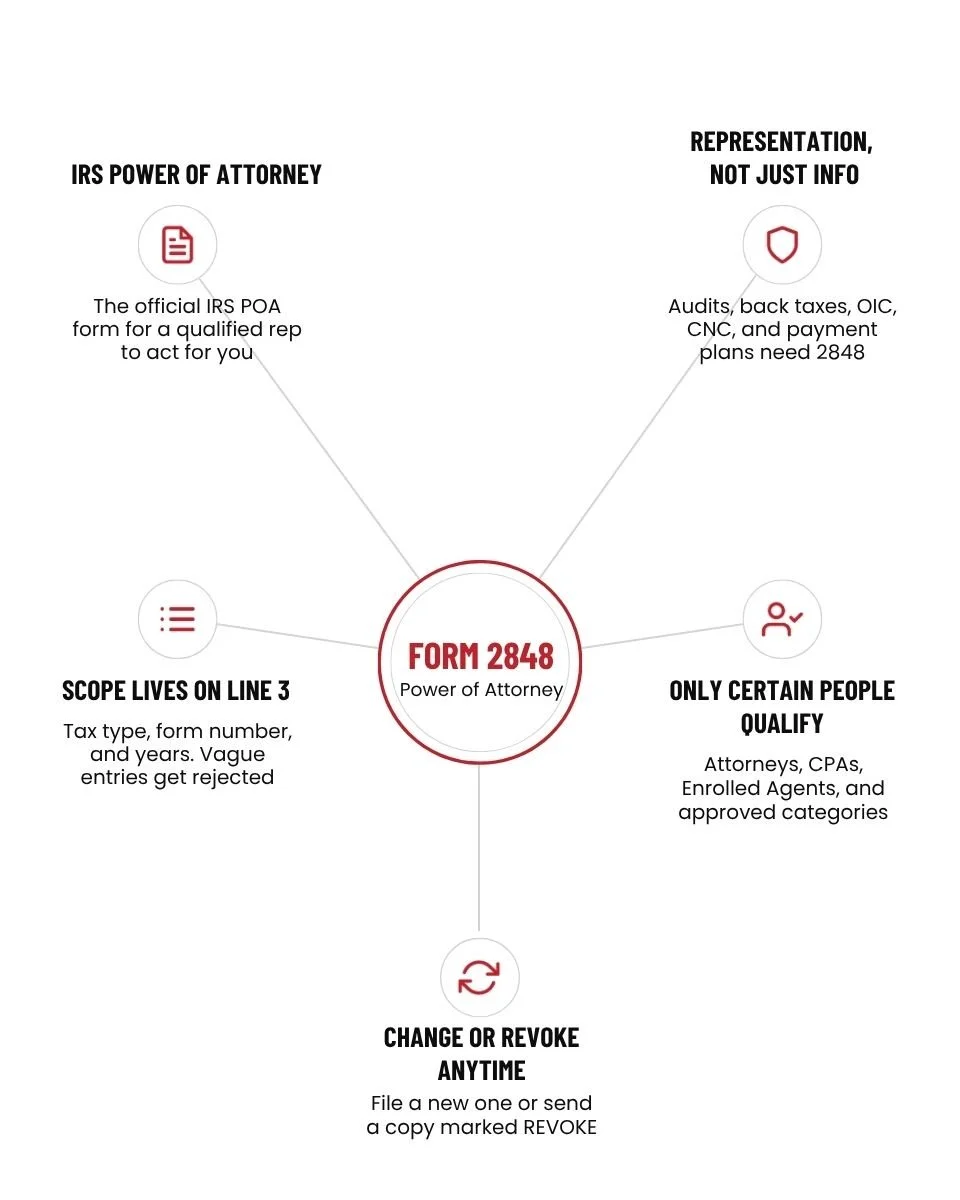
Form 2848 = IRS Power of Attorney. It’s the official IRS POA form that lets a qualified rep talk to the IRS and act for you on specific years/issues.
Use 2848 when you want representation, not just info. Audits, back taxes, levies, liens, Offers in Compromise (OIC), Currently Not Collectible (CNC) status, and payment plans usually need Form 2848, not just Form 8821.
8821 is “read-only.” If you only need someone to access transcripts or share info with a lender, Form 8821 (Tax Information Authorization) is often enough.
Scope lives on Line 3. You must clearly list tax type, form number, and years/periods (e.g., “Income, Form 1040, 2021–2023”). Vague “all years/all taxes” entries get rejected.
Only certain people can represent you. Attorneys, CPAs, Enrolled Agents, some officers/employees, and certain other approved categories can be your IRS representative.
Your rep gets tax rights, not full financial control. Form 2848 lets them receive tax info, call the IRS, negotiate, and sign some consents, but not cash your refund or run your bank accounts.
Separate forms for different roles. Often you’ll have one 2848 for you personally and another for your business (941, 1120, 1065, etc.).
Signatures and details matter. Most rejections come from bad IDs, missing signatures, or sloppy Line 3 entries—double-check before submitting.
Best submission: Use the IRS 2848 online portal when possible. The IRS upload tool + proper e-signature is usually the fastest way; fax or mail works but is slower and more error-prone, as it requires manual processing.
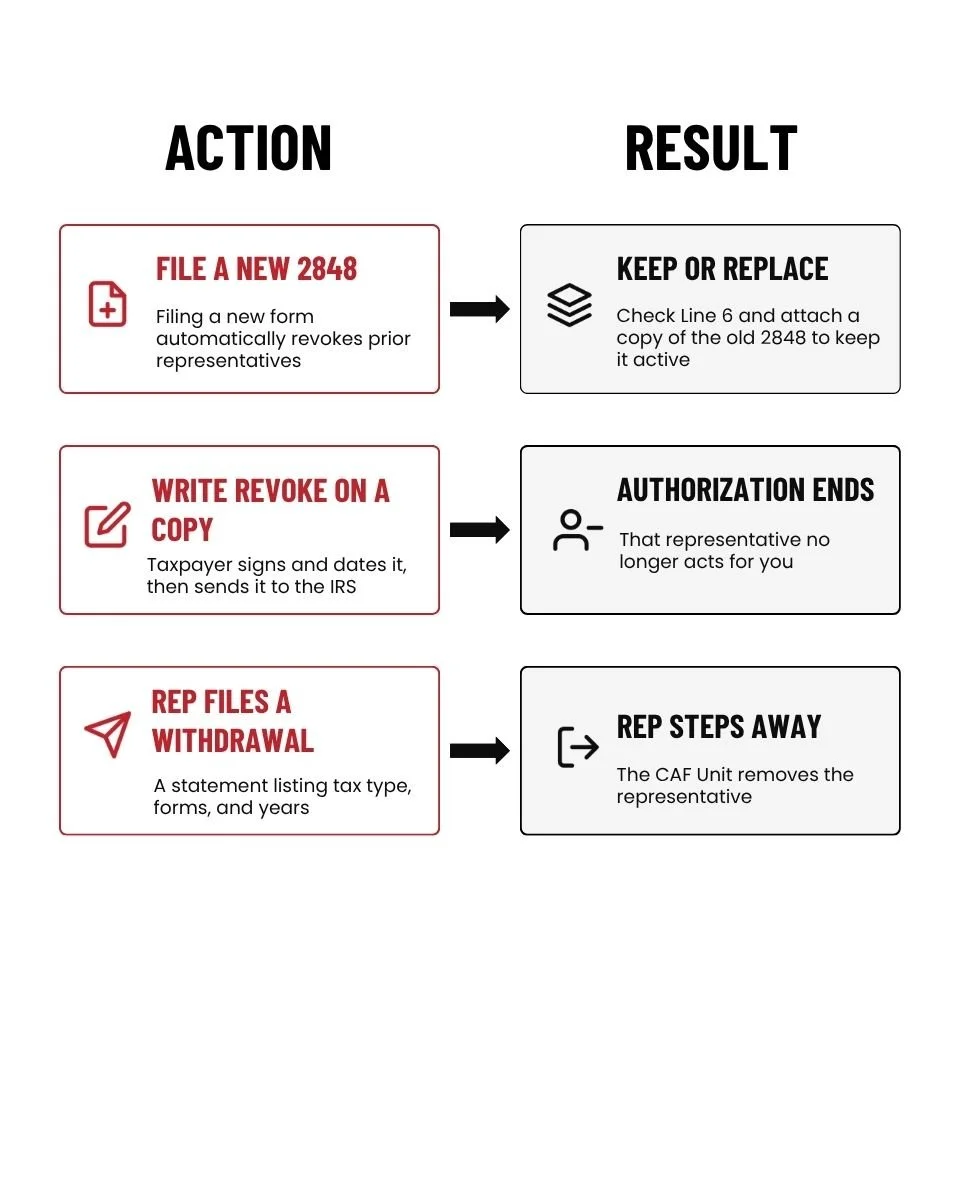
You can change or revoke a 2848. File a new one or send a copy marked “REVOKE” to update who represents you and for which years.
Think long-term, not permanent. A 2848 stays active for the listed periods until issues are resolved or you revoke it; IRS may keep it on file for years.
Core use in tax relief work. In real cases, Form 2848 is the gateway that lets a pro stand between you and the IRS so you don’t have to handle every call and notice yourself.
What Does IRS Form 2848 Allow a Representative to Do?

In plain English: the IRS 2848 gives a qualified representative the legal authority to talk to, communicate with, and negotiate with the IRS on your behalf.
The tax POA covers IRS procedures such as audits, payment plans, back-tax debt negotiations, appeals, and more.
You may need Form 2848 if you want someone to:
Call the IRS, respond to letters, and pull transcripts from the IRS
Negotiate tax debt: payment plans, Offers in Compromise (OIC),or Currently Not Collectible (CNC), Partial Pay Installment Agreements.
Represent you during an IRS audit
Represent you at an IRS appeals hearing
You probably don’t need Form 2848 if someone only needs to view your IRS records. In those cases, Form 8821 is enough. An 8821 differs because it only allows limited communication between the IRS and the person named on the 8821.
IRS Form 2848 vs Form 8821 vs Third Party Designee
This is usually the first decision I make with a new client.
| Tool / Form | What It Is | What Your Tax Pro Can Do | When You Use It |
|---|---|---|---|
| Form 2848 (POA) | IRS representation authority | Speak to IRS, argue your case, negotiate, attend audits and appeals | Audits, back tax negotiations, OIC, payment plans, serious notices |
| Form 8821 | Tax Information Authorization | Receive info only, no negotiation | Lenders, bookkeepers, or a tax pro gathering data |
| Third Party Designee | One year limited authority | Answer basic questions on the specific filed return by the Tax Professional | Simple filing related questions only |
Simple test:
• If you want someone to fully fight for you on your IRS matters, choose Form 2848.
• If you only want someone to view your IRS account, with limited IRS communication, Form 8821 is appropriate.
When You Actually Need IRS Form 2848
Here are situations where I recommend filing a POA:
IRS Audits
A representative can:
• Receive the audit notice
• Speak directly with the examiner
• Provide documents and defend your position
• Attend conferences on your behalf
Back Taxes, Levies, and Payment Plans
Form 2848 allows a representative to:
• Review transcripts
• Handle OIC, CNC, or installment agreement negotiations
• Appeal rejections or collection actions
You can check out our Offer in Compromise Calculator.
Unfiled Tax Returns
Your representative can:
• Pull wage and income transcripts
• Review account history
• Coordinate filing strategies and communicate with the IRS
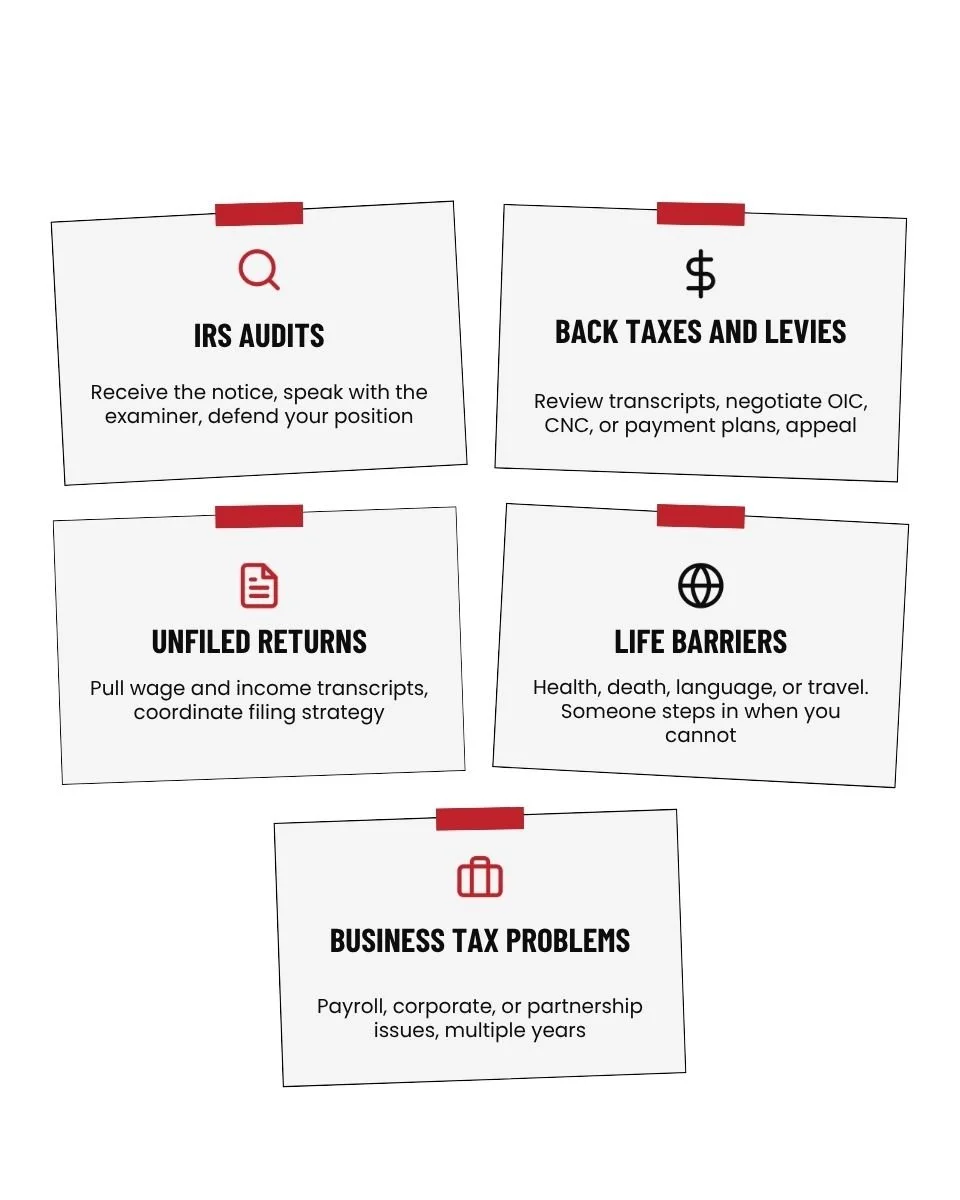
Health, Death, Language, or Travel Barriers
Form 2848 allows someone to step in when you cannot. In certain situations, your POA may take over to help resolve problems. However, there are times when the 2848 will allow a family member in specific situations. Certain personal situation arise when authority is given to someone else, such as with a General Power of Attorney, Trust, Will, or Court Order.
Business Tax Problems
Essential if your business has:
• Payroll tax issues
• Corporate or partnership tax problems
• Multiple years of noncompliance
In addition to Tax Professionals, Corporate officers & Employees can be authorized on a 2848 of a business they operate.
What Rights You Give and What You Don’t
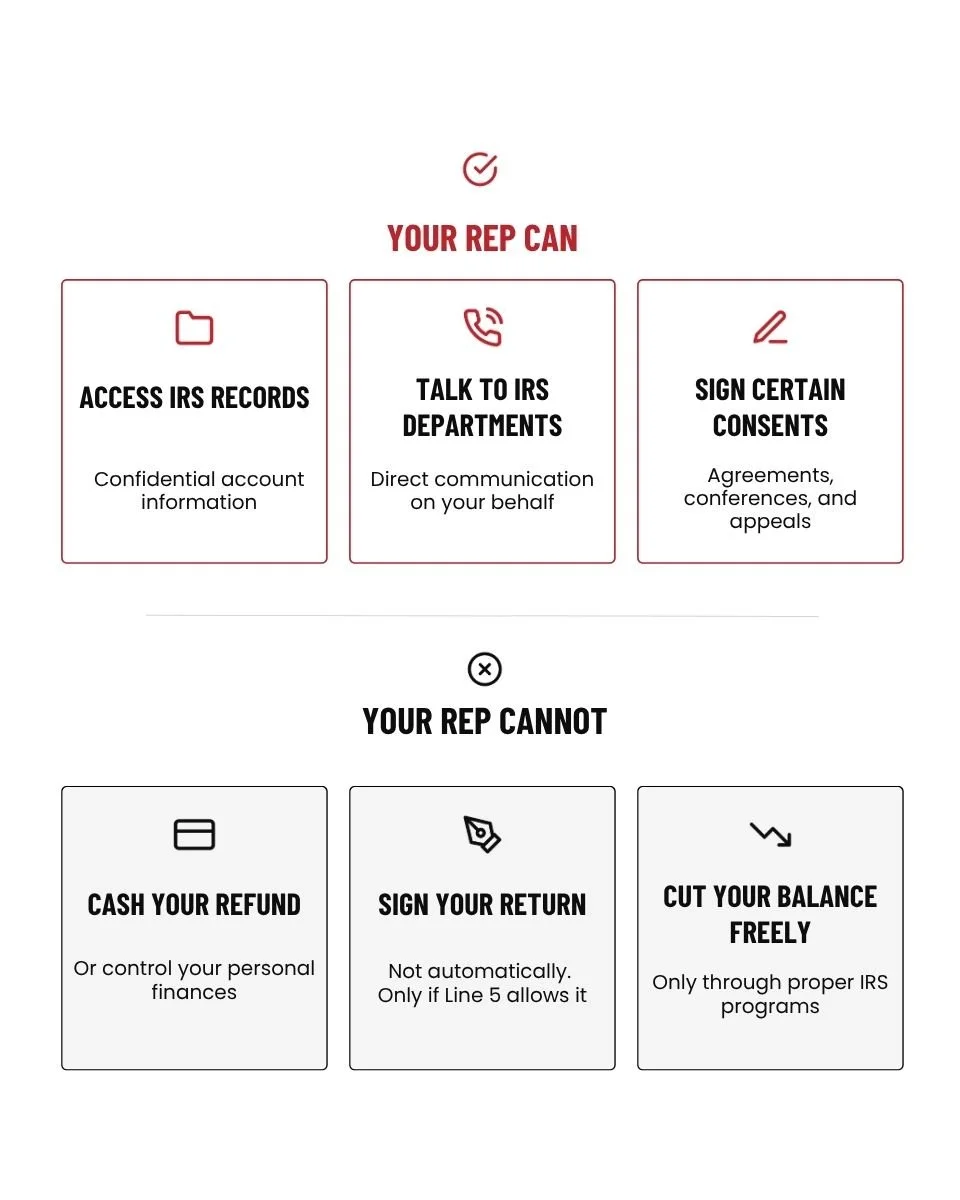
What Your Representative Can Do
• Access your confidential IRS records
• Communicate directly with IRS departments
• Sign certain consents and agreements
• Represent you in conferences and appeals
What Your Representative Cannot Do
• Cash your refund or control your personal finances
• Automatically sign your tax return
• Reduce your tax balance without proper IRS programs
Sign off on certain banking authorizations.
Who Can Serve as Your Representative
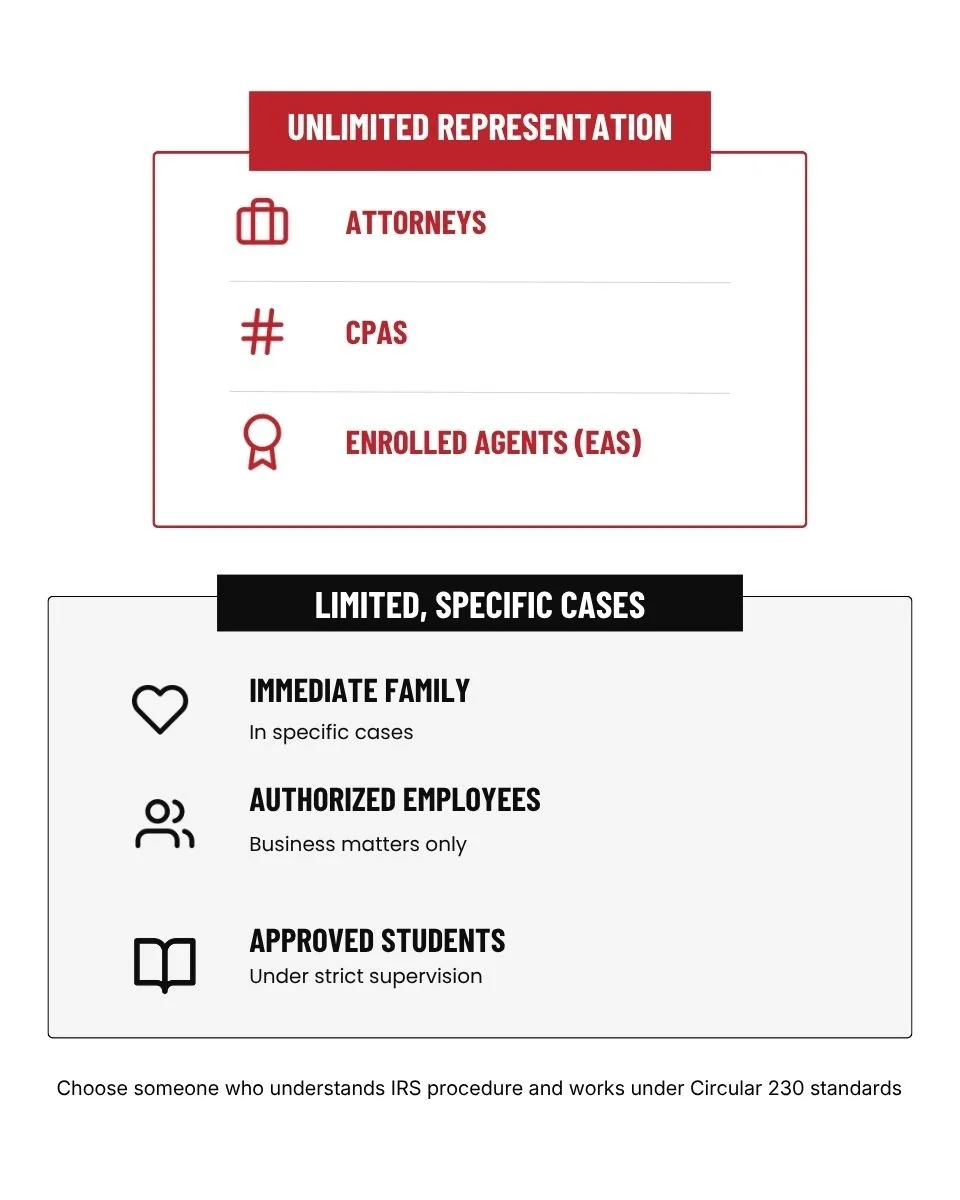
The IRS only accepts certain professionals:
• Attorneys
• CPAs
• Enrolled Agents (EAs)
• Immediate family members in specific cases
• Certain authorized employees for business matters
• IRS-approved students under strict supervision
Always choose someone who understands IRS procedure and works under Circular 230 standards.
How to Fill Out IRS Form 2848, Step by Step
Part I, Power of Attorney
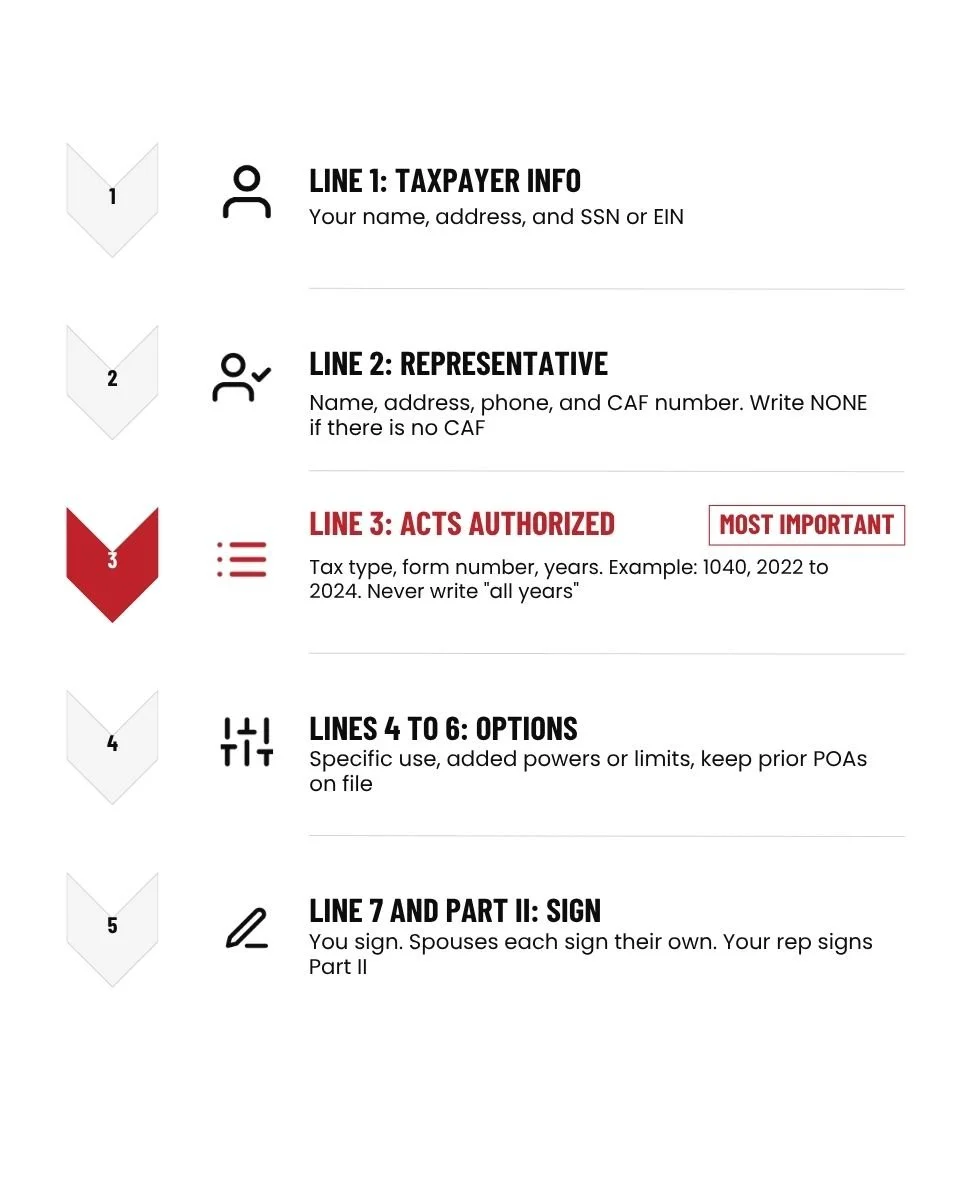
Line 1: Taxpayer Information
Enter your name, address, and SSN or EIN.
Line 2: Representative Information
Add the rep’s name, address, phone number, and CAF number.
If no CAF exists, write “NONE”.
Line 3: Acts Authorized (Most Important Section)
List:
• Tax type
• Form number
• Years or periods
Example:
• “1040, 2022–2024”
• “941, 1Q 2023–4Q 2024”
Avoid vague entries like “all years”.
Line 4: Specific-Use POA
Check this if it’s a one-time issue that shouldn’t be stored in the IRS CAF system.
Line 5: Additional Powers or Restrictions
Allow limited return signing or add a restriction for your rep.
Line 6: Retention of Prior POAs
A new 2848 revokes older ones unless you attach copies to keep them active.
Line 7: Signature
You must sign.
Spouses must each sign a separate Form 2848.
Part II, Declaration of Representative
Your representative signs and certifies their qualifications.
How to Submit IRS Form 2848
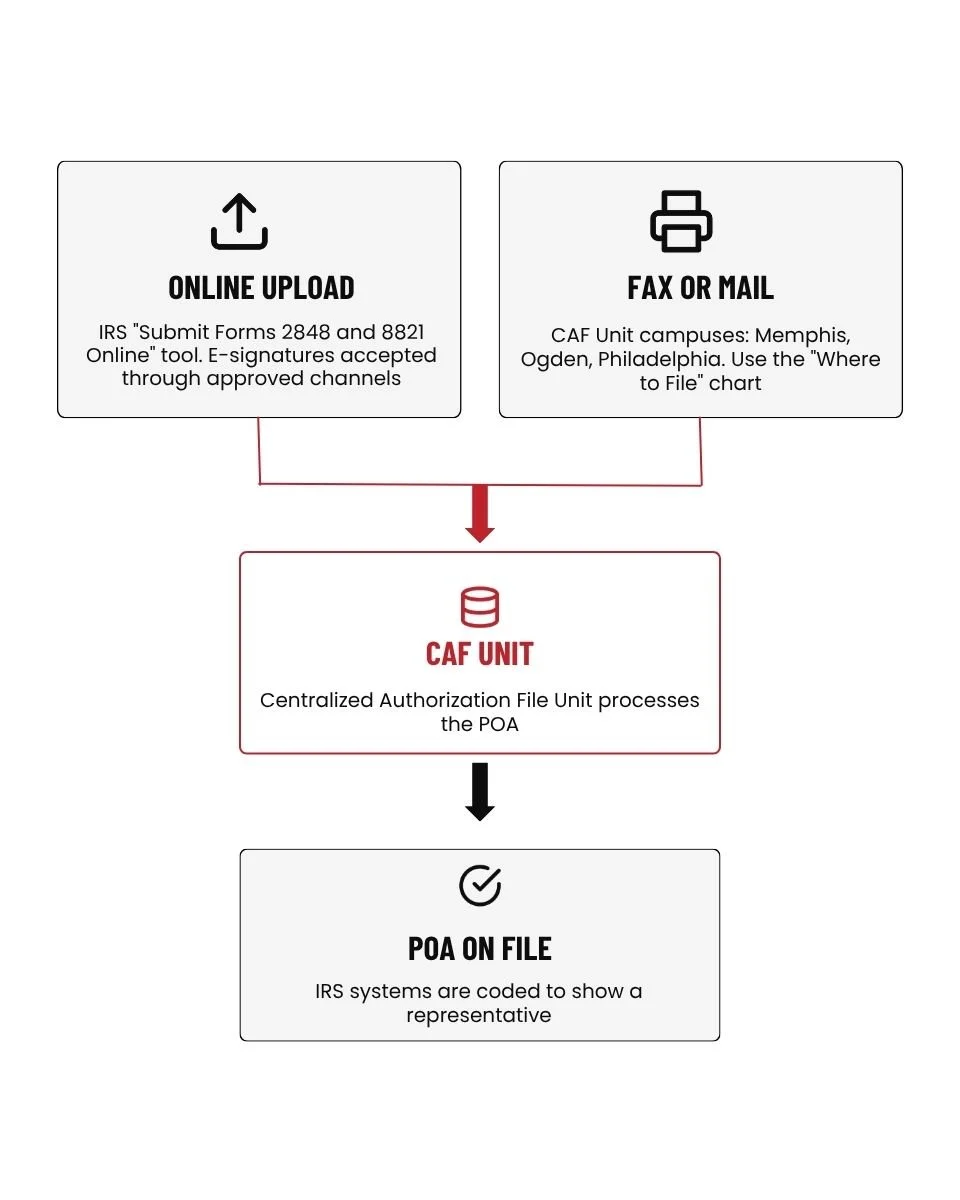
The IRS has a Centralized Authorization File Unit ( CAF Unit) that processed IRS POAS. Once they receive the 2848, the IRS systems will be coded that there is a POA on file. The submission fo the IRS 2848 can be:
Online Upload
IRS “Submit Forms 2848 and 8821 Online” tool allows secure uploads.
Electronic signatures are accepted only when submitted through approved channels.
Fax or Mail
The IRS CAF unit is spit between 3 campuses: The Memphis, Ogden & Philadelphia unit. Depending on where you reside, is the department you would need to send the 2848. Use the “Where to File” chart in the instructions to find the correct fax number or address.
How Long IRS Form 2848 Stays on File
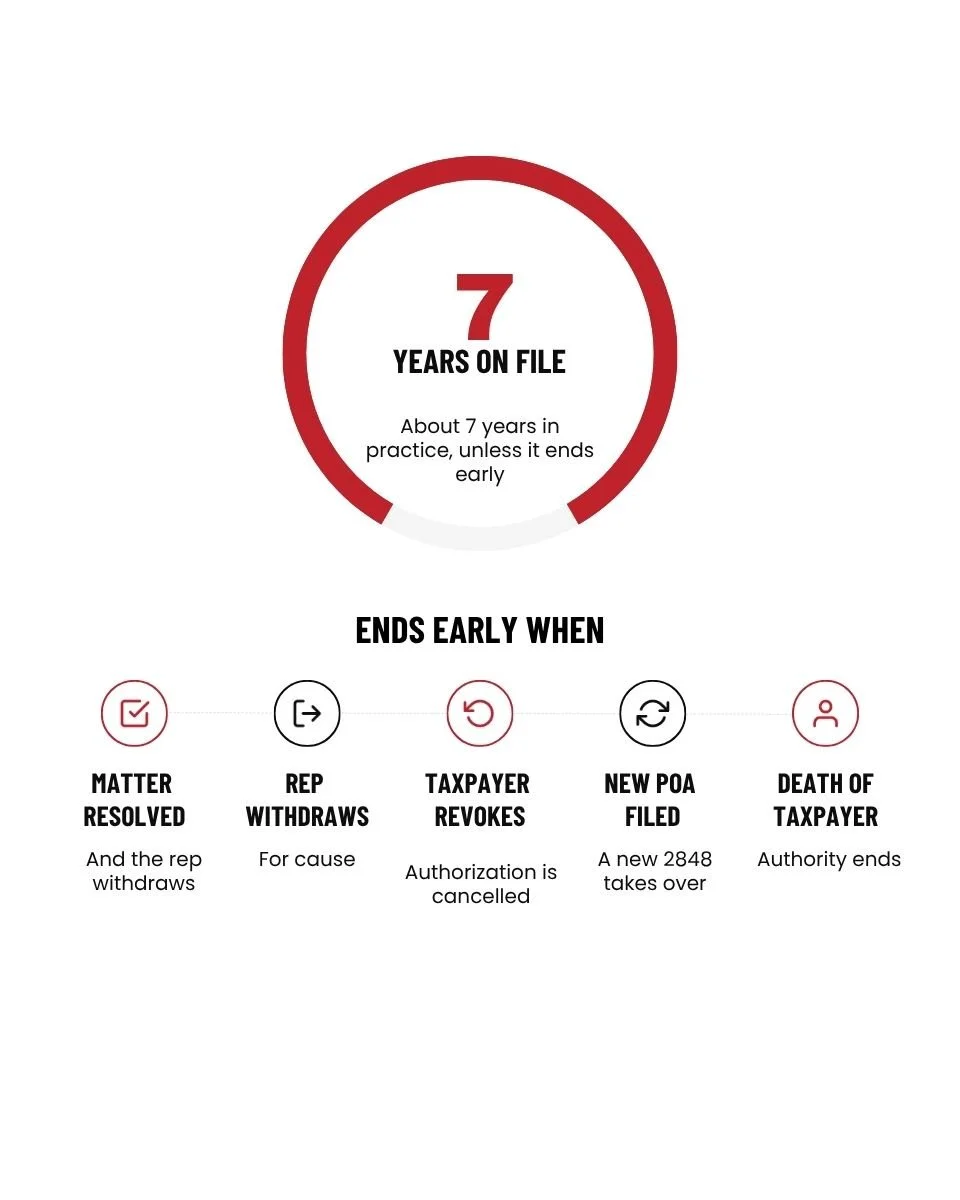
In practice, a 2848 stays active for 7 years, unless:
The matter is resolved & the POA is withdrawn by the representative
The POA withdrawn due to casue by the Representative
The Taxpayer revokes authorization
You replace it with a new one Power of Attorney
Death of the Taxpayer
Updating, Revoking, or Adding Representatives
You can:
Filing a new 2848 automatically revokes any prior representatives. However , you can keep the old POA on file by checking section 6 on the new 2848 & submitting a copy of the original 2848 to the IRS CAF Unit.
Taxpayer Sends the IRS a copy with “REVOKE” written across the top, signed & dated .
Representative submits a statement of withdrawal, with the Tax Type, Tax forms & Tax Years.
Special Situations
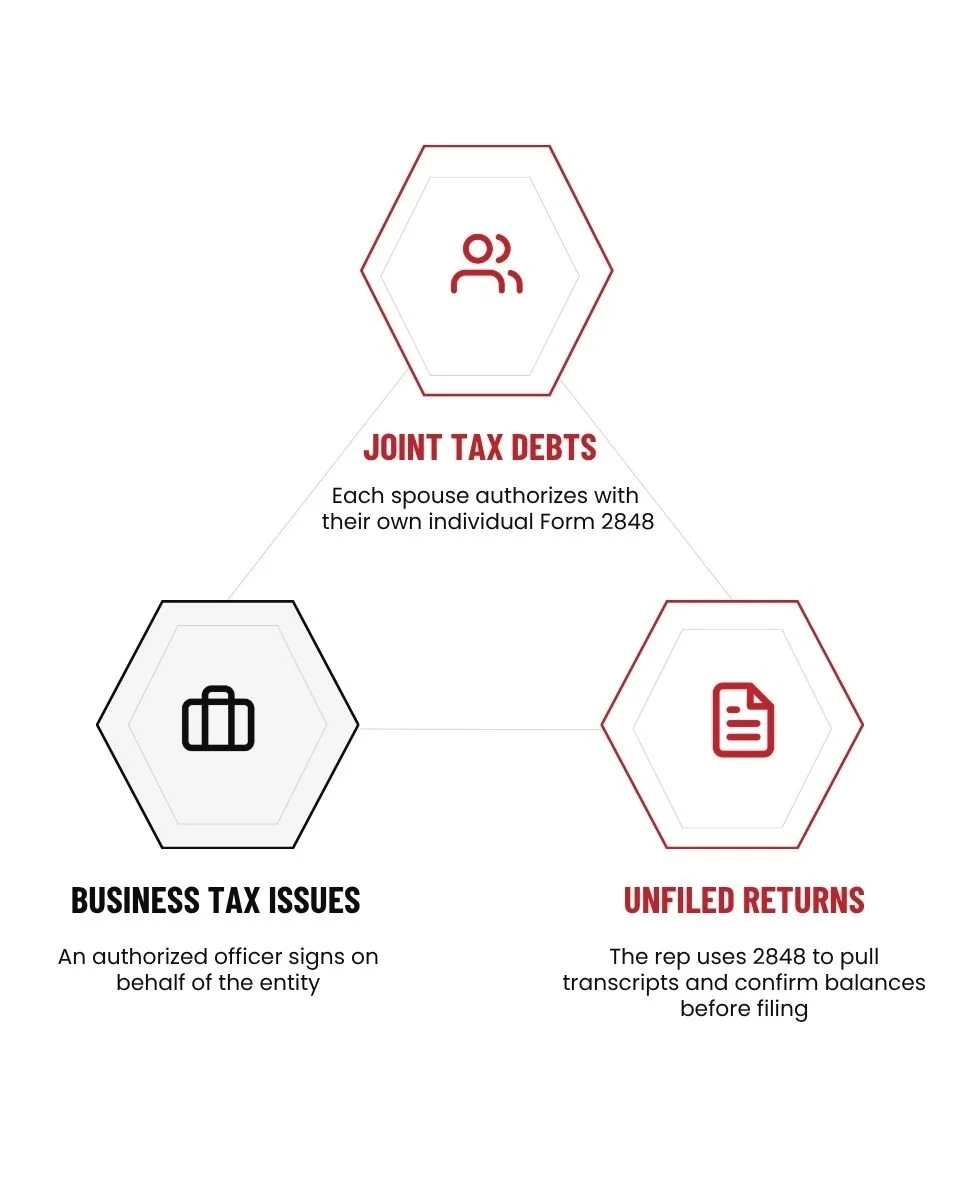
Joint Tax Debts Between Spouses
Each spouse has their own individual 2848 to authorize.
Business Tax Issues
An authorized officer signs on behalf of the entity.
Unfiled Returns
Your rep uses 2848 to pull transcripts and confirm balances before filing.
You can check out: Innocent Spouse Relief
IRS Form 2848 Power of Attorney FAQs
-
No. The IRS will not accept a general POA without Form 2848 requirements. The IRS Form 2848 is strictly for IRS Federal Tax Matters, not authorizing any other usage.
-
Any of the three types of Tax Professionals have unlimited representation with the IRS & can represent you. A tax preparer that is not an Attorney, Enrolled Agent or CPA can not be on a 2848 except for limited situations.
-
Yes, under IRS e-signature rules. The e-signing must meet a “Knowledge Based Authentication", where you have to verify your identity while signing. There are special processing for e-signed 2848s, where the authorization must be submitting electronically by your tax professional through their IRS account. The IRS will not accept this form via fax.
If you have an IRS.gov account, your Tax Professional may send you a sign request through your IRS.gov account, and you can authroize the 2848 through the IRS website.
Getting IRS Representation With Form 2848
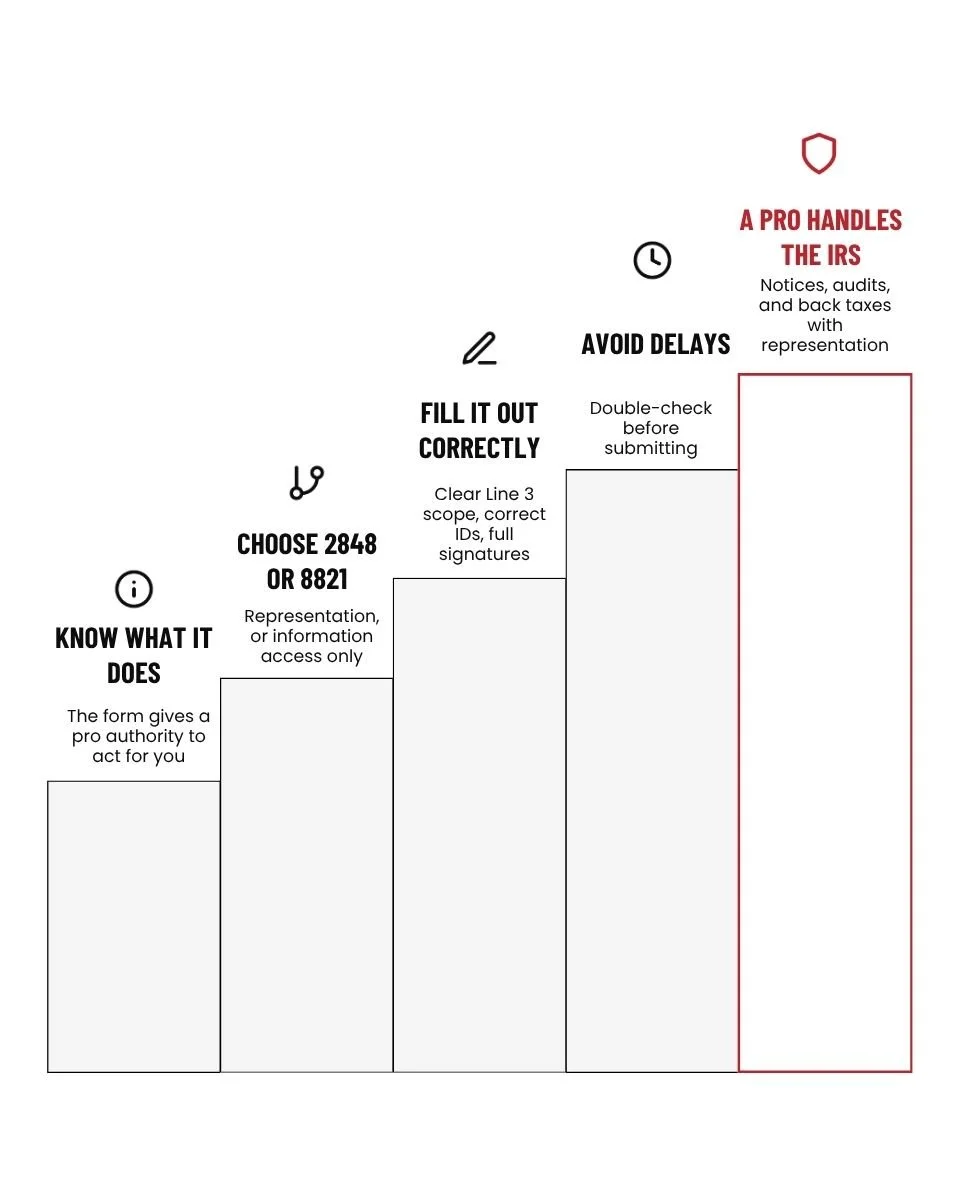
If you’re facing IRS notices, audits, or back taxes, Form 2848 is the gateway to having a qualified professional handle the IRS for you.
Use this guide to understand:
• What the form actually does
• Whether you need 2848 or 8821
• How to fill it out correctly
• How to avoid delays and common mistakes
This guide is information only, but it gives you a strong foundation before speaking with any tax professional. If you are overwhelmed you can check out our IRS tax debt resolution guide to get a clearer picture.
If you want my team to review your IRS options, you can schedule a free case review anytime.